Sloped lawns punish underpowered mowers. On a hillside, torque, traction, and deck weight decide whether the cut stays even or the wheels lose grip halfway up the rise. I’ve focused this list on walk-behind models with the gearing, power delivery, and balance that hold their line on uneven ground, while keeping each pick grounded in everyday yard work.
A Side-By-Side Look
PickWhy We Picked ItBest ForAction
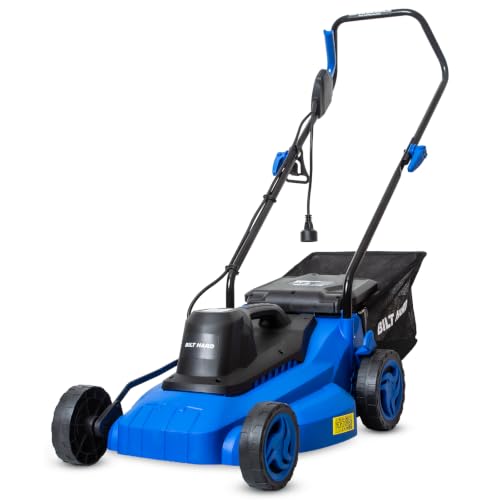
Lightweight Hill Tamer
BILT HARD 15-Inch Corded Electric Lawn Mower
Lightweight, easy handling
Small, gentle slopes

Top Pick
Greenworks 80V 21in Self-Propelled Lawn Mower
Strong brushless drive
Steep, uneven terrain

Performance Leader
Greenworks 60V 21in Self-Propelled Lawn Mower
Dual batteries, longer runtime
Larger yards with hills

Premium Pick
Honda HRX-BE 21-Inch Battery Walk-Behind Mower
Refined Versamow deck
Mulching perfectionists

Heavy Duty Pick
Honda HRX-BV 21-Inch Battery Walk-Behind Mower
Variable-speed self-propelled
Variable slope gradients

Dependable Option
Litheli 40V 16-Inch Cordless Brushless Lawn Mower
Dual-battery brushless drive
Mid-sized suburban lots

Lightweight Choice
Litheli 14-Inch Cordless Brushless Lawn Mower
Lightweight Choice
Litheli 14-Inch Cordless Brushless Lawn Mower
Compact foldable frame
Tight storage spaces
The Picks, Examined More Closely
For homeowners with a small lawn and a gentle slope, this BILT HARD corded model keeps things simple. The 11A motor turns the blade at 3300 RPM, enough to slice through common cool-season grasses without bogging on light inclines.
Because it’s corded, runtime is unlimited as long as your outdoor outlet and extension cord cooperate. The 15-inch deck trims a tighter path than the 21-inch options later in this list, which helps in fenced side yards where turning space is tight.
Where It Helps
- ✓Lightweight build reduces fatigue on shallow banks.
- ✓Foldable handle stores flat in tight garage corners.
- ✓Five height settings from 1 to 3 inches for seasonal changes.
- ✓Zero fuel or battery upkeep for low-maintenance owners.
Things To Consider
- •Cord management gets awkward on uneven or terraced terrain.
- •Smaller 35L bag fills faster on thick spring growth.
Who It Suits Best
First-time homeowners with flat-to-mild lawns under 1,500 square feet who want a quiet, no-fuss replacement for an old reel mower.
Skip It When
Anyone mowing real elevation should reach for the Greenworks 80V 21in Self-Propelled Lawn Mower instead, since the self-propelled drive and brushless torque handle steep grades with far less muscle.
When the slope is more suggestion than landscape feature, you want a brushless motor and a self-propelled rear drive. The Greenworks 80V 21in Self-Propelled Lawn Mower delivers both, paired with a 21-inch steel deck that chews through tall grass in wider passes.
Owners commonly report that the brushless drivetrain keeps RPM steady on damp, thick turf, where brushed motors tend to slow. In our view, the 4.0 Ah battery is the limiting factor on multi-acre lots, but for suburban yards up to about a third of an acre, it’s a clean fit.
Everyday Perks
- ✓Brushless motor resists bogging on uphill climbs.
- ✓Self-propelled drive reduces push effort on grades.
- ✓21-inch deck covers ground faster than 14 or 15-inch models.
- ✓Cordless design reaches trees and slopes without extension cord drag.
- ✓Quieter than gas, which matters in close-neighbor neighborhoods.
Trade Offs
- •One battery limits long sessions on bigger lots.
- •Heavier than corded models, harder to lift for transport.
- •Battery storage in winter matters for long-term capacity.
Made For
Homeowners with rolling yards up to a third of an acre who want self-propelled traction without gas engine maintenance.
Where Another Pick Suits Better
For larger properties, the Greenworks 60V 21in Self-Propelled Lawn Mower ships with two batteries and covers more ground per charge.
Greenworks built this 60V model for shoppers who want gas-comparable torque without the noise or oil changes. The 21-inch deck and brushless motor keep blade speed near 3200 RPM, which matters when grass is wet or thick on a downhill pass.
Two 4.0 Ah batteries rotate mid-mow, so a half-acre with a slope is workable in one session. Compared to the 80V sibling above, the trade-off is slightly less peak power but noticeably more runtime, which most homeowners will appreciate on real-world lots.
Standout Benefits
- ✓Brushless motor delivers gas-like torque at lower noise.
- ✓Dual batteries extend runtime for larger hilly yards.
- ✓Self-propelled drive holds pace on inclines.
- ✓60V platform shares batteries across other Greenworks tools.
Honest Caveats
- •Bulkier than 40V or corded options, harder on stairs.
- •Charge time between batteries interrupts long sessions.
Right Fit For
Owners of half-acre-plus properties with mixed flat and sloped sections who already use Greenworks 60V tools.
Not Your Match When
Shoppers with small urban lawns will find the Litheli 40V 16-Inch Cordless Brushless Lawn Mower easier to store and lighter to push.
Honda’s HRX-BE pairs a battery drivetrain with the brand’s long-running GCV-series engine equivalent in feel, specifically the high torque and consistent RPM that hold a clean cut going uphill. The deck uses the Versamow system with a Clip Director, so mulching, bagging, discharging, and leaf shredding all happen without swapping parts.
It’s a heavier, more refined option compared to the lighter Litheli and BILT HARD picks earlier in this list. You trade portability for build quality, and depending on the size of your yard, the runtime may push you toward the BV variant below.
Strengths Worth Knowing
- ✓Versamow system switches modes without tools or attachments.
- ✓MicroCut twin blades produce a finer mulch and cleaner bag fill.
- ✓Honda-grade drivetrain durability for frequent mowing schedules.
- ✓21-inch deck trims fewer passes on larger lawns.
Less Ideal Details
- •Heavier than competing battery mowers, tougher on slopes without drive assist.
- •Premium pricing reflects the Honda build and Versamow deck.
Best Suited To
Homeowners who prioritize cut quality and mulching performance and own a mid-sized lawn with moderate grade changes.
Consider Something Else When
Steep properties call for the Honda HRX-BV 21-Inch Battery Walk-Behind Mower, which adds variable-speed self-propelled drive for steeper climbs.
The HRX-BV takes everything the HRX-BE offers and adds variable-speed self-propulsion, which is the key feature for serious slopes. You dial in your walking pace and the rear drive matches it, which keeps the cut consistent without slipping on damp grass.
The Versamow Clip Director still handles mulching, bagging, and leaf shredding in one deck. Compared to the BE, this is the right call when the lawn has consistent inclines rather than a single hill you walk up once.
Advantages To Know
- ✓Variable-speed self-propelled drive adapts to slope and stride.
- ✓Versamow 4-in-1 deck for mulching, bagging, discharging, shredding.
- ✓Honda-grade torque holds RPM under load.
- ✓Heavy-duty build for frequent mowing on demanding terrain.
Worth Noting
- •Heaviest option in this list, hard to lift into truck beds.
- •Higher price tier than other battery walk-behinds.
- •Storage footprint is larger than foldable compact models.
Who Will Love This
Homeowners with rolling, multi-grade lawns who want Honda refinement plus serious hill-climbing drive.
Look Elsewhere When
If storage space is tight and slopes are mild, the Litheli 14-Inch Cordless Brushless Lawn Mower folds flatter and handles light banks without the bulk.
Litheli’s 40V mower takes a different approach from the Honda and Greenworks picks above. Both 5.0Ah batteries must be inserted to deliver full 40V performance, which means consistent blade speed through thick spring growth rather than the gradual fade common in single-battery designs.
The 16-inch deck and six cutting heights (25 to 75 mm) keep the cut flexible across seasons. With no oil, spark plug, or carburetor to clean, maintenance drops to blade swaps and under-deck cleaning, which is a real ownership perk.
Good Reasons To Consider
- ✓Brushless motor runs quietly and lasts longer than brushed designs.
- ✓Dual 5.0Ah batteries hold 40V power throughout the mow.
- ✓Six cutting heights give finer seasonal adjustments than 5-step decks.
- ✓50L collection bag reduces emptying stops on bigger yards.
- ✓Maintenance-free motor cuts out oil changes and tune-ups.
Small Caveats
- •Push design, no self-propelled drive on steeper hills.
- •Narrower 16-inch deck means more passes than 21-inch options.
Who Should Grab It
Suburban homeowners with a quarter-acre yard that mixes gentle slope and flat zones who prefer low-maintenance ownership.
A Better Fit Elsewhere
On real hills, the Greenworks 80V 21in Self-Propelled Lawn Mower’s rear drive makes the climb far easier than any push mower.
The compact Litheli 14-inch model is built for tight lots and short storage walls. Its quick-fold handle collapses the deck into a flat rectangle that slides behind a shelf or into a narrow closet, which matters in apartments with shared outdoor bins.
On a slope, the lighter frame is easier to redirect, though the brushless motor still demands real push effort on grades over 15 percent. Compared to the larger Litheli 40V sibling, this trades deck width and runtime for portability.
Points In Its Favor
- ✓Lightweight frame fits seniors and small-frame gardeners.
- ✓Adjustable handle supports healthy posture across user heights.
- ✓Quick-fold design shrinks storage footprint dramatically.
- ✓Brushless motor cuts maintenance to zero for daily use.
Practical Considerations
- •14-inch deck doubles the passes on any yard over 1,000 square feet.
- •5.0Ah battery tops out near 3,000 square feet per charge.
- •No self-propelled drive, manual push on every slope.
Built With In Mind
Apartment dwellers and small-yard homeowners with light banks who want a quiet, no-maintenance mower that disappears into a closet.
Swap It Out When
Anyone with a quarter-acre or more should pick the Greenworks 60V 21in Self-Propelled Lawn Mower for fewer passes and self-propelled hill traction.
Matching The Right Mower To Your Slope
Hill work changes what matters in a walk-behind. The deck width, drive type, and motor technology each solve a different problem, and reading them as a system keeps the wrong mower out of the garage.
Drivetrain And Drive Type
A brushless motor uses electronic commutation instead of carbon brushes, so it generates less heat, runs quieter, and holds RPM under load. On uphill climbs where a brushed motor slows and bogs, brushless keeps the blade tip speed consistent. Pair that with a self-propelled rear drive and the slope stops being a workout.
Deck Size And Maneuverability
A 21-inch deck covers more ground per pass but resists tight turns near trees and beds. Smaller 14 to 16-inch decks pivot easily around landscape features and shed pounds that matter on inclines. For a half-acre or more, a 21-inch deck saves real time. For tight lots, smaller is smarter.
Battery Platform And Runtime
A single 4.0 Ah battery works for small lawns, but anything over a third of an acre drains mid-mow. Dual-battery kits like the Greenworks 60V model rotate packs and extend sessions. Runtime is also affected by grass thickness and slope, so headroom matters for spring growth and damp conditions.
Weight, Storage, And Build Quality
Heavier mowers feel planted on slopes but are harder to lift. Foldable handles save garage space, which matters in apartments and small sheds. Steel decks outlast plastic in rocky or root-heavy yards, and premium models like the Honda HRX series trade weight for longevity.
Key Considerations Across These Picks
Where Shoppers Go Wrong
The most common slip-up is buying deck size that doesn’t fit the yard. A 14-inch mower on a half-acre means triple the passes of a 21-inch model, and that’s after pushing uphill. Another trap is ignoring drive type, since push mowers on 20 percent grades turn a routine mow into a workout. Always match self-propulsion to slope, not to ambition.
When Paying More Pays Off
Higher-tier models like the Honda HRX-BV earn their cost through variable-speed drive, Versamow mulching, and longer deck life. For a quarter-acre with steady slopes, that upgrade pays back in saved effort and cleaner cuts. For a flat city lot, the premium doesn’t earn its keep.
Frequently Asked Questions
QDo walk-behind mowers really work on hills?
Yes, when the mower has a self-propelled rear drive and a brushless motor. Push mowers work on gentle grades, but anything over about 15 percent benefits from powered rear wheels that match your walking pace.
QHow wide should the deck be for a sloped yard?
A 21-inch deck covers ground faster, which means fewer sidehill passes where the mower wants to slide. For tight lots with tree roots and beds, a 16-inch deck maneuvers more easily. Match the deck to yard size and obstacle density.
QIs a brushless motor worth the extra cost?
On hills, a brushless motor is worth it. It holds RPM under load, runs cooler, and lasts longer than brushed designs. For flat small lawns, the cost premium is harder to justify.
QCan battery mowers replace gas for large properties?
Yes, with the right battery count. A dual-battery 60V or 80V kit covers most half-acre lawns on a single charge. Larger acreages may need extra batteries or a rapid charger to avoid mid-mow downtime.
QHow do I store a walk-behind mower through winter?
Drain or fully charge the batteries before storage, clean the under-deck surface, and store in a dry space. Fold the handle if the model supports it to save floor space, and avoid leaving the unit in damp sheds.
Closing Remarks
The right walk-behind turns a slope from a chore into a routine. Match the drive and deck to your yard size, lean toward brushless motors for any real grade, and let storage weight guide the final call. Pick the model that fits your terrain and your weekends get a little quieter.