A lawn mower that won’t start in late spring feels like a small emergency. Whether you’re chasing a worn drive disc, hunting down a stubborn oil leak, or rebuilding a tired push mower from the deck up, the right motor part or replacement engine can pull a Saturday back from the brink. I’ve pulled together a mix of gaskets, seals, starter kits, breather parts, drain hoses, and a full drop-in engine so you can match the fix to the problem.
The Main Contenders
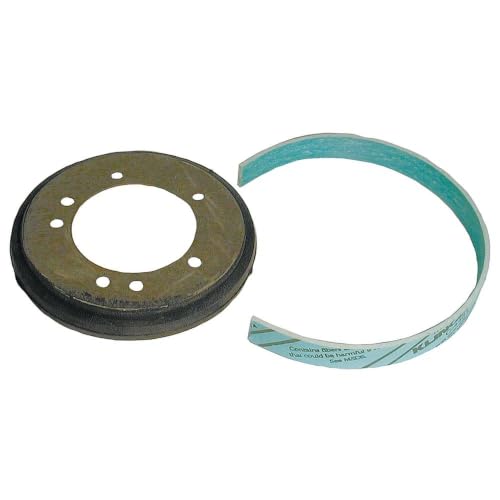
Stens 240-975 Drive Disc Kit With Liner

Briggs & Stratton 699485 Crankcase Gasket
Nimiah 291675S Oil Seal (2-Pack)

Stens 150-118 Starter Drive Kit

Tecumseh 36557 Breather Repair Kit

John Deere Ejector M89679

Briggs & Stratton 1723165SM Oil Drain Hose

Aceup Energy 4.4HP 173cc Vertical Engine
Taking A Closer Look At The Options
If you inherited an older Snapper rear-engine rider and the blade drive slips or stalls under load, the clutch area is a usual suspect. The Stens 240-975 kit targets that exact spot: a replacement drive disc paired with a liner for engines running a smooth clutch design. It’s a niche pick, but the kind of niche part that saves a whole mower from the scrap heap.
For a backyard mechanic doing a spring tune-up, this lands in the small-folder of parts that actually solves the problem rather than masks it. If you’re chasing a Snapper 5-3103, 5-7423, 7053103, or 7600135 series machine, the liner makes the difference between a clutch that grabs cleanly and one that keeps slipping in tall grass.
Features That Help
- Replaces multiple Snapper part numbers, which broadens the chance it matches your specific model
- Includes a smooth-clutch liner so you don’t have to source that separately
- Compact 8.42 by 6.54-inch packaging, easy to stash in a parts drawer until needed
- Lightweight at 0.72 pounds, friendly for a one-handed swap on the workbench
Things To Consider
- Narrow fitment: only useful if your mower matches one of the listed Snapper references
- Confirm whether your clutch is the smooth style, since the liner is the key reason to grab this kit over a plain disc
Key Specs
Made For
A Snapper owner restoring a rear-engine rider with a slipping smooth clutch who wants the liner included.
Skip It When
Your mower is a modern Briggs-powered walk-behind, where the Briggs & Stratton 699485 Crankcase Gasket is more likely the part you need.
A crankcase gasket sounds dull until oil starts weeping onto your driveway. The Briggs & Stratton 699485 is the factory-spec seal for several popular Briggs engine families, including the 555525, 692549, and 273661 models. Because it’s an OEM part, the gasket thickness and bolt-hole pattern match the case halves exactly, which matters more than people expect on a thin paper gasket.
I’ve owned enough small engines to know that a mismatched aftermarket gasket is a slow leak waiting to happen. For a homeowner pulling the sump off for the first time, the right paper gasket turns a fiddly job into a clean one. Pair it with a fresh oil change and a torque wrench, and the leak is usually gone for good.
Everyday Wins
- Genuine OEM part, so the die-cut shape matches the case halves without trimming
- Covers three common Briggs engine families, widening the chance it fits your mower
- Thin composite material crushes evenly when torqued to spec
- Inexpensive insurance compared with a full engine reseal at a small-engine shop
Worth Noting
- You’ll need to confirm your engine family number before ordering, since the gasket only fits the listed series
- Replacement requires draining the oil and separating the case halves, so plan for a half-day project
Right Fit For
A Briggs 555525, 692549, or 273661 owner chasing down a persistent oil drip from the sump seam.
Look Elsewhere When
Your Briggs engine is in the 251000 or 421000 series, where the Nimiah 291675S Oil Seal handles the leak at the crankshaft instead of the case joint.
An oil seal lives in a quiet, greasy corner of the engine where nobody looks until oil shows up where it shouldn’t. The Nimiah 291675S seal targets the crankshaft exit on popular Briggs vertical-shaft engines in the 10 to 15 gross HP range, covering the 251000, 252000, 401000, 421000, and 422000 series. Two seals come in the pack, which is helpful if you plan to reseal the crank on both ends.
For a homeowner staring at a dark ring on the mower deck below the engine, this seal is often the fix. You may find the install goes smoother with a proper seal driver, but a socket that matches the outer diameter usually works in a pinch.
What It Does Well
- Standard 1-3/8-inch ID by 1-7/8-inch OD by 1/4-inch thickness fits the common Briggs vertical-shaft geometry
- Two-pack gives you a spare or lets you seal both ends of the crankshaft
- Replaces the OEM 291675 and 291675S along with the 49-047 and 495-044 cross references
- Targets a high-failure spot on older Briggs vertical engines, so the part addresses a real pain point
Trade Offs
- Install requires pulling the engine shroud or flywheel on some models, so it’s not a five-minute job
- Aftermarket seals can vary in rubber compound; owners commonly report mixed long-term durability versus OEM
Best Suited To
DIYers resealing a Briggs vertical-shaft engine in the 251000 through 422000 range who want a two-pack on hand.
Not Your Match When
You only need to reseal the crankcase halves, not the crankshaft, in which case the Briggs & Stratton 699485 Crankcase Gasket is the smarter order.
When the electric start spins but the engine doesn’t engage, the Bendix-style starter drive is usually at fault. The Stens 150-118 kit replaces Briggs & Stratton 495878 and 696540 starter drives across the full electric-start engine line that uses a roll-pin retention style. The composite drive gear with 16 teeth is a deliberate upgrade over worn metal units that have chipped teeth.
For a homeowner whose riding mower click-clicks but never cranks, this kit is the kind of repair that brings the whole machine back without buying a new starter motor. The composite gear tends to be quieter on engagement, which is a small bonus on a cold morning.
Reasons It Performs
- Composite 16-tooth gear resists chipping better than brittle OEM metal units on worn engines
- Full kit contents include starter gear, spring retainer, return spring, clutch retainer, roll pin, and roll pin cage, so nothing else is needed
- Replaces two common Briggs part numbers, covering a wide slice of the electric-start lineup
- Targets roll-pin retained engines specifically, which fits most older Briggs V-twin riding mowers
Honest Caveats
- Installation means removing the starter motor and retaining clip, which can be fiddly on tightly packed engine bays
- Only fits roll-pin retained starters, so confirm your engine style before ordering
Who Should Grab It
A riding-mower owner with a Briggs electric-start engine that spins without engaging and wants a full kit in one box.
Reach For A Different Pick When
You’re chasing a fuel-system vent issue on a Tecumseh engine, where the Tecumseh 36557 Breather Repair Kit is the better-targeted fix.
The breather assembly on a Tecumseh small engine does the quiet work of letting the fuel tank breathe as fuel is consumed. Over time the gasket or valve element hardens, cracks, or falls apart, and the engine starts running rich or surging under load. The Tecumseh 36557 kit brings back the OEM breather for the LEV, LV, TVS, OV, and OVRM engine series, with parts matched to the original diagram.
Tecumseh engines aren’t as common as they once were, but a lot of them are still cutting grass on smaller properties. For owners of those engines, an OEM breather kit is easier than chasing an aftermarket cross-reference, and the install is usually a single bolt and a short hose.
What Helps Most
- Genuine OEM Tecumseh part, so the gasket profile matches the original without trimming
- Covers five Tecumseh engine families in one part number, simplifying the search
- Allows the fuel tank to vent correctly, which protects the carburetor from vacuum lock
- Quick repair, typically a single fastener and a short length of hose
Points To Note
- Limited to Tecumseh LEV, LV, TVS, OV, and OVRM series, so wrong-engine orders are a real risk
- The original part may have worn or cracked from age; check the surrounding hose for embrittlement at the same time
The Right Fit
A Tecumseh LEV/LV/TVS owner chasing fuel-starvation symptoms and wanting a direct OEM breather replacement.
Where Another Pick Suits Better
If your mower runs a Briggs flat-opposed engine instead of a Tecumseh vertical, the Stens 150-118 Starter Drive Kit solves a different but common Briggs problem.
This isn’t a homeowner-level part, but it earns its place on the list for the people who actually need it. The John Deere M89679 is an OEM ejector that fits a long list of commercial Deere machines: the 2020 and 2030 ProGator utility vehicles, the 2500B and 2500E greens mowers, and the 3215 lightweight fairway mower, among others. The part replaces earlier Deere numbers T200280, R109341, and MG9840689.
For a turf technician or golf-course equipment manager, an OEM ejector matters because the flow geometry affects how clippings discharge. Aftermarket copies often look identical and then clog within a shift. The Deere part keeps the airflow profile the engineers designed.
Everyday Perks
- Genuine John Deere OEM construction with the factory casting number on the part
- Consolidates three prior part numbers into one current replacement, simplifying inventory
- Maintains the designed airflow pattern for consistent clipping discharge on commercial decks
- Fits a wide commercial lineup, from utility vehicles to greens and fairway mowers
Practical Considerations
- Specialty part that only matters if you service the listed Deere commercial machines
- OEM cost is higher than generic ejectors, which can be a sticking point for one-off replacements
Built With In Mind
Golf-course equipment managers and Deere commercial fleet technicians who need a genuine ejector for a ProGator, 2500-series, or 3215 mower.
Consider Something Else When
You’re maintaining a residential walk-behind or rear-engine rider, where the Stens 240-975 Drive Disc Kit covers a much more common backyard repair.
Oil changes on a Briggs vertical engine used to mean tipping the mower on its side and hoping oil didn’t end up in the air filter. The 1723165SM drain hose fixes that with a 10.5-inch flexible extension that routes the used oil past the deck and chassis and into a drain pan. The line uses 3/8-inch-18 NPT fittings and an oil-resistant flexible body rated for hot oil and repeated use.
For a homeowner who services the mower twice a season, the hose turns a messy chore into a clean one. You may find a short piece of cardboard under the pan is still a good idea, but the worst of the sloshing is gone.
A Strong Showing
- Genuine Briggs & Stratton OEM hose, sized and threaded for the company’s vertical engines
- 10.5-inch flexible reach clears mower decks and generator frames without disassembly
- Oil-resistant line tolerates hot drain oil and repeated seasonal use
- Saves the air filter from an accidental oil bath when changing oil on side-mounted dipsticks
Small Caveats
- Fitment depends on your engine having the matching 3/8-inch-18 NPT drain port
- Hose can stiffen slightly in cold weather, so warm oil drains faster than cold
Whose Shelf It Belongs On
Any Briggs owner doing seasonal oil changes who wants to keep the deck, frame, and air filter clean in the process.
A Better Fit Elsewhere
If your mower needs more than a clean oil change and is showing sump-seam drips, the Briggs & Stratton 699485 Crankcase Gasket addresses the actual leak.
Sometimes the engine is the problem, and no individual part can rescue it. The Aceup Energy 173cc vertical-shaft engine is a full drop-in replacement motor for tired push mowers, with a recoil start, a primer bulb for cold starts, and a 0.9-gallon fuel tank. Rated at 4.4 HP at 3600 RPM with 8.5 N.m of torque at 2500 RPM, it’s sized for standard residential walk-behinds.
The shaft is 7/8-inch diameter by 3.16 inches long with a 3/8-inch-24 UNF tapped end and a 3/16-inch keyway, which matches a large slice of the walk-behind mower market. For a homeowner whose mower has thrown a rod or whose repair bill approaches the cost of a new machine, an aftermarket engine swap is often the smarter move than chasing another fix.
The Value In It
- Full replacement motor, sidestepping the parts rabbit hole when the original engine is shot
- Recoil start with primer bulb means simpler controls than electric-start engines
- 4-stroke OHV design runs cleaner and quieter than older side-valve push mower engines
- 0.9-gallon tank is enough for most suburban lawns on a single fill
Where It Is Less Suited
- Output shafts vary between mower brands, so confirm the 7/8-inch by 3.16-inch dimensions match your deck before ordering
- Recoil-only start is a downgrade if your existing mower has electric start
Key Specs
Who Will Love This
A homeowner with a push mower whose engine is beyond repair and who wants a straightforward recoil-start swap.
Swap It Out When
Your existing engine just needs a starter drive rebuild, in which case the Stens 150-118 Starter Drive Kit is a fraction of the cost.
What Matters Most Before Choosing Lawn Mower Motors
Engine type comes first. A Briggs vertical-shaft engine drives a different parts catalog than a Tecumseh flat-opposed or a John Deere commercial diesel, and the wrong gasket, seal, or drive kit simply won’t fit. Match the part number and engine family to your model before anything else.
Use case shapes the second decision. A weekend homeowner fixing a single leak or a slipping clutch wants OEM-style fitment and a small parts drawer order. A turf-care technician on a ProGator or 2500-series Deere needs commercial-grade OEM parts to keep a fleet running across long shifts.
Fitment verification beats price every time. Cross-reference the part number against your engine’s model and serial plate. A cheap aftermarket seal that doesn’t match the bore is a leak waiting to happen, while a more expensive OEM gasket in the right size solves the problem on the first try.
Key Considerations Across These Picks
Pitfalls Shoppers Hit
The most common slip is ordering by brand alone instead of by engine family number. Briggs makes several different 690-series engines, and a gasket for one does not always fit another. Always check the model and serial on the engine plate first.
Another frequent mistake is treating aftermarket seals and gaskets as identical to OEM. They often look the same out of the package, but compound quality and dimensional tolerance vary. On high-temperature or high-RPM parts like the starter drive, that gap shows up fast.
Where The Extra Money Goes
Higher-tier OEM parts command a premium because they match the engineering drawings the engine was built around. For commercial Deere ejectors or Briggs factory gaskets, that means tighter tolerances, batch-tested rubber compounds, and parts diagrams that line up without trimming.
The upgrade is worth it when downtime costs more than the part. For a homeowner mowing one lawn on Saturday morning, a quality aftermarket seal is usually fine. For a commercial crew missing a shift because of a recurring leak, OEM is the smarter spend.
Frequently Asked Questions
How do I know which lawn mower motor part I actually need? Start with the engine model and serial number stamped on the blower housing or valve cover. Cross-reference that against the part listing, since brand alone is rarely specific enough.
Are aftermarket replacement parts as good as OEM? For wear items like seals and gaskets, quality aftermarket parts often work fine. For high-stress components like starter drives and OEM ejectors, genuine parts tend to last longer under heavy use.
Can I replace a lawn mower engine myself? A recoil-start vertical-shaft swap on a walk-behind is a manageable project with basic sockets and a torque wrench. Always disconnect the spark plug wire and drain the fuel before starting.
How long do lawn mower engines usually last? With regular oil changes and clean air filters, a residential push-mower engine often runs for eight to ten years. Heavy use, missed oil changes, and dusty conditions shorten that window noticeably.
What’s the difference between a gasket and a seal? A gasket sits between two flat mating surfaces, like the crankcase halves. A seal rides against a rotating shaft to keep oil inside the engine.
Bottom Line
The right lawn mower motor part is the one that matches your engine family number and solves the specific symptom you’re chasing, whether that’s a slipping clutch, a weeping sump, a dead starter drive, or an engine that needs a full swap. Start with the model and serial, pick the part that fits, and the rest of the repair usually falls into place.