I spend my weekends thinking about lawns, so I notice when a tool genuinely changes the chore. Remote-controlled and robotic mowers have finally grown up, handling real slopes, weird yard shapes, and full-season yard care without me sweating through a t-shirt. If your Saturday mornings feel like groundhog day with a push mower, this list is for you.
An Overview Of The Picks

Mowrator S1 4WD Remote Control Lawn Mower, 21-Inch, 37° Slope
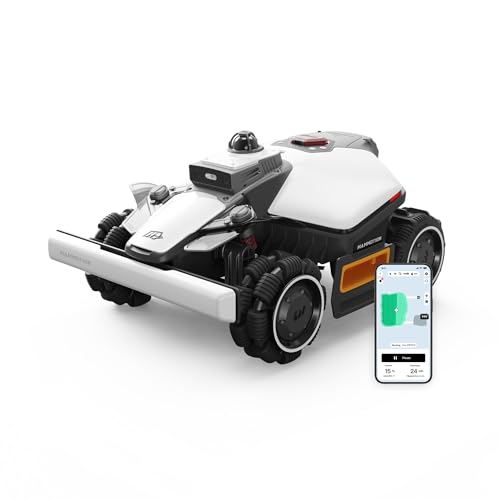
Mammotion LUBA mini 2 AWD 1500H Robot Lawn Mower with Garage

LEBOSBO V3 AI Vision Robotic Lawn Mower, 1600 Sq.Ft, Black
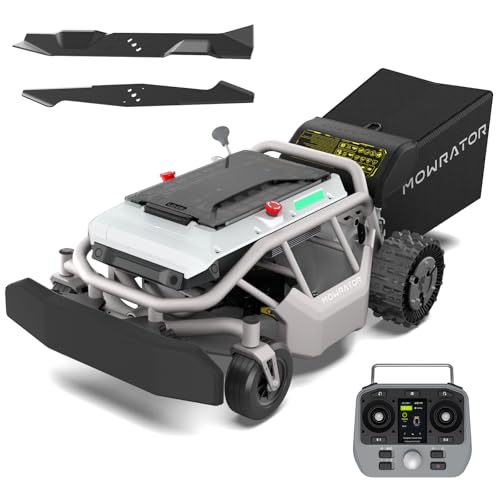
Mowrator S1 2WD Remote Control Lawn Mower, 21-Inch, 24° Slope
YARDCARE V100 Robot Lawn Mower, HD Vision, Up to 1600 sq ft
The Strengths Of Each Pick
The Mowrator S1 4WD sits in a category of its own. Most remote mowers are essentially toys, but this one packs a 21-inch cutting deck, four-wheel drive, and a 37-degree slope rating that handles real backcountry terrain. The 18Ah battery keeps it cutting through substantial acreage before needing a recharge, which matters when you have a long fence line or a hillside orchard to manage.
For owners with steep, uneven, or large properties, this is the closest thing to a sit-on mower without the sit-on mower. Where the smaller robotic options in this list rely on flat lawns and gentle gradients, the S1 4WD treats slopes as a feature, not a problem. Anyone tired of fighting gravity with a walk-behind should pay close attention here.
Where It Helps
- Four-wheel drive grips inclines up to 37 degrees, freeing you from the most dangerous mowing chore
- 21-inch deck covers ground fast, trimming the time spent managing a half-acre or larger lot
- Large 18Ah battery supports extended sessions before recharging, ideal for properties with limited downtime
- Remote control operation means you stay safely on flat ground while the machine handles the slope
Things To Consider
- Larger footprint demands more storage space in a garage or shed than a compact robot like the YARDCARE V100
- Remote-control mowing has a learning curve; new operators typically need a few sessions to feel confident on uneven ground
Key Specs
Made For
Owners of hilly, uneven, or large rural properties who need serious slope capability and don’t mind active remote operation.
Consider Something Else When
Flat, modest-sized suburban lawns are better served by the Mammotion LUBA mini 2 AWD 1500H, which mows autonomously while you stay inside.
The Mammotion LUBA mini 2 AWD 1500H is the most tech-forward mower in this lineup. It pairs 360-degree LiDAR (a laser-based scanning system that maps surroundings in real time) with dual-camera AI vision, giving it genuine spatial awareness instead of blind wandering. Coverage extends to about 0.37 acres with support for 20 distinct mowing zones, which is more than most suburban lots ever need.
Where the Mowrator S1 4WD keeps you holding a remote, the LUBA mini 2 AWD 1500H handles the entire job on its own. Set up zones in the app, schedule runs, and come back to a freshly cut lawn. For tech-comfortable homeowners juggling front yard, back yard, and side strips with different mowing requirements, this is the most hands-off option here.
Strong Points
- LiDAR plus AI vision dramatically improves obstacle detection compared to camera-only robots like the YARDCARE V100
- 20-zone management handles fragmented lawns with separate front, back, and side areas
- All-wheel drive tackles slopes up to 80% (a far steeper rating than most robotic mowers claim)
- Included garage protects the unit from weather, extending the lifespan of sensors and electronics
Trade Offs
- Initial setup takes patience; mapping multiple zones through the app can require an afternoon of fiddling
- Sensors require occasional cleaning to maintain accuracy, especially after pollen season or heavy dust
Who It Suits Best
Tech-comfortable suburban homeowners with multi-zone lawns who want a fully autonomous mowing experience and won’t mind a longer setup day.
A Better Fit Elsewhere
Smaller, single-zone lawns under 1600 square feet are easier on the wallet with the LEBOSBO V3, which delivers AI vision without the multi-zone complexity.
The LEBOSBO V3 is built for the lawn most people actually own: a tidy city lot under 1600 square feet. AI vision handles obstacle detection, and a 32-foot magnetic strip lets you mark off flower beds or play areas without burying boundary wire. For small suburban yards, the V3 delivers the core robotic mowing experience without the sticker shock of flagship units.
The trade-off is scope. Where the Mammotion LUBA mini 2 AWD 1500H manages 0.37 acres and 20 zones, the V3 keeps things simple and straightforward. You get a smaller coverage area, a single working zone, and a much shorter learning curve. For someone stepping into robotic mowing for the first time, that’s often the right balance.
Notable Gains
- AI vision improves obstacle detection without requiring expensive LiDAR hardware
- 32-foot magnetic strip creates no-go zones without the hassle of installing buried wire
- Compact footprint suits narrow side yards and tight storage areas
Points To Keep In Mind
- 1600 square feet of coverage is far below the Mammotion LUBA mini 2 AWD 1500H; larger yards will need multiple cycles
- Magnetic strip boundaries can shift over time and may need repositioning after storms or yard work
Feature Snapshot
Best Suited To
First-time robot owners with modest suburban lawns who want modern obstacle detection at an approachable price point.
Look Elsewhere When
Large, hilly properties need the climbing power and capacity of the Mowrator S1 4WD instead.
The Mowrator S1 2WD is the gentler sibling of the S1 4WD. Same 21-inch cutting deck, same remote-control format, but two-wheel drive and a 24-degree slope ceiling make it a friendlier fit for typical suburban terrain. The 12Ah battery is smaller than the 4WD’s 18Ah, yet still enough to finish most residential mowing sessions on a single charge.
For someone who likes the control of a remote but doesn’t need four-wheel-drive climbing power, this is the practical sweet spot. It pairs the wider deck and all-season versatility of the S1 line with a more accessible profile than its heavy-duty sibling.
What Pays Off
- 21-inch deck finishes medium lawns in fewer passes than smaller robotic units
- Lower price point than the S1 4WD makes remote mowing accessible to more shoppers
- Optional mulching blade handles autumn leaf cleanup beyond standard grass cutting
Worth Noting
- Two-wheel drive limits slope work compared to the S1 4WD’s 37-degree capability
- 12Ah battery requires more frequent charging on bigger jobs than the 18Ah version
Right Fit For
Homeowners with flat to moderately sloped lawns who want remote-control precision and a wide deck without the four-wheel-drive premium.
Another Choice May Suit
Fully autonomous operation matters more to you than deck size; the Mammotion LUBA mini 2 AWD 1500H handles itself once programmed.
The YARDCARE V100 takes a friendly approach to robotic mowing. HD vision plus a bumper sensor gives it basic environmental awareness, while AI processing distinguishes grass from non-grass surfaces. Coverage caps at 1600 square feet, which lines up neatly with small urban lots.
Compared to the LEBOSBO V3, the YARDCARE trades magnetic-strip boundaries for a slightly different feature set aimed at first-timers. For someone new to robotic mowers with a modest lawn and minimal complexity, the V100 is approachable without being underpowered.
The Value In It
- HD camera plus AI recognition handles up to 150 obstacle categories, useful for yards with garden decor or pet toys
- Compact size stores easily in tight garage corners or small sheds
- Simplified operation suits homeowners stepping into robotic mowing for the first time
Small Caveats
- 1600 sq ft coverage matches the LEBOSBO V3 but trails behind the Mammotion LUBA mini 2 AWD 1500H’s larger capacity
- Bumper-sensor recovery means occasional nudges before redirecting, which can show up on delicate plants near boundaries
Who Will Love This
First-time robot mower owners with small, simple lawns who want a low-pressure entry into automated mowing.
Where A Sibling Pick Shines
The LEBOSBO V3 brings similar coverage but adds a 32-foot magnetic strip for cleaner no-go zones on lawns with sensitive garden beds.
What To Weigh Before Choosing Rc Lawn Mowers
Coverage Capacity And Yard Size
Square footage is the first filter. Robotic units like the LEBOSBO V3 and YARDCARE V100 top out around 1600 square feet, ideal for small lots. The Mammotion LUBA mini 2 AWD 1500H stretches to roughly 0.37 acres with multi-zone support for more fragmented properties. For acreage that exceeds either threshold, the remote-controlled Mowrator S1 2WD or S1 4WD offers wider decks and larger batteries that finish faster.
Slope Ability And Terrain
Flat lawns give every option a fair shake, but slopes change the math quickly. Most robotic mowers handle gentle grades only. The Mammotion LUBA mini 2 AWD 1500H pushes to an 80% rating, and the Mowrator S1 4WD handles 37 degrees, which covers serious inclines. Anything beyond a gentle roll benefits from four-wheel drive and active remote control rather than autonomous mapping.
Control Style
Autonomous robots free your hands entirely once mapped, but they demand accurate setup. Remote-controlled mowers like the Mowrator S1 line keep you engaged with the machine, which can actually feel safer on tricky terrain. The right pick depends on whether you want a Saturday chore eliminated or simply made easier.
Boundary Setup
Buried wire, magnetic strips, and GPS-based virtual boundaries each have tradeoffs. Magnetic strips like the LEBOSBO V3’s are easier to install and adjust, while app-mapped zones on premium robots handle complex layouts without physical markers.
Key Considerations Across These Picks
Where Shoppers Go Wrong
Many people pick a mower sized for the lawn they wish they had rather than the one they actually mow. A heavy-duty four-wheel-drive unit on a flat city lot is overkill, and a tiny robot on a half-acre is doomed to constant charging cycles. Measure your lawn accurately and account for slopes, narrow passages, and separate zones before deciding.
What The Higher Tier Buys
Spending more typically brings smarter sensors, larger batteries, and wider decks. The jump from a compact vision robot to the Mammotion LUBA mini 2 AWD 1500H or a Mowrator S1 4WD adds LiDAR mapping, all-wheel drive, or full multi-zone management. The upgrade pays off when your lawn is large, fragmented, or steep; for modest lots, the lower tiers handle the work just as well.
Frequently Asked Questions
How Long Do Robotic Lawn Mowers Typically Last?
Most quality robotic mowers last five to eight years with reasonable care. Battery lifespan usually drives replacement timing, and keeping sensors clean extends electronics life across seasons.
Are Remote Control Lawn Mowers Hard To Operate?
There’s a brief learning curve, but most people feel comfortable within a few sessions. Starting on flat ground before tackling slopes builds confidence quickly.
Can Robotic Mowers Handle Rain?
Most models are designed to return to their dock or garage when rain starts. Operating in heavy wet conditions isn’t recommended, as it can stress the electronics and produce uneven cuts.
Do These Mowers Work At Night?
Many robotic mowers run quietly enough for evening schedules, though obstacle detection improves in daylight. The Mowrator S1 line requires active operator attention regardless of time.
How Much Maintenance Is Required?
Expect to clean sensors occasionally, swap blades once or twice a season, and keep the charging station clear of debris. Total upkeep is far lighter than a traditional mower.
The Takeaway
The right RC lawn mower depends entirely on your yard and how you like to spend your weekends. Pick the Mowrator S1 4WD for serious terrain, the LUBA mini 2 AWD 1500H for autonomous multi-zone mapping, and the LEBOSBO V3 or YARDCARE V100 for simple small-lot automation. Mowrator’s S1 2WD lands comfortably between remote control and budget. Match the mower to the grass you actually have, and your Saturdays open up fast.