Keeping mower blades genuinely sharp changes how a cut looks and how a machine holds up across a season. Whether I’m maintaining my own yard after a long day or helping a small landscaping side-hustle, I want an edge that’s clean enough to slice paper, not just scrape grass. The picks below cover a real mix of styles, from guided handheld brackets to dedicated bench grinders, so it’s easier to match the right tool to the kind of sharpening I actually do.
A Fast Comparison Of The Options

All American Sharpener Model 5005 Gen 2 (Made in USA)

All American Sharpener 5005 Gen 2 with Blade Balancer

Kimgsoak Lawn Mower Blade Sharpener with Balancer Kit

RACTOP Adjustable Lawn Mower Blade Sharpener Kit (Red)

Edicapo Adjustable Lawn Mower Blade Sharpener Kit (Black)

RBG Grinders 7″ Professional Fast Grind Blade Sharpener 712

SHARPAL 103N All-in-1 Knife and Garden Sharpener
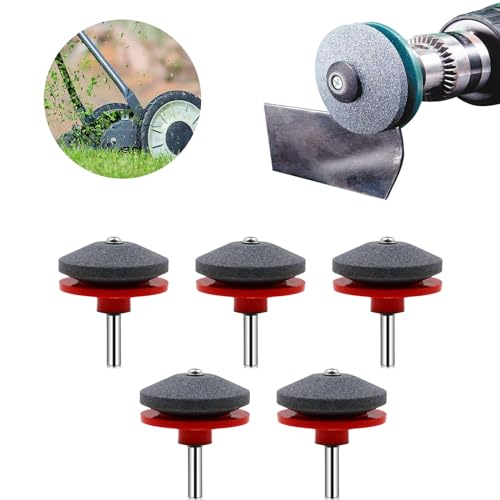
Surlveia Corundum Lawn Mower Blade Sharpener (5-Pack)
A Breakdown Of The Leading Choices
The All American Model 5005 Gen 2 has earned a reputation among groundskeepers and weekend warriors alike, partly because it pairs with the cordless angle grinder most folks already own. I find the appeal right away: the bracket holds the blade at a consistent angle while my grinder does the actual cutting, so I’m not chasing a steady hand across a spinning wheel.
It runs through standard straight, mulching, and high-lift blades without drama, and the 15° to 45° adjustable range covers the factory edge most mowers ship with. Owners commonly describe it as a permanent fixture in the garage once it goes up, and the made-in-USA build reads as a quality cue I’d want on a tool I reach for every few weeks.
Advantages To Know
- Adjustable from 15° to 45°, so it covers nearly every factory edge angle on residential and commercial decks.
- Works with the cordless angle grinder most homeowners already own, no extra motor or specialty tool to buy.
- Handles straight, mulching, and high-lift blades, useful when a small crew runs mixed mower types.
- Built in the USA from the original inventor’s tooling, which tends to mean replacement parts stay available over time.
- Mounts to a bench for repeatable sessions, freeing both hands to focus on the grinder’s pressure and angle.
Worth Bearing In Mind
- You’ll supply the grinder separately, so the all-in cost depends on whether you already own one.
- Aim gets thrown off if the bracket isn’t firmly clamped, so a wobbly workbench becomes the weak link in the setup.
Whose Garage It Belongs On
Homeowners and small crews sharpening a few mower decks each season who already own a cordless grinder.
Where Another Pick Suits Better
Landscapers running high blade volume across many decks each week should look at the RBG Grinders 7″ Professional Fast Grind Blade Sharpener 712 instead.
The 5005 Gen 2 with Balancer bundles the same bracket as the first pick and pairs it with a balancer that catches the second problem nobody talks about: an uneven edge. A blade can look sharp and still vibrate the deck apart because one side has been ground more than the other, and that’s exactly what this kit addresses.
Unlike the standalone bracket, this version ships with a balancing cone that handles star-pattern holes or odd symmetrical shapes between roughly half an inch and just over an inch across. The made-in-USA construction feels reassuring on a tool meant to last through years of weekend sessions, and the balancer is the kind of accessory I wish I’d added sooner.
Everyday Wins
- Adds a balancing cone so sharpened blades run true instead of shaking the deck over time.
- Balancer accommodates star and odd-shaped holes between roughly 1/2″ and 1 1/4″ inside diameter.
- Same 15° to 45° bracket range as the standalone, covering most factory edge angles.
- Made in the USA with parts commonly available, useful when a small part wears out after years of use.
Points To Note
- The full kit costs more than the bracket alone, so the balancer only pays off if you actually use it.
- You still need a cordless grinder on hand, since neither the bracket nor balancer includes one.
Made For
Prosumers who want sharp, balanced blades and don’t mind paying extra for the second tool in one box.
Look Elsewhere When
Anyone keeping costs low for a single home mower is better served by the Kimgsoak Lawn Mower Blade Sharpener with Balancer Kit.
The Kimgsoak kit leans into the same guided-bracket concept as the American-made options, but it swaps heavy steel for a high-density aluminum body and trims the price along with it. The setup includes guide pins that the bushings fit over snugly, which is a small detail that cuts wobble on the first pass.
Four guide pins give a few angle choices within the typical factory range, so I’m covered for most residential decks. For anyone stepping into mower maintenance for the first time, this kit reads as a lower-risk entry point than a full bench grinder, and it stows on a shelf without dominating the garage.
The Case For It
- Aluminum alloy body keeps the bracket light enough to move between workbenches without strain.
- Four guide pins snap into place to lock a chosen angle, which matters when you’re still learning the feel.
- Tighter bushing fit reduces wobble, so the first few swipes actually bite instead of skating across the steel.
- Lower entry cost than most dedicated sharpeners, useful for first-time owners testing whether they even want to maintain their own blades.
Honest Caveats
- Aluminum won’t shrug off a dropped grinder the way steel does, so handle the bracket with care.
- Angle range is narrower than premium brackets, which may frustrate anyone with non-standard mulching blades.
Best Suited To
Beginners on a tight budget who want a guided setup rather than freehand grinding on a spinning wheel.
Skip It When
Anyone who already owns a cordless grinder and wants a wider angle range should consider the All American Sharpener Model 5005 Gen 2 instead.
The RACTOP bracket leans hard into repeatability. Four holder bars lock the grinding target into position, which means I’m not holding the blade with one hand while swinging a grinder with the other. For someone running a small repair corner, that locked-down feel matters more than a fancy housing.
The 15° to 45° range tracks the same envelope as the higher-priced American brackets, and the stainless steel handle cuts down on slip when hands get sweaty or the air turns humid. It also pulls less material per pass, so a slightly neglected blade doesn’t disappear into the grinder on the first contact.
Well-Handled Touches
- Four holder bars lock the blade so both hands stay on the grinder instead of balancing steel.
- Anti-slip stainless handle keeps grip steady through longer sessions in warm weather.
- Adjustable 15° to 45° angle matches the same factory edge envelope as more expensive brackets.
- Removes less material per pass, useful for reviving dull blades without shaving them into nothing.
Small Caveats
- The locking lever can bind if over-tightened, so a little practice goes a long way before the first blade.
- Still requires a separate grinder, so the kit alone isn’t a fully self-contained sharpening station.
Key Specs
Right Fit For
Anyone running repeatable sharpening sessions in a home workshop and tired of freehand grinding.
Swap It Out When
Mobile landscapers without a fixed bench may find the RBG Grinders 7″ Professional Fast Grind Blade Sharpener 712 a better dedicated platform.
The Edicapo bracket takes the same guided approach as the RACTOP and adds explicit support for both right-hand and left-hand blades, which sounds minor until you’re staring at a fleet of mowers where half spin the opposite direction. For mixed-deck operations, that’s a real time-saver.
The black finish gives it a tougher look that reads as workshop-grade, and the 15° to 45° envelope covers the angles I’ve actually needed across standard residential decks. It’s the kind of bracket that wants a permanent spot on a bench and rewards that kind of commitment.
Notable Gains
- Designed for both right and left hand blades, helpful for fleets with mixed deck rotations.
- 15° to 45° adjustment covers standard and high-lift edges without swapping brackets.
- Black finish tends to hide shop grime better than bare metal during long seasons of use.
- Functions with a standard cordless grinder, so no extra power source is required.
Things To Consider
- Bench clamp isn’t always included, so check the listing before assuming it’s a full bench-mount setup.
- Heavier than aluminum alternatives, which matters if the bracket lives on a portable work surface.
Who It Suits Best
Multi-deck mowing operations and homeowners juggling push and riding mowers with opposite blade rotations.
Not Your Match When
Solo homeowners with one mower are paying for capability they may never tap, and the RACTOP Adjustable Lawn Mower Blade Sharpener Kit covers the basics at lower cost.
The RBG 712 is a different animal from the rest of the list. Instead of pairing with a handheld grinder, it’s a dedicated 7-inch bench grinder built specifically for mower blades, with a preset guide that keeps the angle honest. That’s a meaningful upgrade when a single session means putting an edge back on eight or ten blades.
It handles standard and reverse blades of essentially any length, and the integrated dust management matters once you’ve spent an afternoon grinding without it. For a small repair shop or a serious property owner, this is the platform that scales with the workload instead of slowing it down.
What Pays Off
- Preset blade guide holds a consistent angle without constant manual adjustment between blades.
- Accepts standard and reverse blades of nearly any length, useful for varied mower fleets.
- Built-in dust handling keeps the work area cleaner than an open grinder on a bench.
- Restores blades to a factory-flat edge, which helps cutting performance and balance.
Practical Considerations
- Bench grinder footprint demands dedicated shop space, which renters or apartment dwellers won’t have.
- Higher upfront cost than guided brackets, so the value only shows up at higher sharpening volume.
Feature Snapshot
Who Will Love This
Small repair shops, serious property owners, and pros running multiple blades through sharpening each week.
Reach For A Different Pick When
Homeowners who only sharpen twice a season don’t need the dedicated platform, and the All American Sharpener Model 5005 Gen 2 handles the occasional touch-up with less space.
The SHARPAL 103N doesn’t pretend to be a pro sharpening station. It’s a pull-through sharpener that handles mower blades, pruners, loppers, hedge shears, axes, and kitchen knives, which makes it a different sort of category entry. For a shed or garage that already collects dull edges of every shape, that flexibility is the point.
The trade-off is precision: a pull-through tool won’t match the factory-flat edge a bench grinder or guided bracket delivers. For seasonal touch-ups on a residential deck, though, it’s enough to stop the tearing that comes from a blade that’s been ignored too long.
Features That Help
- One tool covers mower blades, pruners, hedge shears, axes, and standard kitchen knives.
- Compact enough to live in a drawer or a small shed without claiming bench space.
- Pull-through design removes the risk of a spinning wheel for users who aren’t comfortable around bench grinders.
- Quick learning curve for anyone who has never sharpened a blade before.
Trade-Offs To Consider
- Won’t restore a true factory-flat edge, so heavy sharpening jobs still call for a guided bracket.
- Single-bevel and double-bevel blades need different passes, which adds a small learning step.
The Right Fit
Sheds and garages that collect dull edges of every kind and want one tool to handle most of them.
Consider Something Else When
Anyone focused purely on getting a mowing edge back should still consider the RACTOP Adjustable Lawn Mower Blade Sharpener Kit for a dedicated approach.
The Surlveia stones are a different approach entirely. Each piece measures roughly 50 by 55 millimeters, which is small enough to chuck into a power hand drill and carry to wherever the mower lives. For quick field touch-ups between full sharpening sessions, that portability is the whole appeal.
Corundum is a hard abrasive commonly used for grinding steel, and a double-layer design tends to stay effective longer than single-layer alternatives. The five-pack means I can stash one in each mower trailer, the shop, and the truck without rationing.
What Stands Out
- Each stone measures roughly 50 by 55 mm, small enough to live in a glove box or tool tray.
- Double-layer corundum cuts steel aggressively and tends to outlast cheaper single-layer stones.
- Five-pack covers multiple trailers, sheds, and shop drawers without buying singles.
- Drill-powered setup works in the field without hauling a bench grinder to the mower.
A Few Limitations
- A drill-powered stone can’t match the precision of a guided bracket or bench grinder.
- Stones wear down with use and eventually need replacement, which the multi-pack helps soften.
Built With In Mind
Mobile landscapers and rural property owners who need quick edge touch-ups away from a workshop.
Where A Sibling Pick Shines
For a true factory-style edge at a workbench, the RBG Grinders 7″ Professional Fast Grind Blade Sharpener 712 is a more serious long-term platform.
What Matters Before Choosing Commercial Lawn Mower Blade Sharpeners
The first thing to sort out is how the blade gets held. Guided brackets lock the steel at a chosen angle while a separate grinder does the cutting, and that’s the dominant style in this category. Bench grinders build the grinding wheel into the unit itself, which trades shop space for throughput. Pull-through and drill-powered tools fit the smallest storage footprints but ask more from the operator’s hand.
Angle range matters next. Most residential mower blades ship with a factory edge somewhere between 25° and 35°, but high-lift and specialty mulching blades often sit outside that range. A bracket that adjusts from 15° to 45° covers nearly everything a homeowner or small crew will run into, while fixed-angle units limit flexibility across mixed fleets.
Balancing closes the loop. A blade can look sharp and still shake the deck apart if one side carries more material than the other, which is why some kits ship with a balancing cone or fixture. For higher-volume operations, that step matters more than any extra degree of sharpness.
Finally, think about workflow. Cordless grinder compatibility keeps the kit portable, but a bench grinder removes the need to charge batteries between sessions. Storage footprint, dust management, and how often the tool gets used all push the choice in different directions, and the right pick depends on which of those trade-offs I can actually live with.
Key Considerations Across These Picks
Pitfalls Shoppers Hit
The most common mistake is buying a sharpener without confirming it works with the grinder already in the shop. Many of the brackets in this category rely on a separate angle grinder, and assuming one is included tends to lead to a frustrating unboxing. Another misstep is ignoring blade handedness. Right-hand and left-hand blades both exist, and a bracket that locks one orientation only doubles the work for anyone running mixed decks.
Where The Extra Money Goes
Higher-tier picks typically earn their cost through wider angle range, better dust handling, and made-in-USA construction that tends to age well across many seasons. For occasional home use, the extra spend rarely pays back. For a small crew or repair corner, the time saved across dozens of blades each year is where the upgrade justifies itself.
Frequently Asked Questions
How often should commercial mower blades be sharpened?
For most commercial mowing schedules, blades benefit from sharpening every 25 hours of run time, though heavy sandy conditions shorten that window. Visible tearing on grass instead of a clean cut is a reliable signal that the edge has gone dull.
Can a handheld bracket match a bench grinder?
A well-designed bracket paired with a quality cordless grinder comes close, especially for standard residential decks. For high-volume work where every minute counts, a dedicated bench grinder still wins on speed and consistency.
Do blade balancers really matter?
Yes, particularly after aggressive sharpening. An unbalanced blade vibrates the deck, stresses spindle bearings, and leaves an uneven cut, so a quick balance check after each sharpening session is widely recommended.
Is a pull-through sharpener enough for mower blades?
A pull-through can revive a slightly dull edge for light residential use, but it won’t restore a true factory angle on heavily worn blades. For anything beyond a quick touch-up, a guided bracket or bench grinder is a better choice.
What’s the difference between standard, mulching, and high-lift blades?
Standard blades offer a single cutting edge for clean discharge. Mulching blades feature a curved profile that recirculates clippings for finer decomposition. High-lift blades generate stronger suction for bagging and taller grass, and each style benefits from the correct angle setting during sharpening.
Closing Remarks
Across these eight picks, the right answer depends less on the brand name and more on the workload. Homeowners sharpening a single deck a few times a year can stop at a guided bracket, while small crews and repair operations start to feel the difference when a dedicated bench grinder enters the shop. Match the tool to the volume of blades actually moving through the season, and the rest tends to fall into place.