Pulling the mower out of the garage in spring only to find it won’t fire up is one of the small frustrations that ruins a Saturday morning. I put together this list for homeowners who want a smoother season, covering the engine oils, fuel stabilizers, and system cleaners that actually keep small four-stroke engines alive.
The right combination depends on how you store your mower, how often you use it, and whether you’re running ethanol-blended pump gas. Here’s what’s worth considering.
A Fast Comparison Of The Options

Briggs and Stratton 100005 SAE 30W Engine Oil 18oz (6-Pack)

STA-BIL Storage Fuel Stabilizer, 4 oz (8-Pack)

John Deere Turf-Gard SAE 10W-30 Oil (2-Quart Pack)
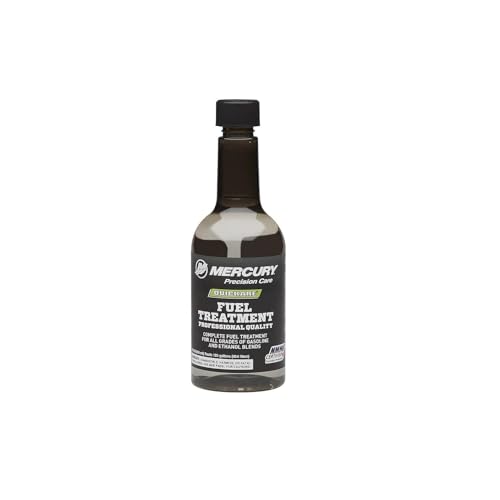
Mercury 8M0047930 Quickare Fuel Treatment Additive, 12 oz

Mercury 8M0047932 Quickstor Fuel Treatment and Stabilizer, 12 oz
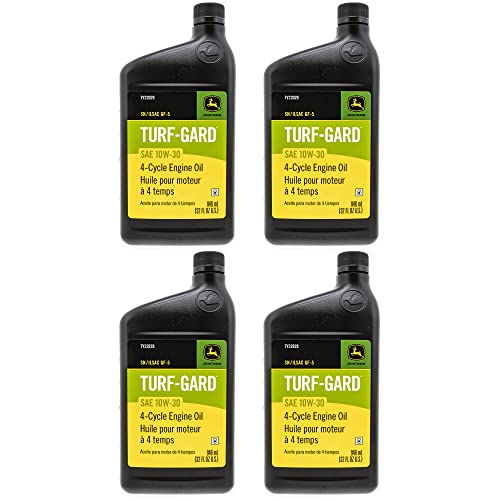
John Deere Genuine Turf-Gard 10W-30 Oil TY22029 (4-Pack)

Quicksilver Quickleen Engine and Fuel System Cleaner

Mechanic in A Bottle Fuel System Cleaner (24 oz, 2-Pack)

Briggs and Stratton 100005 SAE 30 Oil & Fuel Treatment Combo

STA-BIL In-Season Fuel System Treatment 32 oz (6-Pack)
A Breakdown Of The Leading Choices
When a mower is rolling off a Briggs and Stratton engine, going with the factory-recommended oil removes one decision from your weekend. The 100005 SAE 30W formulation is a single-weight oil, which means it flows most consistently in warm-weather cutting conditions above roughly 40 degrees Fahrenheit. For most homeowners who mow from late spring through early fall, that thermal window covers the entire active season.
This pack ships six 18-ounce bottles, so you’re set for multiple oil changes across a couple of seasons without restocking trips. Compared with the John Deere 10W-30 multi-grade options later in this list, this is a simpler product aimed squarely at a specific engine family. Most walk-behind mowers take between 18 and 20 ounces at a change, which makes the six-pack math work cleanly for three years of single-mower service.
Strengths Worth Knowing
- Factory-spec oil for Briggs and Stratton four-stroke engines, removing guesswork at service time.
- Single-weight 30W formulation optimized for typical summer mowing temperatures.
- Six-bottle format covers multiple oil changes across several active seasons.
- Compact 18-ounce bottle fits neatly on a garage shelf without spilling.
Things To Consider
- Not ideal for cold-weather starts since single-weight 30W thickens more than a multi-grade 10W-30.
- You may find this oil specifically optimized for Briggs engines, limiting cross-brand flexibility.
- Storage of six full bottles takes a bit of shelf space over the off-season.
Made For
Owners of Briggs and Stratton-powered walk-behind mowers who mow through warm months and want factory-matched oil on hand.
Look Elsewhere When
You run a John Deere or other brand that calls for 10W-30 multi-grade oil; the John Deere Turf-Gard 2-Quart pack is a closer match.
Modern pump gas with ethanol starts to degrade in roughly 30 days, which is the silent killer of small engines left sitting through winter. STA-BIL’s storage stabilizer claims to keep fuel fresh for up to 24 months, which covers a full off-season plus a buffer year for any equipment that ends up sitting longer than planned. The 4-ounce bottles are sized to treat roughly 10 gallons of fuel each.
The eight-pack format is a thoughtful move for households with several gas-powered tools, since mowers, snow blowers, and leaf blowers all share the same fuel supply problem. Unlike Mercury Quickstor later in this list, STA-BIL Storage is positioned strictly for off-season layups rather than year-round dosing. The treated fuel goes back to standard performance once the equipment is running again, no extra rinse-out step required.
Strong Points
- Up to 24 months of fuel freshness, easily covering a winter layup.
- Engineered to combat the corrosive effects of ethanol-blended pump gas on small-engine fuel systems.
- Compact 4-ounce bottle is easy to measure and store.
- Eight-pack format covers a whole shed of gasoline-powered gear.
Points To Note
- Designed primarily for storage rather than active-season use; for in-season treatment, STA-BIL’s other SKU is a better fit.
- You need to add it before fuel ages, not after varnish has already formed.
- Treated fuel must run through the engine eventually to avoid long-term storage residue.
Right Fit For
Homeowners who store a mower and other small engines for winter and want a single bulk purchase to cover multiple machines.
Skip It When
You mow weekly and need fuel treatment at every fill-up; Mercury Quickare is built for that routine.
John Deere’s Turf-Gard oil is formulated as a 10W-30 multi-grade, which gives it noticeably better cold-weather flow than the single-weight 30W option above. For homeowners in northern climates who fire up the mower in early spring when temperatures still dip into the 40s, that lower-viscosity start can matter. The oil is licensed by John Deere as a genuine OEM product for their lawn and utility equipment.
The two-quart format is generous, roughly 64 fluid ounces of oil per bottle, which covers most walk-behind mower crankcases with room to spare for topping off. Compared with the Briggs and Stratton 100005, this is a broader-temperature product designed for engines that see wider seasonal swings. It’s also specifically labeled for gas engines only, so two-cycle equipment isn’t on the menu.
Advantages To Know
- 10W-30 multi-grade flows well at cold start, helpful for shoulder-season mowing.
- Licensed OEM product, providing a factory-aligned option for John Deere equipment.
- Large 32-ounce bottle reduces the number of containers to manage per oil change.
- Engineered for maximum protection in lawn and utility work applications.
Honest Caveats
- Two-bottle pack may be more oil than a single-mower household needs in one season.
- Engineered for John Deere engines, so cross-brand fit is by compatibility rather than design.
- Higher viscosity spread may be overkill for warm-climate mowers running summer-only.
Best Suited To
John Deere owners in regions with cool spring starts who want OEM-specified multi-grade oil ready to pour.
Consider Something Else When
You only need a few small oil changes over warm months; the Briggs and Stratton 100005 six-pack covers that scenario at lower per-bottle volume.
Quickare sits in the rotation slot rather than the storage slot, so it pairs naturally with mowing routines where you top off the tank every few weeks. The dosing is simple: one ounce per ten gallons of gasoline, which is forgiving for the typical one-or-two-gallon mower tank. At 12 ounces per bottle, you get roughly a year of treatment cycles for a single walk-behind mower.
The product claims to clean existing varnish and gum deposits from fuel lines, tanks, carburetors, and intake valves, which is the kind of maintenance benefit you want on an older mower that’s starting to run rough. Phase separation from ethanol-blended fuel is a real issue in equipment used intermittently, and Quickare’s corrosion-control package is designed to address that. The 12-ounce bottle is small enough to live in a garage shelf caddy.
Features That Help
- Year-round treatment designed to clean existing varnish and gum buildup.
- Simple 1-ounce-per-10-gallons ratio fits typical mower tank sizes.
- Helps control corrosion tied to ethanol-blended fuels.
- Compact 12-ounce bottle stores easily in a garage or shed.
Softer Spots
- Not optimized for multi-season storage; for long layups, Mercury Quickstor is a stronger fit.
- Best results require consistent dosing, which can be easy to forget between mowings.
- Smaller bottle may run out quickly across multiple machines.
Who It Suits Best
Homeowners who mow weekly through the season and want to keep carburetor passages clean on aging equipment.
Not Your Match When
You store the mower for more than a month at a time; STA-BIL Storage is built for that gap.
Quickstor is the seasonal-storage sibling to Quickare, and the dosing shifts to one ounce per five gallons, which is twice the concentration for situations where fuel will sit untouched for months. The stabilizer is designed to hold fuel fresh for up to two years, which is a wider window than STA-BIL Storage claims. It works in both carbureted and fuel-injected gasoline engines, covering older mowers and newer fuel-injected walk-behinds alike.
The product carries NMMA certification under the Gasoline Protection Program, which is a third-party review worth noting for shoppers who care about industry validation. Compared with STA-BIL Storage earlier in this list, the smaller 12-ounce bottle means it’s less of a bulk buy but easier to keep on hand for quick winterization. It also helps keep injectors and carburetors lubricated during downtime, a small detail that adds up over years.
Notable Upsides
- Up to two years of fuel stability for long winter layups.
- Works across carbureted and fuel-injected small engines.
- NMMA certification under the Gasoline Protection Program.
- Helps keep fuel system components lubricated through downtime.
Points To Keep In Mind
- Concentrated 1-ounce-per-5-gallons ratio is double Quickare’s, so dose carefully.
- Single 12-ounce bottle treats a limited number of small tanks.
- More expensive per ounce than STA-BIL Storage bulk packs.
Perfect Match For
Mower owners with mixed carbureted and fuel-injected equipment who want certified storage protection for winter layups.
A Better Fit Elsewhere
You want maximum bulk for the lowest per-bottle cost; STA-BIL Storage 8-Pack delivers that spread.
This is the same John Deere Turf-Gard 10W-30 oil as the 2-quart pack, just doubled up for households running multiple machines or wanting a longer stretch between supply runs. At four quarts totaling 128 fluid ounces, this single purchase covers several years of typical mower maintenance for one walk-behind, or a season’s worth across two machines.
The 10W-30 multi-grade viscosity holds up across shoulder-season mowing in spring and fall, when temperatures vary widely within a week. Compared with the Briggs and Stratton 30W oil in pick 1, this product leans toward broader seasonal use rather than peak-summer-only service. John Deere’s OEM specification means it’s a clean match for Deere equipment and a solid alternative for any small four-stroke engine calling for 10W-30.
Why It Works Well
- Bulk four-quart pack covers multiple oil changes or multiple machines.
- OEM-spec 10W-30 multi-grade oil fits John Deere and other small engines calling for that grade.
- Lower cold-start viscosity supports early spring and late fall mowing.
- Genuine branded product for shoppers who prefer manufacturer-direct supplies.
Less Ideal Details
- Bulk pack may exceed one-season needs for a single small mower.
- Four full bottles require shelf space and weight handling in the garage.
- Multi-grade oil adds a small cost premium versus single-weight options.
Who Will Love This
Households with two or more small four-stroke engines, or anyone who wants to stock up on OEM John Deere oil without reordering.
Another Choice May Suit
You have a single mower in a warm climate; the Briggs and Stratton 100005 six-pack is the more economical warm-season pick.
Quickleen is the heavy cleaner in this lineup, designed to attack carbon deposits that have built up over years of mowing rather than preventing fresh varnish from forming. The product targets carburetors, injectors, intake valves, spark plugs, piston crowns, and cylinder heads, which covers essentially every combustion-side component that sees fuel residue. At one ounce per five gallons, it follows the same dosing pattern as Mercury Quickstor.
This is the right pick for a used mower that has just come into your possession or one that’s been running rough for a season. Unlike STA-BIL Storage or Mercury Quickare, which lean toward prevention, Quickleen is more of a recovery tool. The trade-off is that it’s an occasional-use product rather than a routine additive, so most owners will only reach for it once or twice a year.
The Case For It
- Targets carbon deposits across the entire fuel and combustion system.
- Designed to help reduce engine knocking and piston seize-up on older equipment.
- Compatible with all gasoline grades and ethanol-blend fuels.
- Manufacturer part number 8M0047921, made by the Quicksilver marine-engine brand.
Factors To Consider
- Recovery product rather than daily-use additive, so dosing frequency is lower.
- Commonly reported owner experience suggests a multi-tank cycle may be needed for stubborn deposits.
- Smaller bottle treats limited fuel volume per application.
Built With In Mind
Shed owners reviving a neglected mower or working through rough-running symptoms on an older engine.
Swap It Out When
Your equipment is running fine and you simply want seasonal protection; Mercury Quickare is the gentler routine option.
Mechanic in A Bottle is the only product in this roundup that bridges gas and diesel, which makes it the flexible choice for properties running a diesel compact tractor alongside a gas mower. The synthetic additive formulation claims to clean varnish, shellac, and carbon deposits while also dispersing water in the fuel system, covering several small-engine headaches in one bottle. The 24-ounce size, doubled into a two-pack, totals 48 ounces of working additive.
Compared with Mercury Quickare’s narrower gas-only focus, this product covers more ground in mixed-equipment households. It’s positioned for use in both two-cycle and four-cycle engines, which is uncommon among fuel additives. The catch is that the catch-all positioning can mean the product isn’t specialized for any single fuel issue; it spreads across problems rather than drilling deep on one.
What It Does Well
- Compatible with gas, gas-ethanol blends, diesel, and biodiesel blends.
- Disperses water and removes varnish, shellac, and carbon deposits in one formula.
- Two-pack provides 48 ounces for multi-machine treatment cycles.
- Works across two-cycle and four-cycle engines, expanding equipment compatibility.
A Few Limitations
- Broader positioning means less specialization than single-purpose fuel additives.
- Two-bottle purchase adds shelf-bulk in smaller garages.
- Owner reports of effectiveness vary depending on the specific fuel issue being addressed.
Whose Shelf It Belongs On
Property owners with a mix of gasoline and diesel small engines who want one additive that handles both.
Reach For A Different Pick When
You only run a single gas mower; Mercury Quickare is a more focused everyday option.
This combo pairs two 18-ounce bottles of Briggs and Stratton 100005 SAE 30W oil with a 2-ounce bottle of 3-N-1 Advanced Fuel Treatment, which is enough to dose 10 gallons of gasoline. For someone buying their first round of small-engine maintenance supplies, that single-purchase approach removes the “do I also need a fuel additive?” question. It’s a tidy starter pack for a Briggs-powered walk-behind.
The included fuel treatment is sized for occasional use rather than year-round dosing, so it works as an annual refresher at the start or end of the mowing season. Compared with the larger six-pack of oil in pick 1, this set trades volume for bundled convenience. For owners with more than one mower or extended storage needs, picking the items in larger quantities separately may serve better.
Real Benefits
- Bundles engine oil and fuel treatment in one purchase for new maintenance routines.
- Factory-aligned Briggs and Stratton SAE 30W oil for matching engine specs.
- Fuel treatment treats up to 10 gallons, covering multiple tank top-offs.
- Compact packaging fits in a small garage storage area.
Where It May Fall Short
- Smaller oil quantity than the standalone six-pack option for long-term maintenance.
- Fuel treatment portion is brief; ongoing use will require additional additive.
- Specifically optimized for Briggs engines, limiting flexibility for mixed equipment.
Who Should Grab It
First-time mower owners looking for an all-in-one introduction to basic small-engine care supplies.
Where Another Pick Suits Better
You already own fuel stabilizer and want oil in larger volume; the Briggs and Stratton 6-Pack in pick 1 is the more economical repeat buy.
The in-season STA-BIL formula targets fuel injectors, lines, and pumps, while also addressing water, gum, and varnish removal during active use. At 32 ounces per bottle and six bottles per pack, this is the largest fuel-additive volume in the roundup, designed for high-hour seasonal mowing or commercial-scale use. The treatment is positioned as an in-season product rather than a winter-storage solution, so it complements the STA-BIL Storage option earlier in the list.
The bulk packaging works for landscapers, multi-property homeowners, or anyone running fuel through several mowers over a long cutting season. Compared with Mercury Quickare’s 12-ounce single bottle, this format trades compact convenience for serious volume. Owners commonly report that consistent in-season dosing keeps small engines running cleaner across the season, reducing the kind of mid-summer rough-running symptoms that derail a busy weekend.
Reasons It Performs
- Designed to clean fuel injectors, lines, and pumps during active use.
- Six-pack of 32-ounce bottles covers high-volume seasonal operations.
- Targets water, gum, and varnish before they cause running issues.
- Industry-positioned protection against internal fuel system corrosion.
Things To Weigh Up
- Bulk six-pack requires significant storage space in smaller sheds.
- Not formulated for long-term fuel storage; STA-BIL Storage is the matching seasonal SKU.
- Higher total fluid volume than most residential users will consume in a single season.
Right Fit For
Landscapers, multi-property owners, or mowing enthusiasts with several machines running through high-hour seasons.
Consider Something Else When
You only run one mower occasionally; Mercury Quickare’s smaller 12-ounce bottle matches that workload better.
What To Weigh Before Buying Gas For Lawn Mower
Viscosity Grade Compatibility
The single most important attribute is matching the oil’s viscosity grade (the thickness rating that determines flow at different temperatures, expressed as 30W or 10W-30) to what your engine manufacturer calls for. Most small four-stroke mowers run cleanly on SAE 30W in warm weather, but multi-grade 10W-30 handles shoulder-season temperatures more gracefully. Going outside the spec can affect cold-start behavior and long-term wear, so checking the owner’s manual before buying pays off.
Fuel Storage vs. In-Season Treatment
Stabilizers and fuel cleaners serve different purposes, and confusing them is a common mistake. Storage stabilizers like STA-BIL Storage or Mercury Quickstor hold fuel fresh through months of downtime, while in-season additives like Quickare or the in-season STA-BIL SKU keep the running fuel system clean. Households that mow weekly typically benefit from one of each, applied at different points in the year.
Ethanol-Blended Pump Gas
Most U.S. pump gas contains 10 percent ethanol, which absorbs water and corrodes small-engine fuel system components over time. Additives that target ethanol-related phase separation are particularly relevant for equipment used intermittently, where fuel sits in the tank long enough for moisture to accumulate. Treating fuel at every fill-up is a small habit that prevents much larger repair bills later.
Engine Brand and OEM Specification
Engines from Briggs and Stratton, John Deere, Honda, and others each have specific oil and additive recommendations. OEM-branded oils like the Briggs 100005 or John Deere Turf-Gard lines remove the specification question entirely, which is appealing for newer mower owners. For older equipment or off-brand engines, a high-quality general small-engine oil is usually a safe choice.
What Most Shoppers Overlook In This Category
Where Shoppers Go Wrong
The most common misstep is treating stabilizer and fuel cleaner as interchangeable products, when they actually do different jobs. Another slip is waiting until the mower won’t start in spring to buy a stabilizer, by which point the fuel has already degraded. Measuring matters too: over-treating fuel wastes additive and can affect combustion, while under-treating leaves deposits behind.
When Paying More Pays Off
Higher-tier fuel additives often include water-dispersing and corrosion-control chemistries that basic stabilizers skip, which matters on equipment exposed to humid conditions or infrequent use. Premium OEM-branded engine oils typically include additive packages tuned for specific engine families, which can extend component life. The upgrade generally pays off when equipment sees heavy seasonal use, sits for long stretches, or shows early signs of rough running. For a single lightly-used mower in a dry climate, a basic stabilizer and standard oil is usually enough.
Frequently Asked Questions
How often should I change mower engine oil?
For typical residential mowers, an oil change once per season or every 25 to 50 hours of run time is the standard recommendation. Mowers used commercially or in dusty conditions benefit from more frequent changes.
Can I use car engine oil in my lawn mower?
Many small four-stroke engines accept automotive SAE 30W or 10W-30 oil in a pinch, though OEM small-engine oils include additive packages tailored to mower operating conditions. Two-cycle mower engines need oil mixed into the fuel, so the rules differ.
Do I need fuel stabilizer if I use the mower weekly?
For weekly use, in-season fuel treatments help keep the fuel system clean, but a dedicated storage stabilizer is most relevant during months of downtime. Owners running equipment through winter may still benefit from treating each tank.
What’s the difference between SAE 30W and 10W-30 mower oil?
SAE 30W is a single-weight oil that flows consistently in warm weather, while 10W-30 is a multi-grade that flows more easily at lower temperatures. Multi-grade is generally a better fit for shoulder-season mowing.
How long does stabilized fuel last in a mower?
Most quality fuel stabilizers claim to keep fuel fresh for 12 to 24 months, depending on the product and storage conditions. Real-world results vary with humidity, temperature, and how full the tank was at treatment.
Wrap Up
The right gas and oil combination depends on whether you’re maintaining an active mower or putting one away for winter. For most homeowners, a factory-matched oil plus a year-round fuel treatment covers the routine, with a storage stabilizer added at season’s end. Pick what fits your mower’s specs and your climate, and the spring startup gets a lot less stressful.