Most homeowners I know dread the moment the grass gets tall and the mower groans through it. The right engine turns that chore into a quick sweep, while the wrong one leaves you fighting thick patches. I pulled together eight options that cover everything from cordless walk-behinds to gas-powered workhorses built for real compaction duty.
The Essentials At A Glance

Greenworks 80V 21in Push Lawn Mower, 4.0 Ah Battery and Charger

Cordless Lawn Mower, 17 in Walk Behind Lawn Mower

EGO POWER+ LM2135SP Self-Propelled Mower Bundle

SuperHandy 7HP Plate Compactor, 4200 lb Force
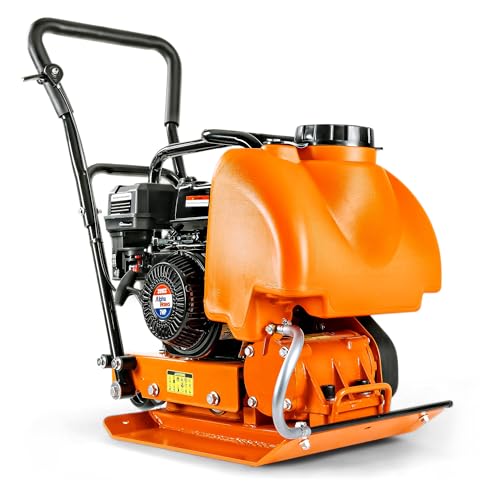
SuperHandy Plate Compactor with 7HP Gas Engine

Honda HRX-BE 21-Inch Battery Mower (HRX217YXBEXA6)

Honda HRX-BV 21-Inch Battery Mower (HRX217YXBVKA4)

Makita DLM330Z 18V Li-ion LXT Lawnmower
The Picks, Examined More Closely
The Greenworks 80V platform has matured into a genuinely capable substitute for small gas mowers, and this 21-inch deck version carries the strongest build of the line. I like the steel deck for the way it shrugs off the occasional hidden rock, and the brushless motor (a design that uses electronic switching instead of carbon brushes, which means less friction and longer life) keeps the cutting blade spinning at a steady pace even when the grass clumps. The single-lever height adjust is a small thing that becomes a big thing when you are juggling between thick spring growth and a lighter summer trim.
Where it really earns its place is in a typical quarter-acre suburban yard. Run-time lands around 60 minutes per 4.0Ah battery charge, and the rapid charger tops the pack back up in roughly an hour. Owners commonly report that the 80V battery feels closer to gas than 40V systems do, especially in tall fescue. Push-only operation keeps the weight friendly, but you do feel every slope.
What Works In Its Favor
- Brushless motor delivers steady torque, so the blade does not bog down in damp grass
- 21-inch steel deck covers ground fast, cutting real mowing time on open lawns
- Rapid charger returns the battery to full in roughly an hour, useful between weekend cuts
- Single-lever height adjust makes switching cut lengths a one-hand job
Worth Noting
- Push-only drive, so slopes and large yards will wear you out faster than a self-propelled unit
- Run-time drops noticeably in dense or wet grass, leaving you short on bigger lots
- The steel deck adds weight that may be a hassle if you need to lift it for stairs or storage
Key Specs
Who It Suits Best
Homeowners with a flat to gently sloped quarter-acre lawn who want gas-like cutting without the noise, fumes, or oil changes.
Where Another Pick Suits Better
Anyone with a larger or hillier yard should look at the EGO POWER+ LM2135SP, whose self-propelled drive takes the strain off your arms.
Casince built this 17-inch mower for the kind of homeowner who wants something lighter on the wallet without giving up the basics. The dual 20V 4.0Ah battery setup is the headline feature here, because it lets one pack keep cutting while the other recharges, and the deck size is narrow enough to slip through a garden gate but wide enough to finish a small lawn in a reasonable pass count. Six height settings, from roughly 1 to 3 inches, give you real flexibility across seasons.
In a small yard under 5,000 square feet, this mower behaves like a tidier alternative to the Greenworks 80V I just covered, trading some cutting width for a friendlier price. Expect around 40 minutes of total runtime from the two batteries, which is plenty for a city lot. The trade-off shows up in thicker turf, where the smaller 17-inch deck means more passes.
A Favorable Mix
- Dual-battery system extends run-time and keeps a backup ready to swap in
- Six height settings cover most grass types and seasonal preferences
- 17-inch deck fits through narrow gates and tight side yards
- Lightweight frame is easy to maneuver around flower beds
Honest Caveats
- Smaller deck means more passes on anything over a small lot
- Plastic deck construction feels less rugged than the Greenworks 80V steel build
Made For
Beginners and budget-conscious homeowners with small, flat yards who want a quiet, no-fuss cordless mower.
Not Your Match When
Anyone mowing a half-acre or more should consider the Honda HRX-BE 21-Inch Battery Mower, whose wider deck and stronger cutting system handle bigger jobs.
EGO has been pushing hard on the idea that battery can replace gas, and the LM2135SP is the most convincing argument I have seen for that swap. The 56V 7.5Ah battery delivers torque that holds its own against a small gas engine, and the self-propelled rear drive takes the strain off your arms when the lawn gets big or sloped. The Select Cut multi-blade system is the clever part: you swap the lower blade depending on whether you want to mulch, bag, or extend runtime, which is genuinely useful across seasons.
The included extra 5.0Ah battery (which ships separately, worth keeping in mind) means you can keep cutting while the larger pack recharges. Compared with the Greenworks 80V I reviewed first, this one trades push effort for traction, and the wider feature set shows up in the price. Owners commonly report that the self-propel speed feels right for most walking paces, though steep hills still demand attention.
Benefits That Matter
- Self-propelled drive lightens the load on slopes and larger lawns
- Select Cut blade system adapts between mulching, bagging, and extended runtime
- 56V 7.5Ah battery delivers gas-comparable torque without noise or fumes
- Bundle includes an extra 5.0Ah battery for longer total runtime
Things To Consider
- Extra battery ships separately, so your full runtime setup is not ready on day one
- Heavier than push mowers, which makes storage and transport a bit more planning
- Premium feature set comes at a higher price tier than the Greenworks and Casince options
Quick Facts
Best Suited To
Homeowners with half-acre to three-quarter-acre lawns, especially those with slopes who want gas-comparable power without engine maintenance.
Swap It Out When
Shoppers on a tighter budget should look at the Casince 17-Inch Walk Behind, which covers the basics for smaller lots at a lower cost.
This is where the list takes a hard left turn into real gas-powered muscle. The SuperHandy 7HP plate compactor is built for compacting soil, gravel, and paver base, not for cutting grass, and that distinction matters. The 7HP 4-stroke OHV engine (an overhead-valve design that improves airflow and efficiency over older side-valve engines) spins at up to 3,600 RPM and delivers 4,200 pounds of force through the 20-by-15-inch steel plate, which is enough to settle a driveway base or a patio sub-layer properly.
The powder-coated frame handles the rough environment of a construction site, and the compaction depth of up to 12 inches means you can prep a foundation in fewer passes than a rental-grade plate. Compared to the lawn mowers above, this is a different tool entirely, aimed at homeowners building patios or tackling serious landscaping. Maintenance is straightforward: check the oil, mind the fuel mix guidelines, and keep the plate clean of stuck material.
Everyday Perks
- 7HP OHV engine delivers consistent compaction force without bogging down
- 4,200 lb impact force settles gravel and paver base in fewer passes
- Powder-coated steel frame stands up to job-site abuse and weather
- 12-inch compaction depth handles thick base layers in a single session
Softer Spots
- Gas engine means oil checks and fuel management that electric mowers skip
- Heavier than smaller plate models, so transport and storage need planning
Right Fit For
DIYers and homeowners prepping a patio, walkway, or driveway base who need real compaction force without renting professional gear.
Consider Something Else When
Anyone focused purely on lawn cutting should stay with the Greenworks 80V or Honda HRX-BE, since plate compactors are not designed for turf work.
The sibling of the previous SuperHandy adds one feature that genuinely matters for asphalt and paver work: a built-in water tank. Wetting the plate during compaction keeps hot asphalt from sticking and dragging, and it gives you a smoother finish on paver surfaces. The 7HP gas engine and 4,200-pound force are identical to the model I just covered, so the bones of the machine are the same.
What changes is the finishing quality you can achieve. For a homeowner laying a small asphalt patch or installing a brick patio, the water tank is the difference between a job that looks pro and one that looks amateur. Owners commonly report that the water tank holds enough for a moderate patio without refilling. The same maintenance considerations apply: gas engine, oil checks, and clean plate after use.
Where It Excels
- Built-in water tank prevents asphalt from sticking to the plate during compaction
- 4,200 lb force handles both soil-gravel prep and paver finishing
- Same rugged powder-coated frame as the standard SuperHandy model
A Few Limitations
- Water tank adds weight and complexity over the simpler SuperHandy version
- Gas engine upkeep means this is not a grab-and-go tool
- Overkill for purely soil compaction, where the tank-less model suffices
Feature Snapshot
Who Will Love This
Homeowners installing a paver patio or patching an asphalt driveway who want a cleaner finish than a dry plate can deliver.
Reach For A Different Pick When
Anyone only compacting soil or gravel for a shed base should save money on the tank-less SuperHandy 7HP Plate Compactor.
Honda’s HRX line has earned a reputation for build quality, and the HRX-BE battery version carries that DNA into the cordless category. The standout feature is the Versamow system with Clip Director, a 4-in-1 design that lets you mulch, bag, discharge, and shred leaves without swapping any attachments. The 21-inch deck and Honda GCV-class motor platform deliver the torque and sustained RPMs that thick grass demands.
Twin blades handle mulching and bagging cleanly, which matters when you switch modes mid-season. Against the EGO LM2135SP I covered earlier, this Honda leans more toward refinement than raw self-propelled speed, so push operation may feel like a workout on larger lots. The battery platform is the bigger consideration: matching Honda’s specific battery and charger is essential for full performance.
Where It Helps
- Versamow 4-in-1 system with Clip Director eliminates attachment swaps
- Twin blades deliver clean mulching and bagging across grass types
- Honda GCV-class motor platform holds torque in dense turf
- 21-inch deck is wide enough for medium to larger lawns
Points To Note
- Push-only operation makes it tiring on larger or sloped lawns
- Premium price reflects the engineering and feature set
- Requires matching Honda battery and charger for full rated performance
Perfect Match For
Detail-oriented homeowners with medium lawns who want a refined cut, flexible clipping management, and the Honda build reputation.
Skip It When
Anyone with a large or hilly property will find the push operation demanding and should look at the self-propelled Honda HRX-BV instead.
The HRX-BV takes everything I liked about the HRX-BE and adds variable-speed self-propel, which is a meaningful upgrade for anyone with uneven or sloped ground. The same Versamow 4-in-1 system and twin blades carry over, so you do not give up clipping flexibility. The variable-speed control lets you match the drive pace to your walking stride and the terrain, which makes longer mow sessions far less tiring.
Compared to the EGO LM2135SP, this Honda trades the swappable blade system for a smoother self-propel experience and the Versamow clipping versatility. Owners commonly report that the variable-speed control feels intuitive after a few passes. The trade-off is the same Honda ecosystem dependency: matching battery and charger matter for rated performance.
Points In Its Favor
- Variable-speed self-propel reduces fatigue on slopes and longer sessions
- Versamow 4-in-1 system with Clip Director for mulching, bagging, and leaf shredding
- Twin blades deliver clean cuts across different grass conditions
- Honda build quality and motor platform provide steady torque
Trade Offs
- Heavier and pricier than the push-only HRX-BE
- Honda battery ecosystem required for full rated performance
- Variable-speed controls add complexity over a single-speed drive
At A Glance
Built With In Mind
Homeowners with hilly or uneven lawns who want Honda refinement plus the self-propelled assist that makes mowing larger properties manageable.
A Better Fit Elsewhere
Shoppers on a tighter budget should consider the Greenworks 80V, which covers the basics for less money if self-propel is not essential.
Makita built the DLM330Z for tight spaces and the kind of small lawn where a 21-inch deck is overkill. The 330mm cutting width (about 13 inches) and 4,300 RPM motor make this a nimble tool, and the soft-start feature protects the motor and your wrist from the abrupt jerk of a sudden spin-up. The 3-in-1 cutting mode handles mulching, bagging, and side discharge in a single compact deck.
The catch, and it is a real one, is that batteries and charger are not included. If you already own Makita 18V LXT batteries, this is a straightforward add-on that fits your existing system. If you do not, the total cost climbs fast once you add a battery and charger. For tiny urban yards, narrow side passages, and storage closets where a full-size mower simply will not fit, the small footprint earns its keep.
Bright Spots
- Compact 13-inch deck fits narrow gates and tight storage spaces
- Soft-start feature is gentler on the motor and on you
- 3-in-1 cutting mode handles mulching, bagging, and discharge
- Integrates with the existing Makita 18V LXT battery ecosystem
Points To Keep In Mind
- Batteries and charger are not included, so add those costs if you are new to Makita
- Small deck means more passes on anything beyond a postage-stamp lawn
- Lower voltage limits you to lighter cutting conditions
The Right Fit
Makita tool owners with very small lawns or tricky side yards who want a compact cordless mower that slots into their existing battery system.
Look Elsewhere When
Shoppers without existing Makita batteries should consider the Casince 17-Inch Walk Behind, which ships with batteries and a charger ready to go.
What To Weigh Before Choosing A Lawn Engine Setup
Picking the right mower or engine comes down to three honest questions: how much grass you cut, what kind of terrain you cover, and how much fuss you tolerate. Lawn size is the easiest filter. A small city lot under 5,000 square feet handles fine with a 17-inch deck, while half-acre properties benefit from the wider 21-inch decks and longer runtime of larger battery packs. Anything beyond three-quarters of an acre starts pushing toward self-propelled drive or even a riding mower, since push mowers wear you down fast.
Terrain matters more than people expect. Flat lawns let any mower shine, but slopes and uneven ground change the math. Self-propelled drives like the one on the EGO LM2135SP or the Honda HRX-BV take real strain off your arms and let you keep a steady pace. Forgas-powered compaction work, the SuperHandy models bring 7HP OHV engines that handle soil, gravel, and asphalt, but they are a different tool category from mowers entirely.
Maintenance tolerance is the third filter. Battery mowers skip oil changes, fuel mixing, and spark plug swaps, which is a meaningful quality-of-life win for most homeowners. Gas engines demand more attention but deliver consistent torque in dense or wet grass where some cordless platforms struggle. Matching the tool to your willingness to maintain it often decides more than raw specs.
Key Considerations Across These Picks
Mistakes Worth Dodging
Buying the widest deck you can afford sounds smart, but a 21-inch mower in a yard with narrow gates and tight side passages becomes a frustration. Measure your gate widths and storage door openings before you commit, since even a great mower fails if it cannot reach the lawn or fit back in the garage. Another common slip is underestimating battery cost: the Makita DLM330Z ships without batteries, which changes the total picture if you are not already in that ecosystem.
Where The Extra Money Goes
The jump from budget to premium picks mostly funds three things: stronger motors, longer battery runtime, and self-propelled drive. The EGO LM2135SP and Honda HRX-BV cost more because their drive systems reduce fatigue, and their larger battery packs cover more ground per charge. For homeowners with bigger or hillier lawns, that upgrade pays back in time and energy saved. For a flat, small lot, the premium tier is genuinely optional.
Frequently Asked Questions
What makes a lawn mower engine “powerful” for thick grass? Voltage and motor design matter most. Brushless motors (which use electronic switching instead of physical brushes) sustain torque better in dense turf, and higher voltage platforms like 56V or 80V hold blade speed where lower-voltage systems bog down.
How long do battery mower charges actually last? Most cordless mowers in this list run 30 to 60 minutes per charge, depending on grass thickness and deck size. Dual-battery systems like the Casince extend total runtime by letting one pack charge while the other cuts.
Are gas plate compactors worth buying for a home project? For a one-off patio base, rental often makes sense. For ongoing landscaping work or multiple paver projects, owning a 7HP compactor like the SuperHandy models saves repeated rental fees and gives you the tool ready when the weather cooperates.
Can a battery mower really replace a gas mower? For most suburban lawns under an acre, yes. The EGO and Honda battery models match small gas engines in torque while skipping oil changes, fuel mixing, and pull-start effort. Very large or commercial properties still favor gas for runtime reasons.
What maintenance does a cordless mower actually need? Blade sharpening once or twice a season, occasional under-deck cleaning to prevent grass buildup, and battery care (storing at moderate temperatures, not running to absolute zero). That is genuinely the full list for most homeowners.
Wrap Up
The right engine setup depends less on specs and more on the yard you actually have. Small flat lots pair well with the Casince or Makita, mid-size lawns benefit from the Greenworks 80V or Honda HRX-BE, and larger or sloped properties earn their self-propelled drive with the EGO LM2135SP or Honda HRX-BV. For compaction work, the SuperHandy models handle real jobs without the rental counter. Match the tool to the yard, and the chore stops feeling like one.