A mower that sputters, stalls, or refuses to start on the first pull almost always traces back to a gummed-up carburetor. Old fuel leaves varnish on the throttle plate and jets, and that film starves the engine of air and fuel in equal measure. A purpose-built cleaner cuts that residue fast, and the right one matches how often you mow, how much fuel sits in the tank between sessions, and whether you want a spray solvent or a set of physical picks. I put together eight solid options worth a look, from heavy-duty degreasers for the deck down to the micro-jet tools that clear the tiny passages most sprays cannot reach.
Your Options, Compared
Mustowl Heavy Duty Mower Cleaner Degreaser Spray 50ML
Mustowl Heavy Duty Mower Cleaner Degreaser Spray 50ML (2-Pack)

Coeweule Carburetor Cleaning Kit, 13 Lines, 10 Needles, 5 Nylon Brushes
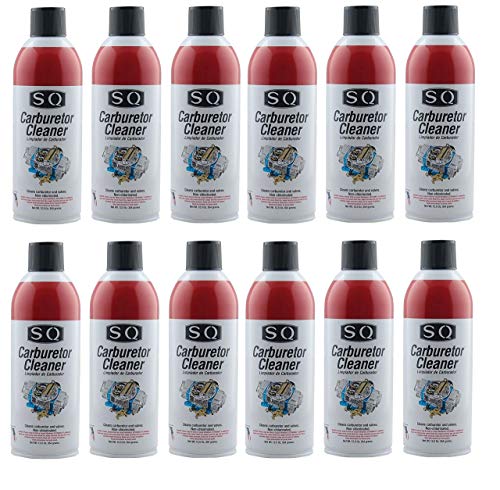
SQ Carburetor Cleaner 12-Pack, 12.5 Oz Bottles
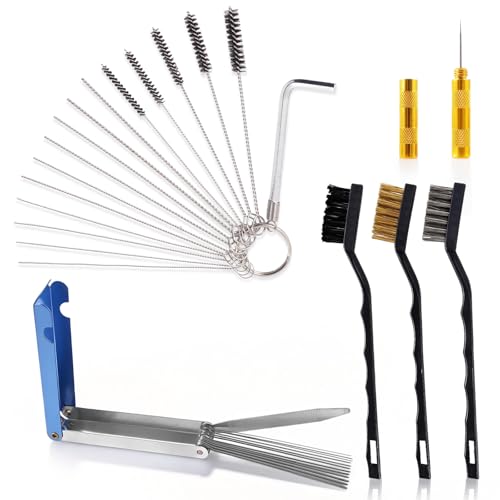
Zesllwid Premium Carburetor Cleaning Kit, Stainless Steel Torch Tip Cleaner

Gumout 800002231 Carb/Choke Carburetor Cleaner Spray 14 Oz (Pack of 6)

Sea Foam Spray Upper Engine Cleaner and Lube SS14, 12 oz (Pack of 2)
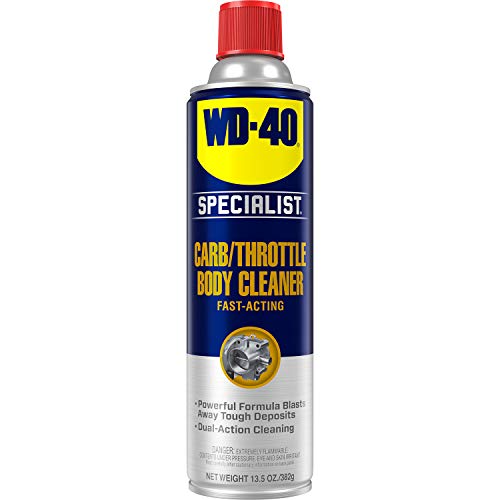
WD-40 Specialist Carb/Throttle Body & Parts Cleaner 13.5 OZ
A Deeper Look At The Lineup
This single 50 mL bottle from Mustowl focuses less on the carb internals and more on what builds up outside the engine: caked grass clippings, oily residue, and the damp grime that sits along the mower deck after a long mow. The targeted nozzle is the highlight, since it reaches into hinge pockets, under the deck lip, and around blade mounts where garden hose spray tends to miss.
For a homeowner with one walk-behind mower and a trimmer or two, the small bottle size is plenty for a season’s worth of post-mow wipe-downs. Owners with bigger equipment or multiple machines may find the volume light and lean toward the two-pack below instead. You may also want a separate spray solvent for the inside of the carburetor, since this one’s job is the exterior.
Everyday Advantages
- Precision nozzle reaches hinge corners and tight deck gaps
- Dissolves grass residue and oily film in one wipe
- Helps reduce moisture-trapping buildup that can lead to surface corrosion during storage
- Compact 50 mL size stores easily on a garage shelf
Trade-Offs Worth Considering
- 50 mL volume runs short for fleet owners or large decks
- Not formulated for internal carburetor jet cleaning
Feature Snapshot
Built With The Home Gardener In Mind
Homeowners with one walk-behind mower who want a quick post-mow cleanup without hauling out a pressure washer will appreciate the targeted spray and small footprint.
Consider A Sibling Pick When
Owners maintaining multiple machines over a long mowing season should look at the Mustowl 50ML 2-Pack instead, since the doubled supply keeps a bottle on hand as the first one runs dry.
The two-pack version of the Mustowl deck cleaner delivers the same targeted spray in a doubled supply. Where the single bottle works for one mower and an occasional trimmer, this bundle suits the homeowner with a riding mower, a push mower, and a string trimmer all sharing the same garage shelf.
Comparing the two-pack to item one, the only real change is volume per dollar. The formula, nozzle, and intended use are identical, so the decision here is purely a math problem. If the first bottle always runs out before the season ends, stepping up to this set removes the mid-summer scramble for a replacement. For internal carburetor work, though, neither this nor its single-bottle sibling is the right tool, and a spray solvent from later in this list will serve better.
Where It Excels
- Two-bottle supply covers a full season for multi-mower households
- Same precision nozzle as the single pack, so reach stays consistent
- Spray-and-wipe routine trims post-mow cleanup time
Possible Compromises To Know
- No internal-carb cleaning power, so a separate solvent is still needed for jet varnish
- Excess bottles can sit on the shelf longer than expected once grass season ends
Best Suited To Multi-Mower Owners
Households running a riding mower alongside a push mower or trimmer will get through both bottles in a normal season and avoid mid-summer stockouts.
Skip It When
Anyone focused on clearing gum from inside the carburetor should reach for the Gumout 800002231 spray instead, which targets internal varnish rather than exterior grass residue.
The Coeweule kit skips solvents entirely and hands you the physical tools for working inside a disassembled carburetor. It includes 13 stainless cleaning lines, 10 precision needles, 5 nylon brushes, and a pointed pick, all sized for the narrow passages no aerosol can fit through. A “jet” in carburetor terms is one of those tiny calibrated holes that meters fuel, and once varnish plugs it, no spray will restore the original flow.
This is a kit for someone who has already pulled the carb off the engine and laid it on the bench. The stainless steel wires handle rust without shedding bristles, and the nylon brushes give a softer pass on brass surfaces that scratch easily. Where it falls short compared to item five below is breadth of diameters, since this set stays inside a tighter size range.
Noteworthy Benefits
- Stainless steel and nylon construction resists rust and bristle loss
- Multiple line and needle diameters cover most small-engine jets
- Pointed pick reaches corners that wires alone cannot clear
- Useful beyond mower carbs, including welding tips and airbrush nozzles
Honest Caveats
- Requires disassembly, since the tools only reach passages after the carb is off the engine
- Does not dissolve varnish, so heavy buildup still benefits from a spray solvent first
- Narrower diameter range than the Zesllwid kit reviewed later
Technical Highlights
Perfect Match For The Bench Restorer
Owners who already pull carbs off for a full teardown and rebuild get the most out of the fine needle selection and pointed pick.
Look Elsewhere When
Someone who wants a broader diameter spread for cars, ATVs, and mowers all in one toolkit should consider the Zesllwid Premium Carburetor Cleaning Kit instead.
SQ’s 12-pack delivers twelve 12.5 oz aerosol cans, which makes sense the moment you stop thinking about a single mower and start thinking about a season’s worth of small engines. The formula is non-chlorinated, leaves no residue, and is pitched for lawn mowers and two-stroke engines, which covers most walk-behinds, leaf blowers, and string trimmers in a typical shed.
Buying twelve cans at once only pays off if you actually go through that volume, and for a small repair shop or a homeowner with a fleet of equipment, the math works. A homeowner with one mower will not use this much. Note that SQ states this product is not available for shipment to several states due to VOC rules, so shoppers in CA, CO, CT, DE, MD, MI, NH, NY, OH, RI, and parts of UT will need to look at a different option like the Gumout spray reviewed below.
Everyday Wins
- Twelve-can supply covers a full busy season without reordering
- Non-chlorinated formula leaves no residue on carb parts
- Marketed specifically for two-stroke engines and lawn mower carbs
- Useful as an engine starter fluid on stubborn small engines
Factors To Consider
- Restricted shipping to CA, CO, CT, DE, MD, MI, NH, NY, OH, RI, and parts of UT
- Aerosol volume is overkill for homeowners with a single mower
Whose Shelf It Belongs On
Small engine repair shops and homeowners maintaining multiple lawn tools benefit most from this volume.
Reach For A Different Pick When
Shoppers in restricted shipping states should consider the Gumout 800002231 spray, which is formulated to meet VOC rules nationwide.
The Zesllwid kit broadens the diameter range covered by a single purchase, which is the main reason it earns the Feature Rich badge here. Inside the case sit 13 stainless steel cleaning wires running from 0.4 mm to 1.6 mm, 10 precision needles, 5 high-density nylon brushes, 3 large brushes with brass-plated, nylon, and stainless variants, plus a sharp pick and a small wrench.
That wide spread covers micro jets on motorcycle carbs and also larger passages on ATV and mower carbs, which is more reach than the Coeweule kit above offers. In my view, the included brass and stainless large brushes are useful for the throttle bore, but go gently on aluminum surfaces to avoid scoring. Like any tool-only kit, it assumes the carb is already off the engine.
What Stands Out
- Wire diameter range from 0.4 mm to 1.6 mm covers both micro and mid-size jets
- Three large brush materials handle brass, nylon-friendly, and stainless jobs
- Pick and wrench included for stubborn deposits and jet removal
- Replaces a scattered collection of individual picks and wires
Less-Strong Areas
- Brass-plated brush can mark softer aluminum surfaces if used aggressively
- Many small parts mean a drop lid is easy to lose in a busy garage
- Still requires disassembly for full access
Quick Facts
Right Fit For The Multi-Vehicle Owner
Garages that service cars, ATVs, and mowers get the most mileage from the broad diameter range and varied brush materials.
Swap It Out When
Someone only servicing a single mower carb with narrow jets can save money with the slimmer Coeweule kit reviewed above.
Gumout has been a familiar name in fuel-system cleaners for years, and the 800002231 spray focuses squarely on the symptoms that push a mower carb past the point of no return. Hard starting, rough idling, stalling, and high exhaust emissions all point to varnish and gum built up inside the carburetor chamber, and this formula is aimed at exactly that film.
The six-pack gives a homeowner enough aerosol to handle multiple tune-ups across several machines or a couple of seasons on one mower. Compared with the SQ 12-pack reviewed above, the Gumout can is sold in smaller bulk but typically ships to all 50 states, which matters if you live somewhere SQ cannot reach. The trade-off is that no spray fully replaces the physical picks for completely blocked jets.
The Upside
- Targets gum and varnish that cause stalling and rough idle
- Works on both the inside of the carb chamber and external surfaces
- Pack of 6 keeps cans on hand for multiple machines or seasons
- Wider US shipping footprint than bulk non-compliant aerosols
Soft Spots
- Aerosol solvent alone cannot fully clear physically blocked jets
- Requires running the engine briefly after spraying to flush residue
Made For Seasonal Tune-Up Routines
Homeowners who do a spring carb spray and choke service each year will find the Gumout spray a familiar and reliable fit.
A Better Fit Elsewhere When
Shoppers needing the physical tools to clear fully blocked jets should pair this spray with the Coeweule or Zesllwid kits reviewed earlier.
Sea Foam SS14 takes a slightly different approach from the carb-only sprays above. It is an upper engine cleaner and lube designed to clean intake valves, upper cylinders, and combustion chambers, while also leaving a light lubricating film behind. For gasoline direct injection engines (GDI), where fuel additives cannot reach the intake valves, spraying through the air intake is often the only practical way to address carbon buildup there.
Application is straightforward: no special tools required, just spray into the air intake, throttle body, or carburetor throat. The trade-off is that Sea Foam is not formulated for diesel engines, so anything in your shed with a diesel powerplant is off-limits. The two-pack gives a sensible backup can for a follow-up treatment months later.
Benefits That Matter
- Cleans upper engine areas that fuel additives cannot reach on GDI engines
- Light lubrication supports smoother running after the cleaning pass
- DIY-friendly application through the air intake or carb throat
- Works on cars, trucks, motorcycles, lawnmowers, and snowblowers
Small Caveats
- Not for diesel engines
- Targets upper-engine deposits more than heavy external carb varnish
Spec Overview
Who Should Grab It
Owners of modern GDI engines or any mower suffering rough idle and hesitation will benefit most from intake-side cleaning.
Another Choice May Suit When
Shoppers focused on heavy exterior varnish and choke deposits will find the Gumout 800002231 spray a more targeted match.
The WD-40 Specialist spray leans on a dual-action system: a solvent formula breaks up baked-on carbon first, then the propellant blast physically pushes the loosened residue out of the way. It is marketed as an all-in-one option for the carburetor, throttle body, and unpainted metal parts, which covers most of the surfaces a small-engine tune-up touches.
Versus the Gumout spray reviewed above, the WD-40 Specialist pitches itself as gentler on sensors. The manufacturer states it will not affect oxygen sensors or catalytic converters upon incidental contact, which is reassuring when overspray drifts near exhaust hardware. For lawn mowers, tractors, weed trimmers, and other gas-powered gear, the broad equipment compatibility makes it a single-can solution for a varied shed.
Good Reasons To Consider
- Dual-action formula breaks up carbon and blasts residue in one step
- Safe for incidental contact with oxygen sensors and catalytic converters
- Works on cars, trucks, tractors, motorcycles, boats, mowers, and trimmers
- Promotes smoother idle and easier startups once varnish is cleared
Practical Considerations
- Single 13.5 oz can runs out fast across multiple machines
- Like other solvent sprays, it cannot punch through a fully blocked jet without physical picks
Whose Garage It Belongs In
Owners running a mix of lawn tractors, tillers, and trimmers alongside a mower benefit from a single spray that covers them all.
Where Another Pick Suits Better
Shops needing bulk aerosol should consider the SQ 12-Pack instead, which delivers more cans per dollar for high-volume cleaning.
What Matters Before Choosing Lawn Mower Carb Cleaners
Solvent Spray vs Physical Tool Kit
The first fork in the road is whether you need a spray that dissolves varnish on contact or a set of wires and needles that physically clear blocked passages. Solvent sprays like the Gumout, Sea Foam, SQ, and WD-40 Specialist options shine when the carb is still bolted to the engine, since you can spray through the air intake or down the throat and let the chemistry do the work. Physical kits like the Coeweule and Zesllwid sets only pay off after you have pulled the carb off and have the jets exposed on a bench. Many owners end up using both: a spray for routine maintenance and a tool kit for the stubborn, fully blocked jets no aerosol can shift.
Engine Type And Fuel Habits
A mower that runs through a tank every few weeks stays relatively clean, while one that sits with half a tank of fuel over winter is a prime candidate for varnish buildup. Gasoline direct injection engines, common in newer riding mowers and small cars, need intake-side cleaning because fuel additives never reach the intake valves, which is exactly where Sea Foam SS14 earns its place. Two-stroke engines, common on older trimmers and some mowers, need a spray that handles oil-mixed residue without leaving film behind, which the SQ and Gumout formulas address.
Volume, Storage, And Shipping
Bulk packs make sense for shops and multi-mower households, while single cans fit the average homeowner. Aerosol cans need a cool, dry storage spot away from heat sources, and flammability matters more than most people remember when a can sits in a hot garage all summer. VOC shipping rules also affect which products can ship to your state, so always check the listing if you live in CA, CO, CT, DE, MD, MI, NH, NY, OH, RI, or parts of UT.
Key Considerations Across These Picks
Traps First Timers Fall Into
The most common mistake is spraying a solvent into a carb that is already physically blocked and expecting miracles. Varnish softens, but a hard plug of debris needs a wire or needle to clear, which is why pairing a spray with the Coeweule or Zesllwid kit covers both bases. Another misstep is ignoring the choke plate and external linkages, since a gummed choke can mimic a fuel delivery problem and send you chasing the wrong fix.
Where The Extra Money Goes
Higher-tier kits and sprays tend to add either broader diameter coverage, gentler sensor-safe formulas, or larger can counts. The WD-40 Specialist justifies its single-can cost with the dual-action system and sensor-safe chemistry, while the Zesllwid kit charges more for the wider jet range and the brass and stainless large brushes. For most homeowners, the upgrade is worth it when you actually service multiple engines, since a single mower rarely justifies a full bench-restore toolkit.
Frequently Asked Questions
How often should I clean my lawn mower carburetor?
A light spray-through once per mowing season is enough for most mowers, while engines that sit with old fuel over winter benefit from a pre-storage treatment and a spring follow-up.
Can a carb cleaner fix a mower that will not start?
A spray can clear light varnish and restore flow, but a fully plugged jet or a cracked float bowl needs disassembly and physical tools like the wires in the Coeweule or Zesllwid kits.
Are these cleaners safe for oxygen sensors and catalytic converters?
The WD-40 Specialist formula is designed to be safe on incidental contact with those components, while other sprays should be used more carefully around modern sensor-equipped engines.
Do I need to remove the carb from the engine to use a spray?
Most sprays work through the air intake or carb throat without removal, though stubborn buildup is much easier to clear with the carb off and a tool kit in hand.
What is the difference between carb cleaner and sea foam style upper engine cleaner?
Carb cleaners target varnish inside the carburetor and throttle body, while Sea Foam style sprays reach intake valves and combustion chambers for a broader upper-engine cleaning pass.
Closing Remarks
The right lawn mower carb cleaner depends on whether you are chasing a hard-start symptom, a rough idle, or a fully blocked jet. For most homeowners, a single aerosol like the WD-40 Specialist or Gumout spray handles seasonal varnish, while the Coeweule or Zesllwid kits earn their keep on the bench during deeper rebuilds. Match the format to the symptom and the engine type in front of you, and a sputtering mower usually comes back to a smooth idle within an afternoon.