Saturdays used to mean sweat, a push mower, and a sore back. That’s still true for plenty of homeowners, but a new wave of remote control lawn mowers is rewriting the routine, and not every model earns its place on a wish list. Slope handling, vision systems, battery range, and boundary-wire setups vary wildly between options at similar prices.
I put seven current models side by side to map out where each one actually shines, and where the trade-offs might bite. Suburban lots, uneven terrain, tight corners, and small city yards all demand different things from a robotic mower, so the goal here is matching the right tool to your turf. No fluff, no hype, just a clear read on which mower fits which kind of yard.
The Shortlist At A Glance

Mowrator S1 4WD 18Ah Remote Control Lawn Mower 21-Inch
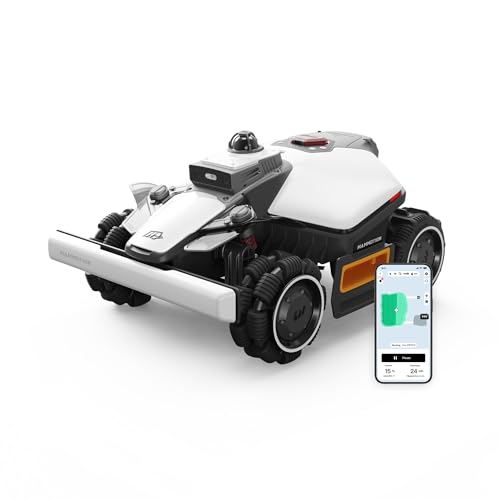
Mammotion LUBA mini 2 AWD 1500H Robot Lawn Mower

LEBOSBO V3 AI Vision Robotic Lawn Mower

Segway Navimow i215 LiDAR Robot Lawn Mower
YARDCARE V100 Robot Lawn Mower HD Vision

YARDCARE M800Plus Robot Lawn Mower GPS & 3D Vision

ANTHBOT M5 Robot Lawn Mower Dual Vision NRTK
Taking A Closer Look At The Options
The Mowrator S1 sits in a class of its own among this lineup. Unlike every other model here, it accepts a handheld remote and works like a piloted mower rather than a fully autonomous bot. That changes who benefits: someone with a steep, uneven lot who wants direct control but hates walking behind a push mower.
A true four-wheel-drive system drives all four wheels for grip, paired with a 21-inch cutting deck, the widest on this list. The 18Ah battery delivers extended runtime for larger properties, and the listed 37° slope rating covers serious inclines that would stop a typical robotic mower dead. For owners of half-acre-plus lots with hills, the trade-off of manual piloting feels worth it.
The Upside
- Four-wheel-drive traction climbs up to 37° slopes that overwhelm lighter 2WD bots.
- The 21-inch deck finishes wide lawns in noticeably fewer passes than 16-inch competitors.
- 18Ah battery packs enough runtime to clear bigger properties on a single charge.
- Optional tow hitch, mulching blade, and snow plow attachments extend use across seasons.
- Handheld remote gives precise, real-time control over routing and obstacle handling.
Things To Consider
- This is a piloted mower, not a fully autonomous one, so you stay engaged during operation.
- The heavy-duty build demands more storage space than compact robotic alternatives.
- Several useful attachments ship as optional add-ons, which adds to the overall cost.
Who It Suits Best
Owners of large, sloped properties who want hands-on control without walking behind a traditional mower will find this the most capable model on the list.
Where Another Pick Suits Better
For hands-off autonomous mowing on a smaller, flatter lot, the LEBOSBO V3 AI Vision Robotic Lawn Mower is a friendlier fit.
The Mammotion LUBA mini 2 AWD is the most sensor-rich autonomous mower in this roundup, and that alone shapes who it serves. Compared with the boundary-wire-free approach of the Segway Navimow i215, this one pairs a 360° LiDAR scanner, which uses laser pulses to build a precise map of surroundings, with dual-camera AI vision for layered awareness.
The “1500H” refers to the model’s 1500-hour annual runtime rating, aimed at heavy seasonal use. It handles up to 0.37 acres and supports 20 distinct mowing zones, useful for yards with front lawn, side strips, and back garden separated by paths. The 80% slope capability (about 38°) edges out most competitors in this list, and the included garage housing protects the unit between sessions.
Good Reasons To Consider
- 360° LiDAR plus dual-camera AI vision gives strong obstacle recognition, day or night.
- 20 multi-zone management handles fragmented yards better than single-zone bots.
- 80% slope rating covers steep terrain that defeats lighter robotic mowers.
- Included garage housing shields the unit from rain and sun between sessions.
Worth Noting
- Sophisticated sensors add cost, making this one of the priciest picks on the list.
- Full multi-zone setup requires meaningful configuration time during initial mapping.
Key Specs
Made For
Mid-size suburban homeowners with multi-section yards, sloped terrain, and a budget that can absorb premium sensor hardware.
Skip It When
Yards under 1,500 square feet with simple layouts get full coverage from the YARDCARE V100 Robot Lawn Mower at a lower price point.
The LEBOSBO V3 brings AI vision to a price tier where most models still rely on basic bump sensors. It targets owners of small, flat lawns who want smarter obstacle handling without paying for premium LiDAR rigs like the Mammotion LUBA mini 2 AWD.
Rated for lawns up to 1,600 square feet, the V3 reads its surroundings through a forward-facing camera, distinguishing grass from non-grass surfaces to stay on course. The included 32-foot magnetic strip creates no-go zones, a low-tech but effective way to block flower beds or pet areas without digging boundary wires.
Everyday Advantages
- AI vision improves obstacle awareness over older bump-and-turn robotic mowers.
- Magnetic strip no-go zones are easier to reposition than buried boundary wire.
- Compact build stores easily in sheds or garages with limited floor space.
Trade Offs
- The 1,600 sq ft coverage ceiling limits it to small yards rather than full suburban lots.
- Camera-based vision may struggle in low light or heavy fog versus LiDAR-equipped units.
- Steep slopes aren’t this model’s strength; flat terrain suits it best.
Right Fit For
Owners of small, relatively flat urban or suburban lawns who want smarter obstacle handling at a friendly entry price.
Consider Something Else When
For larger or sloped properties, the YARDCARE M800Plus Robot Lawn Mower covers more ground and adds GPS precision.
The Segway Navimow i215 takes a different approach than most wire-free mowers. It uses solid-state LiDAR, a sensor with no spinning parts, paired with onboard vision for what’s called dual fusion navigation. No satellite signal needed, which is a real edge under tree cover or beside tall fences.
It’s also the quietest model on this list at 59 dB(A), roughly the level of a normal conversation. For homes with close neighbors, early-morning mowing windows, or noise-sensitive households, that rating alone can be the deciding factor. Off-road wheels handle 45% slopes (about 24°), and wire-free auto-mapping means setup skips the digging step entirely.
Real-World Strengths
- Solid-state LiDAR plus vision delivers reliable navigation without satellite dependency.
- 59 dB(A) operation stays polite enough for early-morning or evening schedules.
- Wire-free auto mapping shortens setup versus buried boundary cables.
- Off-road wheels grip 45% slopes better than standard small-wheeled bots.
Points To Note
- Coverage tops out around 0.37 acres, smaller than several premium competitors.
- Solid-state LiDAR handles most conditions well but may need a clean lens in dusty yards.
Key Specs
Best Suited To
Homeowners with smaller lots, tree cover, or close neighbors who need quiet, wire-free operation that doesn’t rely on satellite signals.
A Better Fit Elsewhere
For substantially larger or steeper properties, the Mowrator S1 4WD 18Ah Remote Control Lawn Mower brings true four-wheel-drive and a wider 21-inch deck.
The YARDCARE V100 is purpose-built for tight spaces. Where the Mammotion LUBA mini 2 AWD targets complex multi-zone layouts, this one keeps things simple: a single HD camera, a compact body, and a 1,600 square foot ceiling that maps perfectly to city lots and townhouse strips.
That HD vision system pairs with a bumper sensor for layered awareness. The mower distinguishes grass from non-grass surfaces, recognizes obstacles, and adjusts its path after contact when something falls into its blind spot. Setup stays low-fuss, and the small footprint tucks into sheds without rearranging storage.
Useful Strengths
- HD camera detects up to 150 obstacle types, reducing mid-run stops.
- Compact dimensions suit narrow side-yard gates and small storage sheds.
- Bumper sensor plus visual sensor adds redundancy when lighting shifts.
Honest Caveats
- The 1,600 sq ft limit rules out anything beyond a small city lawn.
- Camera-only navigation can struggle in heavy shade or after dark without supplemental lighting.
Who Should Grab It
Townhouse and small-lot homeowners who want a hands-off robot that doesn’t dominate the garage or back patio.
Look Elsewhere When
Lots pushing past 1,600 square feet benefit more from the YARDCARE M800Plus Robot Lawn Mower with its GPS and 3D vision upgrade.
The YARDCARE M800Plus slots in as the larger sibling to the V100. It swaps HD camera-only navigation for a hybrid GPS and 3D vision setup, which builds a richer spatial picture than single-sensor models in this price bracket.
Rated for lawns up to 8,611 square feet, it covers properties the smaller YARDCARE V100 cannot. Bow-shaped mowing patterns cut more evenly across large rectangular yards, and the included 32.8-foot magnetic stripe lets owners block flower beds without digging boundary wire. App control and auto-charging round out a sensible mid-tier package.
Standout Benefits
- GPS plus 3D vision handles open lawns and partly shaded yards more reliably than single-sensor bots.
- Bow-shaped mowing improves finish quality on rectangular lawns.
- Auto-charging keeps the unit running without manual dock trips.
- Magnetic no-go stripe installs in minutes without digging.
Less Ideal Details
- If grass exceeds 2.6 inches, a manual pre-cut is recommended before the first run.
- GPS-guided systems can drift under heavy tree canopy in narrow side yards.
Key Specs
Perfect Match For
Suburban homeowners with mid-to-large lawns who want GPS accuracy and 3D vision without stepping up to premium pricing.
Not Your Match When
Yards with heavy tree cover or complex multi-zone layouts are better served by the Mammotion LUBA mini 2 AWD’s LiDAR-plus-vision system.
The ANTHBOT M5 closes out the list with the most ambitious positioning technology here. NRTK, or Network Real-Time Kinematic, is a satellite correction method that refines GPS accuracy down to centimeter level rather than the meter-level precision most standalone GPS bots deliver.
Pair that with a dual-vision system and adaptive cruise control, and the M5 aims to navigate complex lawn layouts without perimeter wire. It’s rated for about 1/8 acre, supports multi-zone mapping, and handles 45% slopes (about 24°). The included garage housing keeps the unit sheltered between sessions.
Reasons It Performs
- Full-band NRTK delivers centimeter-level positioning for precise mowing paths.
- Dual-vision cameras recognize obstacles and grass boundaries in varied conditions.
- Multi-zone mapping supports several disconnected lawn sections.
- Included garage protects the unit between mowing cycles.
Factors To Consider
- NRTK correction signals depend on regional network availability, which can vary by location.
- Feature-heavy configuration takes longer during initial setup than simpler camera-only bots.
Built With In Mind
Tech-forward homeowners managing multi-zone yards up to roughly 1/8 acre who want centimeter accuracy and don’t mind a more involved setup.
Reach For A Different Pick When
Homeowners wanting a quieter, simpler wire-free setup should look at the Segway Navimow i215 LiDAR Robot Lawn Mower.
What Matters Most Before Choosing a Remote Control Lawn Mower
Yard Size and Zone Complexity
Coverage ratings range from about 1,600 square feet on compact units like the LEBOSBO V3 up to roughly 8,611 square feet on the YARDCARE M800Plus. Match the mower’s rated coverage to your actual lawn, not your dream lawn, because under-rated mowers simply run out of battery mid-pass.
Multi-zone management matters if your yard has front, side, and back sections separated by paths or fences. The Mammotion LUBA mini 2 AWD supports 20 zones, while simpler units assume one continuous area.
Slope and Terrain
Slope ratings vary widely, from gentle grades on small bots to 37° on the Mowrator S1 4WD. Robotic mowers with two-wheel drive lose traction above roughly 20°, so steep lots benefit from AWD or 4WD systems or models like the Segway Navimow i215 with off-road wheels.
Uneven terrain with ruts or roots puts more stress on small-diameter wheels and lighter chassis, so heavier-duty builds handle abuse better.
Navigation Technology
Three main approaches dominate: camera vision, LiDAR (laser-based mapping), and GPS with NRTK correction. Camera-only models cost less but struggle in low light. LiDAR works day or night but adds cost, and NRTK systems like the ANTHBOT M5 deliver centimeter accuracy where satellite coverage is strong.
Boundary setup matters too: buried wire is permanent, while magnetic stripes and virtual mapping can shift with the seasons.
Noise, Storage, and Maintenance
Quieter models like the 59 dB(A) Segway Navimow i215 suit noise-sensitive neighborhoods. Storage footprint varies; compact units fit sheds, while heavy-duty piloted mowers demand garage space. Blade cleaning, battery storage in winter, and occasional sensor lens wipes are practical realities across the category.
Smart Choices Across These Picks
Common Shopping Slip Ups
A frequent mistake is picking a mower by coverage rating alone. A 1,600 square foot bot can technically mow 1,500 square feet, but it will run flat before finishing if the lawn has narrow passages that force repeated turns.
Another trap is ignoring boundary setup. Buried wire costs real labor if you ever redesign the lawn, and not every model supports virtual mapping or magnetic strips. Check how a mower handles no-go zones before committing.
What Separates Premium From Basic
Higher-tier models earn their price with sensor redundancy, where multiple navigation systems back each other up, plus stronger slope handling and multi-zone management. The Mammotion LUBA mini 2 AWD layers LiDAR and AI vision so the unit still navigates if one sensor struggles.
Premium picks also tend to ship with garage housings, auto-charging, and longer battery cycles, which reduce hands-on maintenance over a season. For yards over half an acre with slopes or fragmented layouts, that upgrade pays off in fewer interruptions and cleaner cuts.
Frequently Asked Questions
How do remote control lawn mowers handle rain?
Most robotic mowers in this category detect wet conditions and either return to the dock or pause their schedule. Premium models with rain sensors save the lawn from clumping and protect the blade deck from muddy residue.
For piloted units like the Mowrator S1, weather handling depends on the operator. Mowing wet grass usually produces uneven cuts, so most owners postpone sessions after heavy rain regardless of mower type.
Do these mowers work without perimeter wire?
Several models on this list, including the Segway Navimow i215 and the ANTHBOT M5, use virtual mapping or LiDAR instead of buried boundary wire. Wire-free setup saves installation time and lets owners redesign lawn zones more easily.
Units that do rely on physical boundaries often accept magnetic stripes instead, which lay on top of the grass and can be repositioned by hand.
How long do the batteries last per charge?
Battery life varies by model, slope, and grass thickness. Compact bots covering 1,600 square feet typically handle the full lawn on one charge, while larger units like the YARDCARE M800Plus may return mid-session to dock and resume automatically.
Expect runtime to drop in tall or wet grass, since denser material demands more cutting effort from the blade motor.
Can these mowers handle slopes and uneven ground?
Slope ratings range from gentle on camera-only bots to 37° on the piloted Mowrator S1. Two-wheel-drive units typically lose traction above 20°, while AWD and 4WD systems stay planted on steeper grades.
Rough terrain with ruts or roots puts extra stress on small wheels, so models with off-road tires or heavier chassis perform better in real-world conditions than their paper specs suggest.
Are remote control lawn mowers safe around pets and kids?
Modern robotic mowers include lift sensors, tilt sensors, and blade-stop mechanisms that activate quickly when the unit is picked up or tipped. Models with AI vision or LiDAR detect moving obstacles earlier than basic bump sensors, giving pets and wildlife more clearance time.
That said, no autonomous mower replaces supervision around small children or curious pets, especially during initial setup runs when the unit is learning the lawn layout.
The Takeaway
Matching a remote control lawn mower to your yard comes down to honest sizing: lot area, slope, and how much hands-on time you actually want. Compact units like the LEBOSBO V3 and YARDCARE V100 shine on small, flat lawns, while the Mammotion LUBA mini 2 AWD and Mowrator S1 step up for larger or more demanding terrain. Take a quick walk of your property before deciding, then pick the mower whose strengths line up with the ground you’ll actually mow.