A dead battery turns a Saturday mow into a guessing game. The right replacement keeps your Toro zero turn firing on the first key turn, even after a winter of sitting in the shed. I pulled together ten solid options that match common Toro U1 group specs, so you can get back to cutting grass without the guesswork.
The Picks In Brief

WEIZE Lawn Garden AGM Battery 12V 300CCA BCI Group U1

WEIZE Lawn Garden AGM Battery 12V 200CCA BCI Group U1

MARXON U1 Riding Lawn Mower Battery 12V 330CCA

Forgetyo U1 Lithium LiFePO4 Battery 12V 16Ah 720CCA

Mizoneparts 12V 2Pin Battery Charger for Toro 22 inch Mowers

WEIZE Lawn Garden AGM Battery 12V 350CCA BCI Group U1

UPLUS U1 Riding Lawn Mower Battery 12V 330CCA Maintenance Free

Autocessking U1-320CCA Rechargeable SLA Starting Battery

Briggs & Stratton 7600188YP Sealed Battery Kit
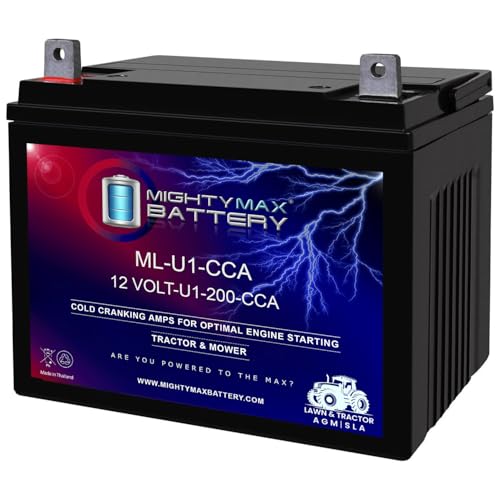
Mighty Max ML-U1 12V 200CCA Battery for Troy-Bilt 361106
Inside Each Recommended Option
The 300CCA WEIZE sits right in the middle of the U1 group, which is where most residential Toro zero turns land. For a homeowner who mows once a week through spring and summer, the cranking output handles cool dawn starts without straining.
AGM construction means the acid is held in fiberglass mats, so you can mount it at slight angles inside the battery tray without worrying about spills. Compared to the 200CCA WEIZE later in this list, you get noticeably stronger cold starts for only a small jump in weight.
Strong Points
- 300CCA gives reliable cold-morning starts for typical residential decks
- AGM sealed design resists vibration on uneven Toro zero turn frames
- Standard U1 footprint matches most factory battery trays in the Toro line
- Lower self-discharge than flooded lead-acid when the mower sits between cuts
Worth Noting
- Heavier than lithium alternatives at roughly 18 to 19 pounds
- Cranking output is modest for very large twin-cylinder engines
Key Specs
Who It Suits Best
Homeowners with a standard Toro zero turn mowing a third-of-an-acre lot on a weekly schedule.
Where Another Pick Suits Better
Riders in freezing northern climates who push their mowers harder may want the 350CCA WEIZE for stronger cold-weather cranking.
Dropping to 200CCA cuts a noticeable amount from the price, which is why this AGM still earns a place on the list. For a smaller yard where the mower sees gentle weekend duty, the lower output is rarely the weak link.
The trade-off shows up the moment temperatures dip below freezing or you ask the engine to crank longer than usual. In most mild climates, though, it does the job.
Key Advantages
- Lower price point suits casual users
- Same U1 footprint as the 300CCA sibling for easy drop-in
- AGM sealed build avoids the acid-checking chores of flooded batteries
Honest Caveats
- 200CCA struggles in sub-freezing starts or with engines that need extra cranking time
- Less reserve for accessory loads if your mower has lights or electric PTO clutches
Made For
Small-yard homeowners in temperate climates who mow every week or two during the season.
Skip It When
Cold-climate riders or owners of larger twin-cylinder decks should reach for the 350CCA WEIZE or the Forgetyo lithium instead.
The MARXON lands at 330CCA inside the standard U1 shell, and the brand pitches it for a wide mix of garden tractor and zero turn models. For owners running multiple mower brands on a property, that cross-compatibility list is the real selling point.
Polarity matches the factory layout on most Toro zero turns, with positive on the left and negative on the right. The dimensions stay compact enough that it slides into common battery trays without spacers.
The Case For It
- 330CCA balances daily mowing with occasional heavier loads
- Broad fitment covers John Deere, Cub Cadet, Toro, Husqvarna and more
- Compact footprint fits factory trays in most residential zero turns
Points To Keep In Mind
- Lead-acid weight adds up compared to the lithium option from Forgetyo
- Owners commonly report typical AGM lifespan of a few seasons under hard use
Best Suited To
Shoppers with a mixed mower fleet or anyone uncertain about exact brand fitment who wants one safe replacement choice.
Not Your Match When
Riders chasing the lightest possible battery should look at the Forgetyo LiFePO4 unit later in this roundup.
Lithium changes the math on a riding mower battery, and this Forgetyo unit is the standout on the list. LiFePO4 chemistry, which is lithium iron phosphate, runs lighter, holds voltage steadier, and cranks harder than the equivalent lead-acid group.
At roughly 5 pounds, it’s about a third of the weight of the AGM batteries. For anyone who wrestles their battery out for off-season storage, that difference is the whole point of upgrading.
Practical Pluses
- 720CCA peak output delivers confident starts even on cold mornings
- About 5 pounds makes seasonal swaps far easier than AGM
- Flat voltage curve keeps starter speed consistent as the battery drains
- Longer cycle life than SLA replacements in typical seasonal use
Some Limits To Know
- Higher upfront cost than every AGM option on this list
- Requires a lithium-compatible charger if you top off during storage
Key Specs
Who Will Love This
Riders who haul their mower batteries inside for winter storage or hate lifting heavy lead-acid bricks.
Consider Something Else When
Casual users on a tight budget will get more value from the 300CCA WEIZE AGM earlier in this list.
This pick breaks the pattern on purpose. Instead of a battery, it’s the charger that fits certain 22-inch Toro push mowers, the models with the integrated 2-pin connector rather than standard posts.
If your Toro is one of the listed 22-inch decks, a normal U1 battery swap is not what you need. This replacement charger restores a dead pack without forcing you into a dealership.
Reasons It Performs
- Direct fit for a long list of Toro 22-inch mower model numbers
- 2-pin connector matches factory wiring without splicing
- Compact unit stores easily on a shelf in the garage
Where It Is Less Suited
- Not a battery, so it only helps owners with the integrated battery system
- Specific to certain Toro 22-inch models; zero turn owners should skip
Perfect Match For
Toro 22-inch push mower owners whose built-in battery no longer holds a charge and want a direct factory-style replacement.
Look Elsewhere When
Zero turn riders with a U1 battery tray should turn back to the WEIZE or MARXON picks earlier in this list.
The 350CCA WEIZE sits at the top of the AGM cranking range in this roundup. For larger twin-cylinder Toro zero turns or riders in cold climates, the extra amps make a real difference on the first turn of the key.
You still get the same U1 dimensions and polarity as the lower-rated siblings, so installation is identical. The honest trade-off is roughly 3 pounds of extra weight compared to the 200CCA version.
Points In Its Favor
- 350CCA is the highest AGM output in this U1 group
- Strong fit for sub-freezing mornings and bigger twin-cylinder decks
- Same dimensions and polarity as the 200 and 300CCA WEIZE batteries
Small Caveats
- Heavier than the lower-rated siblings, which matters during seasonal swaps
- Overkill for small single-cylinder engines in mild climates
Feature Snapshot
Who Should Grab It
Riders in cold northern regions and anyone with a larger twin-cylinder Toro zero turn engine.
A Better Fit Elsewhere
Owners chasing the lightest possible battery will be happier with the Forgetyo LiFePO4 unit from earlier in the list.
UPLUS pushes the maintenance-free angle hard with this 330CCA AGM, and for many owners that is the deciding factor. No fluid to top off, no acid spills, just install and mow.
The dimensions land right in U1 territory and the brand lists a broad fitment across Toro, John Deere, Cub Cadet, Husqvarna, and others. For a rider who never wants to think about the battery again, this fits the brief.
The Value In It
- Maintenance-free sealed design eliminates fluid checks
- 330CCA suits typical residential Toro zero turn engines
- Pure-lead internal chemistry aims for longer shelf life
Trade Offs
- Standard AGM weight; not the lightest option in this roundup
- Higher price than budget AGM picks with similar CCA
Quick Facts
The Right Fit
Homeowners who want a sealed, install-and-forget battery without any periodic upkeep.
Swap It Out When
Riders trying to drop battery weight should choose the Forgetyo LiFePO4 unit from earlier in the article.
Autocessking lands in the middle of the AGM pack at 320CCA, and the SLA, or sealed lead-acid, construction keeps things simple. For the average yard with regular weekly mowing, the rating is comfortably above the floor without stepping into premium pricing territory.
The terminal layout matches the factory orientation on most Toro zero turns, so wiring goes back exactly as it came off the old battery.
Well-Handled Touches
- 320CCA covers typical residential mowing without strain
- Sealed SLA build avoids the mess of older flooded batteries
- Compact size fits stock U1 trays on common Toro decks
Less Ideal Details
- CCA sits between cheaper 200CCA and higher 350CCA options, with no standout advantage
- Lead-acid weight remains a factor for riders who remove the battery seasonally
Built With In Mind
Average-yard homeowners who want a reliable middle-of-the-road AGM without chasing the highest CCA rating.
Another Choice May Suit
Riders in cold climates should reach for the 350CCA WEIZE for stronger winter cranking.
Briggs & Stratton is one of the engine makers that powers many Toro zero turns, which is why this factory sealed battery kit lands on the list. For owners who want an OEM replacement engineered to factory tolerances, it’s a sensible pick.
The sealed design eliminates watering, and the kit format arrives ready to install. Pricing tends to track higher than third-party AGM equivalents, but the fit and finish match what came out of the machine originally.
Bright Spots
- Factory-branded replacement designed to fit Briggs-powered Toro decks
- Sealed kit eliminates the maintenance of flooded batteries
- Compatible with several Briggs engine models used in Toro zero turns
Factors To Consider
- Premium pricing compared to aftermarket AGM options
- Limited CCA details in the source make cross-shopping harder
Whose Shelf It Belongs On
Owners who want an OEM battery built for their Briggs-powered Toro and don’t mind paying extra for that fit.
Reach For A Different Pick When
Shoppers watching their wallet will find more cranking amps per dollar in the WEIZE 350CCA option.
Mighty Max closes the list with a model-specific replacement, the ML-U1 tuned for the Troy-Bilt 361106 lawn tractor. For someone who owns that exact machine, the fit is direct and the price is modest.
The 200CCA rating is gentle, which fits a smaller engine and lighter mowing duty. If you also run a Toro zero turn, the same case dimensions are unlikely to match, so keep this pick in its lane.
Good Reasons To Consider
- Direct replacement for Troy-Bilt 361106 owners
- Compact SLA build drops in without modification
- Modest price suits a tractor that sees light seasonal use
Where It May Fall Short
- Not the right fit for most Toro zero turn models
- 200CCA is light for cold-weather starts or bigger engines
Right Fit For
Troy-Bilt 361106 owners who need a like-for-like battery swap on a smaller lawn tractor.
A Better Fit Elsewhere
Toro zero turn owners should pick one of the WEIZE or MARXON AGM batteries covered earlier in the article.
What To Weigh Before Choosing a Toro Zero Turn Battery
Match the Group Size Before Anything Else
The U1 battery group, which is a standardized case size set by the Battery Council International, is what most Toro zero turns use. Inside that group, length, width, and height still vary slightly between models, so measure the tray or check the owner manual before ordering. A battery that is even a half-inch too tall can pinch the hood or tray bracket, and a too-short unit slides around on rough ground.
Cranking Amps vs Climate
Cold Cranking Amps, abbreviated CCA, measure how much current a battery can deliver at 0 degrees Fahrenheit for 30 seconds while staying above a minimum voltage. The higher the CCA, the easier first starts become on frosty mornings. Riders in the southern states can comfortably run a 200 to 300CCA unit, while anyone north of the snow line should look at 330CCA or higher. Going higher than your engine needs simply costs more without buying you anything.
AGM, Flooded, and Lithium Trade-Offs
AGM, or absorbed glass mat, batteries hold the electrolyte in fiberglass so they cannot spill and need no watering. Flooded lead-acid is cheaper but requires periodic fluid checks. Lithium LiFePO4 costs the most up front but weighs roughly a third as much and lasts longer in seasonal use. Each works, but the maintenance and weight difference shape long-term ownership far more than the spec sheet suggests.
Terminal Polarity and Cable Reach
Most Toro zero turns ship with positive on the left and negative on the right when you face the battery, but not every aftermarket replacement follows that layout. Reversed polarity can leave the cables short or crossed, which is more than an inconvenience. It is worth a quick check before the old battery comes out.
Key Considerations Across These Picks
Pitfalls Shoppers Hit
A common slip is buying a battery with the right group size but the wrong CCA for the engine, then wondering why cranking feels weak. Measure the tray, confirm polarity, and match cranking amps to your climate before clicking through. Another trap is treating lithium like a drop-in upgrade without checking that the charging system is lithium-compatible; some older regulators push voltages that shorten LiFePO4 life.
Where The Extra Money Goes
Higher CCA ratings, sealed AGM construction, and lithium chemistry all add cost because they require more material or different internal design. The upgrade pays off when you actually use the benefit: cold mornings for high CCA, no maintenance for AGM, and easier seasonal swaps for lithium. For a small yard in a mild climate, a budget AGM is often the smarter move than chasing the top-tier option.