Scalping a lawn means mowing it short on purpose, usually in late winter or early spring, to shake off dead grass and let sunlight reach the soil. The right mower makes that low cut clean instead of ragged, and it keeps working through regular weekly cuts too. I put together this list of eight walk-behind mowers that handle scalping passes without tearing up the turf, from compact corded models to battery-powered self-propelled units.
The Lineup, Simplified
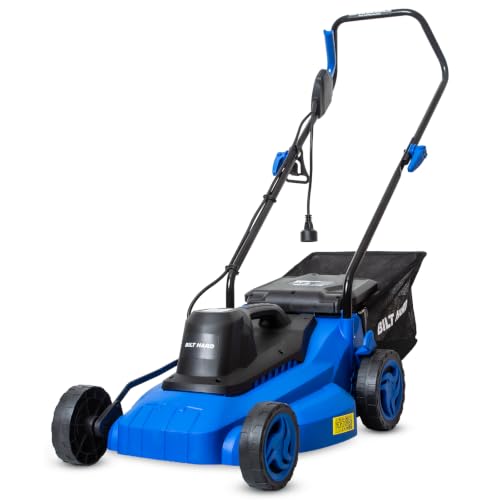
BILT HARD 15-Inch Corded Electric Lawn Mower

MZK 20V 13-Inch Electric Lawn Mower

Casince 17-Inch Cordless Walk-Behind Lawn Mower

Greenworks 80V 21-Inch Self-Propelled Lawn Mower

Greenworks 60V 21-Inch Push Lawn Mower

Worx 40V 21-Inch 3-in-1 Cordless Lawn Mower (WG752)
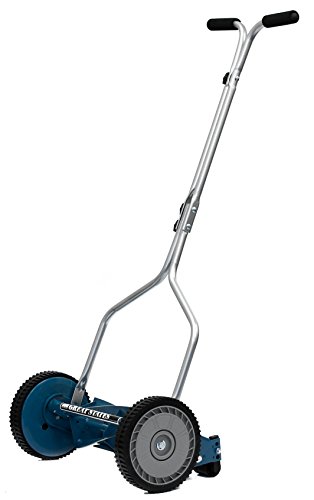
Great States 204-14 Hand Reel Push Lawn Mower

Greenworks 60V 17-Inch Push Lawn Mower
More Details On Our Top Picks
This corded mower keeps things simple, and that is its real charm. The 11-amp motor spins the blade at 3300 RPM, which is plenty aggressive for a spring scalp pass on a thin lawn, and the 15-inch deck handles narrow side-yard strips where a 21-inch unit would feel clumsy. Five height adjustments ranging from 1 inch to 3 inches give you room to drop low for scalping and climb back up for summer cuts.
For anyone renting a small place with a fenced yard, the foldable handle and 35-liter rear bag make storage and cleanup painless. The trade-off is the cord itself; dragging a 100-foot outdoor extension around a tree or flower bed wears thin fast on an oddly shaped lot.
Benefits That Matter
- Lightweight body, easy to push uphill and easy to carry up porch steps
- Lowest cut of 1 inch suits a true scalping pass without scalping the soil
- Corded power means no battery anxiety on longer spring sessions
- Foldable handle collapses flat for closet or shed storage
- 35-liter bag cuts down on post-mow raking in tight yards
Points To Keep In Mind
- Requires a heavy-gauge outdoor extension cord (not included)
- 15-inch deck means more passes on anything over a quarter acre
- Plastic deck may crack if it takes a hard hit on rocks or roots
Right Fit For
First-time homeowners with a small, flat yard under 2,500 square feet who want a no-fuss mower for spring scalping and weekly touch-ups.
Swap It Out When
You manage a larger yard or sloped lot, where the cord becomes a tripping hazard and the MZK 20V 13-Inch Electric Lawn Mower or Greenworks 80V 21-Inch Self-Propelled Lawn Mower will serve you better.
Small mowing jobs call for a small machine, and the MZK 13-inch fits the bill for anyone tending a tight patch of grass behind a townhouse. The brushless motor (a motor design that uses electronic control instead of carbon brushes, which typically extends lifespan) tops out at 3400 RPM on the high setting, enough to slice cleanly through early-season growth that has gone slightly leggy. Two cutting speeds give you the option of slowing down for scalp work to avoid tearing tender spring blades.
Four height positions from 1.3 to 2.6 inches let you graze the turf without going quite as low as the BILT HARD. For tiny lawns under 1,000 square feet, this is about as painless as mowing gets.
Strong Points
- Brushless motor runs cooler and tends to last longer than brushed designs
- Two-speed control helps dial in a clean cut on tender spring grass
- Compact 13-inch deck navigates between raised beds with ease
- Battery swaps out quickly when you need a second pack on hand
Honest Caveats
- Small bag means frequent stops to empty clippings
- Lowest setting is 1.3 inches, so it cannot scalp quite as aggressively as the BILT HARD
- Limited runtime suits a postage-stamp lawn, not a real yard
Feature Snapshot
Built With In Mind
Apartment dwellers and townhouse residents mowing a courtyard strip or patio lawn where a full-size deck would be overkill.
Consider Something Else When
You need to cover a half-acre lot, in which case the Greenworks 60V 21-Inch Push Lawn Mower offers the deck size and runtime to finish in one pass.
The Casince sits in a comfortable middle ground. Its 17-inch deck is wider than the MZK but narrower than the Greenworks 21-inch flagships, which keeps it maneuverable around swing sets and garden beds while still finishing a quarter-acre lawn in reasonable time. Two 20V 4.0Ah batteries ship in the box and run in sequence, so you can finish a scalp pass and a follow-up cut without sitting on the charger.
Six height positions from 1 inch to 3 inches cover a real scalp session in March and a normal weekly cut the rest of the season. Owners of mid-size suburban lots will find this the easiest machine to live with day to day.
What Stands Out
- Dual batteries stretch runtime to roughly 40 minutes per charge cycle
- 1-inch minimum cut is genuinely scalping territory
- 17-inch deck strikes a usable balance between speed and agility
- Folding handle stores vertically in a garage corner
Trade-Offs To Consider
- Batteries charge sequentially rather than simultaneously with the included dock
- Plastic deck can flex under heavy scalping on uneven ground
Quick Technical Notes
Made For
Suburban households with a 4,000 to 6,000 square-foot lawn who want cordless convenience without paying flagship prices.
Look Elsewhere When
You have a half-acre or larger property with hills, where the Greenworks 80V 21-Inch Self-Propelled Lawn Mower saves your legs.
Sloped lawns punish push mowers, and the 80V Greenworks answers with a self-propelled rear-wheel drive that pulls itself forward at walking pace. The 21-inch deck chews through a half-acre lawn in fewer passes than the 17-inch Casince, and the brushless motor delivers what Greenworks describes as a serious torque bump over brushed designs, which matters when the spring scalp pass uncovers thick thatch (the matted layer of dead grass and roots sitting between green blades and soil).
This is the upgrade pick for anyone whose yard fights back. Compared to the BILT HARD at the top of the list, this is a different class of machine altogether, and the price reflects that.
A Favorable Mix
- Self-propelled drive makes slopes and thick grass far less exhausting
- 80V battery delivers power closer to a small gas engine
- Wide 21-inch deck finishes large yards quickly
Where It Is Less Suited
- Heavier than any other pick here, harder to lift into a truck bed
- 4.0Ah battery drains faster than the Casince dual-battery setup on long scalp passes
Technical Highlights
Whose Shelf It Belongs On
Homeowners with sloped or uneven half-acre lawns who want gas-like performance without engine maintenance.
A Better Fit Elsewhere
Flat-lot owners who do not need self-propulsion, where the Greenworks 60V 21-Inch Push Lawn Mower offers a similar deck at lower cost.
The 60V push mower keeps the wide 21-inch deck of its 80V sibling but drops the self-propelled drive, which trims weight and price for anyone mowing a flat or gently rolling lot. The 5.0Ah battery is larger than the 80V model’s 4.0Ah pack, and combined with the 3,200 RPM blade speed, it handles dense spring grass without bogging. Where the Casince feels like a mid-size commuter, this one feels closer to a midsize truck for lawn duty.
For a homeowner who wants 21-inch productivity without paying for rear-wheel drive, this is the smart middle ground.
What Earns Its Place
- Larger 5.0Ah battery extends runtime over smaller-cell competitors
- 21-inch deck finishes big open lawns in fewer passes
- 60V brushless power handles thick spring growth cleanly
- Lighter than self-propelled models, easier to store and maneuver
Things To Weigh Up
- No self-propulsion makes long slopes a workout
Spec Overview
Best Suited To
Owners of flat or mildly contoured lawns up to three-quarters of an acre who want flagship deck size without flagship pricing.
Reach For A Different Pick When
Your yard has steep grades, in which case the Greenworks 80V 21-Inch Self-Propelled Lawn Mower is worth the extra spend.
The WG752 leans into versatility. Its 3-in-1 design switches between bagging, mulching (chopping clippings fine and dropping them back into the lawn as nutrients), and side discharge, which is useful when you scalp in spring and want to bag the dead material, then switch to mulching through summer. The 40V platform is lower voltage than the Greenworks 60V or 80V units, but the aerodeck airflow design pushes air volume through the cutting chamber, which improves cut quality on thicker grass.
For someone already invested in the Worx 20V or 40V battery ecosystem, this is the easy choice. For someone starting from scratch, the voltage tradeoff is worth thinking through.
Advantages To Know
- 3-in-1 capability covers bagging, mulching, and discharge in one deck
- Aerodeck airflow design lifts grass for a cleaner cut
- Battery shares across the wider Worx 40V tool family
- 21-inch deck handles lawns up to a half acre
Where It May Fall Short
- 40V is the lower ceiling among wide-deck battery mowers here
- Side-discharge chute can clog in wet spring grass
Who Should Grab It
Shed owners already running Worx 40V tools who want one battery platform across the whole collection.
Where Another Pick Suits Better
You prioritize raw torque over versatility, in which case the Greenworks 60V 21-Inch Push Lawn Mower is the stronger choice.
A reel mower cuts grass with a scissor action rather than a spinning blade, and that difference shows up in two ways: the cut is dramatically cleaner, and the mower runs silent. For warm-season grasses like Bermuda and Zoysia, reel cutting is genuinely the preferred method because it slices each blade instead of tearing it. This Great States model covers a 14-inch swath with five-blade reel action.
There is no motor, no battery, no cord, and no fuel. The trade-off is effort, because reel mowers demand a steady push, and they struggle with grass over about 4 inches tall. For a small lawn on a Bermuda or Zoysia yard, nothing else on this list cuts as cleanly.
What It Does Well
- Scissor-cut finish is the cleanest cut on this entire list
- Zero noise, zero emissions, zero fuel cost
- Minimal maintenance, no spark plugs, no oil, no belts
- Lightweight and inexpensive
Less Ideal Details
- Struggles with cool-season grasses like fescue that grow tall and coarse
- Requires a consistent pushing pace to cut evenly
- Not suited for lawns with sticks, gopher mounds, or rough weeds
Who Will Love This
Bermuda, Zoysia, or Centipede lawn owners with a small, tidy yard who mow frequently and value cut quality above speed.
Not Your Match When
You have a tall fescue or mixed cool-season lawn, where the Worx 40V 21-Inch 3-in-1 Cordless Lawn Mower handles the longer, coarser growth without choking.
This 60V 17-inch model bridges the gap between the compact MZK and the wide-deck Greenworks flagships. The deck is narrow enough to feel agile around tight landscaping, but the 60V battery and brushless motor deliver real cutting authority for a spring scalp pass on a lawn up to about 4,000 square feet. Compared to the Casince 17-inch in the third slot, the Greenworks uses a single higher-voltage pack instead of two sequential 20V packs, which simplifies charging but gives up some of the runtime flexibility.
It is the friendliest pick here for someone who wants a familiar brand, modern battery tech, and a deck size that does not feel like overkill.
The Good Stuff
- 60V brushless power in a manageable 17-inch package
- Simpler single-battery charging compared to dual-battery setups
- Light enough for most homeowners to handle without strain
Minor Gripes
- Single 4.0Ah battery has less runtime than the Casince dual-pack setup
- 17-inch deck adds pass count versus 21-inch alternatives
Perfect Match For
Weekend mowers with a small-to-mid lawn who want the Greenworks battery ecosystem without committing to a 21-inch deck.
Skip It When
You want maximum runtime per charge, in which case the Casince 17-Inch Cordless Walk-Behind Lawn Mower stretches its dual-battery setup further.
What To Weigh Before Buying a Scalping Lawn Mower
Deck Width and Yard Size
Deck width is the single biggest driver of how fast a mower finishes a job. A 13- or 14-inch deck suits a courtyard lawn under 1,000 square feet, while a 17-inch deck handles most lots up to about a third of an acre comfortably. For anything approaching half an acre or more, a 21-inch deck saves real time. The catch is maneuverability, because narrower decks slip between beds and along fence lines where wider decks have to back up and reposition. Match the deck to your layout, not just the square footage, since a wide open half-acre is faster with a 21-inch deck but a narrow side yard with trees benefits from a 17-inch one.
Cutting Height Range for Scalping
A true scalping pass drops the deck to around 1 inch, which exposes the soil and removes the brown winter buildup. Not every mower reaches that low; the BILT HARD and Casince both go down to 1 inch, but the MZK stops at 1.3 inches, which is closer to a low regular cut than a scalp. Check the lowest height setting, not the advertised range, because the numbers at the bottom of the dial matter most for spring scalping. A mower that only drops to 1.5 inches still helps but will not deliver the same dramatic cleanup.
Power Source Trade-Offs
Corded mowers never run out of battery, but the cord is a constant drag and a real tripping hazard in uneven yards. Cordless mowers free you up but introduce runtime anxiety, especially on a slow scalp pass at low blade speed that drains batteries fast. Push reel mowers eliminate both problems but demand physical effort and a tidy lawn free of sticks. For most suburban yards, a 60V or 80V cordless machine hits the best balance, while small courtyards do fine on a 20V model and tiny tidy lawns thrive on a reel.
Drive Type and Terrain
Self-propelled rear-wheel drive is a quality-of-life upgrade that becomes essential on slopes and uneven ground. On flat lawns, a push mower is lighter, cheaper, and easier to store. If your yard has any kind of grade, the extra cost of self-propelled drive pays back every single mow in saved effort.
Key Considerations Across These Picks
Pitfalls Shoppers Hit
The most common mistake is buying a wider deck than the yard can use, which leaves you wrestling a 21-inch machine around a tight 900 square-foot courtyard where a 14-inch reel would finish in half the time with a cleaner cut. The opposite mistake is choosing a 13-inch mower for a half-acre lot and spending an extra hour every mow making endless passes. The honest read is to size the deck to your actual layout, not the square footage alone, and to check the lowest height setting before buying if scalping is the goal.
When Paying More Pays Off
The jump from a budget corded mower to a premium 60V or 80V model buys brushless motors, longer runtime, wider decks, and self-propelled drive in some cases. For a homeowner with a flat quarter-acre lot, the budget tier is genuinely enough. For anyone with slopes, thick grass, or a yard over a third of an acre, the premium tier pays for itself in saved time and effort over a few seasons of use.
Frequently Asked Questions
What is scalping a lawn, and why do people do it?
Scalping means mowing the lawn very short in late winter or early spring to remove dead grass and allow sunlight to warm the soil and reach new growth. It is most common on warm-season grasses like Bermuda and Zoysia that thrive after a hard reset.
What deck height should I use for scalping?
A true scalp pass drops the deck to around 1 inch, which removes brown buildup while leaving the crown of the grass plant intact. Going lower risks damaging the grass, while staying above 1.5 inches is more of a low cut than a scalp.
Are cordless mowers powerful enough for scalping?
Modern 60V and 80V cordless mowers match the torque of small gas engines and handle spring scalp passes without bogging. Lower-voltage 20V or 40V platforms work for small lawns but may struggle on thick, tall, or damp spring growth.
When does a reel mower make more sense than a powered one?
Reel mowers excel on warm-season grasses like Bermuda and Zoysia when the lawn is small, tidy, and mowed frequently. For cool-season grasses, larger yards, or rough terrain, a powered rotary mower is the practical choice.
How often should I sharpen the blade for scalping season?
A sharp blade is critical for clean cuts, especially during scalping when the blade runs close to the soil and picks up debris. Sharpen or replace the blade at the start of each season, and inspect it midseason if you mow over sticks or rough patches.
Closing Remarks
The right scalping mower comes down to your lawn size, terrain, and grass type more than any single feature. Small flat courtyards do great on a compact or reel model, mid-size lots get the best balance from a 17-inch cordless deck, and larger or sloped yards benefit from a 21-inch self-propelled upgrade. Match the machine to the yard, and spring scalping becomes a quick annual reset rather than a chore.