Nothing derails a Saturday mowing session faster than a battery that refuses to crank. I’ve put together eight solid 12V battery options that cover everything from small push mowers to heavier garden tractors, so the right power source is ready when the grass is. Each pick below fits a different yard, budget, and use pattern.
The Choices Worth Comparing

Mighty Max Battery 12V 18AH Sealed Lead Acid Battery

YUASA Battery NP4-12 General Purpose VRLA 12V 4AH

WEIZE Lawn Garden AGM Battery 12V 300CCA Group U1

WEIZE Lawn Garden AGM Battery 12V 200CCA Group U1

ExpertPower EXP12180 12V 18AH Gel Deep Cycle Battery

Interstate Batteries SLA Battery 12V 5Ah AGM VRLA
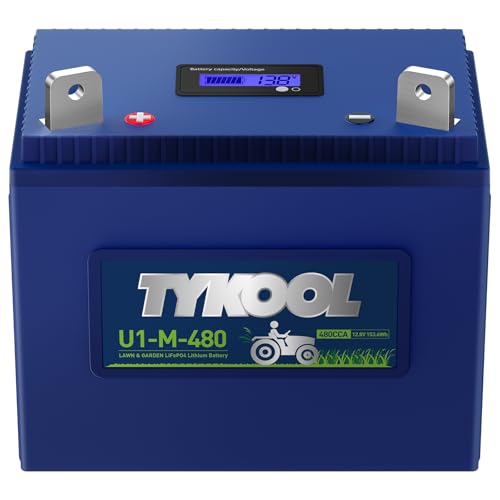
TYKOOL 480CCA Group U1 Lithium LiFePO4 Mower Battery

WEIZE Lawn Garden AGM Battery 12V 350CCA Group U1
The Picks, Examined More Closely
The Mighty Max ML18-12 is a classic sealed lead-acid (SLA) unit, which means the electrolyte is held inside an absorbent glass mat (AGM) and never needs topping off. For a homeowner who stores a mower in an unheated garage, that spill-proof construction matters: you can mount the battery in any orientation without worrying about leaks.
At 18 amp-hours (Ah), it delivers enough reserve capacity for smaller riding mowers and most walk-behind electric-start units. The nut-and-bolt terminals are common, and the 7.12 x 3.00 x 6.50-inch footprint fits a wide range of factory trays. Where it differs from the Yuasa pick below is capacity: the Mighty Max carries roughly four times the rated storage, which translates to more cranking attempts between charges.
A Favorable Mix
- AGM construction resists vibration in rough yard terrain.
- 18Ah rating supports multiple start cycles in one mowing session.
- Maintenance-free design removes the need to check water levels.
- Compact form slides into most U1-style battery trays.
Things To Consider
- No wire harness or mounting hardware is included, so factor in extra parts.
- SLA chemistry weighs more than a lithium equivalent, which matters on smaller mowers.
- Performance drops noticeably in sub-freezing storage over winter.
Key Specs
Who It Suits Best
Homeowners with mid-size riding mowers who want a no-fuss replacement that doesn’t demand periodic watering.
Consider Something Else When
Shoppers who need extreme cold-weather cranking or a much lighter battery should look at the TYKOOL 480CCA Lithium LiFePO4 instead.
The Yuasa NP4-12 is a small-format valve-regulated lead-acid (VRLA) battery aimed at lighter yard equipment and crossover devices. Its 4Ah rating makes it a poor fit for full-size riding mower starters, but it shines as a replacement for things like lawn-sprayer pumps, small ride-on toys, or garden electronics that share the same 12V chemistry.
Yuasa built its reputation on absorbed glass mat (AGM) construction, where the electrolyte stays locked in fiberglass separators instead of free liquid. That gas-recombination design means the unit can sit in enclosed compartments without venting. Compared to the Mighty Max unit above, this battery trades raw capacity for a much smaller footprint, so it slots into tight battery boxes where a larger SLA won’t physically fit.
What Earns Its Place
- VRLA design eliminates the need for electrolyte refills or venting tubes.
- Lead-calcium grid chemistry supports steady long-term float performance.
- Compact body fits in tight compartments under small mower seats or shrouds.
Worth Noting
- At 4Ah, it doesn’t have the cranking reserves needed for full-size tractor engines.
- Smaller terminals may not accept standard lawn-mower cable lugs without adapters.
- Deep discharges shorten service life faster than on higher-capacity AGM units.
Made For
Users with compact electric-start mowers, sprayers, and small yard tools who need a tidy, sealed power source.
Where Another Pick Suits Better
For a riding mower or garden tractor, the WEIZE 12V 300CCA Group U1 delivers the cold-cranking amps this Yuasa can’t match.
The WEIZE BCI Group U1 is purpose-built for lawn tractors, and its 300 cold-cranking amps (CCA) hit the sweet spot for most residential mowers. CCA measures how much current a battery can deliver at 0 degrees Fahrenheit for 30 seconds, so a higher number means easier starts on chilly spring mornings.
The 7.68 x 5.12 x 6.22-inch case matches the U1 footprint used by John Deere, Toro, Cub Cadet, and Craftsman tractors. Square-hole nut-and-bolt terminals sit in a left-positive, right-negative layout, which lines up with the standard wiring harness orientation. The main step up from the Mighty Max unit earlier is starter-grade cranking, while the trade-off is the 18.68-pound weight, which is on the lighter end for a U1 SLA.
Well-Handled Touches
- 300CCA handles mid-size single-cylinder tractor engines without strain.
- AGM build tolerates rough terrain and resists acid stratification.
- Direct-fit U1 case matches OEM brackets and hold-downs.
- Square-hole terminals accept standard automotive-style cables.
Honest Caveats
- Slightly less reserve capacity than the 18Ah Mighty Max for accessory loads.
- Shipping is subject to hazardous-materials regulations, which can slow delivery.
Key Specs
Best Suited To
Riders and garden tractors from mainstream brands whose owners want a direct replacement without re-wiring.
Skip It When
Shoppers in northern climates with sub-zero storage should consider the TYKOOL lithium battery for stronger cold starts.
The 200CCA sibling of the WEIZE U1 lineup targets users in warmer regions or anyone running a smaller single-cylinder engine. A 200CCA rating is enough to crank a typical riding mower in moderate weather, though it leaves less headroom when temperatures dip.
It shares the same U1 case dimensions and terminal layout as the 300CCA version above, so installation looks identical. The main difference shows up at the starter: the 200CCA unit has roughly a third less cranking current. Against the Mighty Max, the WEIZE unit offers a tractor-specific fit and stronger starting surge, even if its amp-hour capacity is lower.
The Value In It
- Lower price point makes it accessible for casual weekend mowers.
- Standard U1 case means it drops into most factory battery trays.
- AGM construction cuts down on routine maintenance.
Minor Gripes
- 200CCA can feel marginal in cold garages or for high-compression engines.
- Heavier than the 300CCA WEIZE despite less cranking power.
Whose Shelf It Belongs On
Suburban gardeners in temperate climates who need a basic, no-frills starting battery for light mowing duty.
A Better Fit Elsewhere
Cold-climate owners pushing bigger twin-cylinder tractors should step up to the WEIZE 12V 350CCA version further down this list.
The ExpertPower EXP12180 uses gel cell chemistry rather than standard AGM. In a gel battery, the electrolyte is suspended in a silica-based gel, which makes the unit fully sealed, vibration-resistant, and tolerant of deep discharge cycles. That last point matters if your mower runs accessories like headlights or sprayer pumps between starts.
It ships factory-activated, so there is no initial acid pack to install. M5 threaded terminals accept ring-lug connectors, though they don’t match the automotive-style posts of the WEIZE batteries. Capacity mirrors the Mighty Max at 18Ah, but the gel formulation is designed for slower, repeated discharge rather than quick cranking bursts. The honest read is that this is more of a deep-cycle workhorse than a starter-focused unit.
Features That Help
- Gel chemistry recovers well from deep accessory drain without permanent damage.
- Factory-sealed design works in any mounting orientation, even on slopes.
- Maintenance-free over its entire service life.
- Lower self-discharge rate during winter storage than many AGM batteries.
Things To Weigh
- Less effective as a pure cranking battery for large tractor engines.
- M5 terminals may require adapter lugs for standard mower cable ends.
- Charging voltage must be regulated properly to avoid damaging gel cells.
Key Specs
Who Should Grab It
Users who run accessories off their mower battery between starts, or anyone who needs a deep-cycle workhorse for generator backup.
Swap It Out When
Anyone needing pure starting power for a big twin should reach for the WEIZE 12V 350CCA U1 instead.
Interstate’s SLA1055 is a small AGM VRLA battery with F1 spade terminals, which is a different connector style than the screw posts seen on most mower batteries. That detail alone makes it a crossover option: it works fine in smaller ride-on toys, alarm panels, and certain compact yard tools, but it isn’t a drop-in replacement for a full-size tractor.
Capacity sits at 5Ah, double the Yuasa NP4-12 reviewed earlier, but still well below the deep-cycle 18Ah units. Where it stands out is the F1 tab terminal layout, which is widely supported across the security and mobility industry. For a homeowner whose needs span lawn gear, garage door openers, and emergency lighting, one of these can flex across multiple devices.
Strengths Worth Knowing
- AGM VRLA design runs in any orientation without leaks.
- F1 spade terminals are widely supported across many small devices.
- Backed by an established battery brand with broad compatibility guidance.
Points To Note
- F1 terminals don’t match standard mower battery posts, so adapters or new cables may be needed.
- 5Ah capacity is too small for reliable starts on a full-size riding mower.
Perfect Match For
Users who want one spare SLA battery to swap between small yard devices, alarm panels, and ride-on toys.
Another Choice May Suit
For a dedicated riding mower replacement, the WEIZE 12V 300CCA U1 is the more practical drop-in.
The TYKOOL U1-M-480 is the only lithium iron phosphate (LiFePO4) option in this lineup, and the chemistry difference is significant. LiFePO4 cells hold a higher voltage under load, weigh a fraction of an equivalent SLA, and tolerate deep discharge without the sulfation damage that kills lead-acid batteries over time.
At 480CCA, this unit out-cranks every WEIZE on the list, including the 350CCA flagship. Cold spring mornings are exactly where lead-acid units struggle most, so the higher CCA translates to noticeably faster turns of the engine. The trade-off, of course, is price, since lithium cells cost more up front than AGM. Compared to the Mighty Max and ExpertPower 18Ah units, the TYKOOL stores less total energy (12Ah) but delivers it more aggressively.
Key Advantages
- LiFePO4 chemistry resists capacity loss in cold weather better than SLA.
- A fraction of the weight of comparable AGM U1 batteries, easing installation.
- Long cycle life means years of service before capacity drops noticeably.
- 480CCA out-cranks every lead-acid option in this roundup.
Practical Considerations
- Higher upfront cost than any AGM pick on this list.
- Requires a charger with a lithium-compatible profile for longest life.
- Compatibility with OEM charging systems on older mowers should be confirmed before purchase.
Key Specs
Built With In Mind
Riders and garden tractor owners who mow in cold weather and want a long-lasting, lightweight upgrade over lead-acid.
Reach For A Different Pick When
Anyone on a strict budget or with a charger that isn’t lithium-compatible should default to the WEIZE 12V 300CCA U1.
The 350CCA WEIZE is the highest-output lead-acid option in this roundup, aimed squarely at bigger twin-cylinder tractors that demand more starter current. At 21.45 pounds, it sits in the same U1 footprint as the other WEIZE units, so installation is identical: drop it in, reconnect the cables, and tighten the hold-down.
The 50CCA jump over the 300CCA version is meaningful for cold-storage tractors and higher-compression engines. Against the TYKOOL lithium unit, it costs less but weighs nearly three times as much, and won’t hold its voltage quite as crisply in deep cold. Still, for someone who doesn’t need lithium and simply wants the strongest AGM option, this is the one.
The Practical Payoff
- 350CCA delivers confident starts on larger engine displacements.
- Standard U1 form factor fits directly into OEM brackets.
- AGM spill-proof design is friendly to sloped or rough mowing terrain.
Small Caveats
- Heavier than the 300CCA WEIZE with no extra reserve capacity to show for it.
- Still lead-acid, so cold storage will sap cranking performance over winter.
Who Will Love This
Owners of larger garden tractors with twin-cylinder engines who want maximum AGM cranking without stepping into lithium pricing.
Not Your Match When
Anyone prioritizing weight savings and long cycle life should consider the TYKOOL 480CCA lithium option instead.
What Matters Most Before Choosing a 12V Lawn Mower Battery
Match the Group Size First
The U1 group size is the most common spec for residential riding mowers, and it covers brands like John Deere, Craftsman, Toro, and Cub Cadet. Measure the existing battery tray before ordering, since a mismatch means re-bending hold-down brackets or buying spacers. Smaller compact mowers and accessories sometimes use a smaller footprint like the Yuasa NP4-12, so check the manual before assuming a U1 form factor.
Cranking Amps Versus Amp Hours
Cold-cranking amps (CCA) measure the burst power needed to spin a starter motor in cold weather. Amp hours (Ah) measure how long the battery can deliver a smaller current before recharging. A tractor that only needs short cranks wants high CCA. A mower that powers lights, sprayer pumps, or accessories between starts benefits from higher Ah. Most homeowners split the difference by choosing a U1 AGM with solid CCA and reserve capacity.
Decide Between AGM, Gel, and Lithium
AGM is the everyday workhorse: balanced cost, vibration resistance, and broad compatibility. Gel cells like the ExpertPower EXP12180 handle deep accessory discharge better, but they aren’t ideal as pure starters. Lithium (LiFePO4) is the premium pick for cold-weather users and anyone willing to pay more for weight savings and cycle life, though it requires a compatible charger.
Confirm Terminal Style and Polarity
The WEIZE batteries use nut-and-bolt posts with left-positive, right-negative layouts. The Interstate SLA1055 uses F1 spade tabs that won’t accept standard mower cables. The ExpertPower gel unit uses M5 threaded posts. Polarity swaps can damage electronics, so always check the layout against the existing wiring before connecting.
Key Considerations Across These Picks
Mistakes Worth Dodging
Choosing a battery by price alone is a common misstep in this category, since a cheaper unit with low CCA may leave a rider stranded on a chilly morning. Forgetting to confirm the terminal style is another pitfall: the Interstate and ExpertPower units don’t match standard automotive posts, and adapters are easy to overlook at checkout. Finally, ignoring charging-system compatibility with lithium can shorten the life of an otherwise premium purchase.
When Paying More Pays Off
The jump from a 200CCA WEIZE to the 350CCA version, or from any AGM unit to the TYKOOL lithium, costs more but returns something tangible: stronger cold starts, lighter weight, or a longer service life. For homeowners in northern climates or anyone running heavier twin-cylinder tractors, the upgrade tends to pay for itself in fewer dead-battery mornings and longer replacement intervals.
Frequently Asked Questions
How long does a 12V lawn mower battery typically last?
A quality AGM battery in regular seasonal use generally lasts three to five years before capacity drops noticeably. Lithium options can stretch that further with proper charging habits.
Can I use a car battery in a riding mower?
It physically fits some U1 trays only with modification, and a car battery’s higher CCA isn’t matched by the mower’s charging system, which can shorten its life. A U1-group battery is the safer match.
What’s the difference between CCA and Ah?
CCA measures starting power in cold conditions, while Ah measures total stored energy over time. A starter battery leans on high CCA, and an accessory-heavy setup leans on higher Ah.
Do lithium mower batteries need a special charger?
Yes, a charger with a lithium-compatible profile protects the cells from overvoltage damage. Many modern smart chargers include a LiFePO4 mode that works with the TYKOOL unit.
How should I store a mower battery over winter?
A fully charged battery stored in a cool, dry place holds its charge best. A maintenance charger or periodic top-off every few weeks prevents sulfation in lead-acid units.
Closing Remarks
The right 12V battery for your mower comes down to matching group size, cranking needs, and budget to the way you actually mow. Lead-acid AGM units cover most residential needs with reliable, no-fuss starting power. Lithium earns its premium when cold mornings, long cycle life, or weight savings matter. Pick the chemistry that fits your yard, and the next cutting season starts without a hitch.