Most riding mowers and push mowers sip through a 10W-30 oil change without anyone thinking twice, yet the wrong bottle quietly shortens valve life by a season or two. I’ve walked plenty of homeowners through this, and the honest read is that viscosity grade matters less than matching the oil to the engine’s workload and age. A weekend yard, a daily mowing route, and a fleet of rentals each want something slightly different under the cap.
How The Shortlist Stacks Up

Castrol GTX 10W-30 Conventional Motor Oil

Castrol EDGE High Mileage 10W-30 Full Synthetic

Castrol EDGE 10W-30 Advanced Full Synthetic
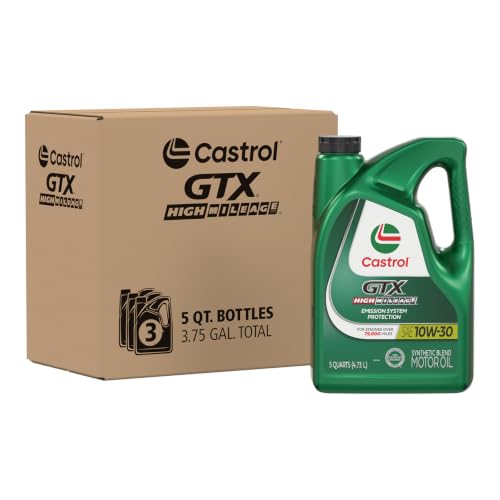
Castrol GTX High Mileage 10W-30 Synthetic Blend

Royal Purple 01130 10W30 Synthetic Oil

STP Premium Synthetic Blend 4-Cycle Small Engine Oil

Honda Motor Oil 10W30 (Pack of 2)
The Picks, Examined More Closely
For a plain push mower that gets stored in the garage and pulled out every Saturday, a conventional oil like Castrol GTX 10W-30 in the 5-quart jug is often more than enough. Conventional motor oil is refined directly from crude without the extra processing that creates a synthetic, so it costs less per change and suits older single-cylinder engines that don’t punish a simpler formula.
Across decades of small-engine use, GTX has built a quiet reputation for resisting the gummy sludge that collects on valve covers after long idle weeks. That’s the same kind of residue that turns a spring startup into a smoke show, and it’s what most folks are quietly trying to avoid when they reach for a familiar jug.
What Works In Its Favor
- Conventional formula costs less per oil change, which adds up across a mowing season of routine top-ups.
- 10W-30 weight flows well at cold start and stays stable once the engine warms up on a long mow.
- Sludge-control additives help engines that sit for weeks between cuts stay clean under the cap.
- The 5-quart jug covers multiple changes for small engines without forcing repeat trips to the store.
Things To Consider
- Conventional oil breaks down faster under heavy heat, so a tractor mowing in summer sun may need shorter intervals.
Feature Snapshot
Right Fit For
Homeowners with a standard push mower or entry-level riding mower who change oil once a season and want a trusted conventional formula.
Skip It When
Pick the Royal Purple 10W30 Synthetic Oil instead if your small engine runs long, hot hours and a synthetic blend would handle the workload better.
A riding mower past the 75,000-mile mark is a different animal than a fresh unit off the lot. Castrol EDGE High Mileage is a full synthetic, meaning the base oil has been chemically engineered rather than simply refined, which gives it tighter molecular structure and longer life under heat. For engines with tired seals and worn valve guides, that matters more than viscosity alone.
The “high mileage” label refers to a specific additive package, including seal conditioners that help older rubber stay pliable. For a small engine sitting in a barn for eight months, a formula that resists drying out the seals during storage is genuinely useful rather than a marketing flourish.
Real Benefits
- Full synthetic base oil resists thermal breakdown during long mowing sessions in summer heat.
- Seal conditioners help rejuvenate hardened gaskets on engines with hundreds of hours logged.
- Lower volatility reduces oil burn-off, which matters on worn rings that tend to sip oil.
- Phosphorus Replacement Technology supports emission-system components without starving protection.
Honest Caveats
- Costs noticeably more than a conventional jug, so the upgrade only pencils out for engines that truly need it.
- Older push mowers with minimal hours won’t show much difference versus a basic conventional oil.
- Storage in a hot shed can shorten the open jug’s lifespan if it sits for months between changes.
Whose Shelf It Belongs On
Owners of high-hour riding mowers and garden tractors who notice seeps around gaskets or a slight uptick in oil consumption between changes.
Look Elsewhere When
The Castrol GTX 10W-30 Conventional Motor Oil is a smarter match for a newer push mower where the seal-conditioning features add cost without any real benefit.
Where the high-mileage version targets worn seals, the standard Castrol EDGE 10W-30 Advanced Full Synthetic chases maximum protection for engines that haven’t yet accumulated hours. Synthetic oil is engineered for stable viscosity across temperature swings, which is exactly what a small engine experiences when it starts cold in April and runs hot by July.
For homeowners running commercial-grade zero-turn mowers or working their acreage equipment hard, the upgrade pays off in cleaner internals and longer drain intervals. It’s a different cost conversation than the GTX jug, but the trade-off shows up in fewer mid-season top-offs.
Positive Points
- Engineered viscosity control keeps the oil film strong from cold start through hot summer cuts.
- Improved fuel economy relative to conventional oil, noticeable on equipment that runs for hours.
- Strong sludge and deposit control helps engines that idle frequently stay cleaner internally.
- 5-quart container suits larger oil capacities or several smaller engines in a fleet.
Where It May Fall Short
- Premium pricing means the payback period depends on how often the equipment gets used.
- May over-deliver on protection for a casual weekend mower with light-duty hours.
Technical Highlights
Made For
Heavy-duty mowing routes, commercial-grade equipment, and homeowners who want maximum protection for frequently used power equipment.
Not Your Match When
Honda equipment owners will find the Honda Motor Oil 10W30 a more tailored fit, since it’s formulated specifically to Honda’s small-engine specs.
A synthetic blend sits between the cheaper GTX conventional and the fully synthetic EDGE, mixing refined base oil with engineered synthetics to lift performance without the full premium price. For a homeowner who wants high-mileage additives across more than one engine, the Castrol GTX High Mileage 10W-30 Synthetic Blend arrives as a 5-quart pack of three.
Three jugs solve the “I’m running out mid-season” problem that catches many folks by surprise. Spare oil stored properly keeps a fleet of small engines covered without last-minute store runs when the mower starts blowing smoke on a Saturday morning.
Bright Spots
- Synthetic blend delivers better temperature stability than a pure conventional oil.
- High-mileage additives support seals on engines with accumulated hours and minor seepage.
- Pack-of-three format covers multiple machines or several change intervals in one purchase.
Points To Note
- Bulk packaging takes up shelf or garage space, which matters in tighter storage areas.
- Blend formula doesn’t quite match the protection level of the full synthetic EDGE for severe-duty engines.
Quick Facts
Best Suited To
Property owners running two or three engines (riding mower, tiller, generator) who want high-mileage protection across the whole lineup in one purchase.
Swap It Out When
Pick the STP Premium Synthetic Blend 4-Cycle Small Engine Oil instead for equipment outside the Castrol ecosystem, since it’s engineered specifically for outdoor power tools.
Royal Purple has built a niche following among folks who treat their small engines less like tools and more like weekend projects worth obsessing over. The ROY01130 10W30 Synthetic Oil comes in a single quart, which is honestly a refreshing format for engines with smaller sumps that don’t need a five-quart jug.
Synthetic oils in this tier often include proprietary additive packages that go beyond what API service classifications require. The trade-off is cost per quart, which can sting on a tight budget, but for engines that demand clean internals and long drain intervals, the conversation shifts.
A Favorable Mix
- Synthetic formula handles heat spikes better than conventional during extended mowing sessions.
- Single-quart format matches small-engine capacities without leaving half a jug open on the shelf.
- Known for cleaner internals, which can matter on older equipment owners want to preserve.
Trade-Offs
- Higher cost per ounce compared to Castrol GTX conventional or blend options.
- One-quart bottle means multiple purchases for owners with larger-capacity engines or several machines.
Who Should Grab It
Detail-oriented small-engine enthusiasts who treat their mower or generator as a long-term investment and want premium synthetic protection.
Consider Something Else When
The Castrol GTX 10W-30 Conventional Motor Oil covers a basic push mower at a fraction of the per-quart cost without sacrificing essential protection.
Most motor oils on the shelf are designed for cars and adapted to small engines. STP Premium Synthetic Blend 4-Cycle Small Engine Oil goes the other direction, formulated specifically for the lawnmowers, generators, tractors, and snow blowers in the shed. A 32-fluid-ounce bottle is sized for typical small-engine capacities without excess waste.
For homeowners with a mixed fleet of outdoor power equipment, an oil that’s purpose-built for 4-cycle small engines removes the guesswork about whether automotive motor oil is appropriate. The antioxidants in the formula target the thermal breakdown patterns unique to air-cooled engines.
The Case For It
- Engineered for outdoor power equipment rather than adapted from automotive formulas.
- All-weather viscosity support helps engines start easier across seasonal temperature swings.
- Antioxidant package resists thermal breakdown in air-cooled engines that run hot.
- 32-fluid-ounce size suits typical small-engine oil capacities without leftover jug waste.
Small Caveats
- Smaller bottle format requires multiple purchases for shops servicing several machines.
- Specialty positioning can mean fewer shelf locations at big-box retailers.
Feature Card
Perfect Match For
Owners of mixed outdoor power equipment who want an oil specifically formulated for air-cooled 4-cycle small engines across multiple seasons.
Reach For A Different Pick When
The Castrol EDGE High Mileage 10W-30 Full Synthetic suits a high-hour riding mower where seal-conditioning additives would do more than a general small-engine formula.
OEM-matched oil removes one variable from the small-engine equation. Honda Motor Oil 10W30 comes in a two-quart pack, sized for Honda’s typical small-engine oil capacities in mowers, generators, and pumps. The formula exceeds API service classification SM and uses shear-stable polymer additives designed by Honda’s engineers for high-revving 4-stroke engines.
For committed Honda equipment owners, the OEM angle isn’t about loyalty so much as matching the formulation Honda tested against its own engines. That kind of match tends to show up in longer valve train life and fewer warranty headaches.
The Helpful Details
- OEM Honda formulation designed specifically for Honda power equipment engines.
- Shear-stable polymer additives resist viscosity breakdown under high-revving loads.
- Two-quart pack suits typical Honda small-engine capacities for two change intervals.
Possible Compromises
- Costs more per ounce than a comparable aftermarket synthetic blend.
- OEM fit matters less on non-Honda equipment, where Castrol or STP options serve broader needs.
Who Will Love This
Honda power equipment owners who prioritize manufacturer-matched fluids over aftermarket alternatives for warranty and longevity reasons.
Where A Sibling Pick Shines
The Castrol GTX 10W-30 Conventional Motor Oil works well on a non-Honda push mower where OEM-specific engineering adds cost without matching benefit.
How To Choose The Right 10W-30 For Your Mower
Viscosity Grade and What It Really Means
The “10W-30” label describes how the oil flows at different temperatures. The “10W” rating covers cold-start behavior, while “30” describes how it holds up once the engine is hot. For most small engines running in temperate climates, 10W-30 is the manufacturer’s default recommendation, and deviating without reason usually creates more problems than it solves. SAE (the Society of Automotive Engineers) sets these grading standards, so any jug labeled 10W-30 should perform comparably at temperature.
Conventional vs. Synthetic vs. Blend
Conventional motor oil is the simplest refined option and costs the least, which suits casual weekend mowers. Full synthetic oil is engineered for greater temperature stability and longer drain intervals, useful for hot-running equipment or commercial-grade mowing. Synthetic blends sit in the middle, lifting performance over conventional without the full synthetic price. Picking between them is mostly about how hard and how often the engine works.
Matching the Oil to the Engine’s Age
Engines past 75,000 miles benefit from high-mileage formulas that include seal conditioners and additives targeting worn components. Newer engines don’t need those extras, so the budget can go toward a quality conventional or blend instead. For a generator that runs occasionally or a mower used twice a month, age matters less than consistent change intervals.
Container Size and Storage Reality
Small engines typically hold between 18 and 48 fluid ounces of oil, so a single quart often covers one change. Multi-packs make sense for households running several machines or for anyone who forgets to restock mid-season. Storage in a cool, dry place keeps an opened jug usable longer, especially for synthetics that can degrade with heat exposure.
What Separates These Oils From Each Other
Pitfalls Shoppers Hit
The most common mistake is treating any 10W-30 as interchangeable, when in reality the additive package matters as much as the viscosity grade. Automotive oils work fine in small engines, but oils specifically formulated for outdoor power equipment tend to handle air-cooled heat patterns better. Another trap is buying synthetic for an engine that never sees the conditions that justify the upgrade. Drain intervals also get ignored: even the best oil needs to be changed, and skipping that step nullifies the protection the jug was designed to deliver.
Where The Extra Money Goes
Premium tiers cost more because the base oil has been engineered rather than simply refined, and the additive packages go beyond minimum API service classifications. For engines that run long hours, idle in summer heat, or accumulate serious mileage, the upgrade translates into cleaner internals and longer component life. For a basic push mower used ten times a season, the conventional tier delivers everything the engine actually needs.
Frequently Asked Questions
Can I use automotive 10W-30 in my lawn mower?
Yes, most automotive 10W-30 oils work safely in 4-cycle small engines. The main difference is that small-engine-specific oils are tuned for air-cooled operating temperatures.
How often should I change 10W-30 in my mower?
Most manufacturers recommend an oil change every 50 hours of operation or once per mowing season, whichever comes first. Heavy-duty or dusty conditions shorten that interval.
What’s the difference between SAE 10W-30 and just 30 weight oil?
The “10W” prefix means the oil flows well at cold temperatures, while straight 30-weight can be sluggish on cool spring starts. Multi-grade oils like 10W-30 cover both cold and hot conditions in one bottle.
Is synthetic 10W-30 worth it for a small engine?
For frequently used or hot-running engines, synthetic offers longer life and better stability. For occasional weekend mowing on a basic push mower, conventional oil handles the job at lower cost.
Does the oil brand matter for small engines?
Brand matters less than the formula matching your engine’s needs and the API service classification on the jug. Established brands tend to deliver consistent quality across batches, which is the real reason they earn repeat shoppers.
Closing Remarks
Matching the right 10W-30 to your mower comes down to engine age, workload, and how often the equipment sees action. A simple push mower doesn’t need the same protection as a high-hour zero-turn, and the picks above cover that range from conventional economy to OEM-specific formulation. Pick the one that matches your situation, change it on schedule, and your mower will reward you with many seasons of reliable starts.