Anyone with uneven ground, sloping sections, or wet grass knows that push mowers and standard rear-wheel drives run out of grip fast. Four-wheel-drive machines keep all four tires pulling in sync, which translates to less slipping, cleaner cuts on inclines, and far less fatigue on larger yards. I put this list together for homeowners who battle slopes, rural lots, or just want a steadier walk-behind or rider that does not stall mid-stride. Below are six focused picks covering drive wheels, replacement tires for riding mowers, and two battery-powered Honda walk-behinds built for serious cutting.
The Essentials At A Glance

ZALANA Front Drive Wheels for Troy-Bilt Walk-Behind Mowers

HALBERD 15×6.00-6 Tractor Tires 4PR, Set of 2

Fourtry 4.80/4.00-8 Tubeless Turf Tires, Set of 2
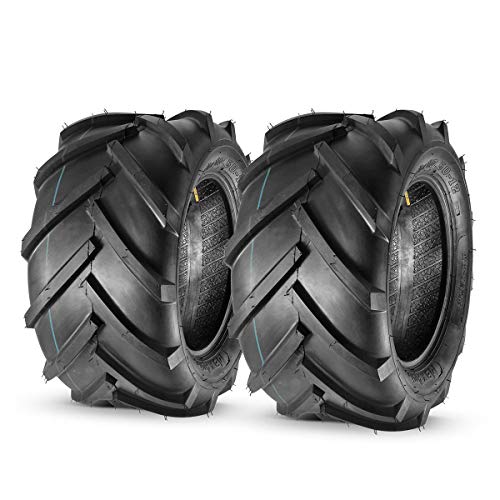
MaxAuto 23×10.50-12 Super Lug Riding Mower Tires, Set of 2

Honda HRX-BE 21-Inch Battery Walk-Behind Mower

Honda HRX-BV 21-Inch Battery Walk-Behind Mower
The Strengths Of Each Pick
Front drive wheels are the unsung heroes of any self-propelled walk-behind: once the tread wears smooth, even a healthy engine cannot grip. ZALANA’s replacement set targets Troy-Bilt’s TB210, TB230, TB240, and several related MTD/Snapper models, which covers a long stretch of machines still earning their keep in suburban garages. The wheels ship as a matched pair, so both front corners get refreshed in one swap.
Compared to a full mower upgrade, a wheel swap is a small repair that returns self-propel function and traction on damp grass. For most Troy-Bilt owners dealing with slipping fronts after a few seasons, this is the kind of part that quietly brings a mower back from the curb.
Good Reasons To Consider
- Direct-fit replacement for the Troy-Bilt 734-04018 wheel series, so installation is a bolt-on job rather than a fabrication project.
- Restores self-propel grip, which matters on slopes or dew-soaked early-morning cuts where a smooth tire simply slides.
- Covers a wide model range including TB210, TB230, TB240, and Tuff-Cut 210, so the part covers several common Troy-Bilt walk-behinds.
- Sold as a pair, so both fronts match in tread depth and age from day one.
Things To Consider
- Compatibility is specific: confirm the model number on your existing mower before ordering, since the wrong wheel pattern will not seat properly.
- These are replacement tires only, so the existing wheel hubs must still be in good shape to reuse.
Quick Facts
Made For
Troy-Bilt self-propelled mower owners whose front tires have gone slick and want an affordable, bolt-on traction fix.
Skip It When
Your mower is a brand other than Troy-Bilt or MTD/Snapper; the HALBERD 15×6.00-6 tractor tires serve a different riding-mower crowd entirely.
Compact garden tractors and small riding mowers chew through turf tires every few seasons, especially on slopes or rough back-forty grass. HALBERD’s 15×6.00-6 set brings a classic herringbone tread with shoulder taper, which is the same general shape used on small ag tires for decades. The 4PR (ply rating) build keeps the sidewalls firm enough to handle a rider’s weight without feeling mushy in turns.
For homeowners with an older lawn tractor that has lost bite in wet grass, swapping in fresh rubber is often cheaper than a new machine. Where the ZALANA set above targets walk-behind fronts, this one tackles garden-tractor rears where traction matters most.
Strong Points
- Herringbone tread with tapered shoulder bars keeps grip steady on sidehill mowing without tearing up the lawn.
- 4-ply rating supports heavier riders and rougher ground compared to entry-level 2PR turf tires.
- Tubeless design simplifies mounting and roadside repairs on a tube-free rim.
- Comes as a matched pair, so both rear tires wear at the same rate.
Worth Noting
- Wheels are not included, so this is a tire-only swap; the existing rims need to be serviceable and clean.
- Speed rating tops out at A3, which is fine for mowing pace but not for any trailering at road speeds.
Feature Snapshot
Right Fit For
Owners of older garden tractors needing a reliable rear-tire refresh without investing in a full wheel assembly.
Swap It Out When
Your machine needs a much larger 23-inch rear tire for heavy-duty farm-style mowing; the MaxAuto 23×10.50-12 set fills that slot instead.
Not everyone owns a riding mower; plenty of suburban lots run on push mowers, wheelbarrows, and small utility trailers. Fourtry’s 4.80/4.00-8 turf set speaks directly to that crowd with a tubeless design that fits garden tractors, tillers, golf carts, and trailers alike. The 8-inch wheel format shows up everywhere, which is what makes this size so widely useful.
Where the HALBERD tires above lean into tractor rears, this pair is more of a generalist replacement for anything rolling on an 8-inch rim. If you’ve got a flat tire on a yard cart and the same size lives on your tiller, one swap can cover both jobs.
Advantages To Know
- Covers several machine types in one tire size, simplifying a shop’s spare-tire inventory.
- Tubeless construction means fewer pinch-flats on rough terrain and easier inflation in the garage.
- Sold as a pair so both sides of an axle match in age and wear.
Trade Offs
- Tread pattern is turf-oriented, so it works best on grass and pavement rather than muddy job sites.
- Verify the sidewall marking on your current tire, since 4.80-8 and 4.00-8 sizes overlap and a mismatch causes fit issues.
At A Glance
Best Suited To
Homeowners with multiple 8-inch-rim yard machines who want one replacement set on hand rather than several specialized sizes.
Look Elsewhere When
Your riding mower needs the larger 23-inch agricultural grip; the MaxAuto 23×10.50-12 tires are purpose-built for that workload.
When a riding mower crosses into farm-tractor territory, turf tires lose bite fast on soft ground. MaxAuto’s 23×10.50-12 set flips the script with sharp-angled lugs designed for pushing and pulling power, plus wide shoulders that resist sidewall rollover on slopes. The 6-ply rating and 1760-lb load capacity target heavier garden tractors and small utility rigs.
This is the set to reach for when the Fourtry 4.80/4.00-8 turf tires above would feel underbuilt. Anyone managing rough pasture, deep ruts, or muddy spring ground will see why an aggressive lug pattern earns its keep.
A Few Highlights
- Aggressive Super Lug tread pulls through soft soil instead of skating across it.
- 1760-lb load capacity per tire supports heavier riders and rear-mounted implements.
- Wide shoulder blocks add sidehill stability on sloped terrain.
Honest Caveats
- The deep lugs can mark up a finished lawn more than a turf-style tire, so this is not the right choice for manicured grass.
- These are non-highway service tires, meaning they are not intended for road speeds beyond the driveway.
Key Product Details
Who Should Grab It
Owners of larger riding mowers and small farm tractors who push through pasture, mud, or steep grades and need serious grip.
Reach For A Different Pick When
You only run a walk-behind mower and just need front-wheel traction back; the ZALANA replacement wheels solve that lighter problem.
Honda’s HRX series has long been the gold standard for residential walk-behinds, and the BE electric model keeps that reputation intact with the brand’s GCV-class motor equivalent running on battery power. The 21-inch deck handles mid-size suburban lots without the noise, fumes, or pull-start hassle of a gas unit. The 4-in-1 Versamow system lets you switch between mulching, bagging, discharge, and leaf-shred without swapping parts.
Where the previous picks focus on tires and replacement parts for older machines, this is a complete machine for shoppers starting fresh or replacing a tired gas mower. Battery power means neighbors won’t hear you coming at 7 a.m., and maintenance drops to blade sharpening and the occasional deck clean.
Real-World Strengths
- Honda’s brushless motor architecture maintains RPM under load, so tall or wet grass does not stall the blade.
- Versamow Clip Director handles four cutting modes without extra attachments cluttering the garage.
- Self-propelled drive reduces fatigue on larger lots, with electric motors delivering quiet, instant torque.
- MicroCut twin blade system produces fine clippings that break down quickly when mulching.
Points To Keep In Mind
- Battery runtime is finite, so very large properties may need a charged spare on hand for back-to-back sessions.
- Replacement batteries and chargers are proprietary, which is a long-term ownership consideration.
At A Glance
Who It Suits Best
Suburban homeowners with mid-size lots who want Honda build quality without the gas-engine maintenance schedule.
A Better Fit Elsewhere
If variable-speed self-propel matters more than the standard drive, the Honda HRX-BV variant below offers that upgrade.
The HRX-BV takes everything the BE model above offers and adds variable-speed self-propel, which is the single biggest quality-of-life upgrade for anyone mowing varied terrain. The “V” suffix refers to that adjustable pace, letting you match walking speed to slope, grass thickness, or how fast you want to finish. For larger or hillier yards, that control turns an exhausting chore into a manageable one.
This sits at the top of the HRX battery line, so the trade-off is mostly budget versus convenience. For shoppers who want Honda’s HRX platform with the most refined drive system available, this is the pick.
Notable Gains
- Variable-speed self-propel lets you pace the mower to the slope and your stride.
- Carries over the same Versamow 4-in-1 cutting system and MicroCut twin blades as the BE model.
- Battery drive means quieter mornings, no engine oil changes, and no seasonal fuel stabilizer.
Small Caveats
- Variable-speed controls add complexity for first-time users who may not need the extra dial.
- Battery cost is a long-term consideration if the original pack eventually needs replacement.
Quick Technical Notes
Whose Shelf It Belongs On
Homeowners with sloped or uneven yards who want the most refined Honda battery mower experience and value variable-speed self-propel.
Where Another Pick Suits Better
Flat-lot owners on a tighter budget will find the standard HRX-BE above covers their needs without the variable-speed premium.
What To Weigh Before Choosing 4 Wheel Drive Lawn Mowers
Drive System And Traction Type
A true 4WD system powers all four wheels simultaneously, while many “all-wheel-drive” walk-behinds only engage the front tires when the rear slips. For consistent slope work, all four tires pulling together makes a real difference in fatigue and cut quality. Riders often simulate 4WD behavior by fitting aggressive rear tires like the MaxAuto Super Lug set, which is why tire choice matters even when the machine itself is rear-wheel drive.
Tire Size And Ply Rating
Tire size dictates ground clearance, ride comfort, and how the mower handles uneven ground. Smaller 4.80-8 turf tires suit carts and tillers, while 15×6.00-6 or 23×10.50-12 tires handle garden tractors and small farm machines. Ply rating (the tire’s internal layer count) supports heavier loads: 4PR works for most residential riders, while 6PR suits heavier implements and slopes.
Deck Size And Battery Range
For walk-behinds, 21 inches remains the sweet spot for suburban lots, balancing cut width with maneuverability around beds and fences. Battery runtime depends on grass thickness, mode, and terrain, so shoppers with larger properties should plan for a spare charged pack or a model with swappable batteries. Honda’s HRX-BE and HRX-BV pair the same 21-inch deck with the GCV-class motor equivalent, which holds RPM under load better than budget brushless systems.
Maintenance And Replacement Strategy
Owners of older machines often get more value from a tire or wheel refresh than from a new mower. ZALANA’s front drive wheels, HALBERD’s tractor tires, and Fourtry’s turf set all target specific failure points that come with age: worn fronts, cracked sidewalls, and flat-spotted treads. A modest spend on the right replacement can extend a mower’s life by several seasons.
Key Considerations Across These Picks
Common Shopping Slip Ups
The most frequent mistake is buying tires or wheels without confirming the exact size marking on the sidewall. A 4.80-8 and a 4.00-8 look similar but ride on different rim profiles, and forcing the wrong one risks bead unseating. Another slip is choosing aggressive lug tires for a manicured lawn: the deep tread that pulls through pasture will chew up ornamental grass in a season.
When Paying More Pays Off
The upgrade from Honda’s HRX-BE to the HRX-BV is essentially a variable-speed self-propel system, which justifies the premium for sloped yards or anyone who finds a fixed pace uncomfortable. Similarly, stepping from 4PR to 6PR tires pays off when towing a dump cart or pushing through muddy spring ground. The honest read is that upgrades earn their keep when the use case actually demands them; flat-lot owners on small properties rarely need the premium tier.