A robot mower used to feel like a luxury, but in 2026 the category has matured fast. Newer models handle slopes, multi-zone layouts, and even GPS-denied corners without a single foot of boundary wire. I’ve pulled together ten options that span small urban patches, sprawling half-acre lawns, and everything in between.
The picks below range from visual-navigation bots that read grass the way you’d read a curb to RTK-equipped rigs that map your property to the centimeter. A few handle leaves and clippings in the same pass. Others stay small and quiet for tight suburban lots. Whatever your yard looks like, the right robotic mower turns Saturday mornings into coffee-and-paper time.
A Quick View Of The Lineup
YARDCARE V100 Automatic Robot Lawn Mower (1600 sq ft)

ANTHBOT M5 LIDAR Robotic Lawn Mower (1/8 Acre)
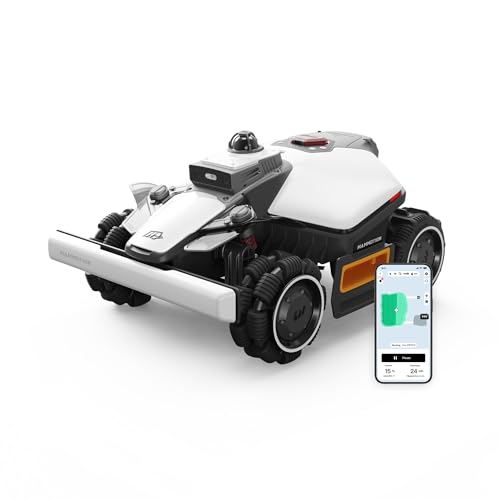
Mammotion LUBA mini 2 AWD 1500H (0.37 Acres)

Mammotion LUBA 3 AWD 1500H Robot Lawn Mower
YARDCARE V100 Robot Lawn Mower (1600 sq ft)

ANTHBOT M5 Robot Lawn Mower with Garage (1/8 Acre)

ANTHBOT M9 Robot Lawn Mower (1/4 Acre)

ANTHBOT 0.9 Acre RTK Robot Lawn Mower

ANTHBOT N8 Robotic Lawn Mower with Sweepe (3/8 Acre)

YARDCARE M800Plus Robot Lawn Mower (8611 sq ft)
A Breakdown Of The Leading Choices
The YARDCARE V100 Automatic Robot Lawn Mower skips the buried boundary wire entirely and leans on an HD camera to tell grass from not-grass. For a small front lawn or back garden, that single decision changes everything: no trenching, no break-in period, just drop it on the turf and let the bumper sensor and visual sensor learn the edges over a few passes.
It claims to recognize up to 150 obstacle types and adjust its route after a tap, which in practice means a forgotten garden hose or a soccer ball gets nudged around rather than dragged across the yard. The 1600 square foot ceiling fits compact urban lots and townhouse patches, making this a sensible starting point for anyone who’s been curious about robotic mowing but didn’t want to commit a Saturday to installation.
Useful Strengths
- Wire-free setup that eliminates trenching and reduces install time to minutes.
- AI camera distinguishes grass from pavement, so it stays inside the lawn without manual edits.
- Bumper-and-vision redundancy handles up to 150 obstacle types for everyday yard clutter.
- Compact footprint suits townhouse courtyards and narrow side-yard strips.
- Adjusts its own path after low-speed bumps, reducing the chance of getting stuck.
Things To Consider
- 1600 sq ft ceiling is a hard cap, so it’s not the pick for a backyard that sprawls past a quarter acre.
- Camera-only navigation can struggle under heavy tree shade where lighting changes fast, which is worth keeping in mind for deeply canopied lots.
- Blade maintenance still applies; owners commonly expect to swap blades seasonally to keep cuts crisp.
Who It Suits Best
First-time robot mower owners with a small, clearly defined lawn who want a low-fuss install and don’t need slope or acreage muscle.
Where Another Pick Suits Better
For a yard with denser tree cover, the ANTHBOT M9 Robot Lawn Mower combines dual-vision plus RTK positioning to hold a steady course where a camera alone might falter.
The ANTHBOT M5 LIDAR Robotic Lawn Mower drops the boundary wire and the RTK antenna together, leaning instead on a 360-degree LiDAR scanner and dual cameras to build the map. LiDAR (light detection and ranging) works by firing invisible laser pulses and timing how long they take to bounce back, which gives the mower a precise depth map of your yard even in dim light. For shoppers who’ve watched neighbors spend a weekend stapling wire, that combination reads as instant relief.
The setup pitch is fast: set it on the lawn, open the app, and the M5 maps the property in milliseconds, ready to cut within a few minutes of unboxing. Coverage lands around an eighth of an acre, which fits the typical suburban side yard plus front strip combo. If your lawn is geometrically simple and you’d rather not bury anything, this lands in the sweet spot.
The Helpful Details
- 360-degree LiDAR builds a full perimeter map without boundary wire or RTK antenna mounting.
- Dual cameras add depth perception, helping the mower read obstacles LiDAR alone might miss.
- App-driven mapping gets the unit cutting within minutes rather than hours.
- Eighth-acre coverage suits standard suburban side and front combinations.
Worth Noting
- Without RTK, mapping accuracy can drift in long, narrow corridors or under heavy tree canopy.
- Coverage ceiling caps it at smaller lots; multi-zone larger properties will need a wider pick.
Made For
First-time robot mower shoppers who value a near-instant setup and have a yard that fits comfortably within an eighth of an acre.
Consider Something Else When
The Mammotion LUBA 3 AWD 1500H is the better match when the property sprawls across larger acreage or demands consistent centimeter-accuracy under tree cover.
The Mammotion LUBA mini 2 AWD 1500H brings all-wheel-drive traction to a property class that usually settles for two wheels. Pair that with 360-degree LiDAR plus dual-camera AI vision, and the result is a mower that holds its line on inclines where lighter bots slide sideways or stop mid-slope.
Rated for an 80% grade (roughly 38 degrees), this is the model I’d eye on a yard that drops toward a creek or climbs toward a back fence. The “DropMow” feature lets the unit relocate itself between mowing sessions for cleaner coverage, and the multi-zone manager handles up to 20 distinct lawn areas, which matters when a property splits into front, back, and side patches.
Positive Points
- All-wheel-drive grip keeps the chassis planted on steep grades that challenge two-wheel-drive rivals.
- LiDAR plus dual-camera AI vision catches obstacles earlier, cutting down on mid-mow stops.
- Up to 20-zone management for split properties with separate grass areas.
- Includes a garage to shield the unit from rain and direct sun between runs.
Trade Offs
- Heavier AWD chassis may leave more visible tire tracks on soft, wet soil.
- Pricing tier sits above entry models, so casual users on flat lots won’t recoup the cost.
Key Product Details
Best Suited To
Homeowners with hilly, multi-zone lawns up to roughly a third of an acre who need traction and structured coverage more than absolute lowest cost.
A Better Fit Elsewhere
If your lot is dead flat, the ANTHBOT M5 Robot Lawn Mower with Garage delivers multi-zone mapping without the AWD premium.
The Mammotion LUBA 3 AWD 1500H Robot Lawn Mower steps into territory where the yard becomes a small farm. A 360-degree horizontal and 59-degree vertical LiDAR sweep reaches up to about 230 feet, turning the property into a dense, real-time point cloud that the AI chip uses to plan routes. For shoppers tired of seeing bots wander in lazy arcs, that level of perception reads as the difference between random walks and clean parallel lines.
Note that the garage ships separately, so factor that into delivery planning. The included extra blade set helps stretch maintenance intervals, and the rugged AWD platform carries the same slope handling as the smaller LUBA mini 2 AWD. For a homeowner who treats lawn presentation as a hobby, this is the build that takes the routine off the calendar.
What Earns Its Place
- Long-range 360° LiDAR builds a high-density map of large properties for cleaner pathing.
- AWD chassis plus all-wheel traction for steep, uneven ground that flattens lighter units.
- Extra blade set in the box extends time between blade replacements.
- Garage add-on protects the deck from weather during idle hours.
Minor Gripes
- Garage arrives in a separate package, which complicates first-day setup.
- Premium tier pricing reflects the spec sheet, so smaller lawns won’t see proportional value.
Technical Highlights
Who Should Grab It
Owners of larger or topographically complex properties who want a feature-rich robotic platform and accept the premium tier for cleaner results.
Skip It When
For a quarter-acre flat lot, the YARDCARE M800Plus Robot Lawn Mower covers similar ground at a more approachable tier without the AWD hardware.
This YARDCARE V100 Robot Lawn Mower carries the same HD vision brain as its sibling higher in the lineup, packaged for the household that only needs to mow a small back garden. The 1600 sq ft ceiling suits a townhouse courtyard, a side-yard strip between garage and fence, or a compact backyard behind a starter home.
What changes here is the supporting feature set. The unit relies on camera-based grass detection plus a bumper sensor to navigate, and like the first YARDCARE on this list, there’s no wire to bury. For a homeowner who mows once a week and just wants the chore to disappear, this delivers without asking for setup patience.
What Helps Most
- Wire-free HD camera navigation keeps install time minimal.
- 1600 sq ft coverage matches the typical small-lot homeowner.
- Visual sensor and bumper work together to skirt common backyard obstacles.
- Compact body stores easily in a garden shed or alongside a trash bin area.
Honest Caveats
- Under heavy shade, camera navigation can confuse edges, so lots under dense trees may see more nudges and course corrections.
- Not built for slopes beyond gentle grades, so hilly yards should look at AWD alternatives.
Perfect Match For
Suburban owners with a tidy, low-slope backyard under 1600 square feet who want the simplest path to robotic mowing.
Look Elsewhere When
For a yard that climbs toward a back fence, the Mammotion LUBA mini 2 AWD 1500H brings the AWD traction that camera-only bots lack.
The ANTHBOT M5 Robot Lawn Mower with Garage layers full-band NRTK (Network Real-Time Kinematic, a satellite positioning method that reaches centimeter precision by correcting GPS data with a reference signal) on top of dual-camera vision, and the combination reads like a serious engineering bet on positioning. Where pure camera systems can drift in low light, NRTK holds the map steady, and the dual cameras back it up when satellites get noisy.
The package includes a garage to keep the unit out of the weather, plus app-based obstacle avoidance that flags objects rather than just bumping them. With 45% slope handling, multi-zone mapping, and adjustable cutting height, this M5 sits in the sweet spot for the homeowner whose property splits across a front lawn, a side strip, and a back garden.
Standout Benefits
- Full-band NRTK holds centimeter accuracy even in shaded or partially obstructed areas.
- Garage included, so the unit parks under cover from day one.
- Multi-zone mapping routes the mower through disconnected lawn patches.
- Adjustable cutting height adapts to seasonal grass growth.
Where It May Fall Short
- Eighth-acre ceiling limits use on larger suburban lots.
- NRTK relies on steady satellite coverage, so dense urban canyons may see occasional drift.
Feature Snapshot
Right Fit For
Suburban homeowners with split lawns across front, side, and back zones who want centimeter-accurate mapping without stepping up to premium-tier pricing.
Not Your Match When
For an estate-sized property with tree canopy that blocks satellites, the ANTHBOT 0.9 Acre RTK Robot Lawn Mower uses a 4-eye vision system that doubles as GPS failover.
The ANTHBOT M9 Robot Lawn Mower takes the dual-vision plus RTK formula and stretches it across a quarter acre, which lands squarely in mid-size family territory. The M9 borrows Adaptive Cruise Control logic from the car world, letting it slow down when it senses an object ahead rather than waiting for a bumper tap to register the obstacle.
The M9 also supports full-band RTK plus NRTK positioning, so it pairs satellite corrections with reference signals for centimeter-level paths. That’s a quiet upgrade for a property whose lawn runs along fences, garden beds, and play structures. With 45% slope handling and multi-zone mapping built in, this is the platform to consider when the lot gets busy.
Strong Points
- Adaptive Cruise Control slows the unit near obstacles, reducing mid-mow stalls.
- RTK plus NRTK positioning supports centimeter-level routing across wider zones.
- Quarter-acre coverage handles most family-lot layouts without extension hardware.
- Multi-zone mapping routes between detached lawn patches under a single plan.
Points To Note
- Setup may need reference-station calibration depending on property line of sight to satellites.
- Capacity scales up but battery cycles per session tend to increase, so heavier weeks may need dock breaks.
The Right Fit
Families managing quarter-acre lawns with mixed obstacles and several separated grass zones who want premium positioning without the largest-acreage price tag.
Reach For A Different Pick When
For larger estates under heavy tree canopy, the ANTHBOT 0.9 Acre RTK Robot Lawn Mower brings a 4-eye vision fallback that keeps it cutting when satellites fade.
The ANTHBOT 0.9 Acre RTK Robot Lawn Mower climbs into estate territory, covering nearly an acre without burying wire or mounting an external RTK pole. Full-band satellite coverage pairs with a 4-eye vision array, giving the mower a fallback when tree canopy or building walls block the sky view.
That dual positioning system matters most in the parts of the lawn that ruin the average bot’s day: the shaded strip behind the garage, the side yard tucked between two maples, the back patch near the workshop. With up to 30 multi-zone management, accurate obstacle avoidance, and an intelligent anti-theft system, this is the unit that scales with property ambition.
Useful Highlights
- Full-band RTK plus 4-eye vision positioning keeps routes stable in GPS-fragile zones.
- Up to 30 multi-zone management for properties with disconnected lawn patches.
- Anti-theft layer adds accountability when the mower operates out of sight.
- 0.9 acre ceiling covers most residential estates in a single platform.
Practical Considerations
- Reference-station placement affects positioning accuracy, so a clear sky view at install is helpful.
- High-end hardware means more to manage during software updates and seasonal storage.
Built With In Mind
Estate owners with tree-shadowed lawns and multiple detached grass zones who need positioning that survives poor GPS conditions.
Another Choice May Suit
For a simpler rectangular yard under a quarter acre, the YARDCARE M800Plus Robot Lawn Mower offers GPS plus 3D vision without the multi-acre overhead.
The ANTHBOT N8 Robotic Lawn Mower with Sweepe reframes what a robot mower does. Beyond standard mowing, it mulches, bags, and sweeps leaves through a Cyclone System running at 4,000 rpm. That kind of suction clears nearly all the leaves and debris in its path, turning autumn cleanup into another hands-off job.
A 23L grass box means fewer dock-side emptying trips, and the auto-dump function handles disposal on its own. The N8 still rides on NRTK positioning for stable routing, and the multi-mode design makes this the unit for shoppers who want one machine covering spring growth, summer cuts, and fall leaf management. It might be the most versatile pick on the list.
Noteworthy Benefits
- Four-in-one function covers mowing, mulching, bagging, and leaf collection.
- 4,000 rpm Cyclone System captures the bulk of leaves in a single pass.
- 23L grass box reduces manual emptying intervals.
- Auto-dump feature handles disposal at the dock.
- NRTK positioning supports consistent routing across modes.
Details To Watch
- Bigger grass box adds weight, which can show in tire ruts on soft, damp soil.
- Multi-function maintenance is more involved than a single-purpose mower, with more parts to clean seasonally.
Feature Card
Whose Shelf It Belongs On
Homeowners with mature, leafy trees who want year-round lawn care from a single robotic platform rather than a dedicated leaf vacuum.
Swap It Out When
For properties with very few trees, a pure mowing unit like the YARDCARE V100 Robot Lawn Mower covers the basics at a more accessible tier.
The YARDCARE M800Plus Robot Lawn Mower pairs GPS with 3D vision, two systems that complement each other on larger residential lawns. GPS holds the wide-area position while the 3D vision reads the immediate surroundings for grass edges and obstacles. A 32.8 ft magnetic stripe adds a quick boundary option for sensitive areas like flower beds, and bow-shaped mowing produces a tighter pattern than the lazy arc coverage of older bots.
Auto-charging sends the unit back to dock when the battery dips, and app control opens scheduling and zone tweaks from a phone. At 8611 sq ft of coverage, this fits the bigger suburban lot where the entry-tier bots run out of capacity but the premium acreage platforms feel like overkill. Worth noting: lawns with grass above 2.6 inches benefit from a pre-mow trim to let the AI map edges cleanly.
Where It Excels
- GPS plus 3D vision combines wide-area positioning with close-range edge reading.
- Bow-shaped mowing produces tighter, more uniform patterns than arc-based coverage.
- 32.8 ft magnetic stripe adds quick protection for flower beds or play areas.
- Auto-charging and app control simplify day-to-day operation.
- 8611 sq ft coverage fits larger residential lawns without an estate-tier price.
Factors To Consider
- Best results require a pre-mow trim when grass exceeds 2.6 inches, which adds a step for overgrown lawns.
- GPS performance depends on clear sky, so heavily canopied lots may see occasional course corrections.
Who Will Love This
Suburban owners with mid-to-large residential lawns who want clean bow-shaped cuts and the convenience of magnetic-stripe boundaries.
Where A Sibling Pick Shines
For lawn areas with heavy leaf fall, the ANTHBOT N8 Robotic Lawn Mower with Sweepe adds leaf collection without sacrificing mowing coverage.
What To Weigh Before Choosing a Robotic Mower
The first decision is yard size, and that’s where most shoppers overshoot. Coverage ratings on the box describe maximum area under ideal conditions, but real lawns run into obstacles, narrow side strips, and shaded patches that eat into runtime. A yard that measures 1600 square feet on paper often feels bigger to a robot navigating around a swing set and three flower beds, so sizing up slightly tends to age better than sizing down.
Navigation philosophy matters as much as raw specs. Camera-only systems read the world the way your eyes do, which works in open sun but stumbles under heavy canopy or sharp light transitions. LiDAR (laser-based depth mapping) handles dim light well but can miss small, low-profile obstacles. RTK (satellite correction that reaches centimeter accuracy) is precise but needs a reasonably clear view of the sky, and it can lose signal under dense tree cover. The most reliable setups combine two or three of these methods so the bot has a fallback when one falters.
Terrain is the third filter. Flat lawns under 1600 sq ft get along fine with a budget-friendly camera bot. Sloped or uneven ground pushes shoppers toward AWD platforms with the grip to hold a line on hills. Multi-zone properties with disconnected lawn patches benefit from dedicated zone management, and shoppers who want year-round value should consider platforms that handle leaves, not just grass.
Sub-topic options for the buying guide
- Boundary style and installation effort. Wire-free setups that lean on cameras or LiDAR need only a charging station and an app pairing, which takes minutes. Magnetic stripes offer a middle path for sensitive zones. Buried boundary wire remains an option on some legacy models but costs a Saturday of trenching, so most shoppers in 2026 skip it.
- Connectivity and app control. Most robotic mowers lean on a phone app for scheduling, zone management, and software updates. Strong Wi-Fi coverage at the dock matters more than people expect, since firmware updates and live mapping both ride on that connection.
Key Considerations Across These Picks
Mistakes Worth Dodging
The most common mistake is buying more mower than the yard needs. Premium acreage platforms with full-band RTK plus AWD drive systems deliver on half-acre estates but feel excessive on a 1200 sq ft patch, where a camera-based bot finishes the job in less time than it takes to find the dock on the heavy model. On the flip side, shoppers who pick the smallest coverage tier to save money often find the mower cycling to recharge mid-mow, which adds hours to weekly maintenance.
A second slip is ignoring the slope rating. Flat suburban lawns hide small grades that feel trivial until the mower starts sliding sideways on damp grass. For any yard with a noticeable incline, AWD plus a published slope percentage keeps the routine on schedule. Look at the listed grade, not the marketing language around it, since “all-terrain” claims tend to mean gentle bumps rather than real hills.
When Paying More Pays Off
Higher-tier models cost more because they stack sensing systems, drive hardware, and software into one platform. The upgrade tends to pay off for shoppers with tree-covered lots, multi-zone layouts, or yards that climb past 15 degrees of slope. There, the extra dollars buy positioning that survives GPS shadows, traction that holds on wet grass, and obstacle awareness that prevents mid-mow rescues.
For flat, open, single-zone lawns under a quarter acre, the upgrade rarely justifies itself. The mid-tier picks in this roundup carry enough sensing and coverage for that scenario, leaving the premium platforms for properties where the conditions actually demand them.
Frequently Asked Questions
How does a robot lawn mower navigate without a boundary wire?
Modern units use a combination of cameras, LiDAR, GPS, or RTK positioning to build a digital map of the lawn. The mower recognizes grass versus non-grass surfaces and routes around obstacles based on the map and real-time sensing, which removes the need to bury a physical boundary.
Can robot mowers handle slopes and uneven ground?
Several models in this roundup list slope handling between 45% and 80%, paired with all-wheel-drive traction. On truly steep or rough terrain, those specs matter more than coverage area, since a mower that slides sideways wastes runtime.
What happens to grass clippings?
Most robotic mowers cut frequently and finely, leaving clippings to mulch back into the lawn as natural fertilizer. Some platforms, like the ANTHBOT N8 Robotic Lawn Mower with Sweepe, add bagging or auto-dump options for properties with heavier debris loads.
How long does a robot mower typically take to map a yard?
Mapping time depends on the navigation system. Pure LiDAR systems can finish mapping in minutes, while RTK platforms may need a longer initial pass plus reference-station calibration. After the first session, subsequent mows run automatically on the saved map.
Are robot mowers safe around pets and children?
Most units include bumper sensors, lift detection, and obstacle avoidance that stops the blades when the chassis is tilted or lifted. As with any outdoor power tool, supervision is wise around curious pets or small children, especially during initial map runs.
Closing Remarks
The right robotic mower comes down to matching your yard’s size, slope, and obstacles to the platform built for them. A small townhouse patch asks for a different tool than a tree-shaded estate, and the ten options above reflect that range. Pick the tier that fits the property, double-check the slope rating if the lawn climbs, and lean on the multi-zone picks when the grass splits across disconnected patches. The rest of the Saturday mornings belong to you.