A dead battery turns a perfectly good mower into a lawn ornament. Anyone who has hit the key on a chilly morning and heard nothing but a click knows the frustration. The right replacement keeps a Craftsman (and plenty of other riding mowers) firing through thick grass, freezing starts, and long weekend sessions without complaint.
The Main Contenders

WEIZE 12V 300CCA BCI Group U1 SLA Battery for Lawn Tractors

WEIZE 12V 200CCA BCI Group U1 SLA Battery for Lawn Tractors

Stens 435-103 Starter Solenoid for AYP, Husqvarna, Toro

Mighty Max 12V 35AH SLA Battery for Riding Mower (2 Pack)

MARXON U1 Riding Lawn Mower Battery 12V 330CCA

WEIZE 12V 350CCA BCI Group U1 SLA Battery for Lawn Tractors

UPLUS U1 Riding Lawn Mower Battery 12V 330CCA Maintenance Free

Autocessking U1 Lawn Garden AGM Battery 320CCA
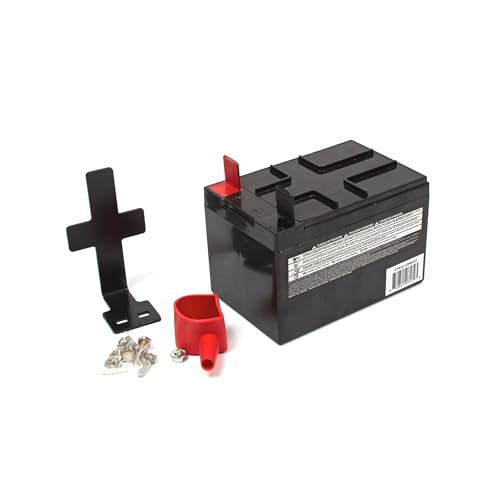
Briggs & Stratton 7600188YP Sealed Battery Kit

GICOOL 21 Inch Deck Mower Blade for EGO LM2114
More On The Choices That Made The List
WEIZE built this Group U1 battery for the heart of the small-engine riding mower world, where reliable cranking matters more than flashy specs. At 12V and 300CCA, it sits in the comfortable middle of the CCA spectrum and handles Craftsman, John Deere, Toro, and Cub Cadet trays without complaint. For homeowners who mow weekly and want a fresh, sealed AGM (absorbent glass mat, a maintenance-free battery design) drop-in, this is the kind of part that disappears into the machine and just works.
Cold mornings and long storage winters are where a battery earns its keep, and 300CCA gives enough headroom for spring startups in most regions. The Group U1 footprint matches the standard Craftsman battery compartment, so installation usually takes a basic socket set and ten minutes.
The Upside
- 300CCA gives confident starts even after a long winter sit
- Sealed AGM construction means no acid spills or fluid top-offs during routine maintenance
- Standard Group U1 dimensions fit Craftsman battery trays without modification
- Works across several major riding mower brands, which simplifies reorders
Things To Consider
- Shipping may be limited by carrier hazmat rules, so delivery scheduling can stretch
- Heavier than some lower-CCA alternatives at roughly 18-19 lbs
Key Specs
Built With In Mind
Homeowners with a Craftsman riding mower who want one solid, all-season replacement without overthinking it.
Swap It Out When
Shed dwellers in very cold northern regions may want the extra cranking headroom of the WEIZE 350CCA option instead.
This is the same Group U1 form factor as the 300CCA sibling, but with a lower cold cranking amp (CCA) rating aimed at light-duty riding mower owners. Think weekend lawns, mild southern winters, and machines that never sit for months on end. The sealed lead-acid construction keeps the unit maintenance-free, which matters when the battery sits under a hood most of the year.
Where this WEIZE loses ground is in raw starting torque. CCA measures a battery’s ability to crank an engine in cold conditions, so a 200CCA unit has less reserve than a 300 or 350. For someone mowing a flat half-acre every Saturday in zone 8 or 9, that’s rarely a problem.
A Few Highlights
- Lower price point for budget-conscious shoppers
- Standard Group U1 sizing fits the same Craftsman tray as the higher-CCA WEIZE models
- Sealed AGM design eliminates routine water checks during ownership
Points To Note
- 200CCA can feel marginal in sub-freezing spring starts
- Heavier than some peers at about 21-22 lbs due to internal plate composition
- Not the best fit for mowers with electric PTO clutches drawing heavy accessory loads
The Right Fit
Warm-climate suburbanites who mow regularly and just need a dependable refresh of an aging battery.
Reach For A Different Pick When
Northern-property owners facing deep cold should step up to the MARXON U1 330CCA for safer cold-weather starting.
The Stens 435-103 is technically a starter solenoid rather than a battery, but it’s the most common culprit when a Craftsman won’t crank. The solenoid is the heavy-duty switch that sends battery current to the starter motor when the key turns. If the battery is healthy and the engine still won’t turn over, this little cube-shaped part is usually the next thing to check.
It cross-references a long list of OEM numbers from AYP, Husqvarna, Toro, and several other brands, which makes it a strong “one part on the shelf” choice for shops or homeowners who own multiple machines. A clicking sound with no crank is the classic symptom it fixes.
Positive Points
- Cross-references multiple OEM part numbers across several mower brands
- Compact four-terminal design drops into existing mounting brackets
- Restores cranking function at a fraction of dealer service pricing
Minor Gripes
- Requires basic electrical diagnosis to confirm the solenoid is actually the failure point
- Not a battery, so it doesn’t address weak cranking from an aging battery
Made For
Tinkerers and small-engine mechanics who troubleshoot a no-crank condition before paying for a dealer visit.
A Better Fit Elsewhere
Anyone who hasn’t yet tested the battery should start with the WEIZE 12V 300CCA and only consider this solenoid if the battery checks good.
Mighty Max leans into the 35Ah capacity rating (amp hours, a measure of how much energy a battery can deliver over time) instead of the usual CCA language, and arrives as a two-pack. The ML35-12 is a classic sealed lead-acid cell, sized for John Deere and similar larger riding mowers. Having a spare on the shelf is the real pitch for households running more than one machine.
The dimensions run a bit taller and slightly narrower than the Group U1 batteries earlier in this list, so it’s worth measuring the tray before ordering. Where this pack shines is longevity in deep-cycle-style use, especially for mowers with electric PTO (power take-off) clutches that draw steady current.
Everyday Perks
- Two batteries per order covers backup or a second machine
- Sealed SLA design tolerates storage in a garage without venting concerns
- Higher amp-hour capacity handles accessory loads like headlights and electric blades
Room For Improvement
- Taller form factor than Group U1, so it may not fit smaller Craftsman trays without modification
- Listing ships batteries and screws only, no wire harness or mounting kit
Who It Suits Best
Owners of larger frame riding mowers or households with multiple machines who want a matched pair on hand.
Where A Sibling Pick Shines
For a standard compact Craftsman tray, the WEIZE 300CCA is a closer dimensional match than this 35Ah unit.
MARXON targets the older garden-tractor crowd with this U1-form-factor battery, and the compatibility list reads like a small-engine swap meet: AGCO, Husqvarna, Gravely, Exmark, Bob-Cat, and a dozen more. At 330CCA, it lands slightly above the WEIZE 300CCA and gives a little extra breathing room for older engines with higher compression or worn starters that drag on cold mornings.
For anyone restoring a vintage Craftsman or running an older zero-turn, the broad brand coverage is the real selling point. Same dimensions as a standard Group U1, so it slips into most trays without shimming or bracket work.
What Stands Out
- 330CCA offers noticeable headroom over typical 250-300CCA replacements
- Compatibility list covers an unusually broad range of legacy garden tractors
- Sealed construction means no fluid checks during routine ownership
Small Caveats
- Not the cheapest U1 option in this roundup for shoppers on a tight budget
- Standard positive-left polarity is right for most mowers, but worth confirming on older machines
Feature Snapshot
Best Suited To
Owners of older garden tractors and zero-turns who need a confirmed fit across a long OEM list.
Another Choice May Suit
Someone wanting a factory-fresh Craftsman-specific brand match may prefer the WEIZE 350CCA for higher cranking power.
The 350CCA variant is the strongest WEIZE in this roundup, and it targets the cold-climate corner of the riding mower market. CCA measures how much current a battery can deliver for 30 seconds at 0°F without dropping below a usable voltage, so a higher number translates directly into easier winter starts. Compared to the 300CCA sibling earlier in this list, the extra 50 amps can mean the difference between a brisk start and a sluggish crank at 10°F.
The trade-off shows up in weight. At roughly 21-22 lbs, it’s a bit heavier to lift into a tractor frame, though most owners will only handle it once at install time. Same Group U1 dimensions, same positive-left polarity, same broad brand compatibility.
The Case For It
- Highest CCA in this roundup for confident sub-freezing starts
- Sealed AGM design eliminates watering during the multi-year ownership cycle
- Standard Group U1 dimensions match Craftsman and most peer mower trays
Worth Noting
- Premium weight may be awkward when lowering into a tight battery compartment
- Cold-climate benefit is minimal for owners in mild southern regions who wouldn’t notice the extra 50CCA
Perfect Match For
Northern homeowners storing a mower through long winters and demanding strong cold-weather cranking.
Consider Something Else When
A budget-conscious shopper in a warm climate would do fine saving with the WEIZE 200CCA option instead.
UPLUS markets itself around pure-lead construction and a five-year service life expectation, which is an unusually long horizon for a U1 lawn battery. The 330CCA rating puts it right in the middle of the pack, but the real pitch is the sealed AGM design that locks out spills, leaks, and water checks entirely. For owners who never want to think about their battery again, this is the closest thing to “install and forget.”
The brand list spans the usual suspects: John Deere, Cub Cadet, Husqvarna, Craftsman, Toro, Ariens, Poulan Pro, and Troy-Bilt. Standard dimensions, standard polarity, and the same Group U1 footprint that the rest of this roundup uses.
A Favorable Mix
- Pure-lead plate construction for longer calendar life in storage
- 330CCA provides solid cold-start headroom for most climates
- Completely sealed, so no terminal corrosion or acid venting during ownership
Points To Keep In Mind
- Carries a slightly higher price tag than entry-level Group U1 options
- Heavier build can be noticeable during installation in tight mower compartments
Feature Snapshot
Who Should Grab It
Set-it-and-forget-it owners who want a long-life sealed battery and don’t mind paying a bit more upfront.
Not Your Match When
Shoppers focused on lowest cost should pick the WEIZE 200CCA, which covers the same tray dimensions for less.
Autocessking slots into the middle of the CCA spectrum at 320CCA and uses the Group 1 form factor that lines up with most Craftsman battery compartments. The brand compatibility list covers John Deere, Toro, Cub Cadet, and Craftsman, which covers the bulk of the riding mower population. It’s the kind of part that doesn’t stand out in a spec sheet, but doesn’t disappoint either.
The sealed AGM construction handles routine ownership without demanding water checks or terminal cleaning, which most people appreciate. It’s a quiet achiever rather than a headline-grabber.
Points In Its Favor
- 320CCA delivers confident starts in most climate zones
- Group 1 form factor fits standard Craftsman battery trays
- Sealed AGM design minimizes maintenance over multi-year ownership
Honest Caveats
- Less brand recognition than WEIZE or UPLUS, which may concern some shoppers
- Hazmat shipping restrictions can extend delivery time
Whose Shelf It Belongs On
Shoppers who want a middle-ground CCA rating without paying a premium for the highest-output batteries in this roundup.
Where Another Pick Suits Better
Owners in very cold regions should pick the WEIZE 350CCA for additional cold-start headroom instead.
The Briggs & Stratton 7600188YP is a sealed battery kit from the engine maker’s own parts catalog, aimed at mowers powered by Briggs & Stratton small engines. The kit format usually includes hardware or terminal covers in the box, which simplifies a clean install. For owners who prefer factory-spec replacement parts, this is the most direct route.
Craftsman riding mowers have shipped with a mix of Briggs, Kohler, and other engines over the years, so confirming the engine brand before ordering is the smart move. The sealed design eliminates water checks and reduces terminal corrosion during storage.
What Helps Most
- Factory-spec replacement for Briggs & Stratton-powered riding mowers
- Sealed kit format typically includes installation hardware
- Engine-maker support simplifies warranty and service questions
Practical Considerations
- Best fit is Briggs-powered models; confirm the engine brand before ordering
- OEM replacement typically costs more than third-party equivalents of similar CCA
Who Will Love This
Owners of Craftsman mowers with confirmed Briggs & Stratton engines who prefer factory parts over aftermarket options.
Skip It When
Mowers with non-Briggs engines will find a broader-fit option like the UPLUS U1 more practical than this OEM-specific kit.
Strictly speaking, the GICOOL 21-inch blade isn’t a battery at all. It’s a high-lift replacement blade for EGO’s 56V battery-powered push mower line, specifically the LM2114 and related 21-inch deck models. It earns a spot here because so many battery-powered mower owners eventually look for replacement blades, and this one replaces the OEM AB2101 part directly.
The high-lift design (curved blade geometry that creates strong airflow under the deck) supports bagging and clean discharge. Anyone replacing a battery on an EGO mower may find this blade useful while the deck is already apart.
Benefits That Matter
- Direct OEM replacement for the EGO AB2101 part number
- High-lift design improves bagging efficiency in thicker grass
- 2-in-1 compatibility handles bagging and side discharge
Where It May Fall Short
- Specific to EGO 21-inch deck mowers, not a universal fit
- Doesn’t address battery replacement for traditional Craftsman riding mowers
Best Suited To
EGO battery-powered mower owners needing a fresh cutting blade for an aging 21-inch deck.
Look Elsewhere When
Anyone replacing a battery on a gas-powered Craftsman rider should focus on the Group U1 picks earlier in this roundup.
What To Weigh Before Choosing A Replacement Battery For Your Craftsman Riding Mower
Start with the battery group size. Most Craftsman riding mowers use BCI Group U1, which standardizes the tray footprint and terminal orientation. Measuring the existing battery and noting the positive-terminal location (almost always left side) prevents returns and the frustration of reversed cables.
Next comes CCA, or cold cranking amps. A higher CCA delivers stronger starting power when the engine is cold, which matters more in northern climates than in places where winter barely drops below 40°F. Going from 200CCA to 350CCA is meaningful headroom; going from 300CCA to 330CCA is incremental. Match the rating to your local weather and how often the mower sits unused.
Finally, decide between flooded lead-acid (FLA) and AGM (absorbent glass mat, a sealed, maintenance-free design). AGM costs more but won’t spill, won’t need water checks, and tends to last longer in seasonal storage. FLA is cheaper up front but rewards owners willing to check electrolyte levels a couple of times a year.
Key Considerations Across These Picks
Common Shopping Slip Ups
The most common mistake is buying on CCA alone without checking the physical group size and terminal polarity. A 350CCA battery in the wrong footprint won’t seat in the tray, and reversed polarity can damage cables and onboard electronics on install.
Another trap is assuming all sealed batteries are identical. AGM and gel chemistries differ in charge profile and storage behavior, and using the wrong charger can shorten life. Stick with a standard 12V AGM charger rated for small-engine batteries.
Where The Extra Money Goes
Higher-tier batteries like the WEIZE 350CCA and UPLUS U1 typically use thicker internal plates, purer lead, and tighter quality control. The result is longer calendar life, more consistent cranking across the seasons, and less voltage sag under accessory loads.
The premium is worth it for owners who mow weekly in cold weather, store the mower in an unheated shed for months, or simply want to install a battery and not think about it again for several years. Casual weekend mowers in mild climates usually do fine with mid-tier options.
Frequently Asked Questions
How long does a Craftsman riding mower battery typically last?
A sealed AGM battery in a Craftsman riding mower usually lasts three to five years with normal seasonal use. Mowers stored in heated garages tend to outlast those parked in unheated sheds through long winters.
Can I use a higher CCA battery than the original?
Yes, going to a higher CCA battery is safe as long as the group size and terminal polarity match. The starter draws only what it needs, so extra cranking amps just sit in reserve for cold mornings.
What’s the difference between U1 and Group 1 batteries?
BCI Group U1 and Group 1 are the same form factor, just referenced under slightly different naming conventions across brands. Either label should fit a standard Craftsman battery tray without modification.
Do I need to charge a new battery before first use?
Most sealed AGM batteries arrive partially charged and benefit from a top-off charge before first install. A standard 12V AGM charger brought up to full charge extends battery life from day one.
How do I know if my mower problem is the battery or the solenoid?
A slow, labored crank points to a weak battery, while a single click with no crank usually means a bad solenoid or cable connection. A quick voltage test across the battery terminals confirms the battery before replacing the solenoid.
The Takeaway
The right battery comes down to matching group size, picking a CCA rating suited to the local climate, and choosing AGM if low-maintenance ownership matters. From the WEIZE 300CCA all-rounder to the cold-weather WEIZE 350CCA and the OEM-direct Briggs & Stratton kit, each pick on this list solves a different kind of dead-battery problem. Measure the tray, confirm the polarity, and the rest of the choice is mostly climate and budget.