Big lawns and thick thatch don’t get along. When matted roots choke out grass across an acre or more, you need a tool that covers ground without wearing you down. I pulled together eight solid options, from manual rakes that reward patience to corded machines that finish the job before lunch.
An Overview Of The Picks

THE GROUNDSKEEPER II 55-Inch Lightweight Rake (21-Inch Head)

Bully Tools Bow Rake 16″ Tines Heavy Duty

FreshFarm Small Rake 63-Inch Adjustable (11 Metal Tines)

Wolf-Garten UGM Multi-Change Moss Removal Rake Head

Gardena 3391 Combisystem 14-Inch Aerator Rake Head

Gardena 3395 Combisystem 12.8-Inch Thatching Rake Head

YEELOR Thatch Rake with 66-Inch Adjustable Handle
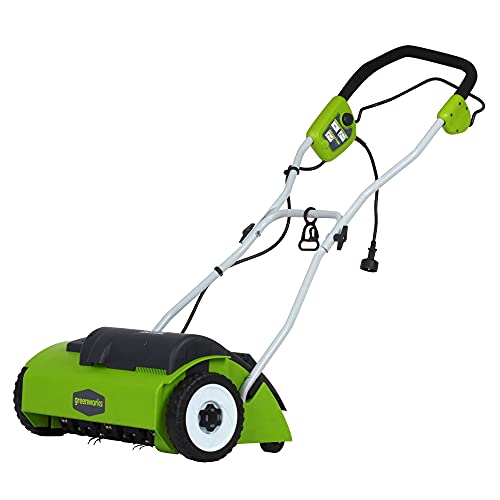
Greenworks 10 Amp 14″ Corded Electric Dethatcher
Why These Options Stand Out
Manual thatching on a big lawn is mostly a stamina question, and the GroundsKeeper II answers it with a 21-inch head that pulls up wide swaths per stroke. The fiberglass handle keeps the weight low so my arms hold up past the first hour, and the angled spring steel tines bite into matted thatch without needing me to lean hard on the tool. For homeowners with a half acre or so who want a workout rather than a machine, this is the place to start.
Compare that to most flat-tine leaf rakes: those flex over surface debris but never reach down to the thatch layer where compaction starts. The GroundsKeeper pulls the actual problem to the surface.
What It Does Well
- Spring-loaded steel tines dig in without extra downward pressure, saving shoulder fatigue over long sessions.
- Wide 21-inch head covers roughly two square feet per pull, which matters on yards pushing a half acre.
- Fiberglass handle won’t splinter or snap the way wood handles tend to after a season of wet storage.
- Co-polymer head and replaceable tines mean worn parts can be swapped rather than the whole tool retired.
Worth Bearing In Mind
- Manual raking across a full acre takes real time, often two to three hours for a single pass.
- Tine tension can loosen over seasons; owners commonly report needing a quick re-tighten after heavy spring use.
Whose Lawn It Belongs On
Homeowners with a half acre who want a low-cost, low-storage tool and don’t mind putting in the elbow grease.
Consider A Different Pick When
Anyone tending more than an acre should reach for the Greenworks 10 Amp 14″ Corded Electric Dethatcher instead, since powered tines finish the job in a fraction of the time.
The Bully Tools Bow Rake isn’t a thatch rake in the strict sense, but it earns its place on big-lawn lists because every spring cleanup eventually needs something that can move gravel, break up compacted soil, and pull debris without flinching. The 10-gauge American steel head gives it a planted, no-flex feel that lighter rakes simply can’t match. The fiberglass handle comes in either 58 or 66 inches, which matters more than people realize when you’re raking for an hour at full extension.
Where the GroundsKeeper II targets thatch specifically, the Bully is the tool you reach for when the soil itself needs convincing.
The Practical Payoff
- 10-gauge steel resists bending even when levered into hard-packed earth or root-laced soil.
- Robotically overwelded tine connections hold up under heavy prying without snapping at the base.
- Powder-coated finish slows rust through wet seasons and storage in damp sheds.
- Two handle length options let taller folks stop hunching, which protects the lower back on long jobs.
Trade-Offs To Consider
- Heavier than a typical thatch rake, so it tires out arms faster during overhead sweeping motions.
- Tines are rigid, not springy, meaning less forgiveness if you hit a buried rock or irrigation line.
- Assembly with a Phillips screwdriver is required out of the box, taking a few minutes before first use.
Best Suited To
Property owners who split their time between lawn care and heavier landscape work like spreading gravel or breaking up soil.
Look Elsewhere When
Shoppers focused purely on thatch removal will get more value from the YEELOR Thatch Rake with 66-Inch Adjustable Handle, which is purpose-built for the task.
The FreshFarm Small Rake lives in a different lane than the wide-headed picks earlier on this list. With a narrower profile and 11 metal tines, it slips under shrubs, between perennials, and along fence lines where the GroundsKeeper II simply can’t fit. The 63-inch adjustable handle helps users of different heights find a comfortable working angle without stooping or overreaching.
I see this one more as a finishing tool than a primary thatch buster, and that’s exactly the role it’s built for.
Well-Handled Touches
- Compact head reaches tight borders where wider rakes damage stems or skip over hidden debris.
- Stainless steel construction resists the rust cycles that destroy cheaper tools after one winter outside.
- Adjustable handle length adapts to the user rather than forcing a fixed posture.
- Light overall weight keeps it accessible for gardeners who find heavier tools tiring.
Minor Gripes
- Narrow coverage makes it impractical as a primary thatch rake on anything larger than a small yard.
- Eleven tines concentrate force, which can scalp turf if pressed too aggressively into soft ground.
Perfect Match For
Gardeners maintaining landscaped beds, narrow side yards, or detailed cleanup work around mature plantings.
Reach For A Different Pick When
Someone needing serious thatch volume should turn to the Gardena 3395 Combisystem 12.8-Inch Thatching Rake Head, which has purpose-built curved tines for thatch.
The Wolf-Garten UGM is a head only, which means it pairs with the brand’s Multi-Change handle system. For shoppers already invested in that ecosystem, swapping one tool head for another takes seconds and saves significant shed space. The double-edged tines pull moss and lateral growth from cool-season lawns, which is a different job than classic thatch removal but often gets lumped in with it.
Versus the standalone rakes earlier, this is the kind of tool that rewards a longer ownership arc rather than a single weekend project.
The Case For It
- Modular design eliminates the clutter of buying a dedicated handle for every specialty tool.
- Sharp tine geometry clears moss aggressively without tearing healthy grass runners.
- European build quality typically translates to long service life under seasonal use.
- Head-only purchase costs less than full-length tools while filling a specific gap.
Things To Consider
- Handle sold separately, so total cost climbs once the matching shaft is added.
- Only fits Wolf-Garten’s Multi-Change system, locking shoppers into one brand for future buys.
Built With In Mind
Existing Wolf-Garten owners and shoppers planning a curated modular tool collection over multiple seasons.
Where A Sibling Pick Shines
Anyone who wants a complete, ready-to-rake tool without buying separate parts should consider the YEELOR Thatch Rake with 66-Inch Adjustable Handle, which ships as one piece.
The Gardena 3391 doubles as both an aerator and a thatch cutter, which makes it useful for lawns suffering from more than just surface buildup. The 14-inch working width sits in a sweet spot between narrow detail rakes and the wide GroundsKeeper head, pulling cores while slicing lateral thatch in the same pass. Like the Wolf-Garten above, it only works with Gardena’s Combisystem handles.
For compacted soil combined with thatch issues, this is one of the more practical manual options on the list.
The Upside
- Combined aerator and thatch-cutting function reduces the number of passes needed across a stressed lawn.
- Mid-width head balances maneuverability with reasonable coverage per stroke.
- Combisystem fit means one handle serves multiple Gardena attachments over time.
- Proven wobble-free connection keeps the head steady during harder pulls.
A Few Limitations
- Requires a separate Gardena handle purchase, raising total cost for first-time Combisystem shoppers.
- Harder to find in some regional markets, occasionally limiting replacement-part availability.
Key Specs
The Right Fit
Lawn owners dealing with compacted soil plus thatch buildup who want a multi-purpose manual head.
Skip It When
Shoppers who already own a sturdy fixed handle and want a complete tool should consider the Bully Tools Bow Rake 16″ Tines Heavy Duty instead.
The Gardena 3395 is purpose-built for thatch removal and includes a small supporting axle with wheels, which sounds minor until you’ve spent an hour pushing a non-wheeled rake across damp turf. The tines feature smooth-sliding backs made from stainless spring steel, so pulled thatch releases cleanly instead of clumping back onto the lawn. The 12.8-inch width is slightly narrower than its sibling the 3391, trading coverage for that wheel-assisted glide.
Long sessions on large yards benefit most from the wheels, since they reduce the lateral push force the arms and shoulders have to absorb.
Positive Points
- Wheeled axle cuts the pushing effort noticeably, especially on level ground.
- Stainless spring-steel tines resist rust and keep their flex through repeated seasons.
- Smooth-sliding tine backs release debris rather than letting it bunch up mid-stroke.
- Head-only design pairs with any standard Gardena Combisystem handle.
Where It May Fall Short
- Handle must be bought separately, raising the actual project cost.
- Wheels add slight width, so edging along hard borders takes more care than with a non-wheeled rake.
Quick Facts
Who It Suits Best
Gardeners tackling larger thatch-prone lawns who want reduced fatigue over multi-hour sessions.
A Better Fit Elsewhere
Shoppers wanting a powered option with similar coverage should consider the Greenworks 10 Amp 14″ Corded Electric Dethatcher, which handles large areas with far less manual effort.
The YEELOR Thatch Rake ships as a complete unit with a 66-inch adjustable handle, which solves the main pain point of the modular Wolf-Garten and Gardena picks above. The body uses reinforced engineering plastic, keeping weight low enough for overhead work without feeling flimsy. The manganese spring-steel teeth promise good elasticity, which matters when tines flex against thick thatch instead of snapping.
For shoppers who want a ready-to-use rake without hunting for a compatible handle, this one skips the extra steps.
Advantages To Know
- Adjustable handle lets multiple household users set a comfortable length without swapping tools.
- Manganese spring steel provides flex that holds up across seasons of thatch work.
- Lightweight plastic body reduces arm strain compared to all-steel rakes of similar width.
- UV-resistant body finish slows the sun damage that cracks cheaper plastic tool heads.
Worth Noting
- Plastic head, while light, doesn’t have the brute strength of the Bully Tools steel construction.
- Less established brand, so replacement parts may be harder to source long term.
Made For
Budget-focused homeowners who want a complete, adjustable thatch rake without buying a separate handle.
Not Your Match When
Anyone needing heavy-duty strength for compacted or rocky soil should reach for the Bully Tools Bow Rake 16″ Tines Heavy Duty instead.
The Greenworks 10 Amp corded dethatcher is the only powered option on this list, and it changes the scale of the job entirely. The 14-inch dethatching path plus a 10-amp motor turns a multi-hour manual task into roughly an hour’s work across most half-acre lawns. Stainless steel tines resist corrosion from wet grass clippings, which matters because the machine pulls a lot of plant matter with each pass.
The honest read is that manual rakes still win on small detail areas, but on open ground pushing toward an acre or beyond, the powered option earns its keep quickly.
A Few Highlights
- 10-amp motor handles dense thatch that would tire out manual raking within minutes.
- 14-inch working width covers ground quickly without sacrificing maneuverability around trees.
- Stainless steel tines hold up against moisture and repeated seasonal use.
- Corded power means no battery management or runtime anxiety during longer sessions.
Honest Caveats
- Corded design requires an outdoor extension cord and some routing awareness around the yard.
- Heavier and louder than any manual option, so storage space and neighbor courtesy both factor in.
- Pulls up a lot of debris at speed, so a cleanup plan (bags or compost bin) should be ready beforehand.
Feature Snapshot
Who Should Grab It
Homeowners with multi-acre lots or anyone who dreads spending an entire Saturday on manual thatch work.
Swap It Out When
Shoppers with smaller lawns or tight budgets will be better served by the THE GROUNDSKEEPER II 55-Inch Lightweight Rake (21-Inch Head), which handles modest yards without the noise or cord.
What To Weigh Before Choosing a Dethatcher for Large Lawns
Lawn Size and Time Budget
The honest starting point is square footage, since manual rakes make sense up to about a half acre and powered options take over beyond that. Anyone with a full acre or more is looking at a long afternoon with a GroundsKeeper II, while a corded dethatcher trims that same job to under two hours. For plots somewhere in between, a wheeled manual head like the Gardena 3395 offers a middle ground between effort and equipment cost.
Tine Design and Soil Type
Thatch layers behave differently depending on grass type and soil condition, and the tine geometry directly affects how cleanly material pulls free. Spring-loaded curved tines (as on the YEELOR and GroundsKeeper) flex around healthy grass and lift only the dead material, while straight rigid tines (like the Bully Tools) dig harder and reach compaction but risk pulling up live stems on softer turf. Clay-heavy soils generally demand stiffer tines, while sandy lawns tolerate gentler curved profiles.
Handle Length and Posture
Most adult users do best with a handle somewhere between 58 and 66 inches, which lets the rake work at the ground without forcing a hunched posture. Adjustable handles (like the YEELOR or Wolf-Garten with a separate shaft) make sense when more than one person in the household plans to use the tool. Shorter handles help for detail work under shrubs but punish the back on open stretches of lawn.
Maintenance and Storage
Steel tines benefit from a quick wipe-down and dry storage, while plastic heads tolerate rougher handling but crack under UV exposure over years. Modular systems save shed space by sharing one handle across multiple heads, though they introduce small connection parts that occasionally loosen. Corded electric machines need dry indoor storage and a safe cord-wrapping habit to avoid insulation damage.
Key Considerations Across These Picks
Where Shoppers Go Wrong
The most common slip is buying a wide-head rake for a yard full of narrow landscaped beds, then realizing the head can’t fit between plantings. The FreshFarm Small Rake exists for exactly this situation, and skipping it costs time in edging and detail cleanup. Another frequent mistake is underestimating how much thatch a healthy lawn actually holds, leading shoppers to choose a manual rake for an acre-plus lot and burning out before finishing.
Why Top Tier Costs More
Higher-end dethatchers typically add either powered motors, modular handle systems, or upgraded tine materials, and each adds genuine capability rather than just branding. The Greenworks powered unit costs more because it replaces hours of manual labor with a machine pass, which has real value for anyone with limited weekend time. Modular options like Wolf-Garten and Gardena charge a premium up front, but the cost spreads across multiple future tool heads, making each new attachment cheaper than a complete standalone tool.