Letting the grass grow while the dog days of summer stack up is the surest way to turn a tidy yard into a chore. Drop-and-go robot lawn mowers quietly solve that problem by handling the cut on a schedule, often without a boundary wire. I wrote this guide for suburban households with a quarter-acre to an acre and a half, where the lawn feels like a weekend obligation. The picks below split into wire-free GPS/RTK units for larger, complex yards and vision-based models for small lawns where a charging station fits in a tight corner.
A Snapshot Of The Selections

Mammotion LUBA 2 AWD 3000X Robot Lawn Mower 0.75 Acre

Mammotion LUBA 2 AWD 5000HX Robot Lawn Mower 1.48 Acres
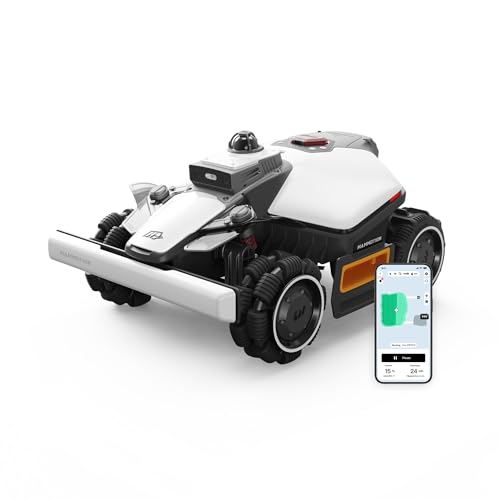
Mammotion LUBA mini 2 AWD 1500H Robot Lawn Mower

Mammotion LUBA 2 AWD 3000HX Robot Lawn Mower
YARDCARE V100 Robot Lawn Mower HD Vision

ANTHBOT M5 Robot Lawn Mower 1/8 Acre with Garage
What Each Pick Brings To The Table
The Mammotion LUBA 2 AWD 3000X enters a yard built for real terrain. Its all-wheel-drive chassis, paired with a 165 W four-wheel motor, targets 80% slope climbing, which translates to roughly a 38° grade, steep enough for hilly lots that would pin a two-wheeled unit to one spot.
For households with about three-quarters of an acre and a mix of flat and sloped grass, the 3000X makes sense. RTK positioning (a satellite-based navigation system that uses a fixed reference point for centimeter accuracy) anchors the mapping, and 4G connectivity keeps the unit reachable when Wi-Fi drops at the back fence line.
Why It Works Well
- All-wheel-drive traction holds steady on inclines where lighter bots spin out, so weekends stop disappearing into pushing a mower uphill.
- RTK satellite navigation removes the need to bury a boundary wire, saving a full afternoon of staking.
- 4G connectivity means schedules can be tweaked remotely, helpful for travel days when the lawn still needs attention.
- Three-quarter-acre coverage matches a typical suburban lot without leaving buffer gaps along edges.
Things To Consider
- RTK accuracy depends on a clear sky view; lots surrounded by tall canopy may see signal drift under heavy leaves.
- Without a dedicated garage shelter, the charging station sits exposed to weather, which can shorten the contact pins’ lifespan over time.
Feature Snapshot
Best Suited To
Owners of hilly suburban lots around three-quarters of an acre who want wire-free mapping and don’t mind RTK’s sky-view requirement.
Reach For A Different Pick When
The YARDCARE V100 makes more sense for a compact urban lawn where RTK overhead and 4G fees add complexity the yard doesn’t need.
The Mammotion LUBA 2 AWD 5000HX stretches its legs across larger properties. Reception coverage reaches 1.25 acres with a maximum operating ceiling near 1.48 acres, which makes it the right scale for rural lots, multi-zone estates, or properties with outbuildings and pathways threading between grass patches.
UltraSense AI Vision layers onto the RTK base, helping the bot read grass borders and recognize edges without needing a buried wire. Combined with adjustable cutting heights from 2.2″ to 4.0″, it adapts across cool-season and warm-season grass mixes.
What Helps Most
- Larger coverage ceiling takes the strain off multi-zone properties where smaller bots return to charge multiple times per cut.
- AI Vision support means edges are recognized without manual flagging, which trims setup time considerably.
- Adjustable deck height allows one machine to handle a manicured front lawn and a rougher back field.
- The same 80% slope climbing as its smaller siblings keeps traction on the tough corners of hilly properties.
Worth Noting
- Maximum coverage assumes ideal conditions; dense landscaping or fragmented zones tend to shrink the effective range.
- Charging time between cycles is longer on the bigger battery, so busy mornings may need scheduling tweaks to avoid mid-mow dock trips.
- Cutting height adjustments are mechanical and require stopping the unit, which matters for households that swap heights weekly.
Whose Lawn It Belongs On
Property owners managing close to an acre and a half with several distinct grass zones and varied terrain will get the most from the 5000HX.
Where Another Pick Suits Better
The Mammotion LUBA 2 AWD 3000X is a more sensible match for a three-quarter-acre lot, where the 5000HX’s extra reach goes unused.
The Mammotion LUBA mini 2 AWD 1500H is the tightest member of the family. Built for lawns around 0.37 acres, it carries the same 80% slope climbing ability as its bigger siblings while adding 360° LiDAR (a laser-based sensor that maps surroundings in a full dome shape) plus dual-camera AI Vision, a combination that improves obstacle recognition in cluttered yards.
The included garage keeps the unit sheltered between cuts, which protects the charging contacts from rain and reduces cleaning. Multi-zone management for up to 20 zones lets the bot pivot between a front strip, side yard, and back lawn without manual intervention.
The Helpful Details
- 360° LiDAR combined with dual cameras catches low obstacles like garden hoses and toys that single-vision systems miss.
- 20-zone management supports split lawns separated by walkways or planters, useful for urban properties with irregular shapes.
- The included shelter garage keeps the unit cleaner between cuts, reducing wash-down time.
- Same 80% slope capability means a small lot with a steep corner bank doesn’t force a downgrade.
Points To Note
- Half-acre-plus lawns will exceed the bot’s comfortable coverage, leaving uncut strips unless a second unit takes over.
- LiDAR turrets are visible above the chassis, adding height that some sheds and gates may not accommodate.
Quick Facts
The Right Fit
City and townhouse owners with split, obstacle-heavy lawns under 0.4 acres who want the same obstacle awareness as bigger flagships.
Look Elsewhere When
The YARDCARE V100 fits tighter budgets on tiny lawns where LiDAR and multi-zone capability add cost the yard doesn’t need.
The Mammotion LUBA 2 AWD 3000HX slots into the same three-quarter-acre target as the 3000X but adds UltraSense AI Vision on top of the RTK base. That pairing gives the bot a clearer read on grass borders and helps it navigate around garden beds and tree wells where pure satellite signals occasionally drop.
For suburban yards with mature trees and landscaping features, this hybrid approach reduces the small gaps and uncut strips that wire-free bots sometimes leave behind.
A Few Strong Suits
- Combined RTK and AI Vision fills in the gaps that pure satellite bots leave near tree canopies.
- All-wheel-drive traction supports the same 80% slope climbing, useful for split-level lots with a back bank.
- Adjustable cutting heights from 2.2″ to 4.0″ allow seasonal shifts without swapping tools.
- Wire-free setup removes the weekend spent pinning boundary cable along fence lines.
Honest Caveats
- AI Vision cameras need occasional lens cleaning, especially after pollen season or sprinkler overspray.
- RTK reference placement matters; putting the base station too close to a metal shed can degrade signal quality.
Built With In Mind
Suburban households with three-quarters of an acre, mature trees, and mixed landscaping where satellite-only navigation tends to leave touch-up strips.
Skip It When
The Mammotion LUBA 2 AWD 3000X is the leaner alternative for open lawns without heavy tree cover, where the vision layer adds cost without clear payoff.
The YARDCARE V100 strips the formula down to its most useful parts for tiny lawns. HD vision paired with a bumper sensor and on-board AI lets the unit tell grass from non-grass and recognize up to 150 obstacle types, which matters in a backyard where toys, hoses, and pet bowls are standard features.
Coverage tops out near 1,600 square feet, so this is the right choice for courtyard lawns, townhouse strips, or side-yard patches that don’t justify RTK hardware.
A Favorable Mix
- No RTK reference station or 4G subscription means setup is genuinely minutes, not hours.
- HD vision recognizes grass boundaries without boundary wire, useful for irregular urban plots.
- Obstacle catalog covers everyday backyard clutter, reducing the stop-and-bump cycles that plague cheaper bots.
- The compact body fits through narrow side gates where larger flagships physically won’t pass.
Small Caveats
- Coverage ceiling of 1,600 sq ft rules out anything bigger than a generous courtyard.
- Camera-only navigation can drift in heavy fog or late-evening light, depending on yard conditions.
- NO-GO zones must be set through the app, which adds a configuration step that wire-buried systems handle automatically.
Who Should Grab It
Urban households with small, irregular lawns under 1,600 square feet who want a vision-only setup without RTK overhead.
A Better Fit Elsewhere
The Mammotion LUBA mini 2 AWD 1500H is worth the step up for lawns with steeper grades, where the V100’s lighter chassis can lose traction on slopes.
The ANTHBOT M5 quietly targets small lawns with a confidence that punches above its size. Full-band NRTK (Network Real-Time Kinematic, a satellite positioning method that uses cellular networks for real-time corrections without a dedicated base station) pairs with dual AI cameras and adaptive cruise control, allowing the bot to handle about an eighth of an acre without a buried boundary wire.
The bundled garage is the small touch that matters day-to-day, sheltering the unit between sessions and keeping charging contacts clean.
Good Reasons To Consider
- Full-band NRTK removes the need for a fixed reference station on the property, simplifying setup for renters.
- Adaptive cruise-style pathing trims unnecessary stops, which shortens total mow time on small lots.
- The included garage shelters the unit from weather, extending contact and motor life.
- Multi-zone mapping lets the bot jump between a side strip and back patch without manual carrying.
Points To Keep In Mind
- Maximum slope rating is 45%, lower than the Mammotion line, so steep banks will need a different tool.
- An eighth-acre ceiling is tight; anything larger will need multiple daily cycles to keep up.
- NRTK depends on cellular coverage, which thin in rural pockets can affect mapping precision.
Spec Overview
Made For
Small-lot owners who want wire-free mapping without setting up a dedicated RTK base station, especially in areas with reliable cellular signal.
Consider Something Else When
The YARDCARE V100 is the simpler pick for tight urban strips where NRTK’s cellular dependency adds complexity the yard doesn’t need.
Picking The Right Fit For Your Yard
Coverage is the first number to anchor on. A lawn under 1,600 square feet gets along fine with vision-based systems like the YARDCARE V100, while anything beyond a quarter-acre usually needs RTK or NRTK precision to avoid drift along edges and property lines.
Slope matters more than most first-time shoppers expect. A unit rated for 80% climbing handles hilly suburbs, but 45% ratings like the ANTHBOT M5 are honest about moderate grades only. Measure the steepest section with a phone level app before committing.
Navigation tech stacks trade off against complexity. RTK offers centimeter accuracy but wants a clear sky view; NRTK uses cellular networks for a similar result without a base station; AI Vision handles obstacles but can struggle in low light or fog. Mature trees tend to favor RTK-plus-vision hybrids like the LUBA 2 AWD 3000HX.
Cutting height range decides seasonal flexibility. A deck that adjusts from 2.2″ to 4.0″ lets the same bot handle spring growth and summer stress cuts without manual swapping. Fixed-height units work, but limit responsiveness.
Practical ownership touches add up over time. A shelter garage protects charging contacts from rain and pollen, which reduces wash-down frequency. Swappable blade sets and clear maintenance routines matter when the bot runs daily through cutting season.
Key Things Worth Watching For
Pitfalls Shoppers Hit
Buyers often chase maximum coverage and end up with a bot that technically fits but spends half its battery returning to the dock. Match coverage to your real lawn size, not the upper limit on the spec sheet, and leave headroom for zones and edges.
A common trap is assuming any robotic mower handles slopes. Most early units stall around 25%, while flagships now reach 80%. Skipping this check on a hilly lot leads to manual pushing, which defeats the point.
Where The Extra Money Goes
Higher-tier models earn their cost through better obstacle recognition, larger batteries, and slope capability that cheaper units cannot match. AI Vision layering on top of RTK cuts down the manual edge trimming that takes real time each week, which compounds across a cutting season.
Frequently Asked Questions
How does a drop-and-go robot lawn mower differ from a traditional robotic mower?
Drop-and-go units use RTK, NRTK, or AI Vision to map boundaries without buried wire. Traditional robotic mowers rely on a perimeter wire loop installed around the lawn, which takes more setup but works in any yard.
Do these mowers handle rain and wet grass?
Most handle light moisture, though mowing wet grass tends to clog decks and leave clumps. Many owners program a rain delay so the bot returns to the dock during showers.
What maintenance do robot lawn mowers need?
Blade replacement every few weeks during peak growth, occasional deck cleaning, and contact-pin wiping on the charging station. A sheltered garage reduces how often the contacts need attention.
Can a robot mower handle multiple grass zones?
Units with multi-zone management, like the LUBA mini 2 AWD 1500H, support up to 20 zones. The bot travels between zones via programmed paths, useful for split lawns separated by walkways.
How loud are drop-and-go robot lawn mowers?
These mowers run quieter than gas mowers, typically in the 55–65 dB range. They can usually operate during early morning or evening hours without disturbing neighbors, depending on local ordinances.
Final Verdict
Start with your lawn size and slope, then pick the navigation tech that fits the layout. Suburban three-quarter-acre lots with mature trees point to the LUBA 2 AWD 3000HX, while smaller urban patches land on the YARDCARE V100 or ANTHBOT M5. The right unit turns the mower from a weekend errand into background noise.