Weekends should not belong to the mower. I have tested the spec sheets and mapped the real-world trade-offs across seven GPS-equipped robotic mowers, so households with actual lawns can pick something that fits their yard, their slope, and their tolerance for boundary wires. The picks below range from small-lot cordless vision units to all-wheel-drive hill climbers built for rough terrain and serious acreage.
A Snapshot Of The Selections
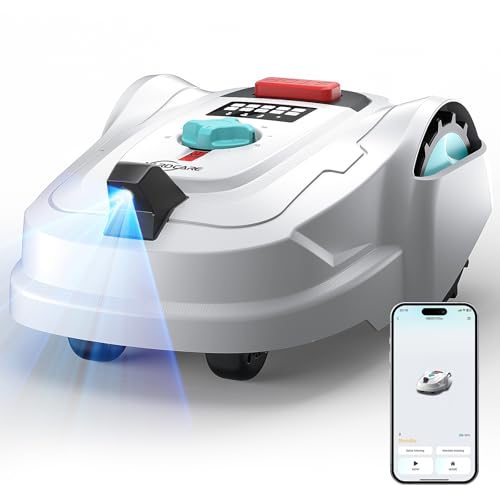
YARDCARE M800Plus Cordless Robot Lawn Mower with GPS + Visual Navigation (1/5 Acre)

Mammotion LUBA 2 AWD 3000X Robot Lawn Mower with 4G (0.75 Acre)

Mammotion LUBA 2 AWD 5000HX Robot Lawn Mower with 4G (Up to 1.48 Acres)

Mammotion LUBA 2 AWD 3000HX Robot Lawn Mower with 4G (0.75 Acre)

YARDCARE 2026 M800Plus Robot Lawn Mower with GPS & 3D Vision (Deep Black)

Segway Navimow i210 AWD Robot Lawnmower with 4 Blade Assemblies (0.25 Acre)

Neomow X2 Pro Auto-Mapping Robot Lawn Mower (1.5 Acres, 3D LiDAR)
Meet The Standout Selections
The first M800Plus earns its spot by removing the single most painful part of robot mower ownership: burying boundary wire. Instead, it leans on a high-definition camera paired with GPS, scanning the lawn to tell grass from patio, driveway, or flower bed. For a typical quarter-acre lot with defined edges, that cuts a full afternoon of digging down to zero.
APP control and bow-shaped path mowing round out a package aimed squarely at first-timers. Owners with tidy lawns under a fifth of an acre get a clean install and a predictable mowing pattern, while the 4.0Ah battery keeps runtime sensible for suburban lots.
A Few Strong Suits
- No boundary wire to bury, so setup is genuinely a Saturday-morning job.
- 3D vision identifies grass versus hardscape, helping the unit stay where it belongs.
- Bow-shaped path pattern avoids the random ping-pong look on visible lawns.
- APP scheduling puts mowing windows on a phone rather than a fiddly panel.
- Obstacle avoidance reacts to toys and garden hoses left on the lawn.
Things To Consider
- Pre-trimming tall grass above 2.6 inches is recommended, so very overgrown lawns need a cleanup pass first.
- Vision-based navigation works best with clear visual boundaries and can struggle in foggy or low-contrast conditions.
Who It Suits Best
First-time robot mower shoppers on a small, well-defined lawn who want a wire-free install and a friendly app.
Look Elsewhere When
Hills above a gentle grade push beyond what this vision-based unit is built for, making the Mammotion LUBA 2 AWD 3000X a stronger fit.
Stepping up from the YARDCARE entry point, the LUBA 2 AWD 3000X swaps gentle suburban lawns for genuine terrain. Its four-wheel-drive drivetrain is rated for 80% slopes (roughly 38°), which in plain terms means most residential hillsides stop being a problem. The 165W four-wheel motor is the muscle behind that claim.
Coverage sits at 0.75 acre, a meaningful jump from the quarter-acre tier, and 4G connectivity frees the mower from Wi-Fi range limits at the back of the property. Owners with mixed grass, ruts, or compacted soil get a unit that simply keeps moving.
Everyday Advantages
- All-wheel drive handles steep grades that stop single-axle mowers cold.
- 4G connection lets the mower roam beyond the home Wi-Fi bubble.
- 0.75-acre capacity covers medium suburban lots without a mid-day charge.
- RTK installation kit in the box simplifies the satellite-guided setup.
Worth Noting
- AWD hardware and the RTK kit add weight, so storage and charging placement matter for daily handling.
- Rough-terrain mowing often leaves owners cleaning undercarriage debris more often than with flatter-lot models.
- Higher up-front cost than vision-only units in this list.
Feature Snapshot
Made For
Homeowners with sloped, uneven yards up to three-quarters of an acre who need traction more than they need tiny footprint.
Consider Something Else When
Flat, postage-stamp lawns would benefit more from the Segway Navimow i210 AWD’s zero-turn agility.
The 5000HX is the largest-capacity pick on this list, with a maximum area of 1.48 acres and a reliable reception zone of 1.25 acres. For owners whose lawn stretches well past the house, that extra acreage translates into fewer map zones and fewer trips back to base mid-cycle. UltraSense AI Vision and RTK automatic edge mapping handle the boundary work without buried wire.
Cutting height runs from 2.2 to 4.0 inches, which is enough range for most cool-season and warm-season grass types. All-wheel drive keeps the same 80% slope capability as its smaller sibling, so acreage does not mean flat ground only.
What Pays Off
- Up to 1.48 acres of coverage handles multi-zone rural and suburban estates.
- UltraSense AI Vision combined with RTK mapping delivers wire-free edges.
- 2.2 to 4.0-inch cutting range fits both Bermuda and fescue schedules.
- AWD traction continues across the largest zone layouts in this lineup.
Trade Offs
- Battery charge cycles scale up with acreage, so planning recharge placement matters for daily top-ups.
- Larger mapped zones take more initial setup time than compact vision units.
Quick Facts
Best Suited To
Owners of large rural or suburban properties with mixed terrain who want one mower covering the whole layout.
Swap It Out When
Small urban lots under a quarter acre are better matched by the YARDCARE M800Plus, which keeps the spec load lighter.
Sitting between the 3000X and the 5000HX, the 3000HX keeps the same 0.75-acre envelope and AWD drivetrain but leans harder into wire-free navigation. UltraSense AI Vision and RTK auto-mapping are the headline additions, blending camera recognition with satellite positioning so the unit learns the lawn rather than relying on physical boundaries.
The cutting height range of 2.2 to 4.0 inches matches the larger 5000HX, which means grass-type flexibility is not sacrificed for the smaller coverage number. For households that want premium mapping without stepping into multi-acre territory, this lands in a sensible middle.
The Helpful Details
- Wire-free perimeter replaces the older generation’s buried boundary line.
- RTK auto-mapping builds the mowing zone on first run, with minimal manual calibration.
- AWD drivetrain carries the same 80% slope rating as the larger Mammotion siblings.
- Cutting range of 2.2 to 4.0 inches covers common turf varieties without a swap.
Points To Keep In Mind
- RTK antenna placement at the charging station affects mapping accuracy, so initial install planning pays off.
- Premium mapping hardware positions this unit above the entry-tier M800Plus on cost.
Right Fit For
Mid-size homeowners who want flagship-grade mapping and slope handling but do not have acreage beyond three-quarters of an acre.
Reach For A Different Pick When
Tiny, square-shaped lawns may not justify the RTK setup, in which case the Segway Navimow i210 AWD is the more agile choice.
The 2026 refresh of the M800Plus adds a physical layer to a vision-based system: a 32.8-foot magnetic stripe. That hybrid lets owners anchor a no-go zone without relying purely on the camera’s interpretation, useful around a vegetable patch or a freshly planted tree. Bow-shaped mowing and APP control carry forward from the original model.
Coverage tops out near 8,611 square feet, a comfortable fit for small suburban lots. The Deep Black finish sits quietly alongside garden edging and dark mulched beds without drawing attention. Auto-charging returns the unit to dock before the battery runs dry.
Bright Spots
- Magnetic stripe gives a tactile no-go marker for garden beds and young trees.
- Bow-shaped mowing pattern delivers an orderly, stripe-like finish.
- Auto-charging means owners never have to babysit a docking routine.
- APP control over scheduling, zones, and start points fits a modern lawn routine.
Honest Caveats
- Magnetic stripe has to be physically laid out, which reduces the “zero setup” advantage of pure vision navigation.
- Tall grass above 2.6 inches benefits from a manual trim pass before the first run.
Feature Card
Perfect Match For
Owners who want vision-based wire-free setup with the option to lock a physical boundary around specific garden zones.
A Better Fit Elsewhere
All-wheel-drive rough terrain pushes toward the Mammotion LUBA 2 AWD 3000X instead.
The Navimow i210 AWD is purpose-built for tight, twisty yards. A concentric third-wheel design enables true zero-turn pivots, so the mower rotates in place instead of looping a wide arc. For lawns dotted with island flower beds or tight side-yard corridors, that agility shows up fast.
Automotive-grade electronic stability control keeps the chassis steady on slopes up to 45% (about 24°), and the four-blade cutting head trims a noticeably wider path than typical three-blade units. Coverage tops out at a quarter acre, which keeps the unit in its sweet spot.
Key Advantages
- Zero-turn steering slips around obstacles without the usual scuff marks.
- Electronic stability control smooths out uneven patches and slopes.
- Four-blade head widens each pass, finishing a small lawn in fewer laps.
- AWD traction suits mixed turf and gentle inclines without losing grip.
Potential Drawbacks
- Quarter-acre coverage caps out quickly for owners with larger connected lawns.
- Specialized turning hardware tends to need periodic checks after heavy obstacle work.
Who Will Love This
City and townhouse owners with a small but obstacle-heavy lawn who want precision over pure coverage.
Skip It When
Bigger half-acre properties make the Mammotion LUBA 2 AWD 3000HX a stronger long-run choice.
The X2 Pro takes a different path to navigation: a 360° 3D LiDAR sensor paired with triple-vision AI obstacle avoidance, and notably no RTK antenna. For owners who do not want a satellite receiver bolted to a fence post, that is a meaningful simplification. SLAM (simultaneous localization and mapping) handles both mapping and positioning in the same hardware pass.
Coverage reaches 1.5 acres wire-free, IPX6 weather resistance shrugs off hose-down cleaning, and a 17.5Ah battery supports longer run windows. GPS anti-theft adds an extra layer for owners storing the unit outside.
The Upside
- 3D LiDAR mapping delivers centimeter-aware edges without an external RTK antenna.
- IPX6 housing allows hose-down cleaning after dusty or pollen-heavy cuts.
- 1.5-acre perimeter-free coverage rivals flagship wired systems.
- 17.5Ah battery supports extended mowing windows on large lots.
- GPS anti-theft adds security for outdoor dock installations.
- 4G app control keeps management in the phone, not at the dock.
Some Limits To Know
- LiDAR housing adds vertical clearance, so low-clearance sheds may need a measured fit.
- Premium sensor package reflects in the listing price tier.
Spec Overview
Whose Shelf It Belongs On
Tech-forward owners with large lawns who want premium mapping without installing an RTK antenna.
Another Choice May Suit
Households focused on steep slopes above 24° get more traction value from the LUBA 2 AWD 3000HX.
Picking The Right Gps Robotic Lawn Mower For Your Yard
Boundary method matters most when you actually picture your lawn. Pure vision navigation skips wire burial but asks for clear visual edges, like a defined patio or fence line. RTK-based mapping (real-time kinematic positioning, which uses a fixed reference station and a rover on the mower to pinpoint location within a couple of centimeters) requires clear sky and at least a small antenna at the charging base. LiDAR mapping avoids both wires and antennas, but the sensor housing adds vertical clearance and, in many listings, cost.
Slope rating is the next filter. A gentle grade under 20% works for nearly any unit on this list. Anything approaching 35% to 40% pushes toward AWD drivetrains, and 80% grade capability is reserved for the LUBA series. Coverage number should match the real lawn footprint, not the official property size: a 0.5-acre property with house and beds may only need 0.25 acres of mowing.
Cutting height range matters for grass type more than yard size. Cool-season fescues prefer the 3 to 4-inch band, while warm-season Bermuda likes the 2 to 3-inch band. A 2.2 to 4.0-inch range covers both with a single adjustment. Battery capacity scales with coverage, so larger lawns benefit from 15Ah-plus packs like the 17.5Ah in the Neomow X2 Pro.
Obstacle Avoidance And Runtime Reality
Triple-vision AI, single cameras, and LiDAR each handle obstacles differently. Cameras struggle in low light and fog, LiDAR keeps working but treats thin wires and pet toys as edge cases. Owners with active pets or frequent lawn furniture should prioritize systems that combine vision with a second sensor. Runtime depends on terrain roughness and grass thickness more than the printed amp-hour number, so think of capacity as an upper bound, not a guarantee.
Key Considerations Across These Picks
Common Slip Ups Worth Dodging
Matching coverage to lawn size is the single most skipped step. A 0.75-acre mower on a 0.2-acre lawn wastes battery cycles, while a 0.25-acre unit on a 0.6-acre property never finishes the job. Boundary method also tends to get underestimated: vision systems need clean visual edges, RTK systems need an antenna with sky view, and LiDAR systems need vertical clearance at the dock.
Where The Extra Money Goes
Premium tiers buy real upgrades, not just badges. AWD drivetrains, RTK centimeter-grade positioning, larger batteries, and 3D LiDAR mapping each solve a specific ownership pain. If the lawn is flat, small, and visually clear, a vision unit covers the job. For slopes above 30%, multi-zone acreage, or tech-forward mapping, the premium tiers earn their keep.
Frequently Asked Questions
How Accurate Is GPS Navigation On A Robotic Lawn Mower?
Modern GPS robotic mowers pair satellite positioning with a secondary sensor, like a camera, LiDAR, or RTK reference station, which keeps accuracy within a few centimeters. Standalone GPS alone drifts too much for tight edges, so the secondary system handles the precision work.
Can A Robot Lawn Mower Handle Wet Grass?
Most units handle light dew but struggle with soaked turf because wet clippings clump under the deck. Running a cycle after the lawn dries, usually by midday, delivers a cleaner cut and reduces undercarriage clogging.
Do I Still Need To Trim Edges Manually?
Wire-free units handle the long edges well, but vertical edges along patios and fences often need a quick string trim pass. Edge trimming frequency drops sharply after the first month as owners learn the mower’s reach.
How Long Does Installation Actually Take?
Vision-based units usually need under an hour for app setup and a test run. RTK systems add antenna mounting and reference placement, which can stretch the first session to a few hours. Magnetic stripe models fall in between, since laying the strip is a slow lap around the lawn.
What Maintenance Does A Robot Lawn Mower Need?
Blade swaps every few months and an undercarriage clean after heavy cycles are the common routines. Battery health benefits from a shaded dock and avoidance of full discharges, while firmware updates arrive through the companion app.
The Takeaway
A GPS robotic lawn mower earns its place by matching the yard, not by collecting features. Small, well-defined lawns suit vision-based wire-free units, slopes and uneven terrain favor AWD, and large or complex layouts justify RTK or LiDAR mapping. Pick the boundary method that fits the property, the slope rating the yard actually needs, and the coverage number that matches real grass, and the rest tends to fall into place.