Clover creeps into lawns every spring, and once it spreads, hand-pulling only buys time. A targeted herbicide clears it from the root without torching the surrounding turf. Homeowners working with cool-season grass often need a different tool than someone replanting a bare patch. The right pick depends on your lawn type, how patient you are, and whether you want a one-shot product or a wider toolkit that makes spraying easier.
A Fast Comparison Of The Options

Southern Ag Methylated Seed Oil (MSO) Surfactant (Quart)

Liquid Harvest Lazer Blue Spray Pattern Indicator (1 Gallon)

Southern Ag Crossbow Specialty Herbicide (1 Gallon)
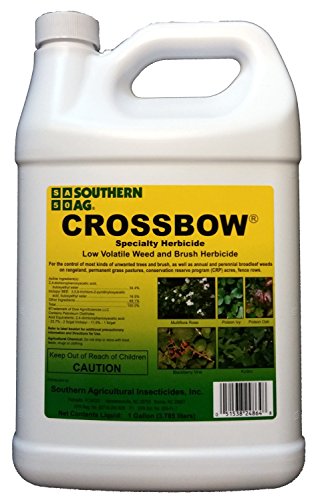
Southern Ag Crossbow Specialty Herbicide (1 Gallon)

Liquid Harvest No Foam Anti-Foam Quart

Liquid Harvest Blazer Spray Tank Cleaner (16oz)

Roundup Weed and Grass Killer4 Concentrate (64 fl. oz.)

Roundup Concentrate Plus Weed and Grass Killer (64 oz.)
A Closer Look At Each Pick
Clover leaves carry a waxy coating that sheds water-based sprays fast, which is why so many clover treatments underperform. Southern Ag Methylated Seed Oil is a surfactant, meaning a spreading agent that helps herbicide droplets cling to and penetrate waxy foliage. I see it most often paired with broadleaf killers in cool-season lawns, where coverage and absorption matter more than brute force. For homeowners already mixing their own clover treatment, this quart-sized bottle stretches across many tank fills.
One thing worth considering is that a surfactant is not a herbicide itself. You still need a clover-targeting product to mix it with, which is why this entry works as a partner rather than a stand-alone fix. Compared with the Roundup concentrates covered later, this picks up where they leave off on stubborn leaves.
Useful Strengths
- Helps herbicide droplets cling to waxy clover leaves instead of rolling off
- Quart size covers a season’s worth of mixing for typical lawns
- Doubles as a replacement for non-ionic surfactants or crop oils in most mixes
- Plays well with a wide range of post-emergent broadleaf products
Things To Consider
- Not a herbicide on its own, so it requires a separate clover-targeting product to mix in
- Overuse can cause leaf burn on sensitive grass varieties, depending on the tank mix partner
Who It Suits Best
Homeowners comfortable mixing their own tank and looking to upgrade clover absorption on stubborn patches.
Consider Something Else When
Shoppers wanting a one-bottle solution may prefer Roundup Weed and Grass Killer4 Concentrate, which lists clover directly on its label.
Spraying clover evenly across a yard is harder than it looks, and skipped strips mean the weed comes right back. Liquid Harvest Lazer Blue is a spray marker dye that tints whatever you apply so coverage shows up as bright blue against the grass. I like it most for first-time sprayers who cannot tell where the tank ran dry. The gallon size suits folks treating several thousand square feet or sharing a mix across multiple sessions.
The dye is water-based and temporary, fading with sunlight and rainfall rather than staining turf permanently. Mix compatibility is limited to water-based solutions, so it will not blend into oil-based mixes used by some specialty products.
A Few Strong Suits
- Makes spray coverage instantly visible, reducing skipped patches and overlap
- One gallon concentrates down into many tank fills for typical yards
- Non-staining formula fades with sun and water over time
- Plays nicely with most water-based herbicide, fungicide, and fertilizer mixes
Worth Noting
- Will not mix into oil-based carrier solutions, limiting some specialty tank mixes
- Blue tint can drift onto nearby concrete or shoes if sprayed on windy days
- Does not kill clover itself, so it works as a tracking tool alongside another product
Feature Snapshot
Right Fit For
Anyone new to spot spraying who wants visual confirmation of coverage before the herbicide dries.
A Better Fit Elsewhere
Homeowners wanting a single bottle that kills and tracks at once should reach for Roundup Concentrate Plus, which targets weeds directly without needing a dye.
Clover on a residential lawn is one thing, but clover mixed with brush, brambles, and woody growth along a fence row is a different job. Southern Ag Crossbow Specialty Herbicide handles both because it carries two active ingredients designed to travel through tough foliage into the roots. I see it most useful on rural properties, pastures, and fence lines where the weed problem has crossed into shrub territory. The gallon jug covers generous ground for one-time cleanups.
The catch is that this is not a casual lawn product. It is built for non-crop and pasture use, so anyone applying it near ornamental turf should read the label carefully before spraying.
Why It Works Well
- Two-active formula tackles clover, broadleaf weeds, and woody brush in one pass
- Rated for rangeland, pastures, and non-crop areas with deep root systems
- One gallon covers a large area or several spot treatments
- Post-emergent action, meaning it works on growth that has already emerged
Trade Offs
- Not labeled for residential lawns, so misuse can damage desired turf
- Restricted-use chemistry that requires careful reading of the label before mixing
- Heavier jug is awkward to pour without a pump dispenser
Best Suited To
Landowners clearing clover and brush along fence rows, pasture edges, and non-crop acreage.
Skip It When
Homeowners focused on a tidy front lawn should look at Southern Ag Crossbow Low Volatile instead, which is gentler near ornamentals.
The low volatile version of Crossbow trades a bit of raw power for less vapor drift, which matters when shrubs or ornamentals sit downwind. I recommend this one to anyone treating brushy edges next to flower beds or vegetable gardens, where the standard formula’s fumes can curl nearby leaves. It still lists clover among the broadleaf weeds it controls, so it works on lawn-adjacent patches too.
One thing worth considering is that lower volatility usually means slightly slower visible results compared to higher-volatility options, so patience pays off in the first week.
Positive Takeaways
- Reduced vapor drift protects nearby ornamentals and shrubs during application
- One gallon mixes down into up to 96 gallons of spray solution for large coverage
- Still effective on clover plus most broadleaf weeds and woody brush
- Post-emergent action targets existing growth rather than pre-treating soil
Room For Improvement
- Slower visible action than higher-volatility alternatives in cool spring weather
- Still requires careful label review for residential and lawn-adjacent use
- Not designed for spot spraying on manicured turf, so misuse can damage desired grass
Spec Overview
Whose Shelf It Belongs On
Rural homeowners and acreage managers clearing brush near sensitive ornamentals who want a less drift-prone formula.
Reach For A Different Pick When
Anyone treating a residential lawn without brush issues should consider Roundup Weed and Grass Killer4 Concentrate, which is gentler on turf.
Foam inside a spray tank looks harmless, but it pushes concentrate out before the mix is uniform, leading to uneven clover control. Liquid Harvest No Foam is a defoamer, a silicone-based additive that knocks down bubbles in agitated tanks. I see it most useful for anyone running a backpack or tow-behind sprayer with a recirculating pump. The quart bottle lasts through many fills.
Adding it ahead of the herbicide prevents foam from forming rather than waiting for overflow. The dose is small, so a single bottle stretches across an entire season of clover treatments.
Real Benefits
- Prevents foam overflow that can waste concentrate and stain clothing or pavement
- Quart size covers roughly 100 gallons of mix per ounce, depending on agitation
- Goes in before the herbicide for cleaner tank filling and more accurate dosing
- Works in hand sprayers, backpack sprayers, and recirculating systems
Points To Keep In Mind
- Dosing changes based on agitation level, so heavy recirculation may need slightly more
- Does not treat clover itself, making it a supporting tool rather than a stand-alone product
Built With In Mind
Sprayer owners dealing with foamy tank mixes on larger lawns or multi-fill sessions.
Swap It Out When
Shoppers using small hand pump sprayers with no agitation can skip this and save space for Liquid Harvest Blazer Spray Tank Cleaner instead.
Switching from a clover herbicide to a fertilizer mix in the same sprayer is risky without a thorough rinse. Liquid Harvest Blazer is a tank cleaner designed to strip leftover residue that plain water leaves behind. I see it as essential gear for anyone rotating products through one tank across a season. The pint size is enough for several deep cleans of a typical backpack sprayer.
It also helps protect metal components from corrosion between fills, which extends tank life over the long run.
The Helpful Details
- Removes chemical residue that water alone leaves behind, preventing cross-contamination
- Pint size covers multiple full-tank cleanings for most backpack sprayers
- Helps reduce metal corrosion inside the tank between seasonal rotations
- Suitable for both commercial and homeowner spray equipment
Honest Caveats
- Does not kill clover, so it works alongside another product rather than replacing it
- Requires a dedicated cleaning cycle with rinse water, adding time to the routine
Perfect Match For
Homeowners who rotate multiple products through one sprayer and want clean tanks between uses.
Look Elsewhere When
Shoppers using dedicated, single-product sprayers can save shelf space for Southern Ag Methylated Seed Oil, which boosts herbicide performance directly.
Most homeowners fighting clover in a yard do not want a chemistry project. Roundup Weed and Grass Killer4 Concentrate lists clover directly on the label, which removes the guesswork of matching the right broadleaf killer to the weed. I like it for spot treatments around flower beds, walkways, and tree rings where grass is also unwanted. The Sure Shot Wand accessory that comes with some bundles helps with precision on driveways and fence lines.
The trade-off is that this is a non-selective product, so it takes out any grass it touches. Spot spraying is the way to use it inside a lawn.
Features That Help
- Labeled for both red and white clover, which removes weed-ID guessing
- Rainproof in as fast as 30 minutes, so unexpected showers do not wash it away
- Visible results within hours for fast feedback during treatment
- Planting window of 1 to 30 days after application for follow-up landscaping
Potential Drawbacks
- Non-selective, meaning it damages any grass it lands on, so overspray hurts the lawn
- Requires careful handling around desirable plants and shrubs
Who Will Love This
Homeowners treating clover in walkway cracks, driveways, and bed edges where bare ground is acceptable.
Where A Sibling Pick Shines
Shoppers targeting clover inside a healthy lawn without harming turf should look at Southern Ag Crossbow Low Volatile for a selective option.
Mixing concentrates by eye is how most homeowners either under-dose or scorch their lawn. Roundup Concentrate Plus solves that problem with an Easy Measure Cap built into the bottle, letting you pour exact amounts straight into a tank sprayer. I recommend it for first-time clover treatments where dosing accuracy matters most. The 64-ounce jug dilutes to a generous finished spray volume, depending on the target weed.
It is non-selective, so the same caution applies as with the previous Roundup pick. Spraying inside a lawn means sacrificing the grass in that spot.
Standout Benefits
- Built-in measuring cap takes the math out of concentrate mixing for beginners
- Targets tough weeds and grasses to the root for longer-lasting control
- Rainproof in 30 minutes for reliable performance after unexpected showers
- Works in standard tank sprayers for flexible application around beds and paths
A Few Limitations
- Non-selective formula kills any grass it contacts, limiting use inside the lawn
- Not labeled for use near existing edibles, so vegetable gardens need a different approach
- Refill jugs can be heavy when full, depending on the user’s lifting comfort
Made For
First-time sprayers who want foolproof measuring and a familiar brand for clover and general weed control.
Not Your Match When
Homeowners seeking a selective clover killer for use inside an intact lawn should reach for Liquid Harvest Lazer Blue paired with a selective herbicide instead.
What Matters Most Before Choosing Herbicides For Clover In Lawns
Know Your Lawn Type First
Clover behaves differently in cool-season grass like fescue or Kentucky bluegrass than in warm-season grass like Bermuda or St. Augustine. Selective broadleaf herbicides work in cool-season lawns because the grass tolerates the chemistry, while warm-season turf needs gentler approaches. Picking a product that ignores this is the fastest way to yellow out a yard.
Match the Product to the Treatment Site
Spot spraying a few clover patches in a lawn calls for a selective product, while clearing clover along fence rows or pasture edges invites the heavier brush formulas. Walk the property before buying and identify where clover shows up most, plus what surrounds it. For most home lawns, a selective herbicide paired with a surfactant is the safer route.
Get the Adjuvents Right
A surfactant, a spreading agent that helps herbicide stick to and penetrate waxy leaves, makes clover treatments work harder per ounce. Foam control and tank cleaner products matter more for anyone running a backpack sprayer across multiple fills in a single afternoon. Skipping these supporting tools often costs more in wasted concentrate than the bottle itself.
Mind Timing and Weather Windows
Clover absorbs herbicide best during active growth in spring or early fall, not during summer heat stress. Rain within hours of spraying washes product off leaves, so a dry forecast matters more than the calendar. Visible results usually arrive within a week under good conditions, with full decline over two to three weeks.
Key Considerations Across These Picks
Pitfalls Shoppers Hit
The most common mistake I see is buying a non-selective herbicide for a lawn and watching the grass die alongside the clover. Reading the label before pouring protects both the yard and the wallet. Skipping a surfactant on waxy clover leaves is the second slip, leaving the herbicide sitting on top instead of soaking in.
Where The Extra Money Goes
Higher-tier products in this category earn their keep through better drift control, larger dilution yields, and broader label coverage. A gallon that mixes into 96 gallons of spray costs more per bottle but far less per treated acre. For anyone spraying more than a small patch, the math usually favors the concentrated formats.
Frequently Asked Questions
What Is The Best Time Of Year To Treat Clover In A Lawn?
Spring and early fall give the best results because clover is actively growing and absorbs herbicide more efficiently. Summer applications can stress both the weed and the surrounding grass during heat waves.
Can I Spray Clover Killer Without Harming My Grass?
Selective broadleaf herbicides target clover while leaving most cool-season turf types unharmed, while non-selective products kill any plant they touch. Reading the label before mixing prevents accidental lawn damage during spot treatments.
Do I Really Need A Surfactant For Clover Treatments?
Clover leaves carry a waxy coating that sheds water-based sprays, so a surfactant improves absorption and reduces wasted product. For stubborn patches, the upgrade usually pays for itself in faster results.
How Long Does It Take For Clover To Die After Spraying?
Visible yellowing typically shows within a week under good growing conditions, with full decline over two to three weeks. Cooler weather can stretch that timeline, depending on the season.
Is It Safe To Replant After Using These Herbicides?
Most products in this roundup allow replanting within a defined window after application, ranging from a few days to a month depending on the formula. The product label lists the exact waiting period for reseeding or sodding.
Closing Thoughts
Clover control comes down to matching the product to the site and the sprayer. Homeowners with a tidy lawn and a few stubborn patches often do best with a selective herbicide plus a surfactant, while acreage owners reach for the heavier brush formulas. Pick what fits the yard, and treat during active growth for the cleanest result.