Your lawn looks tired, the soil feels like concrete under your boots, and water keeps pooling instead of soaking in. Compacted ground is the usual culprit, and a good home aerator punches through thatch and hardpan so air, water, and nutrients can actually reach the roots. The picks below cover everything from quick weekend spot jobs to full-yard overhauls, so you can match the tool to your soil and your stamina.
Your Options, Compared
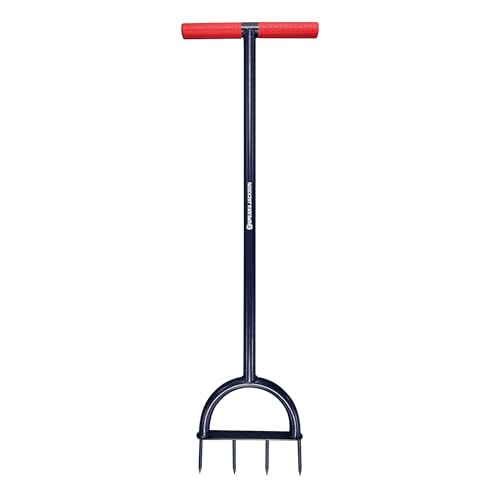
Spear & Jackson 4852LSA Lawn Spike Aerator

Onoxouo Lawn Aerator Shoes for Clay Soil

RAEOHE Manual Core Aerator with 4 Hollow Tines

Bluesea Lawn Aerator Tool 16 Iron Spikes (Orange)

Seeutek 40-Inch Tow Behind Spike Aerator

Bluesea Lawn Aerator Tool 16 Iron Spikes (Black)

Bluesea Lawn Aerator Tool 16 Iron Spikes (Green)
Taking A Closer Look At The Options
The Spear & Jackson 4852LSA leans into a classic British garden tool aesthetic, and the all-metal construction shows it. Carbon steel spikes do the piercing work, while a wide T-handle gives both hands a stable lever. A non-slip grip and a footrest plate sit between you and the soil, so you can drive the tines down without losing balance mid-step.
For a smaller yard with moderate compaction, this is the kind of tool you pull out two or three times a season without thinking about it. It does not pull plugs, so it works the soil by creating narrow holes that let water and air move downward. Treat it like a hand fork on a bigger scale.
Real Benefits
- All-metal body resists the rust that plagues cheaper coated tools left outside.
- Wide T-handle spreads pressure across both hands, which matters during long sessions.
- Carbon steel spikes stay sharp through seasons of rocky soil.
- Footrest plate lets body weight do the work instead of your back.
Things To Consider
- Spike aerators relieve compaction at the surface, but for thick clay you may want the core-style options below.
- Standing water in the handle joint after use can stain surfaces; wipe and dry before storing in a damp shed.
Made For
City gardeners with a small-to-medium lawn and light-to-moderate compaction who appreciate a tool that lasts more than a season.
Skip It When
The onoxouo spiked shoes are a better fit when you want to cover ground faster on a larger, more compacted yard.
Aerator shoes turn a walk across the lawn into the work itself. The onoxouo pair straps onto your boots, and a heavy-duty 5mm metal base, roughly 70% thicker than standard models, gives the steel spikes something solid to push against. The trade-off is that you still have to walk the entire yard in a tight grid to get even coverage.
They shine on clay-heavy lots where hand tools tire you out fast. Wider foot coverage helps you plant each step without wobbling, and the extra metal thickness means the base does not bow when you shift your weight. Just expect a slow, deliberate pace.
The Practical Payoff
- Frees up your hands and back while aerating, which matters across a full afternoon.
- Thickened metal base resists bending on stubborn clay.
- Wider foot platform improves balance compared to narrow economy versions.
- Easy to store flat in a garage corner without hanging hardware.
Worth Noting
- Straps loosen over time; expect to re-tighten buckles every few seasons.
- Coverage is uneven on soft or already-aerated soil where spikes do not bite as deeply.
Feature Snapshot
Right Fit For
Homeowners with sticky clay soil who want to multi-task by mowing or fertilizing right after aerating.
Reach For A Different Pick When
The Seeutek tow-behind aerator is a smarter match for anyone with a riding mower and more than half an acre to cover.
Core aeration is the deeper, more thorough method: instead of poking holes, hollow tines pull small soil plugs out of the ground. The RAEOHE tool has four hollow tines that reach up to 3.94 inches into compacted soil, which is deep enough to break up the dense layer where grass roots struggle. Side openings on the tines help shake loose dirt free so the next step does not jam.
For lawn repair projects and overseeding, this tool earns its place. The cores you leave on the surface break down naturally and feed the topsoil back. You will work slowly, but the result is the kind of relief compacted soil actually needs.
The Good Stuff
- Removes actual soil cores, which relieves compaction more effectively than spike tools.
- 3.94-inch depth reaches the layer where most root suffocation starts.
- Four tines per step speed up the job versus single-tine pluggers.
- Side openings reduce clogging in damp or sticky soil.
- Pulled cores act as a natural top-dressing as they break down.
Trade Offs
- Manual core aeration is genuine physical work across even modest lawns.
- Hard, dry ground can bend tines; pre-watering the lawn is almost always required.
- Left-behind cores look messy until they crumble, which can take a couple of mowings.
Whose Shelf It Belongs On
Homeowners planning overseeding, top-dressing, or repair of a struggling patch who want the deeper relief that spike tools do not deliver.
Look Elsewhere When
The Bluesea 16-spike models are a friendlier intro for anyone who just wants a quick seasonal poke across a healthy lawn.
The orange Bluesea variant feels almost cheerful leaning against the garden wall. Sixteen iron spikes cover a wider footprint per step than most handheld spike tools, and the T-handle keeps wrists in a neutral position. The “automatic dirt clean” feature refers to the way the spikes shed soil as you lift the tool, so each step does not require prying dirt free by hand.
On a softer lawn that just needs seasonal poking, this is a satisfying rhythm: step, press, lift, repeat. You trade plug removal for speed, but for routine maintenance the trade is usually worth it.
What Earns Its Place
- Sixteen spikes per step multiply coverage versus three- or five-spike designs.
- Ergonomic T-handle reduces wrist strain across a full yard.
- Self-cleaning action keeps the rhythm quick and steady.
- Bright finish makes it easy to spot in tall grass or leaf piles.
Points To Keep In Mind
- Painted finishes can chip at stress points after repeated foot-stomping.
- Spike tools compact soil slightly at the hole edges, unlike core aerators.
Spec Overview
Who Should Grab It
Beginners with a small lawn who want a forgiving tool with a quick learning curve.
Consider Something Else When
The RAEOHE core aerator is the right call when actual soil plugs and deeper relief matter more than speed.
The Seeutek tow-behind aerator lives in a different category from the rest of this list. It hooks up to a riding mower or small tractor, spans 40 inches across, and uses ten 3D star-shaped tines that rotate independently so they keep cutting even during turns. Galvanized steel construction fights rust, and a heavy-duty tray supports up to 330 lbs of weight so you can load cinder blocks for deeper penetration.
For a homeowner with an acre or more, this is the kind of tool that turns a weekend of backbreaking poking into a thirty-minute tractor ride. You still need a riding mower or ATV, but if you already have one, the math is simple.
A Strong Showing
- 40-inch width covers ground fast, especially on open lawn with few obstacles.
- Independent rotating tines reduce missed patches during turns.
- 330 lb weight tray lets gravity do the spike-driving work.
- Galvanized steel resists the rust cycle that ends cheaper tow-behinds early.
Honest Caveats
- Requires a riding mower or ATV with a hitch; not useful without one.
- Hard to maneuver around tight beds, narrow side yards, or sharp corners.
- Storage footprint is large enough to need shed space dedicated to it.
Best Suited To
Rural property owners with wide open lawns and a riding mower already in the garage.
Not Your Match When
The Bluesea handheld spike tools fit small suburban lots where a tow-behind would be overkill and a hassle to store.
The black Bluesea is the same tool as its orange sibling, just finished in a darker color that hides scuffs and dirt. Functionally you get sixteen iron spikes, the same ergonomic T-handle, and the same self-cleaning geometry. The practical difference is purely cosmetic, but for a tidy tool shed that matters more than people expect.
If the orange version feels loud against your garden palette or your spouse has opinions about tool colors, the black version is the polite alternative.
What Pays Off
- Same sixteen-spike coverage as the orange model.
- Dark finish hides the scratches and dirt that build up with seasonal use.
- Self-cleaning spikes keep the rhythm fast.
- Neutral color blends into most outdoor storage setups.
Small Caveats
- Harder to find if dropped in deep grass during use.
- Same painted-finish durability concerns as the orange version.
Feature Card
Perfect Match For
Homeowners who already like the Bluesea spike design but want a more discreet finish for their shed or porch.
A Better Fit Elsewhere
The Spear & Jackson 4852LSA is worth the upgrade when you want a fully metal build that outlasts painted steel.
The green Bluesea rounds out the color trio with the same sixteen-spike, T-handle, self-cleaning design. The selling point worth noticing is the construction: 2mm reinforced steel plates joined by precision argon arc welding, with an electrostatically applied anti-corrosion coating. In plain terms, the welds are stronger than standard spot welds, and the finish is meant to survive seasons of damp tool sheds.
If you aerate twice a year and want a tool that holds up to that rhythm without rust creeping into the handle joint, this is the variant most likely to age well.
Practical Advantages
- Reinforced 2mm steel plates resist the flex that ends thinner tools early.
- Argon arc welding at the joints creates stronger bonds than standard spot welds.
- Anti-corrosion coating protects the finish through wet storage.
- Green color blends naturally into garden settings.
- Sixteen-spike coverage keeps pace on mid-size lawns.
Where It May Fall Short
- Construction details are not independently verified, so handle with realistic expectations.
- Spike geometry can still smear soil edges instead of cleanly cutting.
Built With In Mind
Homeowners who aerate on a recurring seasonal schedule and want a tool built to survive the storage shed long-term.
Where Another Pick Suits Better
The Seeutek tow-behind aerator makes more sense for properties large enough that handheld pacing becomes the bottleneck.
Picking The Right Match For Your Yard
Match The Tool To Your Soil Type
Clay-heavy lots benefit most from core aerators like the RAEOHE, since they remove actual plugs of soil rather than just displacing it. Sandy or loamy soils usually respond well to spike-style tools because there is less dense material to extract. Before aerating, water the lawn a day or two in advance so the ground is moist but not waterlogged. Trying to punch dry clay is a recipe for bent tines and sore shoulders.
Handheld Versus Tow-Behind Coverage
Handheld spike and core tools work well up to about a quarter acre, anything beyond that turns into a long afternoon. The Seeutek tow-behind aerator turns that same job into a tractor ride, but only if you already own a riding mower or ATV. For most suburban lots under half an acre, a handheld design still wins on cost and storage.
Spike Versus Core Aeration
Spike tools push soil aside to make narrow channels, which helps air and water move but can compact the hole edges. Core tools pull plugs out, which actually relieves compaction and creates space for roots to expand. Spike tools are faster and cheaper, core tools do the deeper work. Many homeowners start with spike aeration and graduate to a core tool once they see how their lawn responds.
Smart Choices Across These Picks
Pitfalls Shoppers Hit
Picking a spike aerator for severely compacted clay and expecting the same relief a core tool provides is a common disappointment. Skipping the pre-watering step turns any aerator into a frustrating workout, especially in summer. And forgetting to check storage space for a tow-behind can leave a 40-inch tool leaning against the garage wall all winter.
Where The Extra Money Goes
Higher-tier models like the Spear & Jackson lean into all-metal construction and carbon steel spikes that hold an edge longer. The Bluesea green variant’s reinforced welds and anti-corrosion coating exist to extend service life in damp storage. Tow-behind units cost more because of the steel needed to survive tractor speeds and weighted trays. The honest read is that for casual seasonal use, the budget picks do the job, but for recurring aeration, the upgrades show up as years of extra service.
Frequently Asked Questions
How often should I aerate my home lawn?
Most lawns benefit from aeration once or twice a year, usually in early fall or spring when grass is actively growing and can recover quickly.
Do I need to water before aerating?
Yes, moist soil responds much better to aeration. Water the lawn a day or two beforehand so the ground is damp but not muddy.
Can I aerate a brand new lawn?
It is best to wait at least a full growing season before aerating new grass so the root system has time to establish itself.
Will aerator shoes really work on clay soil?
They can, especially the thicker-base designs like the onoxouo pair, but expect a slower pace and multiple passes across stubborn patches.
Is a tow-behind aerator worth it for a small yard?
For most small yards, a handheld tool is faster and easier to store, but a tow-behind becomes worth it once you pass about half an acre.
Closing Thoughts
The right aerator depends less on the tool itself and more on your soil, your yard size, and how often you plan to use it. Start with a clear read on those three things, and the choice between spike, core, handheld, or tow-behind usually answers itself. A healthy lawn underneath is worth the small investment of effort each season.