A dull mower blade tears grass instead of slicing it, leaving ragged tips that brown within a day. Sharper blades mean cleaner cuts, less engine strain, and a noticeably greener lawn. I put together this list of eight sharpeners (plus one balancer) that cover the main DIY paths: hand files, diamond stones, guided jigs, and bench stones. Most work for a wide range of yard tools too, so the value stretches past mowing season.
The Picks In Brief


NedFoss Axe Sharpener Tool with Leather Sheath

Lawn Mower Blade Balancer

TARIST Diamond File Set, 3-Piece, 8-inch

TARIST 10 inch Round Metal File, 3/8 inch

Adjustable 15°- 45° Lawn Mower Blade Sharpener
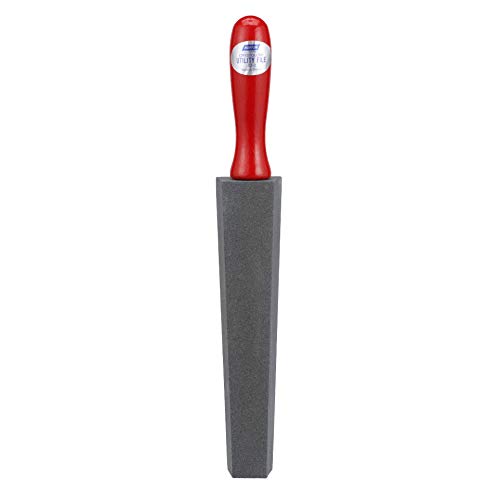
Norton Crystolon Utility Sharpening Stone, 14″

SHARPAL 181N Dual-Grit Diamond Sharpening Stone
Taking A Closer Look At The Options
A triangular cross-section is a small detail that pays off the moment you start working the inside edge of a mower blade. The three flat faces reach corners a flat file simply cannot, and the 10-inch length gives you enough stroke to keep consistent pressure. Made from T12 carbon steel with a deep-quenched tooth pattern, it holds its bite through repeated passes.
Compared to the round file later in this list, the triangle excels in tight, acute spots like the inner curve near the blade center. Anyone keeping a small workbench stocked for occasional blade touch-ups will find it earns its space. It’s also useful for garden shears, pruners, and general deburring around the shop.
What Helps Most
- Triangular profile reaches corners round or flat files miss
- T12 carbon steel body keeps cutting edges sharp over time
- Works on metal, wood, plastic, ceramic, and other common shed materials
- 10-inch length provides steady stroke control for hand work
Honest Caveats
- No handle included, so plan on wrapping the tang or buying a separate handle
- A light coat of oil after each session helps prevent surface rust in humid sheds
Feature Card
Whose Shelf It Belongs On
DIYers and homeowners who want a versatile hand file for mower blades, pruners, and general metal shaping.
Skip It When
Someone who prefers a guided, angle-locking approach should look at the RACTOP Adjustable 15°- 45° Lawn Mower Blade Sharpener instead.
This pick leans into portability. A dual-grit sharpening stone pairs with a hand-stitched leather sheath that slides onto a belt or backpack strap, so the sharpener travels to the tool rather than the other way around. The setup suits people who split time between yard work and outdoor projects like splitting wood or campsite chores.
On the mower, the coarser face resets a tired edge, then the finer face refines the bevel. The leather pouch doubles as a strop for a final polish. For anyone whose sharpening happens away from a workbench, the carry system is the real selling point.
The Value In It
- Two grit grades in one stone for reshaping and finishing
- Leather sheath keeps the stone protected on a belt or pack
- Works for axes, hatchets, mower blades, and field knives
- Compact form factor suits backpackers and small sheds
Some Limits To Know
- Stone surface is small, so long mower blades take many passes
- Leather needs occasional conditioning to stay supple over the years
Best Suited To
Campers, property owners, and anyone who sharpens at the woodpile or trailhead instead of a bench.
Look Elsewhere When
Homeowners focused on full workshop sharpening with a larger stone should consider the Norton Crystolon Utility Sharpening Stone instead.
A balancer is the unsung hero of any sharpening routine. Remove material from one side of a blade and it tilts off-center, which the engine and your wrists both feel. This round metal balancer sits on the blade’s center point, and gravity tells you which side needs a few extra passes. It’s universal across round, square, and most straight mower blades, so it pairs with every sharpener in this guide.
The reading is simple: the heavier side tips down, and you file or grind a touch more there. Beginners especially benefit, because guessing balance from feel is unreliable. Think of it as the second half of the job.
Everyday Wins
- Universal cone-style design fits most mower blade shapes
- Reduces vibration and stress on engine bearings
- Helps extend the working life of freshly sharpened edges
- Beginner-friendly visual check, no calibration needed
Worth Bearing In Mind
- Requires a flat, level surface for an accurate read
Perfect Match For
First-time sharpeners who want a simple way to avoid the wobble that wrecks freshly honed blades.
Swap It Out When
Anyone who only sharpens with the RACTOP bracket jig may already get consistent results without a separate balancer, since the jig locks the blade in place during work.
Diamond-coated files cut faster than traditional steel files because the abrasive is industrial-grade diamond electroplated onto the steel base. This set includes three profiles: flat, half-round, and round, so one kit covers a wide shape range without buying singles. The 8-inch length is shorter than the single TARIST files but easier to control in close spaces.
The anti-slip rubber handle is a noticeable upgrade over bare tangs, especially when working with oily hands. Anyone maintaining a mower, a set of garden shears, an axe, and the occasional tile edge will appreciate the kit approach.
What Stands Out
- Three profiles cover most blade and tool shapes in one purchase
- Diamond abrasive bites quickly on hardened steel mower blades
- Anti-slip rubber grip reduces hand fatigue during longer sessions
- Works on metal, tile, ceramic, glass, and stone beyond the yard
Factors To Consider
- Diamond surfaces cost more upfront than basic carbon steel files
- Sharpen at a steady angle; aggressive pressure wears the coating faster than needed
Feature Card
Right Fit For
Shed tinkerers who want one kit to handle mower blades, pruners, axes, and the occasional tile or glass edge.
Not Your Match When
Someone committed to a guided angle should reach for the RACTOP Adjustable 15°- 45° Lawn Mower Blade Sharpener instead.
The round file is a workhorse for concave curves. A 3/8-inch diameter round file matches the inside sweep of many mower blade edges and a host of garden tools. Like the triangle earlier in the list, it’s made from T12 carbon steel, so tooth geometry holds up across many sharpening sessions.
Where the triangle handles acute corners, the round file glides through gouges, channels, and the curved transition where a blade meets its lift wing. It also doubles as a deburring tool for freshly cut pipe and other workshop projects.
Where It Excels
- 3/8-inch round profile suits concave mower blade curves
- T12 carbon steel keeps teeth sharp session after session
- Reaches into gouges and channels other profiles can’t
- Doubles as a deburring file for non-yard metalwork
Potential Drawbacks
- No handle included out of the box
- Light oil after use prevents rust in damp storage areas
Made For
Homeowners working on blades with pronounced curved edges, plus anyone who wants a multipurpose round file for general metal shaping.
Reach For A Different Pick When
Those wanting a complete profile set should step up to the TARIST Diamond File Set instead.
For anyone whose freehand angle drifts from one blade pass to the next, a guided jig removes the guesswork. This bracket clamps the blade in place and adjusts from 15 to 45 degrees, covering the bevel range of most standard and straight mower blades. Four holder bars lock the cutting edge so less material gets ground away than with hands-on methods.
Pair it with a bench grinder (sold separately) and the result is fast, repeatable edges. It’s a step up in commitment from the hand files earlier, but the consistency is hard to replicate by eye.
A Few Strong Suits
- Adjustable 15°- 45° range covers most residential blade bevels
- Holder bars lock the blade steady for accurate grinding
- Removes less material per session than freehand work
- Anti-slip stainless handle reduces fatigue during repeat work
Trade Offs
- Requires a separate bench grinder to operate
- Bracket size suits a specific blade range, so check fit before buying
Feature Card
Who Should Grab It
Shops and homeowners who already own a bench grinder and want repeatable, professional-style results.
Consider Something Else When
Those without a grinder should pick up the TARIST Diamond File Set and stick to hand sharpening.
Silicon carbide, the abrasive Norton calls Crystolon, bites quickly and stays aggressive across long use. The 14-inch length gives this stone plenty of working room for both mower blades and longer tools like shovels, axes, and spades. A wooden handle keeps the stone steady in hand, which matters when sharpening away from a bench.
It’s a coarse-grit workhorse, so it shines during initial edge resets rather than final polishing. Owners commonly note that Crystolon stones hold up season after season with minimal flattening, making them a low-fuss long-term addition to a tool collection.
What It Does Well
- Silicon carbide abrasive cuts aggressively on hard steel
- 14-inch length handles long mower blades and bigger tools
- Wooden handle supports field use without a workbench
- Resists wear over many sharpening sessions
Points To Note
- Coarse grit alone won’t produce a mirror polish on the bevel
- Longer stone requires more storage space in tight sheds
Feature Card
Who Will Love This
Property owners who want a single stone that handles mower blades, axes, spades, and hatchets.
Where Another Pick Suits Better
Travelers and backpackers will find the SHARPAL 181N Dual-Grit Diamond Sharpening Stone more compact for go-anywhere touch-ups.
Dual-grit stones save a step: coarse face reshapes a dulled edge, fine face refines it, and a leather strop attached to the handle polishes the bevel afterward. Industrial monocrystalline diamonds electroplated onto a stainless steel base reportedly sharpen faster than traditional oil or water stones, which matters when several blades are waiting in the queue.
The paracord-wrapped handle and built-in strop make this a true grab-and-go tool. It’s well matched to the kind of routine where a mower blade, a hatchet, and a pair of shears all need attention in one Saturday morning.
Noteworthy Benefits
- Dual grit handles full sharpening in one tool
- Monocrystalline diamond coating cuts quickly on hard steel
- Built-in leather strop finishes and polishes the edge
- Paracord handle gives a secure grip in wet or oily conditions
Worth Noting
- Strop leather benefits from occasional conditioning to stay effective
Built With In Mind
Everyday DIYers who want one stone to handle mower blades, garden shears, axes, and chisels without switching tools mid-job.
A Better Fit Elsewhere
Shop owners needing the longest stone for big blades will appreciate the Norton Crystolon Utility Sharpening Stone’s 14-inch working surface.
What Matters Most Before Choosing Lawn Mower Blade Sharpeners
Matching the Tool to Your Mower
Push mowers, riding mowers, and commercial zero-turn decks all run different blade lengths and shapes. Hand files handle the widest range because you can angle them into almost any edge. Guided jigs like the RACTOP bracket work best on blades that fit the holder bars. Before buying, check your blade’s profile: flat, curved, or notched, since some files reach places others cannot.
Grit, Abrasive Type, and What They Mean for You
Grit describes how coarse or fine the abrasive surface is. Lower numbers remove metal faster but leave a rougher edge, while higher numbers refine and polish. Diamond-coated surfaces (like the SHARPAL 181N and the TARIST Diamond File Set) stay sharp far longer than carbon steel files. Silicon carbide stones (like the Norton Crystolon) cut aggressively and suit tough reset jobs. Coarse single-grit tools need a follow-up stone or strop for a clean edge.
Portability vs. Bench Stability
A 14-inch Norton stone with a handle travels well to a tailgate or woodpile. A bench-mounted grinder plus the RACTOP jig stays put in a workshop and handles high volume. Match the tool to where you’ll actually do the work. For a small suburban yard, hand files and a portable stone usually do everything needed. For multi-acre properties or a side sharpening business, the bracket jig setup pays off.
The Role of a Balancer
Sharpening removes more metal from one side than the other, throwing blades off balance. An unbalanced blade vibrates, strains the engine, and leaves an uneven cut. A simple cone balancer, like the Silcpall model in this list, takes the guesswork out of the final step. It’s a small add-on that protects both the machine and the freshly sharpened edge.
Key Considerations Across These Picks
Pitfalls Shoppers Hit
The most common mistake is buying a sharpener without checking blade fit. A small pocket stone won’t reach a 21-inch riding mower blade efficiently, and a long bar file is overkill for a 16-inch push mower deck. Another misstep is skipping the balancing step. A freshly sharpened but unbalanced blade still produces a ragged cut and can damage bearings over time. Finally, some folks overlook the angle of the original factory bevel. Sharpening at the wrong angle changes how the blade meets grass and shortens the life of the edge.
Where The Extra Money Goes
Diamond-coated files and stones cost more because the abrasive stays aggressive for thousands of passes, where a budget carbon steel file dulls in dozens. Guided jigs cost more because they lock in a precise angle, saving material and producing repeatable results. For occasional touch-ups, a basic carbon steel file handles the job. For frequent sharpening across multiple tools, the upgrade in abrasive and design quietly pays for itself in time saved and longer blade life.
Frequently Asked Questions
How often should I sharpen my mower blade?
Most homeowners sharpen two to three times per growing season under normal use. Cutting through sticks, gravel, or heavy wet grass dulls the edge faster, so check after any rough session by looking for nicks and torn grass tips.
Can I use a bench grinder instead of a file?
Yes, a bench grinder with a guided jig works well and saves time, but freehand grinding risks overheating the steel and softening the edge. A bracket jig like the RACTOP keeps the angle consistent and the blade cool enough to touch.
What is the factory blade angle I should maintain?
Most residential mower blades leave the factory at roughly 30 to 45 degrees. Following the existing bevel preserves the blade’s cutting geometry and prevents the tip from wearing down faster than intended.
Do diamond files really last longer than steel files?
Diamond-coated surfaces resist wear because diamond is one of the hardest materials available, so the abrasive stays exposed through many sharpening sessions. Carbon steel files cut well at first but gradually lose their tooth geometry as you work.
Is it worth balancing the blade every time?
Balancing is a quick check that prevents vibration, protects the engine, and produces a cleaner cut. Skipping it after major material removal risks noticeable wobble on the next mow, so the balancer earns its place in any routine.
The Takeaway
A sharp blade is the single biggest upgrade most lawns can get, and the right sharpener depends on how you work. Hand files and diamond stones fit a quiet weekend routine, while a guided jig fits a busy sharpening queue. Pair your chosen tool with a balancer and the next mow comes out cleaner, easier on the engine, and noticeably greener.