Walking a property all day takes a quiet toll, and a sulky turns that grind into a more upright, efficient ride. I’ve gathered six options that cover the spectrum from commercial-grade rigs to small-yard walk-behinds, so anyone chasing productivity can find their fit.
A Closer Look At The Lineup

MS2000N One Wheel Sulky
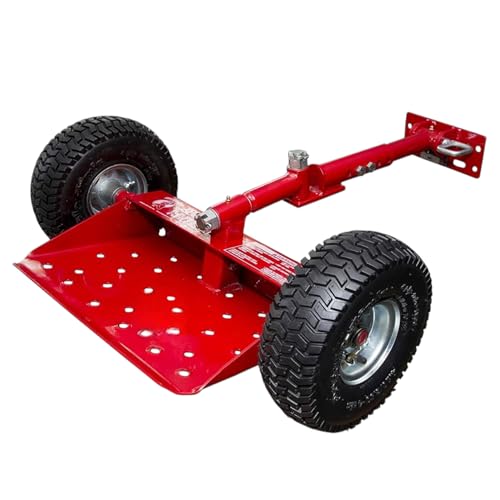
Jungle Jim’s Jungle Wheels Lawn Mower Sulky – Red Edition

Jungle Jim’s Jungle Wheels Lawn Mower Sulky – Black Edition

Honda HRX-BE 21-Inch Walk Behind Battery Powered Lawn Mower

Litheli 40V 16 Inch Cordless Lawn Mower

Litheli Cordless Lawn Mower 14 Inch
A Deeper Look At The Lineup
The MS2000N One Wheel Sulky is the kind of attachment that earns its place on a mixed fleet, where a shop might run half a dozen different walk-behinds over a season. Its patented single-wheel layout lets a rider pivot and lean into turns, which feels closer to driving than riding for most users. Because the brand designed it to fit almost every mower on the market, the install ends up being the deciding factor for many crews.
On long commercial days, the upright stance cuts fatigue and noticeably speeds up mowing passes compared with constant walking. Drilling may be needed to fit a particular mower deck, so anyone unfamiliar with fabrication tools should plan for a half-day install. The single-wheel design also adds real weight to the drive system, which most modern walk-behinds can absorb but older hydro drives may struggle with.
Features That Help
- Patented one-wheel layout for tight, nimble turning on busy lots
- Designed to mount on virtually any walk-behind mower on the market
- Upright stance reduces leg fatigue over multi-acre mowing days
- Converts a walk-behind into a stand-on rider without replacing the mower
Honest Caveats
- Drilling is often required to fit specific mower decks, adding install time
- A single tire can trench soft turf when the rider leans into a sharp turn
- Adds real weight to the drive system, which may shorten hydro pump life over time
At A Glance
Made For
Shop owners and solo operators running varied mower brands who need one universal sulky to fit an entire fleet.
Where Another Pick Suits Better
Landscape crews working manicured turf should look at the Jungle Jim’s Red Edition, where the two-wheel design leaves cleaner striping on delicate grass.
Jungle Jim’s Red Edition is the two-wheel sulky that landscape crews reach for when striping matters. Unlike the single-wheel MS2000N, both tires track behind the mower and follow its exact path, so turns leave clean lines instead of divots. A third pivot point in the chassis absorbs uneven ground, keeping the deck planted where it needs to be.
What I appreciate here is the rear-weighted layout. Weight sits over the wheels rather than the deck, which noticeably reduces scalping on bumpy lawns. The folding trailer hookup also lets crews tow a leaf loader or dethatcher between jobs without unhitching the sulky. It’s a more purpose-built design than the universal single-wheel option.
Where It Helps
- Patented two-wheel layout follows the mower’s track for precise striping
- Rear-weighted design cuts scalping on uneven, undulating terrain
- Third pivot point absorbs ground shock so the deck stays level
- Folding trailer hookup accepts tow-behind attachments on job sites
Worth Bearing In Mind
- Larger footprint than single-wheel sulkies, tougher to store in tight trailers
- Two-wheel stability comes at the cost of a wider turning radius than the MS2000N
- Heavier chassis adds noticeable load to small residential mower transmissions
Best Suited To
Professional crews running commercial properties where striping quality and turf protection affect the bill.
Skip It When
Homeowners with small lots should jump straight to the Litheli 14-Inch, since a commercial sulky is more rig than a half-acre yard needs.
The Black Edition is essentially the Jungle Jim’s Red Edition in a different color, sharing the same patented two-wheel chassis and turf-protecting geometry. For crews who prefer a stealth look on premium properties or simply don’t want their equipment covered in bright branding, the black powder-coat reads more refined.
Underneath the paint, the chassis uses the same rear-weighted balance and third pivot point, so the performance is identical between the two editions. Both 10-inch pneumatic wheels track behind the mower for even cuts on undulating terrain. The 2-year weld warranty covers the structural frame, which matters more than paint for daily commercial abuse.
Strengths Worth Knowing
- Identical patented chassis as the Red Edition, proven in commercial fleets
- Black powder-coat finish hides scuffs from trailer ramps and job sites
- Two-wheel tracking delivers the same striping precision as the Red Edition
- 2-year weld warranty protects the structural frame against cracking
Small Caveats
- No functional difference from the Red Edition beyond finish and color
- Darker paint shows dust and pollen more visibly than the red version
Feature Snapshot
Right Fit For
Crews who want proven commercial chassis without the bold red look on client properties.
Reach For A Different Pick When
Shop owners running a mixed fleet should grab the MS2000N One Wheel Sulky for its broader compatibility across mower brands.
The Honda HRX-BE shifts the conversation from commercial sulkies to homeowner-grade battery mowers. It’s not a sulky at all, but it answers the same underlying question: how do I mow more comfortably? Honda built it with the same DNA as their GCV gas engines, so the torque curve holds RPMs through thick St. Augustine or wet fescue without bogging.
The 21-inch deck and 4-in-1 Versamow system with Clip Director handle mulching, bagging, discharge, and leaf shredding without swapping attachments. For suburban homeowners moving away from gas, this fills the gap left by a sulky setup, trading ride-on comfort for push-mower simplicity and zero fuel mixing.
Where It Delivers
- Honda-grade torque holds blade speed through dense, wet grass
- 4-in-1 Versamow system switches modes without changing attachments
- 21-inch deck covers ground faster than smaller walk-behind units
- Battery drive eliminates oil changes, spark plugs, and fuel mixing
Trade-Offs
- Battery runtime is finite; large properties may need a spare pack
- Heavier than 14- or 16-inch mowers, harder to push on sloped lawns
Quick Facts
Who It Suits Best
Suburban homeowners with quarter- to half-acre lots who want Honda reliability without gas-engine maintenance.
Look Elsewhere When
Anyone needing stand-on comfort on multi-acre properties should choose the Jungle Jim’s Red Edition instead of a walk-behind mower.
The Litheli 40V slots in for medium suburban yards where a 14-inch mower runs out of capacity and a 21-inch unit feels like overkill. Both 5.0Ah batteries must be inserted to deliver the full 40V output, which keeps voltage steady through thick patches instead of sagging mid-cut.
Six cutting heights between 25 and 75mm give enough range for spring overseeding and summer Bermuda scalping in the same season. The 50L collection bag means fewer stops to empty on dense spring growth. The brushless motor skips the maintenance of brushed designs, so there’s no commutator to wear out.
Bright Spots
- Dual-battery setup holds 40V through thick grass without voltage sag
- Six height settings (25 to 75mm) cover everything from low Bermuda to tall fescue
- Brushless motor eliminates brush replacements common to older cordless mowers
- 50L collection bag cuts down on emptying stops during peak growth
Points To Keep In Mind
- Both batteries must be installed to run, so forgetting one shuts down the mower
- 16-inch deck sits between compact and full-size, not ideal for very tight gates
Perfect Match For
Homeowners with mid-sized suburban lots who want cordless convenience without stepping up to a premium 21-inch deck.
A Better Fit Elsewhere
Anyone with a postage-stamp yard and limited storage should pick the Litheli 14-Inch, which folds smaller and weighs noticeably less.
The 14-inch Litheli closes the list for anyone with a small lawn, a tight storage closet, or limited upper-body strength. The 5.0Ah battery covers up to about 3,000 square feet per charge, which fits a typical urban lot with room to spare. Its quick-fold design collapses the handle into a footprint that slides behind a trash can in most sheds.
Five height positions between 1 and 2.5 inches give enough range for common cool-season and warm-season grasses, though anyone cutting low Bermuda may bump against the lower limit. The brushless motor and quiet operation make this an easy choice for early-morning mowing without waking the block.
What Helps Most
- Folding handle shrinks the mower for tight garage and shed storage
- Brushless motor runs quietly for early-morning suburban mowing
- Single 5.0Ah battery covers roughly 3,000 square feet per charge
- Adjustable handle height supports comfortable posture for varied users
Some Limits To Know
- 14-inch deck needs more passes on larger suburban yards
- Minimum 1-inch cut height won’t suit very low-mown Bermuda lawns
- Lightweight build can struggle in tall, wet grass over four inches
Feature Card
Who Should Grab It
Urban homeowners, seniors, and anyone mowing a small lot with limited storage who values quiet operation.
Swap It Out When
Anyone with a larger suburban yard should reach for the Litheli 40V 16-Inch, which covers more ground per charge.
Matching Sulkies To Your Mowing Reality
Before choosing a sulky, start with the mower you already run. A single-wheel unit like the MS2000N works best on a mixed fleet where the same operator hops between machines, while two-wheel Jungle Jim’s editions reward crews mowing the same deck for eight-hour days. Weight matters more than most people expect, since sulkies add real load to hydro pumps and gearboxes.
Next, think about the terrain you actually cut. Smooth, flat lawns barely notice a single-wheel sulky, but uneven, undulating properties benefit from the third pivot point and rear weight distribution that the two-wheel Jungle Jim’s design delivers. Turf type matters too; bentgrass and Bermuda stripe more visibly with a wider, two-wheel platform. Consider how the sulky will mount to your deck, since drilling varies by brand and may require shop tools or a trip to a dealer.
Finally, factor in storage and towing. A two-wheel sulky takes up more trailer space than a single-wheel unit, and a folding trailer hookup adds the option to tow attachments between properties. Crews hauling gear daily will appreciate that convenience. Solo operators with one trailer bay should measure first.
Key Considerations Across These Picks
Common Shopping Slip Ups
The biggest mistake is assuming every walk-behind will accept any sulky without modification. Mounting hardware varies by mower brand and deck design, and assuming a universal bolt-on fit can lead to drilling a brand-new deck. Always confirm the mounting style before checkout. Another trap is ignoring the added strain on the drive system, since older hydrostatic pumps may not handle the extra weight over a full season.
Why Top Tier Costs More
The two-wheel sulkies earn their higher cost through a patented third pivot point, rear-weighted chassis, and heavier-gauge steel that resists flex over thousands of hours. Cheaper single-wheel units use thinner tubing and lighter wheels, which work fine for occasional use but show fatigue faster under daily commercial abuse. Premium walk-behind mowers like the Honda HRX-BE justify their price through battery systems, brushless motors, and 4-in-1 cutting decks that cheaper cordless models skip.
Frequently Asked Questions
What does a lawn mower sulky actually do?
A sulky attaches to the back of a walk-behind mower and lets the operator stand on a small platform instead of walking. It converts a push mower into a stand-on rider without buying a dedicated zero-turn machine.
Will a sulky work on any walk-behind mower?
Most modern commercial walk-behinds accept at least one sulky design, but fit varies by brand. Some models require drilling mounting holes or installing adapter brackets, and lighter residential mowers may not handle the added weight.
Do sulkies damage turf?
Single-wheel sulkies can scuff turf on sharp turns because the wheel pivots independently. Two-wheel sulkies follow the mower’s exact path and distribute weight more evenly, which protects delicate grass much better.
Are battery mowers a replacement for sulkies?
Battery mowers solve a different problem. They cut engine noise and maintenance, while a sulky solves operator fatigue on large properties. Homeowners with small yards get more from a cordless mower; commercial operators mowing acres get more from a sulky.
How long does a quality sulky last?
A well-built two-wheel commercial sulky typically lasts several full mowing seasons under daily use, especially with proper weld maintenance. Single-wheel residential units may show frame fatigue sooner, depending on terrain and operator weight.
Wrap Up
The right pick comes down to the property size, the existing mower, and how many seasons the rig needs to last. Commercial crews mowing multiple acres will feel the difference a Jungle Jim’s sulky makes in their lower back by Friday, while suburban homeowners might never need a sulky at all and will be happier with a cordless mower like the Honda HRX-BE or one of the Litheli options. Pick the rig that matches the work, not the one that looks the busiest in the trailer.