Sloped lawns are a different beast. A mower that handles flat turf with ease can struggle on inclines, leaving uneven cuts, scalped patches, or worse, rolling backward toward your ankles. The right walk-behind mower for hills pairs low weight distribution with enough torque to climb without bogging down, plus drive assist when the grade gets serious.
I’ve spent time comparing the latest options built for uneven terrain, from lightweight corded units to battery-powered self-propelled machines. The picks below cover small yards, suburban lawns, and steep grades where traction matters most.
The Leading Options At A Glance
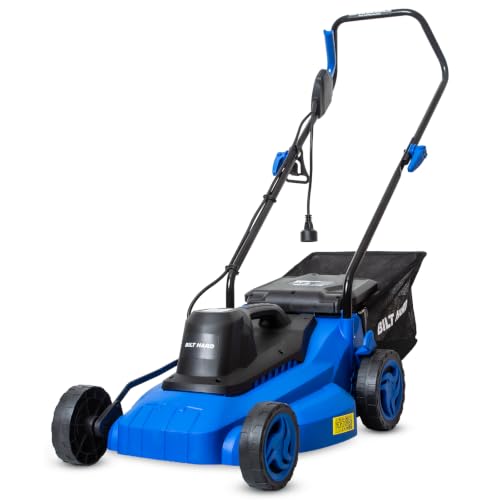
BILT HARD 15″ Corded Electric Lawn Mower

TIECTOWN 16-Inch Electric Dethatcher and Scarifier

EGO POWER+ Self-Propelled Cordless Mower (LM2135SP)

Honda HRX-BE 21″ Battery Mower (HRX217YXBEXA6)

Honda HRX-BV 21″ Battery Mower (HRX217YXBVKA4)

Litheli 40V 16″ Cordless Brushless Mower
A Breakdown Of The Leading Choices
Small lawns with only gentle slopes are where the BILT HARD 15″ corded mower makes sense. The 11-amp motor spins the blade at 3300 RPM, which is enough torque for typical cool-season grass without the fumes or pull-start hassle of a gas unit. The deck is narrow at 15 inches, so it slips between garden beds and tight side yards where bigger mowers can’t follow.
Five height positions between one and three inches let you dial in cut length for the season. The 35-liter grass bag holds a respectable amount of clippings, and the foldable handle collapses for upright storage against a garage wall. Corded means unlimited runtime, though you’ll need a heavy-gauge outdoor extension cord to reach distant outlets.
Real Benefits
- Lightweight design reduces fatigue on sloped ground where every extra pound pulls against you
- Compact 15-inch deck navigates narrow strips and uneven lawn borders without scalping edges
- Corded power eliminates battery anxiety on bigger yards with multiple outlet runs
- Foldable handle saves garage space in homes where storage is tight
Worth Noting
- No self-propel drive, so steep grades demand real leg effort
- Cord management gets awkward on hilly lawns with trees or garden obstacles
- Plastic deck construction may show wear sooner than steel alternatives under heavy seasonal use
Who It Suits Best
First-time homeowners with a small, gently sloped yard who want simple, quiet weekend mowing without fuel mixing or battery charging rituals.
Skip It When
Your yard climbs past a moderate grade, in which case the EGO POWER+ Self-Propelled Cordless Mower (LM2135SP) earns its keep with drive assist.
A dethatcher lives in a different category than a mower, but on hilly lawns where thatch builds up faster, prepping the turf before a fresh mow makes a visible difference. The TIECTOWN 2-in-1 unit switches between dethatching and scarifying modes, pulling dead material from the soil surface so water and nutrients reach the roots underneath. The 15.5-amp motor runs at 3600 RPM through a 16-inch rake path.
Five depth positions let you match aggressiveness to grass type and thatch thickness. The 14.5-gallon collection bag catches most debris before it scatters back across the lawn. For sloped yards, working across the grade rather than up and down reduces strain on the operator and the machine.
A Few Highlights
- Dual-mode design replaces two single-purpose tools for spring and fall lawn recovery
- Five-position depth control matches aggressiveness to grass variety and thatch density
- Large collection bag cuts down on post-job raking across uneven ground
Trade Offs
- Heavier than a standard mower, making slope work more demanding
- Requires a heavy-duty outdoor extension cord (14 AWG to 50 ft, 12 AWG to 100 ft) for safe operation
Made For
Homeowners reviving a tired, thatch-choked lawn before the mowing season kicks in.
Consider Something Else When
You mainly need to mow rather than dethatch, in which case the Litheli 40V Cordless Brushless Mower handles weekly cuts at a lighter carry weight.
For serious inclines, the EGO POWER+ LM2135SP is the standout in this roundup. The 21-inch deck covers ground quickly, while the self-propel drive takes over the heavy lifting on climbs. Up to 7.0 ft-lbs of torque from the brushless motor handles thick grass and damp patches that stall weaker machines. The 56V 7.5Ah battery and rapid charger come bundled, with a spare 5.0Ah battery for extended runtime.
EGO’s Select Cut multi-blade system ships with three interchangeable lower blades: mulching, high-lift bagging, and extended runtime. That flexibility matters on hilly turf where conditions shift from sun-baked crest to shaded damp hollow within a single pass. The mower weighs more than push-only models, but the drive system offsets that with traction.
A Strong Showing
- Self-propel drive reduces physical strain during sustained hill climbs
- Three-blade Select Cut system adapts to mulch, bag, or runtime priorities mid-season
- Spare battery extends coverage for larger suburban lots with mixed grade
- 21-inch deck finishes wide stretches of sloped turf in fewer passes
Honest Caveats
- Heavier build requires careful handling on extreme grades to maintain control
- Battery system represents a bigger upfront investment than corded picks
At A Glance
Right Fit For
Suburban homeowners with rolling terrain who want gas-like performance without the maintenance overhead.
Look Elsewhere When
A flatter yard or a smaller lot doesn’t justify the price, and the Litheli 40V Cordless Brushless Mower covers weekly cuts at a friendlier cost.
Honda’s reputation for engine work carries into its battery lineup. The HRX-BE 21-inch model pairs a brushless DC motor with the same high-torque philosophy that defines the brand’s gas GCV series. On hilly lawns, sustained RPM matters: drop-off cutting performance mid-slope leaves uneven stripes, and Honda tunes the motor to hold speed under load.
The Versamow system with Clip Director switches between mulching, bagging, discharge, and leaf-shred modes without swapping attachments. Twin MicroCut blades deliver a finer mulch that breaks down faster on sloped turf where runoff carries nutrients away. Build quality leans toward the premium end, which is reflected in the price tag.
Good Reasons To Consider
- Premium construction tends to outlast budget options across multiple mowing seasons
- Versamow four-mode system handles seasonal changes without buying extra attachments
- Honda motor tuning holds blade speed on sustained climbs
Points To Note
- Heavier chassis adds fatigue on extreme grades without self-propel assistance
- Premium pricing puts it out of reach for casual weekend mowers
Who Should Grab It
Long-term homeowners who keep equipment for a decade and value low maintenance over upfront savings.
Another Choice May Suit
Buyers wanting similar Honda build quality with self-propel drive should look at the HRX-BV variant below.
The HRX-BV is the sibling of the HRX-BE, adding variable-speed self-propel to the same 21-inch deck and Versamow system. For sloped lawns, that drive assist is the difference between a comfortable workout and a sweat-soaked Saturday. You control the pace, which matters on changing grade where you want to slow down at the crest and accelerate through the flat.
Honda’s GCV-derived motor tuning keeps blade speed steady under load. The Clip Director still toggles between mulch, bag, discharge, and leaf-shred without tools or attachments. Where the HRX-BE feels like a premium push mower, the BV earns its place on hills specifically because you decide how much help the drive provides.
Strengths Worth Knowing
- Variable-speed self-propel matches pace to changing grade
- Four-mode Versamow handles mulch, bag, discharge, and leaf shred
- Honda motor holds RPM during sustained climbs for cleaner cuts
Some Limits To Know
- Higher price than the HRX-BE without a meaningful difference for flat lawns
- Weight plus self-propel demands careful footing on wet grass slopes
Built With In Mind
Homeowners on rolling terrain who want premium Honda build quality and the comfort of variable-speed drive assist.
Where A Sibling Pick Shines
On flatter turf, the Litheli 40V Cordless Brushless Mower handles weekly cuts without the premium price.
Budget-conscious shoppers get a lot from the Litheli 40V cordless mower. Both 5.0Ah batteries must be inserted to deliver the full 40V output, and the brand claims enough runtime to finish a typical suburban yard on one charge. The brushless motor skips oil changes, spark plugs, and carburetor cleaning, so maintenance stays minimal across the seasons.
Six cutting heights between 25mm and 75mm (roughly one to three inches) cover most grass preferences. The 50-liter collection bag handles clippings on mid-sized lots without frequent emptying, and the deck supports mulching for lawns where bagging isn’t necessary. At 16 inches, the deck is narrower than the Honda and EGO options, but the lighter carry weight helps on slopes.
Everyday Wins
- Dual-battery setup extends runtime for larger suburban lots on a single charge
- Brushless motor cuts maintenance to storage and blade replacement only
- Six height positions cover most seasonal preferences
- Lighter chassis reduces fatigue on gentle-to-moderate slopes
Things To Weigh
- Narrower deck means more passes on bigger lawns, which adds time on slopes
- No self-propel, so steep grades still demand real pushing effort
- Runtime depends on both batteries being installed, so charging discipline matters
At A Glance
Best Suited To
First-time battery mower owners with modest budgets and lawns under a quarter acre of mixed grade.
Reach For A Different Pick When
Your yard climbs past gentle slopes, and the EGO POWER+ Self-Propelled Cordless Mower’s drive assist saves your legs.
Picking A Mower That Earns Its Keep On Slopes
Hill work punishes under-spec’d equipment. A motor that bogs down mid-climb leaves ragged cuts, and a deck that doesn’t follow contour scalps high spots into brown patches. The right choice depends on grade severity, lawn size, and how much pushing effort you want to commit each weekend.
Drive Assist vs Push Power
Self-propel drive, like on the EGO POWER+ LM2135SP and the Honda HRX-BV, offloads the work of climbing from your legs to the wheels. Variable-speed versions let you set the pace, which is helpful on changing grade where a single fixed speed feels too fast on the flat and too slow on the climb. Push-only mowers cost less and weigh less, but steep sustained grades quickly exhaust even fit operators.
For hills, always mow across the slope rather than straight up or down. Across-slope mowing reduces the risk of the mower sliding downhill while keeping your footing more stable. Self-propel mowers still need careful handling on wet grass, where even drive assist can’t overcome lost traction.
Deck Size and Maneuverability
A 21-inch deck, like on the EGO and both Honda models, finishes wide lawn sections quickly. The trade-off shows up in tight corners, landscaping beds, and narrow side strips where a wider deck has to be repositioned more often. Smaller 15- or 16-inch decks (BILT HARD, Litheli) trade speed for maneuverability, which matters on irregular lots with lots of obstacles.
On hilly lawns, deck material affects durability more than on flat turf. Plastic decks weigh less, which helps on slopes, but metal decks tend to last longer under heavy seasonal use. Choose based on how many mowing hours per year your yard demands.
Battery, Corded, or Gas
Corded mowers like the BILT HARD deliver unlimited runtime but require extension cord management, which gets awkward on hills with trees or garden features. Battery mowers free you from cords but demand charging discipline, and runtime drops in thick or damp grass. Gas mowers offer the most raw power and runtime, but add fuel mixing, oil changes, and exhaust fumes.
For most homeowners with under a half acre of hilly terrain, modern 40V to 56V battery platforms offer the best balance of power, runtime, and low maintenance. Premium platforms like EGO and Honda hold their charge capacity longer across multiple seasons, which justifies the higher upfront cost for long-term ownership.
Key Considerations Across These Picks
Where Shoppers Go Wrong
Underestimating slope severity leads to the most common buying mistake. A yard that looks gently sloped from the street can hide a grade that punishes a push mower within minutes. Measure the steepest section before choosing, and err toward self-propel if there’s any doubt. Another trap is ignoring cord length on corded models, only to find the outlet doesn’t reach the back corner of the lot. Heavy-gauge outdoor extension cords solve this, but they add cost and storage hassle.
When Paying More Pays Off
Premium mowers earn their price through motor longevity, deck durability, and features that save time across years of use. The Honda HRX-BE and HRX-BV use motors tuned to hold RPM under load, which means cleaner cuts and longer blade life. Brushless motors across the battery lineup reduce wear compared to brushed alternatives. For shoppers who mow weekly across multiple seasons, the upgrade typically pays back in avoided replacements and lower maintenance effort.
Frequently Asked Questions
What makes a mower good for hills? Self-propel drive, sufficient torque to maintain blade speed under load, and a deck that follows ground contour without scalping are the three biggest factors.
Can I mow steep slopes safely with any walk-behind mower? Extreme grades above 20 degrees pose rollover risks for walk-behind mowers. For those sections, a string trimmer or professional service is safer.
How important is deck size on hilly lawns? Deck size affects how many passes you need. Wider decks finish faster but struggle in tight spaces, while narrower decks maneuver better at the cost of more time on the slope.
Should I choose corded or battery for a sloped yard? Battery offers freedom from cord management, which matters on uneven terrain. Corded provides unlimited runtime but adds the hassle of running extension cords across obstacles.
How do I maintain traction on wet grass slopes? Mow across the slope rather than up and down, avoid mowing right after rain when possible, and clean the deck underside regularly so clippings don’t reduce airflow and traction.
Closing Remarks
A hilly lawn rewards the right mower with cleaner cuts, less operator fatigue, and a longer equipment lifespan. Lightweight corded options suit gentle grades and small lots, while self-propel battery platforms take over once the slope gets serious. Match the mower to the steepest section of your yard, not the average grade, and you’ll spend less time wrestling the machine and more time enjoying the view.