Overseeding only works when your mower can scalp the lawn down to bare soil contact. Most homeowners battle thick thatch and tall existing grass that block new seed from reaching the ground. I put together this list of nine machines that handle the low cut, the clean-up pass, or both, so seed-to-soil contact actually happens.
Your Options, Compared
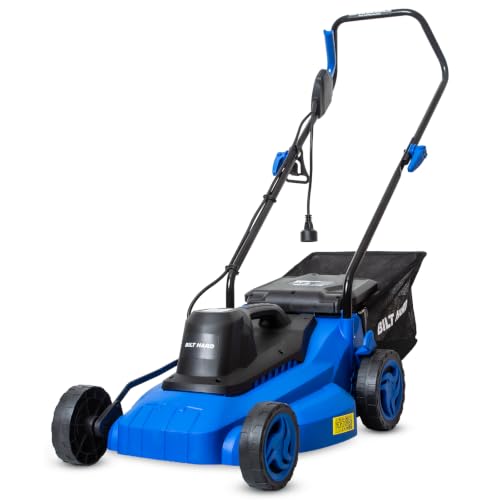
BILT HARD 15″ Corded Electric Lawn Mower 11A 5 Height Adjustments

Westinghouse 16″ 15-Amp 2-in-1 Electric Dethatcher and Scarifier
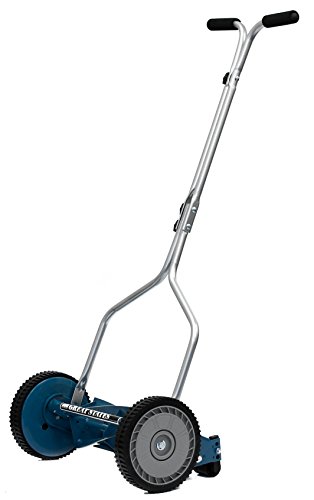
Great States 204-14 Hand Reel 14 Inch Push Lawn Mower
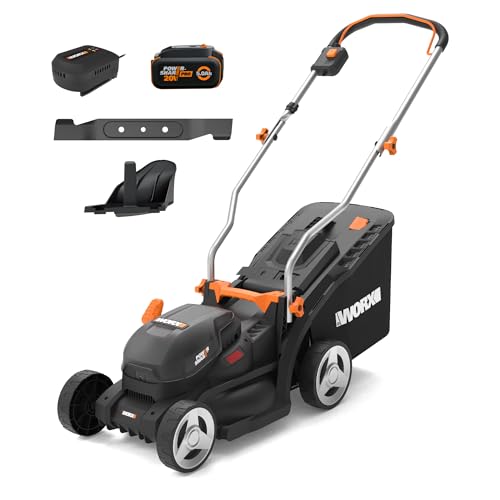
Worx WG733.1 20V 14″ Cordless Lawn Mower
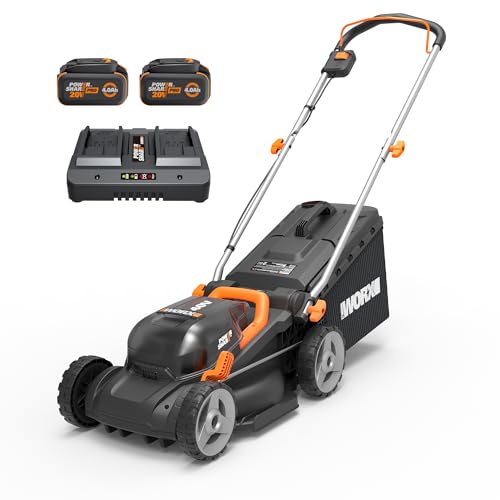
Worx WG735 40V 14″ Cordless Lawn Mower

Worx WG745 40V 17″ Cordless Lawn Mower

Honda HRX-BE 21-Inch Battery Walk-Behind Mower HRX217YXBEXA6

Honda HRX-BV 21-Inch Battery Walk-Behind Mower HRX217YXBVKA4
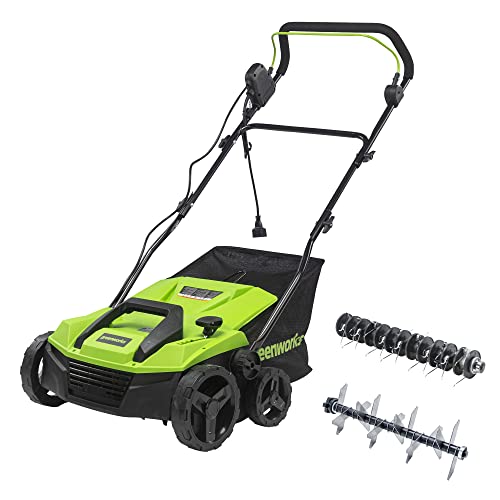
Greenworks 13 Amp 14-Inch Corded Dethatcher Scarifier
Taking A Closer Look At The Options
The BILT HARD 15-inch corded mower is the budget scalp-and-seed machine I keep coming back to for small lawns. Its 11-amp motor spins a blade at 3300 RPM, which sounds modest until you realize the deck drops down to a full inch off the ground. That low setting is the secret to overseeding: it shaves the existing turf short enough that seed actually reaches the soil instead of getting trapped in tall blades.
For anyone with a postage-stamp yard and an outdoor outlet, this is a tidy little workhorse. The 35-liter rear bag catches clippings before they smother new seed, and the folding handle makes garage storage painless. Compared to the Great States reel mower later in the roundup, this one gives you real power and a bag, just at the cost of a cord.
Good Reasons To Consider
- Five height positions dip to one inch, ideal for exposing soil before overseeding.
- 11-amp motor handles cool-season grass without bogging down in normal residential turf.
- 35-liter grass bag keeps clippings off the seedbed, which matters for germination.
- Folding handle collapses for upright storage in tight garage spaces.
- Corded design means no battery fade mid-lawn, so you finish the cut consistently.
Things To Consider
- Being corded, range is limited to extension-cord reach, and cord management on turns is awkward.
- Plastic deck construction can show wear after several seasons of rough ground contact.
Key Specs
Who It Suits Best
Homeowners with small lawns under 1,500 square feet who want the lowest possible cut on a tight budget.
Consider Something Else When
The Westinghouse 16″ 15-Amp 2-in-1 Electric Dethatcher and Scarifier fits better if your lawn needs heavy thatch removal before seed goes down.
The Westinghouse 16-inch dethatcher isn’t a mower at all, but skipping it from an overseeding list would be a disservice. Thatch (that spongy layer of dead roots and stems between grass and soil) is the number-one enemy of new seed. A dedicated dethatcher pulls that layer up so seed-to-soil contact finally happens, which is exactly what the BILT HARD mower alone can’t guarantee on a neglected lawn.
What I like here is the dual-head design: one set of steel tines dethatches, another set slices shallow grooves for aeration. You get two prep steps from one tool, plus a collection bag that gathers the debris so you’re not raking for an hour afterward. This pairs naturally with a mower, and depending on your thatch level, you may run it before you ever start cutting.
Positive Points
- Two functions in one tool, dethatch and scarify, save rental fees and storage space.
- 15-amp motor drives steel tines through dense thatch without stalling in typical conditions.
- Collection bag limits the post-job cleanup mess.
Worth Noting
- It preps the seedbed, it doesn’t mow, so you’ll still want a separate mower for the actual cut.
- Owners commonly report that deeply thatched lawns may need multiple passes for full results.
- Corded again, so extension-cord reach shapes how far you can go.
Made For
Anyone with a thatch problem who needs the seedbed properly opened up before spreading new grass seed.
Look Elsewhere When
The Great States 204-14 Hand Reel 14 Inch Push Lawn Mower suits someone who wants a quiet, no-cord cut on a tidy small lawn with minimal thatch.
The Great States 204-14 reel mower is the antidote to every loud, fume-belching mower on the market. It uses a five-blade reel that snips grass like scissors rather than tearing it, which matters more than people realize for overseeding prep. Torn blades brown at the tips and stress the plant, but a clean scissor-cut lets the existing turf recover faster between scalping and seeding.
There is no motor, no cord, no battery, just push and walk. For a small, level lawn in a quiet neighborhood, that’s genuinely freeing. You mow early Sunday morning without waking anyone. The trade-off is real: tall or wet grass will frustrate a reel mower, and you won’t get the low scalp heights some powered mowers offer.
What Works In Its Favor
- Zero emissions, zero fuel cost, zero noise to upset neighbors.
- Reel cutting action clips each blade cleanly, reducing turf stress before overseeding.
- Lightweight design stores easily in a shed corner or hangs on a wall hook.
Honest Caveats
- No engine means it struggles in grass above about four inches or in damp conditions.
- Limited to smaller, flatter lawns; hills and rough terrain wear out the operator quickly.
- Cutting height is fixed, so scalping down to a single inch is harder than with the BILT HARD mower.
Best Suited To
Eco-minded homeowners with small, level lawns who mow often and want a near-silent tool.
A Better Fit Elsewhere
The Worx WG733.1 20V 14″ Cordless Lawn Mower fits someone who wants cordless convenience with a bit more muscle for taller grass.
The Worx WG733.1 is the lightest battery mower in this roundup, and that weight savings pays off in tight city yards. At 14 inches wide with a brushless motor running off a single 20V battery, it trims edges, slips between raised beds, and stores upright in an apartment closet. For overseeding prep on a small patch, that maneuverability is more useful than raw power.
The 2-in-1 deck mulches or rear-bags, so you can scalp low, bag the clippings, and seed in one morning. Compared to the Great States reel mower, you trade some quiet for actual cutting power in tall grass. The honest read is that this is a small-yard tool first and an overseeding specialist second, but for the right lawn size, it handles both jobs well.
Notable Gains
- Brushless motor extends runtime and tool life compared to brushed designs.
- Battery shares with the wider Worx PowerShare platform, useful if you own other Worx tools.
- Compact 14-inch deck navigates narrow side yards and fenced corners.
Points To Keep In Mind
- Single 20V battery limits continuous runtime on anything bigger than a small lawn.
- Plastic construction feels light, which some prefer and others find flimsy.
Who Should Grab It
Urban homeowners with under 1,000 square feet of lawn who want cordless convenience without overspending.
Swap It Out When
The Worx WG735 40V 14″ Cordless Lawn Mower is a better fit if you want more torque and coverage for thicker turf.
The Worx WG735 steps up to 40 volts and adds IntelliCut torque sensing, which is a fancy way of saying the motor ramps up only when the grass demands it. That adaptive behavior stretches battery life on easy passes and gives you grunt when you hit a thick patch. For overseeding, that matters: scalping into a dense lawn chews through power, and the WG735 adjusts on the fly.
It still uses the same 14-inch deck as the smaller WG733.1, so storage and maneuverability stay friendly. Where it differs is muscle and coverage, with manufacturer guidance suggesting up to 1/8 acre per charge. Compared to the BILT HARD mower, you give up the absolute lowest cut height, but you gain freedom from the cord.
A Favorable Mix
- IntelliCut sensing keeps RPM high where grass is thick and conserves energy where it’s thin.
- 40V PowerShare battery works across the Worx outdoor tool family.
- 2-in-1 mulching or bagging deck suits post-scalp cleanup before seeding.
Room For Improvement
- Heavier than the 20V sibling, so pushing uphill for extended periods tires the operator.
- Cutting heights don’t drop quite as low as dedicated scalp-focused mowers.
Right Fit For
Homeowners with mid-sized yards up to roughly 1/8 acre who want battery freedom and adaptive power.
Where A Sibling Pick Shines
The Worx WG745 40V 17″ Cordless Lawn Mower fits better if you want a wider deck to cover ground faster on half-acre lots.
The Worx WG745 widens the deck to 17 inches and runs on dual 20V batteries, so coverage stretches to roughly a quarter acre per charge. That wider path means fewer passes, which is exactly what you want when prepping a lawn for overseeding. Less traffic across the seedbed afterward keeps the soil loose and welcoming for new grass.
It ships with a dual charger, so downtime between mow sessions is short. Compared to the Honda HRX-BE, you give up premium build quality and a 21-inch deck for a noticeably lower price point. For homeowners who want battery convenience without stepping into flagship territory, the WG745 lands in a useful middle ground.
Useful Highlights
- 17-inch deck trims roughly 30% more lawn per pass than 14-inch models.
- Dual-battery setup keeps runtime meaningful for medium-sized yards.
- Brushless motor and 40V platform share batteries with other Worx tools.
Trade Offs
- Wider deck is harder to maneuver in narrow, fenced side yards.
- Two batteries and a dual charger add weight and storage bulk versus single-battery picks.
Feature Snapshot
Built With In Mind
Homeowners with quarter-acre lawns who want cordless operation with fewer passes.
Not Your Match When
The Honda HRX-BE 21-Inch Battery Walk-Behind Mower HRX217YXBEXA6 fits someone who wants premium Honda build quality and a larger 21-inch deck.
The Honda HRX-BE brings Honda’s reputation for engines into the battery era, and that pedigree shows in how the mower feels under load. The 21-inch deck covers ground fast, and the Versamow system with the Clip Director lets you switch between mulching, bagging, discharging, and leaf-shredding without swapping parts. For overseeding prep, that means you can scalp, bag the clippings, and switch modes in seconds.
The drive is push-only, so on flat ground it glides, but on slopes you’ll feel the weight. Compared to the Honda HRX-BV sibling later in the list, this model trades the self-propel system for a lower entry price. Most homeowners with a typical flat suburban lot won’t miss the self-propel feature.
Practical Pluses
- Honda battery drive train aims for gas-equivalent torque in typical mowing conditions.
- Versamow 4-in-1 system with Clip Director covers every common mowing mode.
- 21-inch deck shrinks mow time on larger lawns compared to 14-inch models.
- Twin blades handle mulching and leaf-shredding chores beyond basic cutting.
Some Limits To Know
- Push-only design demands effort on slopes or rough ground.
- Premium positioning pushes it out of budget territory for smaller lawns.
Perfect Match For
Homeowners with larger, relatively flat lawns who want premium build quality and versatile mowing modes.
Skip It When
The Honda HRX-BV 21-Inch Battery Walk-Behind Mower HRX217YXBVKA4 is a better fit for sloped lawns that need self-propelled drive.
The Honda HRX-BV is the HRX-BE’s tougher sibling, adding self-propelled drive to the same 21-inch deck and Versamow system. For overseeding prep on a hilly lot, that self-propel feature is the difference between finishing the job and abandoning it halfway. The mower pulls itself forward at a steady pace, leaving you to steer rather than push.
You get the same Honda battery drive train promising gas-equivalent torque in typical mowing conditions. Where this differs from the cheaper Honda is meaningful: drive assistance adds weight and complexity, but for sloped lawns it pays off every mow. Compared to the Worx WG745, you step up in price but gain a larger deck and premium Honda construction.
What Pays Off
- Self-propelled drive tackles slopes and large lawns without exhausting the operator.
- Versamow 4-in-1 system with Clip Director covers mulching, bagging, discharge, and shredding.
- 21-inch twin-blade deck finishes quarter-acre lawns in fewer passes.
Practical Considerations
- Self-propelled drive adds weight, which makes storage and transport heavier.
- Battery platform costs more than entry-level cordless options like the Worx WG733.1.
- Premium positioning makes it overkill for very small lawns.
Whose Shelf It Belongs On
Homeowners with larger or sloped lawns who want Honda build quality without manual pushing.
Reach For A Different Pick When
The BILT HARD 15″ Corded Electric Lawn Mower suits someone with a flat, small lawn who doesn’t need self-propelled drive.
The Greenworks 13-Amp dethatcher rounds out the list as a focused, affordable prep tool. Where the Westinghouse earlier in the roundup offers 16-inch coverage and dual functionality, this Greenworks model sticks to a tighter 14-inch path and a 3-position depth adjustment. For smaller yards, that focused approach keeps the price down without sacrificing core function.
Stainless steel tines resist corrosion and stay sharp through repeated use, which matters because dethatcher tines take real abuse in compacted soil. You don’t get a collection bag here, so plan on raking the debris afterward. Compared to the Westinghouse, you trade features for a lower price, but the basic prep job is the same.
The Practical Payoff
- 13-amp motor drives stainless tines through typical thatch without stalling.
- 3-position depth adjustment lets you match aggression to thatch thickness.
- 14-inch deck keeps the tool light and easy to store.
Where It May Fall Short
- No collection bag means manual raking after each pass.
- Corded design restricts range to extension-cord reach.
- Smaller deck requires more passes than the 16-inch Westinghouse on bigger lawns.
Who Will Love This
Homeowners with smaller yards on a tight budget who want a focused dethatching tool without paying for extras they won’t use.
Where Another Pick Suits Better
The Westinghouse 16″ 15-Amp 2-in-1 Electric Dethatcher and Scarifier fits better for bigger yards where the collection bag and wider deck save time.
What Matters Before Choosing a Lawn Mower for Overseeding
Cut Height Range Matters More Than Horsepower
For overseeding, the single most important spec is the lowest deck height the mower reaches. Existing grass needs to come down close to the soil line so seed can land on bare ground instead of getting trapped in tall blades. Look for mowers that drop to roughly one inch, which is where the BILT HARD shines. Reel mowers like the Great States 204-14 cut cleanly but rarely go that low, and battery models often bottom out around 1.5 to 2 inches.
Thatch Control Opens the Door
Even with a low deck, thick thatch blocks seed-to-soil contact. A dedicated dethatcher or scarifier (the Westinghouse or Greenworks in this roundup) pulls up that spongy layer before you spread seed. For lawns that haven’t been dethatched in years, skipping this step leads to disappointing germination rates. Combining a low-cut mower with a separate dethatcher is the most reliable prep sequence.
Match Power to Lawn Size
Small urban lots under 1,500 square feet work fine with light battery mowers (Worx WG733.1) or compact corded units (BILT HARD). Mid-sized lawns up to a quarter acre benefit from dual-battery platforms like the Worx WG745 or WG735. Larger or sloped properties push toward the Honda HRX-BE or HRX-BV, where deck size and drive systems matter.
Decide Between Mower and Prep Tool
This list mixes two categories: cutting mowers and dethatchers. If your lawn has light thatch and you just need to scalp low, any of the mowers will work. If thatch is heavy or compacted, prioritize the Westinghouse or Greenworks first, then use a mower afterward for the cleanup pass.
Key Considerations Across These Picks
Where Shoppers Go Wrong
People often buy the highest-amp mower they can find and skip the prep tools, then wonder why seed never germinates. Thatch and existing grass height are the real bottlenecks. A 15-amp corded unit with a low deck plus a budget dethatcher will outperform a flagship mower used on an unprepped lawn every time.
When Paying More Pays Off
The Honda HRX-BV commands premium pricing because of self-propelled drive and a 21-inch deck. On flat small lawns, those features are wasted. On a sloped half-acre lot, they save real effort every mow. Spend up only when your lawn’s size and terrain genuinely demand the upgrade, not because premium sounds reassuring.