The push mower has had a quiet glow-up. Battery platforms have caught up to gas, decks stay sharp through thick patches, and noise complaints from neighbors are basically a thing of the past. I put together this list for homeowners who’d rather not wrestle a pull cord, store gasoline, or wake the block on Saturday morning.
A Side-By-Side Look

Greenworks 80V 21in Push Lawn Mower, 4.0 Ah Battery and Charger
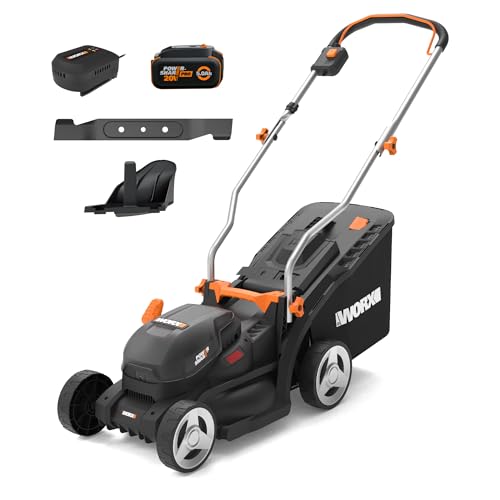
Worx 20V 14″ 2-in-1 Cordless Mower (WG733.1)
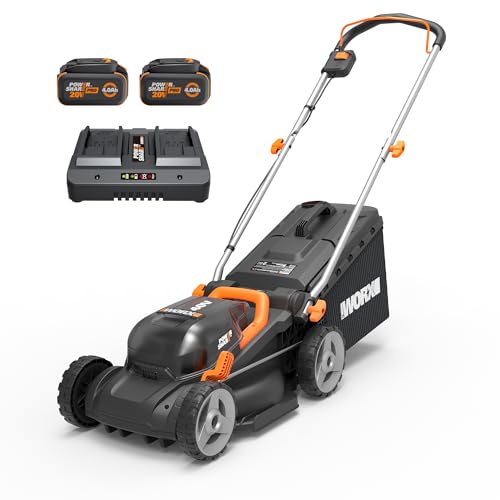
Worx 40V 14″ 2-in-1 Cordless Mower (WG735)

Worx 40V 17″ 2-in-1 Cordless Mower (WG745)

EGO Power+ 21″ Self-Propelled Mower (LM2123SP-2)

Litheli 40V 16″ Brushless Push Mower
Why These Options Stand Out
The Greenworks 80V opens this list because it tackles the biggest yards here without leaning on gasoline. A 21-inch steel deck covers more ground per pass than the 14-inch Worx models below, which matters when you’re cutting a half acre on a Saturday morning. The included 4.0Ah battery tops back up in roughly an hour, so a mid-mow swap is realistic for anyone with a routine mowing schedule.
Compared to the smaller Worx units that follow, this one trades nimble handling for raw coverage. The brushless motor (a design that uses electronic friction-free spinning instead of carbon brushes, lasting longer and wasting less energy) keeps things quiet enough for early starts. Single-lever height adjustment lets you swap from a tidy summer cut to a longer spring trim without fiddling with four separate wheels.
Practical Advantages
- Wide 21-inch steel deck trims passes on bigger yards
- Brushless motor runs quieter and tends to outlast brushed designs
- Rapid charger refills the 4.0Ah pack in roughly 60 minutes
- Single-lever height adjust speeds up seasonal changes
Things To Consider
- Heavier than the 14-inch picks, so smaller-framed users may feel it on slopes
- Run-time scales with grass thickness and cutting height, so very tall spring growth can shorten sessions
Key Specs
Who It Suits Best
Suburban homeowners with medium-to-large flat yards who want a steel deck and don’t mind the extra weight.
Consider Something Else When
The Worx WG745 suits someone working a quarter acre who’d rather save space and shed a few pounds over the Greenworks’ heft.
The WG733.1 is the easiest mower on this list to drag out of a shed, around a flower bed, or up the back steps. It’s the most compact model in the Worx family, and a 14-inch cutting deck matches the kind of postage-stamp yard most city lots actually have. Where the Greenworks above trades maneuverability for coverage, this Worx gives it back to you.
The included 20V 5.0Ah PowerShare battery covers up to roughly 3,200 square feet on a single charge, which lines up with the typical townhouse lawn. The 2-in-1 deck lets you bag clippings or mulch them back into the turf, a small but appreciated feature when autumn leaves start mixing with the grass.
What Works In Its Favor
- Lightest push mower in the lineup, easy for anyone to handle
- PowerShare battery fits 140+ other Worx tools, simplifying charging
Worth Noting
- 14-inch deck means noticeably more passes on anything past a small lot
- Single 20V platform delivers less torque than the 40V models below for thick, wet grass
- Bag capacity tends to fill fast, so owners often empty mid-mow on overgrown patches
Made For
Renters and townhouse owners with a small, mostly flat lawn who want something they can hang on a wall hook.
Look Elsewhere When
The Litheli 40V below suits anyone with a medium yard who needs two batteries and adjustable height settings.
Stepping up from the WG733.1 above, the WG735 keeps the friendly 14-inch footprint but doubles the voltage. That jump matters when spring grass comes in thick and damp, where lower-voltage mowers tend to bog down. IntelliCut technology automatically senses load and feeds in more torque, so the motor adapts instead of stalling.
The included 20V 4.0Ah battery is rated to handle roughly an eighth of an acre on a charge, which fits most small suburban lots. The Airflow-optimized deck pulls clippings upright for a cleaner cut, and the larger rear wheels help when the ground gets soft after rain.
Everyday Perks
- Adaptive torque keeps the blade moving through thick patches
- Airflow deck improves cut quality on damp grass
- PowerShare battery works across the Worx tool ecosystem
Trade Offs
- Single battery, no spare included for longer sessions
- 14-inch deck still means extra passes compared to the WG745 below
Quick Facts
Best Suited To
Homeowners with mixed grass types on a small lot who want smarter load handling without jumping to a wide-deck model.
A Better Fit Elsewhere
The Worx WG745 below fits someone needing a wider 17-inch deck and a second battery for longer sessions.
The WG745 stretches the WG735’s frame into a 17-inch deck and ships with two 20V 4.0Ah batteries plus a dual charger. That wider path, paired with twin packs, is the closest thing here to a true quarter-acre workhorse without stepping up to a self-propelled unit. Pass count drops noticeably compared to the 14-inch models earlier in this list.
The brushless motor delivers gas-like cutting feel with much less noise, which matters during early-morning sessions. PowerShare compatibility means these batteries slot into roughly 140 other tools and outdoor products in the Worx line, which is a quiet long-term perk for anyone already invested in that platform.
Notable Upsides
- 17-inch deck finishes quarter-acre lawns in fewer passes
- Twin batteries extend runtime and reduce mid-mow charging
- Dual-port charger refills both packs together
- Cross-compatible with the broader Worx PowerShare family
Honest Caveats
- Still a push mower, so steeper slopes demand real effort
- Larger deck adds some storage bulk in tight sheds
Who Should Grab It
Owners of roughly quarter-acre yards who want cordless simplicity, dual-battery runtime, and Worx platform flexibility.
Skip It When
The EGO Power+ LM2123SP-2 below makes more sense for sloped properties where self-propulsion saves real energy.
Self-propelled is the headline feature here, and on a hilly yard it’s the difference between an easy Saturday and a sweaty one. The Touch Drive system lets you engage the rear-wheel drive by pressing a paddle, so the mower pulls itself forward at whatever pace you set. That’s a real upgrade for anyone whose lawn tilts toward a slope.
Two included batteries, a 56V 6.0Ah and a 4.0Ah, push total runtime up to roughly 80 minutes in ideal conditions. The 21-inch deck matches the Greenworks’ coverage at the top of this list, but the cutting torque is tuned to compete with gas units. For most flat lawns, the Greenworks above does the job at less cost; on rolling terrain, the EGO earns its place.
The Case For It
- Self-propelled drive reduces fatigue on sloped ground
- Wide 21-inch deck handles larger properties
- Twin batteries extend total runtime significantly
Less Ideal Details
- Pricier than the push-only models above
- Heavier frame can be awkward to store in smaller sheds
Feature Snapshot
Perfect Match For
Homeowners with sloped or larger lawns who’d happily trade pushing effort for a self-propelled ride.
Reach For A Different Pick When
The Litheli 40V mower below fits a flatter, more budget-driven yard where self-propulsion isn’t necessary.
The Litheli rounds out this list with a 16-inch deck that splits the difference between the small Worx models and the wide Greenworks or EGO above. Six cutting heights from 25 to 75 millimeters give real flexibility across seasons, from a close summer cut to a longer spring setting that helps shaded turf stay healthy.
Two 5.0Ah batteries ship in the box and both must be installed to run, a setup the brand markets as a constant 40V feed that doesn’t sag mid-lawn. The 50-liter collection bag holds more clippings than the smaller Worx units, so emptying breaks happen less often. Mulching mode is built in for folks who’d rather feed the lawn than bag.
Reasons It Performs
- Six height settings cover every seasonal need
- Twin batteries and large bag reduce interruptions
- Brushless motor runs cleanly with low upkeep
Points To Note
- Both batteries must be inserted to operate, so no single-pack option
- 16-inch deck sits between the smallest and widest picks without dominating either category
The Right Fit
Family households with a medium, mostly flat lawn who want adjustable heights and longer runtime without premium-tier spend.
Where A Sibling Pick Shines
The Worx WG735 above suits smaller lots where a single battery and lighter frame are easier to manage.
What Matters Most Before Choosing Manual Lawnmowers
Deck Width vs. Yard Size
Deck width controls how many passes it takes to clear a yard. A 14-inch deck on the Worx WG733.1 shines in tight spaces but eats up passes on open ground. A 21-inch deck on the Greenworks or EGO finishes wide lawns faster, though it costs maneuverability around curved beds. Most owners misjudge this, then end up either overworked or under-equipped.
Battery Runtime and Voltage
Voltage drives torque, while amp-hours drive how long the motor runs. A 20V platform handles small, tidy lawns; a 40V or 56V system tackles thicker, taller growth without bogging. For most quarter-acre yards, look for at least two included batteries or a rapid charger, because mid-mow downtime is the silent killer of weekend plans.
Push vs. Self-Propelled
Push mowers are lighter, simpler, and cheaper to store. Self-propelled mowers like the EGO Power+ pull themselves forward, which matters on slopes or for anyone who’d rather not muscle a machine uphill every week. Flat-lot owners often skip the upgrade; anyone with even a modest grade feels the difference within the first cut.
Key Considerations Across These Picks
Wrong Turns To Avoid
The most common mistake is sizing the deck to the entire neighborhood rather than the actual lot. A 21-inch mower on a 1,500-square-foot yard feels clumsy and won’t fit between standard gate posts. The second is ignoring battery setup: a single 20V pack is fine for weekly trims, but spring growth eats that fast, so plan for a second battery or a quick charger.
When Paying More Pays Off
Premium-tier mowers like the EGO LM2123SP-2 spend the extra money on self-propulsion, larger batteries, and beefier torque. None of that matters on a flat, tidy lawn, but on a half-acre with slopes and tall fescue, the upgrade pays for itself in saved weekends and fewer cut-quality frustrations. For smaller lots, the Worx WG745 or Litheli models deliver most of the practical benefit at a friendlier entry point.
Frequently Asked Questions
How long do cordless lawnmower batteries typically last per charge?
Run-time depends on grass thickness, deck width, and battery capacity, but most cordless mowers on this list cover between a small lawn and roughly a quarter acre per charge. Heavier spring growth shortens sessions noticeably.
Are brushless motors worth the upgrade over brushed motors?
Brushless designs run more efficiently, generate less heat, and tend to last longer than brushed motors. For homeowners mowing weekly through the season, the upgrade usually pays back in motor longevity.
Can I leave the batteries on the charger after they finish?
Most modern chargers manage the pack and stop pushing current once full, but unplugging once the indicator confirms full charge is a good habit. Heat and constant top-ups are the usual culprits behind early battery wear.
What’s the difference between mulching and bagging modes?
Bagging collects clippings for disposal, which keeps the lawn tidy and reduces thatch visible on the surface. Mulching chops clippings fine and drops them back into the turf as a light nitrogen feed, which works well in dry summer conditions.
Do self-propelled mowers require more maintenance?
Self-propelled units add a drive cable and sometimes a gearbox, but routine care looks similar to a push mower. Keep the underside clean, sharpen the blade annually, and store the unit out of rain, and most owners report years of trouble-free service.
Closing Remarks
Cordless mowing has caught up to gas in torque and runtime, and it beats gas on noise, storage, and weekend peace. Match the deck and voltage to your actual lot size, and don’t pay for self-propulsion unless slopes are part of your routine. The right pick is the one that disappears into your Saturday instead of dominating it.