A self-propelled mower takes the heavy lifting out of weekend yard work, but only if the size matches the job. A medium yard (think a quarter-acre lot or a long suburban strip) rewards a deck between 17 and 21 inches and a drive system that doesn’t stall on gentle slopes. The challenge is sorting genuine self-propelled units from lightweight push mowers wearing the same label. I pulled together nine options that span full mowers, replacement wheels, blades, and protective covers, so anyone shopping for this category can find a confident starting point.
The Picks In Brief

Grasscool 942-0741A Troy Bilt 21″ Mulching Blade

Toro OEM Self-Propelled Push Wheels

Ranwin 583719501 Front Drive Wheels

Zettum Waterproof Walk-Behind Mower Cover

Casince 17″ Cordless Walk-Behind Mower
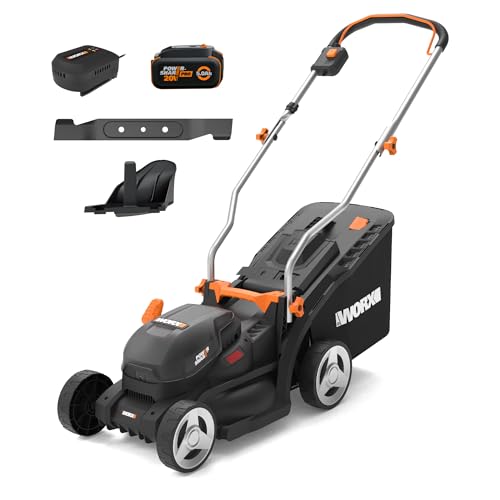
Worx WG733.1 20V 14″ Cordless Mower
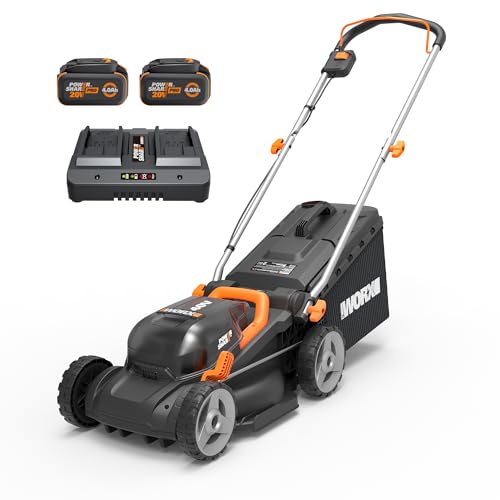
Worx WG735 40V 14″ Cordless Mower

Worx WG745 40V 17″ Cordless Mower

Honda HRX-BE 21″ Battery Walk-Behind Mower
The Picks, Examined More Closely
A dull blade turns a self-propelled mower into a frustrating tool, tearing grass instead of slicing it. The Grasscool 942-0741A is a direct-fit replacement engineered to match Troy-Bilt’s TB130 and a long list of MTD-family 21-inch decks, so swapping it in usually means lifting the deck, loosening one bolt, and resetting the balance in under fifteen minutes. For anyone whose mower still runs fine but leaves ragged tips behind, this is the kind of small part that resets the whole cut quality.
Homeowners with walk-behind, push, or self-propelled mowers from Troy-Bilt, MTD, Craftsman, Cub Cadet, MTD Gold, Bolens, White Outdoor, Murray, Snapper, Yard Machines, Yard-Man, or Huskee should find a clean match here, particularly on decks built from 1995 onward.
Useful Highlights
- Cross-references multiple OEM part numbers (942-0741, 942-0741A, 742-0741, 742-0741A, and several 490-series codes), which simplifies identification on older decks.
- The 21-inch profile mirrors the factory deck width, so swath coverage stays identical after the swap.
- A fresh cutting edge noticeably improves mulching performance, returning finer clippings to the turf instead of stragglers.
- Installation generally takes only basic hand tools, making it approachable for first-time DIYers who want to skip the service visit.
Things To Consider
- This is a blade only, not a full mower, so it delivers no benefit on a machine with engine or drive issues.
- Verifying the OEM cross-reference against the deck model is still important; a wrong match throws off balance and stresses the spindle.
- Owners commonly report the painted finish dulling after a single season, though cutting performance holds up much longer than the coating does.
Quick Facts
Right Fit For
Troy-Bilt and MTD-family self-propelled mower owners whose 21-inch deck cuts unevenly and who want to handle the swap in the driveway with basic tools.
Look Elsewhere When
Anyone needing a full replacement mower, not just a blade, should jump to the Worx WG745 or the Honda HRX-BE for a complete unit.
Self-propelled drive systems live or die by their wheels. Once the tread wears smooth or the inner bearings corrode, the transmission starts slipping and the whole mower feels heavier than it should. Toro’s OEM wheels (parts 98-7135 and 98-7130) restore factory fit on Super Recycler models and similar self-propelled units, and the genuine Toro spec means the hub bore, offset, and splined engagement all match the original drive shaft.
Available in 8-inch, 10-inch, and 11-inch variants, the wheels cover front and rear positions across many recent Toro personal-pace mowers, giving owners a way to refresh traction without buying a whole new machine.
Points In Its Favor
- Genuine Toro OEM construction preserves the original driving feel rather than introducing an aftermarket feel.
- Three size choices (8, 10, and 11 inch) accommodate multiple Toro self-propelled models and wheel positions.
- The hub geometry lines up with the factory splines, reducing the risk of slippage after the swap.
- A matched pair brings the mower back to predictable handling on slopes, a real ownership upgrade in daily use.
Worth Noting
- Selecting the correct wheel size and position still matters; ordering without checking the existing part number risks an incorrect fit.
- The OEM wheels typically cost more than generic aftermarket alternatives, a real trade-off for budget-focused owners.
- Replacement is straightforward but may require a puller or penetrating oil on older mowers where rust has seized the axle.
Made For
Toro Super Recycler owners whose self-propelled drive feels inconsistent and who want a factory-correct wheel rather than a close-enough aftermarket copy.
Swap It Out When
Anyone working on a Craftsman or Husqvarna front-wheel-drive unit will find the Ranwin 583719501 wheels a more compatible two-pack for their machine.
Front-wheel-drive mowers tend to wear both drive tires at the same rate, so buying singles often means paying shipping twice. Ranwin’s two-pack solves that by bundling a matched set of 583719501 wheels, sized at 8 inches tall with a 1-3/4-inch width and a 1/2-inch bore. The hub offset of 1-5/8 inches matches several Craftsman and Husqvarna front-wheel-drive walk-behinds, which is where this part does its best work.
For owners watching their drive system lose bite, replacing both wheels at once is the realistic move, and this pack keeps the symmetry intact.
What Stands Out
- Cross-compatibility with part numbers 583719501, 532402657, 194231X460, and several related codes simplifies ordering.
- A two-pack format avoids the headache of buying one wheel now and another later when the second tire wears through.
- The 8-inch tire height keeps ground clearance close to original, preserving the mower’s handling on uneven turf.
Points To Keep In Mind
- Some buyers may find the aftermarket tread compound less grippy than the original equipment tire in damp grass.
- Installing on heavily rusted axles can require penetrating lubricant and patience.
- This pack addresses front wheels only; rear tires on rear-drive models need separate attention.
Whose Shelf It Belongs On
Craftsman or Husqvarna front-wheel-drive mower owners noticing both front tires losing traction at once and ready to replace them as a matched pair.
Reach For A Different Pick When
Toro owners with rear-wheel Personal Pace systems will get cleaner results from the Toro OEM wheels in pick two.
A mower that lives outside takes a beating from UV, rain, and dust, and a $20 cover routinely outlasts a $400 machine left exposed. Zettum’s 600D Oxford cloth cover, finished with a PU coating, measures roughly 74 by 25 by 39 inches, a profile that swallows most walk-behind mowers from Honda, Husqvarna, Cub Cadet, Toro, John Deere, Ryobi, Greenworks, Sun Joe, EGO, PowerSmart, Craftsman, LawnMaster, and Snapper. The included storage bag is the small but appreciated touch, keeping the cover itself from blowing around the garage between seasons.
Anyone storing a mower under a deck, beside a fence, or in an open shed will see this cover extend the life of paint, plastic, and electrical connections.
The Upside
- The 600D Oxford fabric with PU coating resists tearing and sheds water effectively during heavy rain.
- A universal fit covers most walk-behind decks on the market, so households with multiple mowers can share it.
- The included storage bag makes the cover itself easy to stash through the mowing season.
Trade Offs
- Universal sizing means unusually tall rear-bagger mowers may sit snugly under the fabric.
- Cover fabric benefits from occasional cleaning to prevent mildew in damp climates.
Best Suited To
Homeowners who store a walk-behind mower outdoors or under an open carport and want an inexpensive barrier against sun and rain damage.
Skip It When
Owners keeping their mower in a fully enclosed garage will get little return from a weatherproof cover, and they may prefer investing that budget toward a sharper blade instead.
The Casince 17-inch cordless mower is the first full machine on the list, and it sits in a useful middle ground: wider than a 14-inch suburban mower but narrower than a wide-deck 21-inch workhorse. The 17-inch cutting deck paired with six height settings from 1 to 3 inches gives homeowners control over both finish length and stride width, and the dual 20V 4.0Ah battery configuration stretches runtime across lawns in the 5,000-square-foot range.
For someone replacing a tired gas push mower and tired of the maintenance ritual, this is a quieter, lighter entry point with enough deck to finish a medium yard in a single pass.
Notable Upsides
- A 17-inch deck cuts a meaningful swath without the storage footprint of a 21-inch model.
- Six height positions (1 to 3 inches) cover most turf types from short Bermuda to taller fescue.
- Dual 20V 4.0Ah batteries extend runtime and reduce mid-mow charging pauses.
Honest Caveats
- Battery runtime shrinks quickly in tall or wet grass, so overgrown lawns may require two charging cycles.
- Storage in winter benefits from a climate-controlled space, since lithium batteries prefer moderate temperatures.
Perfect Match For
Homeowners with small to mid-size lawns who want a low-noise cordless deck wider than 14 inches but still manageable in a tight garage.
Where A Sibling Pick Shines
Anyone tending a quarter-acre lot should consider the Worx WG745 for more battery headroom and a similar 17-inch footprint.
For tight lots where a 17-inch deck feels like a parking lot, the Worx WG733.1 is the smallest full mower in the Worx stable. Its 14-inch deck, paired with a brushless motor for efficiency and a single 20V 5.0Ah PowerShare Pro battery, covers roughly 3,200 square feet per charge. At well under 30 pounds, it carries easily down apartment stairs or onto a balcony garden, and it folds small enough to hang on a wall hook.
Anyone renting, sharing storage with bikes and grills, or just tired of wrestling a heavier mower through a side gate will find the WG733.1 a quiet, low-effort companion.
Good Reasons To Consider
- A 14-inch deck slips through narrow side gates and tight fence gaps that block wider mowers.
- The brushless motor delivers efficient power and longer motor life than brushed designs.
- PowerShare battery compatibility extends to 140-plus Worx tools, simplifying spare-battery ownership.
- Lightweight build suits users with limited storage strength or shared walk-up storage.
Soft Spots
- The 3,200-square-foot coverage cap falls short of larger properties with multiple lawn zones.
- A single 5.0Ah battery limits runtime on anything but the smallest patches of grass.
- The compact deck means more passes on even modest lawns, extending total mowing time.
Who It Suits Best
Apartment and townhouse dwellers with postage-stamp lawns who need a mower that lifts easily and stores on a wall.
Not Your Match When
Owners with a quarter-acre lot should jump to the Worx WG745 for a wider deck and longer runtime.
Where the WG733.1 is the lightweight sprinter, the WG735 is the same 14-inch footprint with a bigger 40V battery and a smarter motor controller. IntelliCut technology automatically increases torque when the blade hits thicker patches, which is where cordless mowers traditionally stall. The included 20V 4.0Ah battery covers up to a 1/8-acre lot per charge, and the optimized deck channels air to lift grass upright before the blade hits it.
This is the kind of mower that feels engineered around the one annoying moment every cordless owner knows, the bog-down in damp spring grass.
Real-World Strengths
- IntelliCut auto-adjusts torque on demand, helping the blade power through thick or damp grass without manual intervention.
- A 40V platform provides noticeably stronger cutting performance than 20V equivalents on the same deck size.
- The Airflow deck design produces a cleaner cut by lifting grass before the blade arrives.
Minor Gripes
- The 1/8-acre rating assumes ideal grass height; overgrown lawns will demand a second pass.
- Owners with very large lawns will likely need to swap batteries mid-cut to finish the job.
Who Should Grab It
Homeowners with up to a 1/8-acre lot, especially in regions where spring grass runs thick and damp, who want cordless quiet without sacrificing cut quality.
Where Another Pick Suits Better
Anyone with a quarter-acre should consider the Worx WG745, which pairs a 17-inch deck with double the battery capacity.
The Worx WG745 is the family-lot sweet spot: a 17-inch brushless deck, two 20V 4.0Ah PowerShare batteries, and a dual charger that tops them off between mowings. Rated for lawns up to a quarter acre, it brings the wider deck that halves mowing time compared to 14-inch machines, without the storage weight of a 21-inch workhorse. PowerShare compatibility means the same batteries slot into trimmers, blowers, and chainsaws across the Worx lineup, so the investment extends well beyond mowing.
For households that want one battery platform to power the whole yard tool kit, this is the most efficient place to start.
Everyday Perks
- The 17-inch deck cuts mowing time significantly on quarter-acre lawns compared to 14-inch models.
- Two 20V 4.0Ah batteries run sequentially, extending runtime without mid-mow charging.
- PowerShare compatibility with 140-plus Worx tools means one charger and one battery family for the whole yard.
- The included dual charger replenishes both packs faster than a single-bay charger.
Where It May Fall Short
- The brushless motor is efficient but produces a different sound profile than gas, which may take a session or two to get used to.
- Wet, tall grass still reduces runtime below the 1/4-acre rating.
- Battery storage in winter requires a moderate-temperature location for longevity.
Feature Snapshot
Best Suited To
Family households with quarter-acre lots ready to standardize on the Worx PowerShare platform for the whole yard tool kit.
Consider Something Else When
Buyers who prioritize Honda-grade build and 4-in-1 deck versatility should look at the Honda HRX-BE in the next slot.
The Honda HRX-BE (model HRX217YXBEXA6) is the rare cordless mower that doesn’t feel like a compromise. Its Honda motor targets the same torque profile as the GCV-series gas engine, which is the standard Honda has tuned across decades of lawn equipment. The 4-in-1 Versamow system with Clip Director switches between mulching, bagging, discharging, and leaf shredding without tools or attachments, a feature that genuinely changes how often the mower earns its keep through fall cleanup.
For the homeowner who treats the lawn as a finished surface rather than a chore, this is the most ambitious cordless option in the roundup.
A Few Strong Suits
- The 21-inch deck matches the swath of Honda gas machines, so coverage translates directly from past ownership.
- Versamow with Clip Director combines four cutting modes without tools or add-on decks.
- Honda’s motor calibration aims for sustained RPM under load, addressing a common weakness in budget cordless mowers.
Practical Considerations
- The 21-inch footprint demands more storage space than 14 or 17-inch alternatives.
- Replacement batteries and service parts reflect the premium tier, so ownership costs run higher than entry-level cordless mowers.
- For homeowners with smaller lawns, the extra deck width offers no real efficiency gain and adds storage weight.
Who Will Love This
Demanding medium-lawn owners who want Honda-grade cut quality, 4-in-1 versatility, and battery convenience without stepping back to gas.
A Better Fit Elsewhere
Anyone with a small urban lawn and limited storage will be happier with the compact Worx WG733.1.
Matching Deck Size to Your Yard
Picking a medium-yard self-propelled mower starts with a tape measure and a flat sketch of the lot. Once the approximate square footage is clear, deck width and battery runtime become a tradeoff equation rather than a guessing game. The picks above cluster around three deck sizes, each tied to a typical lawn profile.
Deck width and coverage. A 14-inch deck, like the one on the Worx WG733.1 and WG735, fits lawns up to roughly 3,200 square feet with manageable runtime per charge. A 17-inch deck, found on the Casince and Worx WG745, suits lots in the 5,000 to 10,000-square-foot range and reduces mowing time by roughly a quarter compared to a 14-inch machine. A 21-inch deck, like the Honda HRX-BE, fits larger medium-lawn territories where stride width translates directly into fewer laps.
Drive system and terrain. Self-propelled models fall into front-wheel drive (good for flat terrain with lots of turns), rear-wheel drive (better traction on slopes and bag-heavy mowing), and Personal Pace systems (Toro’s speed-matching design). Replacement wheels matter here too: a worn front tire turns a self-propelled machine into a push mower, which is why picks one through three focus on drive components that bring tired systems back to life.
Battery versus gas trade-off. Cordless mowers like the Worx and Honda options trade raw power for quieter operation, zero engine maintenance, and no fuel storage. For medium lawns under a quarter acre, the runtime gap between gas and battery has closed enough that the choice is increasingly about preference and storage realities rather than capability.
Accessory and maintenance reality. A blade swap (pick one), wheel refresh (picks two and three), and a weatherproof cover (pick four) together address the most common medium-lawn ownership concerns: cut quality, drive performance, and off-season storage. Treating these as a bundled care package, rather than three separate purchases, often produces a better mowing season than any single upgrade.
Smart Picks, Smarter Buys
Mistakes Worth Dodging
Buying a mower with a deck wider than the storage space is the most common self-propelled shopping trap. A 21-inch deck that lives outside under a tarp will outlast the same machine stored folded in a too-small garage, so measure the door before measuring the lawn.
Underestimating how a self-propelled drive feels when the wheels wear down is the second slip-up. Many owners replace the whole mower when a $30 wheel set would have restored the original driving feel, which is why the Toro OEM and Ranwin picks earn their place in this roundup.
What The Upgrade Payoff Buys
Stepping up from a 14-inch to a 17-inch deck saves real minutes on every mow, and the jump from 17 to 21 inches saves more again, but the law of diminishing returns kicks in fast. Premium-tier gains on the Honda HRX-BE show up less in raw coverage and more in cut versatility, motor calibration, and long-term durability.
The upgrade is most worthwhile for households that mow weekly through a long growing season and that store the mower indoors. Lighter-use owners, especially those with smaller lawns, will get more value from a mid-tier deck with sharp blades and fresh wheels than from a flagship machine.
Frequently Asked Questions
What deck width works best for a medium-sized yard?
For most quarter-acre lawns, a 17-inch deck balances mowing speed with manageable storage. Anything narrower means more passes, and anything wider demands more garage space and often more torque to maintain cut quality in thick grass.
Are cordless self-propelled mowers powerful enough for medium lawns?
Modern 40V platforms have closed most of the gap with gas engines on medium lawns. Cordless mowers from Worx and Honda can handle typical weekly mowing on quarter-acre lots, though overgrown or wet grass will still reduce runtime below published ratings.
How often should self-propelled mower wheels be replaced?
Front drive wheels on a frequently used self-propelled mower typically last three to five seasons before the tread smooths out and traction drops. Rear wheels generally last longer but should be inspected annually for cracks or hub wear.
Do push mowers really need a cover when stored outside?
Yes, a waterproof cover slows UV damage to plastic housings, keeps rain out of fuel systems on gas models, and protects battery contacts on cordless machines. A 600D cover like the Zettum option handles most climates with minimal effort.
Can I sharpen a mulching blade instead of replacing it?
A blade can be sharpened a few times before the cutting edge profile changes too much for clean mulching. Once the blade has been sharpened past a quarter inch of material loss, or shows nicks and warping, replacement becomes the safer and more consistent path.
Wrap Up
The right self-propelled mower for a medium yard is less about brand hype and more about matching deck width, drive system, and storage footprint to the actual lot. Anyone replacing a worn machine should consider whether fresh wheels and a sharper blade could extend the life of what’s already in the garage, while anyone stepping into cordless for the first time will find the Worx WG745 a balanced family pick and the Honda HRX-BE the most ambitious option on the list. The mowing season is short enough that the right tool makes every weekend a little easier.