A dull blade tears grass instead of slicing it, leaving brown tips and opening the door to disease. Picking the right mulching lawn mower blades matters because the blade does the actual work of turning clippings into fine pieces that feed the soil. I’ve put together this lineup for homeowners with 21-inch decks running gas or battery-powered mowers from Troy-Bilt, Cub Cadet, Craftsman, Husqvarna, EGO, and Greenworks.
A Closer Look At The Lineup

GICOOL 942-0741A 21 Inch Mulching Blades

GICOOL 942-0741A Mulching Blade 21″

Grasscool 21″ Troy Bilt Mulching Blades

EGO POWER+ 21″ Blade AB2100

GICOOL 406712 Mulching Blade 21″

EGO POWER+ 20″ Blade AB2000
GICOOL 21″ Blade for Greenworks

GICOOL 21″ Blade for EGO AB2101
What Each Pick Brings To The Table
This GICOOL blade is built for the sprawling 21-inch deck crowd, with a long replacement list that reaches across Cub Cadet’s CC and SC series and many MTD walk-behinds. The format matters: a “center hole” is the hole in the middle of the blade that mounts onto the mower’s spindle, the post that spins the blade, so matching that pattern is the first thing to verify before buying any aftermarket blade.
I like this pick for homeowners who own older Cub Cadet models in the CC400 and SC100 families, where finding OEM stock has gotten harder over time. For most suburban lots with weekly mowing schedules, the cutting profile and swing weight suit routine mulching without bogging the engine.
Strengths Worth Knowing
- Cross-references multiple OEM numbers including 742-0741A, 942-0741A, and 742-04276
- Fits a wide range of Cub Cadet CC and SC walk-behind models
- Standard 21-inch format for the most common deck size in the category
- Curved mulching wing design recirculates clippings for a finer cut
Things To Consider
- Verify your model number against the compatibility list before ordering
- Balance checks after install can matter; an unbalanced blade causes vibration over time
Built With In Mind
Homeowners with Cub Cadet or MTD walk-behinds in the CC and SC series who mow weekly on a small-to-medium suburban lot.
A Better Fit Elsewhere
If your garage holds a Craftsman or Husqvarna with a 5/8-inch center hole, the GICOOL 406712 Mulching Blade is a stronger match.
This single-pack version of GICOOL’s 942-0741A targets Troy-Bilt’s TB-series mowers from the TB105 through the TB240. It swaps easily for anyone who already knows the OEM reference numbers, with cross-fits that include 942-0641 and 490-100-F084 alongside the more common listings.
The honest read is that this blade suits the everyday Troy-Bilt owner who only needs one replacement at a time rather than a paired set. Compared to the first GICOOL on this list, the audience is narrower: Troy-Bilt riders, not Cub Cadet owners.
Advantages To Know
- Covers the popular Troy-Bilt TB walk-behind range from TB105 to TB240
- Single-blade pack suits owners replacing one worn blade at a time
- Steel cutting edge handles routine mulching on cool-season turf
Points To Note
- No bundled hardware in the package in some owner reports
- Sharpening intervals shorten in sandy or gritty soil conditions
Whose Shelf It Belongs On
Troy-Bilt TB-series owners with a single walk-behind mower who want a straightforward replacement blade.
Reach For A Different Pick When
Cub Cadet CC or SC owners should step back to the GICOOL 942-0741A 21 Inch Mulching Blades at position one for a wider fit list.
Grasscool built this blade around the same 942-0741A spec, but the model coverage stretches further into the Troy-Bilt lineup than most aftermarket replacements. It fits everything from the TB105 up through the TB360, including XP variants that other blades sometimes miss.
Where this one earns its place is for households running multiple Troy-Bilt mowers or for anyone replacing a blade on a newer XP-series machine. In my experience looking at compatibility lists, XP variants are the ones most often left off aftermarket fitment charts.
What Helps Most
- Includes Troy-Bilt XP variants that some aftermarket blades overlook
- Broad Troy-Bilt model coverage from TB105 through TB360
- Replaces a long OEM cross-reference list centered on 942-0741A
Honest Caveats
- Some listings show inconsistent stock of mounting hardware
- Edge retention can vary with mowing frequency and grass type
Key Specs
Right Fit For
Troy-Bilt owners with newer XP or self-propelled walk-behinds who want the broadest model coverage in one blade.
Not Your Match When
EGO cordless mower owners should pick the EGO POWER+ 21″ Blade AB2100 at position four instead.
EGO designed the AB2100 specifically for the 20.5-inch cutting deck on their 56-volt cordless mowers, covering the LM2100, LM2101, LM2102SP, LM2100SP, and LM2142SP models. It’s a 3-in-1 blade, meaning the same blade supports mulching, bagging, and side discharge without swapping parts.
This is the right blade for EGO owners who want a factory-fit replacement rather than a generic aftermarket gamble. A factory-sharpened edge means you can install it straight out of the box without touching a file first.
Everyday Wins
- OEM factory fit for EGO 56V LM2100 series mowers
- 3-in-1 design handles mulching, bagging, and side discharge
- Factory-sharpened edge installs ready to cut
- Engineered balance for battery-powered spindle speeds
Small Caveats
- Limited to EGO LM2100-series mowers with the 20.5-inch deck
- OEM replacement often costs more than aftermarket equivalents
Made For
EGO cordless mower owners with 20.5-inch decks who want a guaranteed-fit OEM replacement and clean, sharp cut quality.
Swap It Out When
Owners of older EGO 20-inch LM2000-series mowers should grab the EGO POWER+ 20″ Blade AB2000 at position six.
This blade targets AYP-built walk-behinds with a 5/8-inch round center hole, the dominant mounting pattern on older Craftsman and Husqvarna 21-inch decks. The OEM cross-reference covers a long list including 406712, 165833, 175064, and 189028.
It fits a genuinely different audience than the first three picks on this list: AYP-platform mowers rather than MTD or Troy-Bilt. You may find the fit list shorter than competitors because AYP didn’t standardize as widely, but the included models are well-documented.
A Favorable Mix
- Standard 5/8-inch center hole matches most AYP walk-behinds
- Cross-references multiple AYP, Husqvarna, and Poulan OEM numbers
- Lower cost than OEM replacements for legacy Craftsman decks
- 21-inch length suits the most common residential deck size
Worth Bearing In Mind
- Only fits mowers with a 5/8-inch center hole, not star-pattern mounts
- Not compatible with MTD or Troy-Bilt decks covered earlier on this list
Perfect Match For
Craftsman and Husqvarna walk-behind owners with 21-inch AYP-platform decks who want a budget-friendly replacement.
Consider Something Else When
EGO LM2100-series cordless mower owners should pick the EGO POWER+ 21″ Blade AB2100 at position four for a guaranteed fit.
The AB2000 is EGO’s factory replacement for their older 20-inch deck LM2020 and LM2021 cordless mowers. It’s another 3-in-1 blade, so it handles mulching, bagging, and side discharge with one install.
Owners of the original EGO LM2000-series mowers depend on this blade because the 20-inch deck has different dimensions than the newer 20.5-inch LM2100 platform. Picking the wrong blade across these two EGO generations is a common mistake, so the model number matters more than the brand alone.
Noteworthy Benefits
- OEM fit for EGO LM2020-series 20-inch cordless mowers
- 3-in-1 design supports mulching, bagging, and side discharge
- Factory sharpening removes the break-in step
- Balanced for EGO’s specific spindle speed profile
Less Ideal Details
- Limited to 20-inch EGO decks, not interchangeable with 21-inch LM2100 mowers
- OEM cost runs higher than third-party alternatives that may fit loosely
Best Suited To
EGO owners of older LM2000 and LM2020-series 20-inch cordless mowers who need a guaranteed-fit factory blade.
Where A Sibling Pick Shines
Newer EGO LM2100-series owners with a 20.5-inch deck should pick the EGO POWER+ 21″ Blade AB2100 at position four.
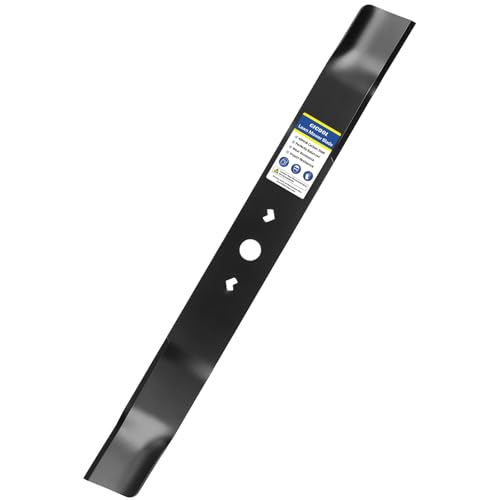
GICOOL targets Greenworks 60V and 80V cordless mowers with this 21-inch blade, fitting popular models like MO40L03, MO40L4413, and MO48L4422. The replacement list spans both residential and commercial Greenworks platforms.
Greenworks owners often pay more for OEM replacements, so this aftermarket option matters for shoppers who want a lower-cost alternative with documented model fit. Compared to the EGO OEM picks earlier, this trades factory branding for a longer compatibility list.
Why It Works Well
- Direct replacement for Greenworks MO40L03, MO40L4413, and MO48L4422
- Covers both 60V and 80V Greenworks cordless platforms
- 21-inch length matches the standard Greenworks residential deck
- Costs less than OEM Greenworks replacements
Some Limits To Know
- Aftermarket fit may need a balance check after install
- Verify the exact Greenworks model number before ordering to avoid mismatch
Who Will Love This
Greenworks 60V and 80V cordless mower owners with a 21-inch deck who want a cost-conscious replacement blade.
Skip It When
EGO POWER+ LM2100-series owners should grab the EGO POWER+ 21″ Blade AB2100 at position four instead.
This blade replaces the EGO AB2101 part number across the LM2100, LM2101, LM2100SP, LM2102SP, and LM2142SP cordless mowers. The 20-1/4-inch cutting length and 11/16-inch center hole are documented for shoppers who want to verify fit before ordering.
The published dimensions and air-lift spec, meaning the upward curve on the back of the blade that pulls grass into the cutting path, set this apart from aftermarket EGO blades with vague fitment claims. It’s a quieter upgrade path for owners who want documented specs over guesswork.
Everyday Advantages
- Replaces EGO AB2101 across multiple 56V cordless mower models
- Documents the 20-1/4-inch length and 11/16-inch center hole for fit verification
- 2-in-1 design supports bagging alongside mulching
- Often costs less than the EGO OEM equivalent
Trade-Offs To Consider
- Only fits EGO AB2101-equipped decks, not older 20-inch EGO platforms
- Air-lift geometry is specific to EGO’s cutting chamber
Key Specs
Who Should Grab It
EGO LM2100-series owners who want a documented aftermarket alternative to the OEM AB2101 with specific dimensions for fit checks.
Look Elsewhere When
Owners of older EGO LM2000-series 20-inch mowers should pick the EGO POWER+ 20″ Blade AB2000 at position six for OEM fit.
Picking The Right Mulching Blade For Your Mower
Match The Mount Before Anything Else
The first thing to confirm is the center hole pattern on your mower’s spindle, the spinning post under the deck. A 5/8-inch circle, an 11/16-inch circle, or a star pattern all use different blade designs, and a mismatch means the blade won’t seat correctly or will throw off balance.
For Troy-Bilt and MTD walk-behinds, look up the OEM reference number printed on your existing blade. For EGO and Greenworks cordless models, the blade part code (AB2100, AB2101, and similar) tells you which replacement blade you should choose. In my experience, shoppers who skip this step end up returning blades that “looked right” but didn’t line up with the spindle.
Balance Blade Speed And Cutting Profile
A “3-in-1” blade supports mulching, bagging, and side discharge without swaps. A “high-lift” blade creates more airflow, lifting grass upright before cutting for a cleaner result, which helps in thicker or taller turf.
The trade-off is engine load. High-lift blades pull more power and can bog down smaller engines on wet or dense grass. Cordless mowers with limited battery capacity may run shorter sessions on a high-lift blade than on a standard one. Choosing between profiles comes down to grass type and mowing frequency: thick cool-season turf benefits from high-lift, while thin or frequently mowed lawns don’t need the extra airflow.
Sharpen, Don’t Just Swap
A dull blade tears grass, so sharpen your blade once or twice per mowing season, depending on lot size and soil grit. Rotary blade sharpeners, files, or bench grinders all work; the goal is a clean, factory-angle edge without rounding off the cutting tip.
A balanced blade matters as much as a sharp one. An unbalanced blade causes vibration that wears out spindle bearings and shaft seals over time. Most owners can test balance on a nail or screwdriver shaft: the blade should sit level without tipping either direction. If one side dips, grind a touch more material off the heavier end until it balances.
Know When OEM Pays For Itself
OEM blades, the blades sold by the mower’s original manufacturer, cost more but match the exact dimensions, weight, and hole pattern for that deck. For cordless mowers like EGO and Greenworks, OEM also means the blade is balanced for the specific motor speed, which protects battery life and reduces vibration.
Aftermarket blades offer real savings for gas walk-behinds with standardized mounts. The savings matter most when you replace blades often, in sandy soil, or after hitting debris. In my experience, the aftermarket savings are strongest on Troy-Bilt, MTD, Craftsman, and Husqvarna walk-behinds where the mounting pattern is widely documented.
Key Considerations Across These Picks
Pitfalls Shoppers Hit
The most common mistake is matching by deck size alone. A 21-inch Troy-Bilt blade and a 21-inch EGO blade share the length but use different center holes and thicknesses. In my experience, shoppers who order by length without checking the spindle pattern end up returning the blade.
Another trap is ignoring the difference between OEM reference numbers. MTD, Cub Cadet, and Troy-Bilt share OEM prefixes like 742 and 942, but not every reference is interchangeable across brands. A blade that fits a Cub Cadet CC469 may not fit a Troy-Bilt TB110 even when both list 942-0741A as a cross-reference.
What Separates Premium From Basic
Premium OEM blades cost more because they’re balanced at the factory, sharpened to a precise edge angle, and matched to the motor’s RPM range. Aftermarket blades can match the cutting edge but often need a balance check after install.
The upgrade is worth it for cordless mowers, where vibration affects battery life and motor bearings. For gas walk-behinds, aftermarket blades deliver nearly the same cut quality at a fraction of the cost, so the premium mostly matters on battery-powered decks.
Frequently Asked Questions
How Often Should I Replace Mulching Lawn Mower Blades?
Most homeowners sharpen their blades once per season and replace them every one to two years. Sandy soil, thick grass, and frequent mowing wear blades faster than clay or thin turf, so the swap interval shortens in heavier conditions.
Can I Use A Mulching Blade Without A Mulching Plug?
Yes, but clippings may not recirculate as finely without the plug closing the side discharge opening. The plug keeps grass under the deck longer for a cleaner cut, which matters most in thick or wet grass.
Are OEM Blades Worth The Higher Cost?
OEM blades matter most on cordless mowers, where the blade weight and balance are tuned to the motor. On gas walk-behinds, aftermarket blades deliver comparable cut quality at a lower cost, so the premium is harder to justify.
What’s The Difference Between A 3-In-1 And 2-In-1 Blade?
A 3-in-1 blade supports mulching, bagging, and side discharge, while a 2-in-1 handles mulching and bagging only. The 3-in-1 design gives more flexibility without swapping blades between modes, which matters for owners who switch between bagging and mulching season to season.
How Do I Know Which Center Hole Pattern My Mower Uses?
Remove the spark plug wire or battery, then tilt the mower and unbolt the existing blade. Measure the center hole with calipers or match it against a reference chart from the mower manufacturer. The pattern matters more than the blade length, since a wrong center hole means the blade won’t seat on the spindle.
Closing Remarks
A sharp, balanced blade does more for lawn health than any fertilizer schedule. Match the OEM reference number or center hole pattern first, then pick the blade profile that fits your grass and mowing frequency. Whether you run a Troy-Bilt walk-behind or an EGO cordless mower, the right replacement blade turns ragged cuts into clean, healthy turf.