Nutsedge earns its reputation the hard way: it shows up in thin spots, near sprinkler heads, and along driveways, then spreads faster than most lawn grasses can fill in. Yellow nutsedge and purple nutsedge both thrive in moist soil, and hand-pulling rarely finishes the job because small tubers stay behind to regrow. A targeted post-emergent herbicide built for sedge control is usually the answer, but the labels vary widely between warm-season turf and cool-season turf applications. I put together this list for homeowners who want a clean lawn without wasting money on the wrong active ingredient.
Your Options, Compared

Target 6 Plus (MSMA 48.2%) Turf Herbicide

Target 6 Plus (MSMA 48.2%) Turf Herbicide Case

T-Zone Turf Herbicide – 1 Gallon
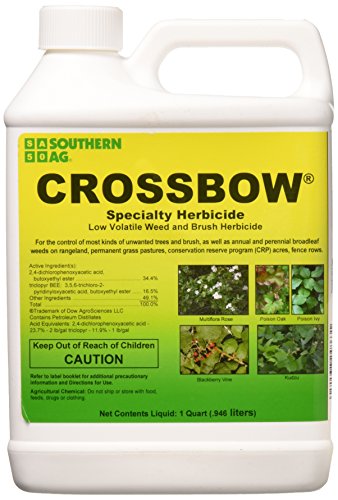
Southern Ag Crossbow Specialty Herbicide Quart
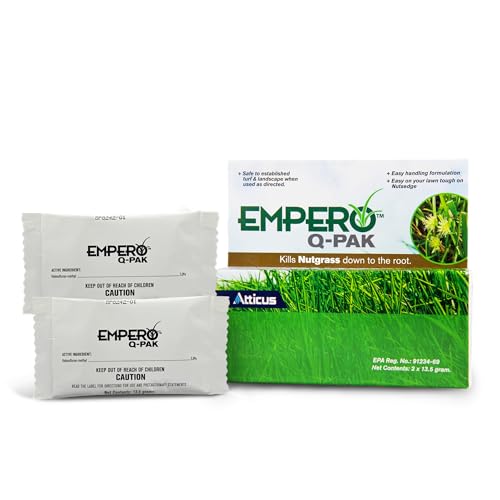
Atticus Empero Q-Pak Nutsedge Killer (2 Pack)

Atticus Sertay Herbicide (1.25 oz)

Southern Ag Surfactant for Herbicides Pint

Atticus Empero Nutsedge Killer 1.33 oz
What Each Pick Brings To The Table
Target 6 Plus is an MSMA-based post-emergent herbicide, meaning it tackles weeds after they have already sprouted rather than preventing them. The 2.5-gallon jug holds enough concentrate to treat sizable turf areas, which makes it a sensible option for properties with extensive sedge infestations or for managers of sports fields and large residential lots. MSMA is one of the older selective herbicides still in rotation, and it remains common on golf courses and sod farms.
For homeowners, the bulk size usually signals scale: anyone with a quarter-acre or more of actively growing nutsedge will appreciate having more on hand than a quart bottle can offer. The mix rate sits around two ounces per gallon of water for general use, though the label should always be checked for sedge-specific adjustments.
Everyday Perks
- Targets nutsedge along with crabgrass, dallisgrass, and johnsongrass in a single pass
- Post-emergent action goes after visible weeds rather than waiting for germination
- Approved for use on cotton, golf courses, sod farms, and highway rights-of-way
- Concentrate format keeps storage footprint smaller than ready-to-spray jugs
- Long-trusted chemistry for serious sedge pressure
Things To Consider
- MSMA is restricted in some states, so local rules should be checked before ordering
- Mixing accuracy matters, since over-application can damage desirable turfgrass
- Personal protective equipment is recommended during spray operations
Key Specs
Made For
Property owners with sprawling lawns or commercial turf managers who already run MSMA programs and need a bulk supply.
Skip It When
A smaller yard calls for the Atticus Empero concentrate instead, since MSMA bulk jugs tend to sit on shelves a while and label restrictions can complicate things.
The five-gallon case is two 2.5-gallon jugs of the same Target 6 Plus MSMA concentrate. Anyone who finished the single-jug review above and felt a bit understocked will recognize why this format exists. It is built for crews and applicators who treat multiple properties or who refill larger spray tanks over the course of a season.
The chemistry is identical to the single-jug pick: 48.3% MSMA designed for post-emergent sedge and grass suppression. The only practical difference is the volume, which lowers the per-gallon cost when someone has the storage space to keep both jugs cool and dry.
Everyday Wins
- Provides a true bulk option for multi-property turf programs
- Same proven MSMA formulation as the single jug, with consistent mix ratios
- Useful for highway rights-of-way, sod farms, and golf course fairways
- Concentrate stretches further than ready-to-spray alternatives
Points To Note
- Two large jugs demand serious storage space and a cool, dry spot
- Some states restrict MSMA use, so labeling must be checked locally
- Imported supply can mean longer restock times during peak season
Built With In Mind
Professional applicators, golf course superintendents, and large-property owners managing repeated sedge outbreaks across wide turf blocks.
Look Elsewhere When
A typical suburban yard does not need five gallons on hand, and the T-Zone Turf Herbicide – 1 Gallon offers a more proportionate bottle for lighter use.
T-Zone SE from PBI / Gordon is a four-active-ingredient broadleaf herbicide with a side hustle: it suppresses young, actively growing yellow nutsedge while it knocks out tougher weeds like wild violet, ground ivy, oxalis, and clover. The improved cool-weather performance is what sets it apart from most sedge products, which tend to slow down when soil temperatures dip.
For lawns in transition-zone climates where spring and fall are the practical spray windows, that cool-weather tolerance is a meaningful feature. It means treatments can begin earlier in the season and stretch later into autumn, catching sedge before it has fully established its tuber bank.
The Good Stuff
- Multi-ingredient blend tackles several stubborn broadleaf weeds at once
- Cool-weather performance lets treatments start earlier and finish later in the year
- Provides suppression of young, actively growing yellow nutsedge alongside broadleaf work
- Sulfentrazone in the formula delivers rapid knockdown of tough species like spurge and dandelion
Honest Caveats
- Labeled for suppression rather than full eradication of mature sedge patches
- State restrictions apply, so New York and similar areas should check before ordering
- Works best when weeds are actively growing, so dormant-season timing matters
Feature Snapshot
Whose Shelf It Belongs On
Homeowners in transition-zone or northern climates who need a multi-purpose product that handles sedge along with the usual spring broadleaf suspects.
Reach For A Different Pick When
Dedicated sedge control is the priority, since the Atticus Empero Q-Pak Nutsedge Killer (2 Pack) focuses on nutsedge without diluting strength across multiple weed targets.
Southern Ag Crossbow is the outlier on this list. It is a low-volatile brush and weed herbicide designed to control unwanted trees, woody brush, and broadleaf weeds, rather than a sedge-specific product. That makes it a different kind of tool: the kind homeowners reach for when nutsedge is only one of several problems creeping in from a fence line, a back corner, or a neglected edge.
The quart size keeps it manageable for spot work, and the formulation is intended for targeted applications rather than broadcast spraying. Think of it as the cleanup product for areas where brush and weeds have run together.
Noteworthy Benefits
- Effective on tough woody brush and unwanted tree sprouts along property edges
- Low-volatile formulation reduces odor and vapor drift during application
- Quart container is manageable for spot treatments and small projects
- Useful as a complement to a sedge-specific herbicide in mixed weed zones
Trade-Offs To Consider
- Not a dedicated sedge control product, so it belongs alongside other herbicides rather than replacing them
- Care is needed around desirable trees and ornamental plants
- Limited inventory through third-party sellers can affect availability
Best Suited To
Homeowners clearing brush, fence-line weeds, and rough areas who want one product that handles woody growth in addition to broadleaf weeds.
Swap It Out When
The main concern is a turf-safe sedge treatment, since the Atticus Sertay Herbicide (1.25 oz) is purpose-built for grassy and broadleaf weed control within southern lawns.
Atticus Empero Q-Pak is a halosulfuron-based nutsedge killer aimed squarely at established turf. Halosulfuron-methyl is the same active ingredient professionals reach for when sedge has gotten out of hand, because it travels down to the root system and tubers rather than just crisping the leaves. The two-pack format doubles the coverage for medium and large lawns.
Gentleness to established turf is the underrated selling point here. Empero works on bluegrass, fescue, Bermudagrass, zoysia, and other common lawn grasses without torching them when label rates are followed. That is a meaningful difference compared to broader-spectrum herbicides that stress the surrounding turf while killing the sedge.
What Works In Its Favor
- Halosulfuron-methyl targets tubers for top-to-bottom sedge control
- Safe on most established warm- and cool-season turfgrasses when used as directed
- Two-pack format covers larger lawns without repurchasing mid-season
- Selective action spares desirable turf while focusing on sedge species
A Few Limitations
- Cool, dry conditions can slow visible results, so patience is part of the deal
- Repeat applications are commonly needed for stubborn infestations
- Storage should stay dry, since the packets are moisture-sensitive
Feature Rundown
Right Fit For
Homeowners with established turfgrasses who want a targeted sedge solution that does not sacrifice lawn health along the way.
A Better Fit Elsewhere
Southern lawns with heavy sedge plus broadleaf pressure may benefit more from the Atticus Sertay Herbicide (1.25 oz), which handles both grass and broadleaf weeds in warm-season turf.
Sertay uses 75% sulfosulfuron, the active ingredient that is the standard for grass, broadleaf, and sedge control in warm-season turf. It is essentially a summer sedge answer for southern lawns, where Bermuda, zoysia, and St. Augustine are the dominant turf species and the spray window lines up with hot weather.
The small 1.25-ounce package reflects how concentrated sulfosulfuron formulations are. A little goes a long way, which is why the bottle is compact despite its coverage potential on larger turf areas.
Positive Takeaways
- Sulfosulfuron covers grassy weeds, broadleaf weeds, and sedge in one product
- Tailored for warm-season turfgrasses common in southern lawns
- Highly concentrated formula stretches a small package across meaningful coverage
- Trusted chemistry for summer applications
Where It Is Less Suited
- Cool-season lawns like Kentucky bluegrass may show sensitivity at higher rates
- Tank-mix compatibility is limited, so surfactant additions need label confirmation
- Small bottle is easy to misplace in a busy garage or shed
Key Product Details
Who Should Grab It
Southern homeowners with Bermuda, zoysia, or similar warm-season lawns who need summer sedge control alongside broader weed suppression.
Consider Something Else When
Cool-season turf is the primary lawn, since the Atticus Empero Q-Pak Nutsedge Killer (2 Pack) is gentler on fescue and bluegrass.
Surfactant is not a herbicide. It is a wetting agent, and a non-ionic surfactant at that, meaning it reduces the surface tension of spray droplets so they spread and stick to leaf surfaces rather than beading up and rolling off. The pint bottle of Southern Ag surfactant contains 80% non-ionic surfactant and works with most post-emergent herbicide sprays.
Adding surfactant to a sedge spray can sharpen results, particularly when weeds have waxy or vertical leaves that resist droplet coverage. It is a useful companion product to keep on the shelf regardless of which herbicide from this list becomes the primary tool.
The Helpful Details
- Improves droplet coverage on waxy or hard-to-wet leaf surfaces
- Compatible with most herbicide sprays including Trimec, atrazine, brush killers, and 2,4-D amine
- Pint size lasts through many tank mixes without taking up much space
- Non-ionic formula avoids the phytotoxicity risk that some oil-based surfactants carry
Points To Keep In Mind
- Not a herbicide on its own, so it does not replace any of the sedge products above
- Always check the herbicide label first to confirm a surfactant is recommended
- Overuse can cause runoff, since droplets spread further than intended
Perfect Match For
Homeowners building a complete spray kit who want to maximize the effectiveness of whichever sedge herbicide they choose as the primary treatment.
Not Your Match When
Only a stand-alone sedge product is needed, since the Atticus Empero Nutsedge Killer 1.33 oz is already formulated for direct use without additives.
This single-bottle version of Atticus Empero carries the same halosulfuron-methyl chemistry as the two-pack I covered earlier, just in a smaller format. The 75% concentrate label is the same trusted active ingredient professionals use, and the compact bottle fits neatly into a small garage shelf or a utility closet.
For small yards, the single 1.33-ounce bottle covers spot treatments without forcing a shopper to commit to a two-pack. It is the right scale when sedge has only colonized a few patches rather than the entire lawn.
The Value In It
- Halosulfuron-methyl targets tubers for whole-plant kill rather than leaf burn only
- Gentle on most established warm- and cool-season turfgrasses
- Compact 1.33-ounce bottle is easy to store and measure
- Right-sized for spot treatments in small lawns
What To Weigh
- Coverage may run short for larger lawns, where the Q-Pak two-pack is the better value
- Slow visible action means patience is required before judging results
- A surfactant may help coverage on waxy sedge leaves, which adds an extra purchase
Who Will Love This
Small-yard homeowners dealing with a few isolated nutsedge patches who want professional-grade chemistry without buying in bulk.
Where Another Pick Suits Better
Medium and large lawns benefit from the Atticus Empero Q-Pak Nutsedge Killer (2 Pack), which doubles the coverage without doubling the shelf footprint as much as jug-format alternatives.
Choosing A Sedged Herbicide That Actually Works
Understanding what separates a working sedge treatment from a wasted spray starts with the active ingredient. Halosulfuron-methyl and sulfosulfuron are the two selective herbicides most commonly relied on for nutsedge in residential turf, and each behaves differently across grass types. Cool-season lawns like fescue and bluegrass tend to handle halosulfuron well, while warm-season turfgrasses often respond better to sulfosulfuron-based products. MSMA is still in rotation on golf courses and sod farms, though state restrictions have tightened in recent years, so availability varies.
Spray timing is the other make-or-break detail. Nutsedge is a warm-weather weed, and most selective herbicides work best when the plant is actively growing and not drought-stressed. Treatments applied during a heat wave or right after a dry spell tend to underperform, since the plant’s metabolism slows down and uptake drops. Spot treatments on visible patches outperform broadcast spraying when infestations are scattered, both for cost reasons and for protecting the surrounding turf.
Turf safety matters just as much as sedge effectiveness. A herbicide that wipes out nutsedge along with half the lawn is not really a win. Look for products labeled for the specific turfgrass being treated, and pay attention to cool-weather performance if the spray window falls in spring or fall. Adjuvants like non-ionic surfactants can sharpen results by helping droplets stick to waxy sedge leaves, but they should only be added when the herbicide label explicitly allows it.
Key Considerations Across These Picks
Pitfalls Shoppers Hit
Buying the cheapest sedge herbicide is rarely a savings. Off-brand concentrates with vague labels often lack the right active ingredient ratios or turfgrass clearance, leading to repeat applications that cost more than the original product. The other common slip is using a brush-killer like the Southern Ag Crossbow where a selective turf herbicide belongs, since non-selective chemistry can damage surrounding grass. Skipping the surfactant when the label calls for one is a quieter misstep that often shows up as poor results on waxy leaves.
Where The Extra Money Goes
Higher-tier sedge products earn their cost through concentration, turfgrass tolerance, and consistent results. A 75% halosulfuron-methyl concentrate goes further per ounce than diluted alternatives, which means the bottle lasts longer even when the sticker price looks steep. Premium formulations also tend to carry broader turfgrass labels, which protects the lawn while still finishing off the sedge. The upgrade is worthwhile for homeowners with established turf who want to treat once and move on, rather than chase the same patches season after season.
Frequently Asked Questions
How long does it take for nutsedge herbicide to work?
Most selective sedge treatments take two to three weeks to show visible decline, since the chemistry works on tubers underground rather than burning top growth alone.
Can I spray nutsedge killer on a newly seeded lawn?
Most herbicide labels caution against applications on newly seeded turf, since young seedlings are sensitive to active ingredients that established grass tolerates.
Is nutsedge the same as crabgrass?
No, nutsedge is a sedge with triangular stems and a different growth habit, while crabgrass is a true grass that spreads along the ground.
Do I need a surfactant with every herbicide?
Only when the product label recommends one, since some herbicide formulations already include surfactants and adding more can cause runoff.
When is the best time of year to treat nutsedge?
Late spring through summer is ideal, once soil temperatures rise and the sedge is actively growing so the herbicide moves through the plant efficiently.
Bottom Line
Nutsedge responds best to targeted chemistry applied during active growth, and the right pick depends mostly on turf type and lawn size. The Atticus Empero Q-Pak Nutsedge Killer (2 Pack) is a strong all-purpose option for established home lawns, while the Atticus Sertay Herbicide (1.25 oz) makes more sense for warm-season southern turf. Match the active ingredient to the grass being grown, follow the label closely, and the lawn usually wins the season.