Five acres of grass is a serious commitment. Anyone who has spent a Saturday wrestling a traditional mower across uneven terrain knows the toll it takes. Modern robotic mowers have grown into capable machines that handle steep grades, map complex yards, and return to their docks without supervision. I pulled together nine current options worth a look, ranging from heavy-duty all-wheel-drive workhorses to compact units built for smaller patches. Most cover a fraction of a typical five-acre property per charge, so running a fleet or planning multi-zone schedules is part of the real-world equation. Below, the picks run from the largest-capacity performers down to the entry-level helpers.
An Overview Of The Picks

Mammotion LUBA 2 AWD 5000HX Robot Lawn Mower

Mammotion LUBA 2 AWD 3000X Robot Lawn Mower
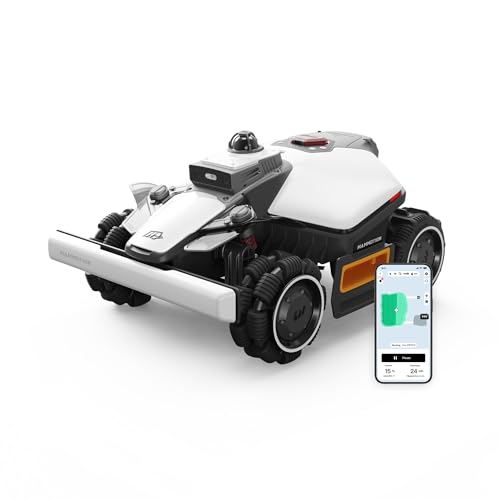
Mammotion LUBA mini 2 AWD 1500H Robot Lawn Mower

YARDCARE AI Vision Robotic Lawn Mower

V3 AI Vision Robotic Lawn Mower

Mammotion LUBA 2 AWD 3000HX Robot Lawn Mower

Segway Navimow i215 LiDAR Robot Lawn Mower
YARDCARE V100 Robot Lawn Mower

ANTHBOT M5 Robot Lawn Mower
Meet The Standout Selections
This is the largest-capacity unit in the roundup, rated for roughly 1.25 acres of typical reception with a maximum ceiling near 1.48 acres under ideal conditions. A 165-watt four-wheel drive system climbs slopes up to 80 percent, which matters for anyone whose five-acre property includes creek banks, retention swales, or hilly pasture edges.
UltraSense AI Vision pairs with RTK (Real-Time Kinematic satellite positioning, accurate down to a few centimeters) navigation to map boundaries automatically and follow edges precisely. For a property that demands real coverage, this lands at the top of the list. It still won’t mow all five acres on a single charge, so splitting the property into zones and scheduling rotations is the realistic path forward.
Everyday Perks
- Highest single-unit coverage available in this group, trimming how many charging docks you need.
- Wire-free mapping means no trenching or boundary cable to bury across the lawn.
- All-wheel-drive traction handles 38-degree slopes without getting stuck.
- Cutting height adjusts from 2.2 to 4.0 inches for seasonal flexibility.
- 4G connectivity keeps the unit online for app control and remote monitoring.
Trade-Offs To Consider
- The price reflects its capability, and it still won’t cover five acres solo.
- RTK reference station placement takes some planning for best signal.
- Replacement blades and parts are a longer-term ownership cost.
Quick Facts
Who Should Grab It
Property owners managing large, irregular lawns with slopes who want the most coverage per machine.
Skip It When
A flatter, more compact yard suits the Segway Navimow i215 LiDAR Robot Lawn Mower better.
Stepping down from the 5000HX, the 3000X trims capacity to about 0.75 acres while keeping the same all-wheel-drive chassis. The box includes a charging station, spare blade set, and RTK installation kit, so the first-day setup is mostly unboxing and placement.
For property owners whose five acres are split into smaller paddocks or back lots, running two or three of these can be a reasonable strategy. It handles the same punishing 38-degree slopes as its larger sibling, which makes it a solid pick when traction matters more than raw coverage.
Points In Its Favor
- Same all-wheel-drive traction as the flagship 5000HX.
- Spare blades ship in the box, saving an early trip to reorder.
- Lower entry cost than the 5000HX for similar slope performance.
- Wire-free installation skips the trenching step entirely.
Where It Is Less Suited
- Capacity is roughly half the 5000HX, so multi-zone scheduling is mandatory.
- RTK signal quality depends on the reference station having a clear sky view.
Made For
Owners who prioritize slope performance and traction over per-charge coverage and prefer a multi-unit strategy.
Consider Something Else When
The Mammotion LUBA 2 AWD 5000HX Robot Lawn Mower is the better fit when maximum coverage per unit is the priority.
The mini keeps the all-wheel-drive DNA of the larger LUBA models but shrinks the package to suit roughly 0.37 acres. A 360-degree LiDAR sensor (LiDAR uses laser pulses to measure distances and build a 3D map of surroundings) pairs with dual cameras, giving it solid awareness in obstacle-heavy yards with toys, hoses, or garden beds.
Twenty multi-zone management means you can divide a larger property into smaller sections and let it rotate. That makes it a flexible helper on a five-acre estate where one section needs daily attention and another only weekly.
Notable Gains
- Dual sensing redundancy improves object detection compared to vision-only systems.
- Compact footprint suits narrow side yards or fenced pockets.
- All-wheel-drive traction persists in the mini form factor.
- DropMow feature lets it start cutting right out of the box.
Some Limits To Know
- Capacity tops out near 0.37 acres, so it covers only a small slice of five acres per cycle.
- Requires a garage housing for weather protection in some climates.
Feature Snapshot
Right Fit For
Owners with obstacle-dense yards or smaller lawn sections within a larger property.
Look Elsewhere When
Maximum single-unit coverage is the goal, which is where the Mammotion LUBA 2 AWD 5000HX Robot Lawn Mower pulls ahead.
The YARDCARE entry-level option covers around 1600 square feet, which makes it a mismatch for five-acre ambitions but a sensible starter for a single small zone. AI vision handles obstacle detection and grass-versus-non-grass recognition at a lower cost than RTK-equipped competitors.
It also includes a 32-foot magnetic strip for setting up custom no-go zones around flower beds or play areas, a practical touch for tight urban yards.
Reasons It Performs
- Lowest-cost entry point in this roundup.
- Magnetic no-go strip avoids permanent boundary installation.
- Camera-based navigation suits flat, well-defined lawns.
Things To Consider
- 1600-square-foot capacity is far below any five-acre need.
- Vision systems can struggle in heavy rain or low light compared to LiDAR options.
Best Suited To
First-time owners with a small, flat lawn who want a low-stakes introduction to robotic mowing.
Reach For A Different Pick When
A larger yard needs coverage, where the Mammotion LUBA 2 AWD 3000HX Robot Lawn Mower makes more sense.
The LEBOSBO V3 mirrors the YARDCARE’s footprint and feature set, including AI vision obstacle detection and a 32-foot magnetic strip for no-go zones. The black finish and shared specifications make it a near-identical sibling for shoppers comparing visual navigation systems.
For anyone managing one small pocket of a larger property, like a fenced side lawn or a side yard, it offers a low-fuss install path. It won’t replace a serious multi-acre machine, but it can handle isolated zones that a larger mower might struggle to access.
Well-Handled Touches
- Magnetic strip customization keeps garden beds off-limits.
- Camera navigation handles small lawns without RTK setup.
- Simple app-based controls ease first-time setup.
Points To Note
- Limited to roughly 1600 square feet of coverage.
- Camera-only navigation may need more hands-on monitoring than LiDAR or RTK units.
Quick Technical Notes
Whose Shelf It Belongs On
Newcomers who want a simple, affordable robotic mower for a modest lawn.
Swap It Out When
Multi-acre coverage is required, and the Mammotion LUBA 2 AWD 3000X Robot Lawn Mower is the better match.
The 3000HX sits between the 5000HX flagship and the 3000X in the lineup. Capacity lands around 0.75 acres, but the “HX” designation adds UltraSense AI Vision with RTK auto-mapping for a fully wire-free experience.
For property owners who want the convenience of perimeter-wire-free setup without stepping all the way up to the largest-capacity unit, this is the middle ground. It still climbs the same 80-percent slopes as its bigger sibling and trims between 2.2 and 4.0 inches.
A Favorable Mix
- Wire-free RTK mapping simplifies installation.
- Adjustable cutting height for seasonal flexibility.
- All-wheel-drive traction across uneven ground.
- 4G connectivity for remote monitoring.
Potential Compromises
- Capacity sits at 0.75 acres, requiring multi-zone scheduling for five-acre properties.
- Premium pricing reflects the wire-free RTK tech.
Perfect Match For
Shoppers who want wire-free installation and strong slope handling without jumping to the largest model.
A Better Fit Elsewhere
The Mammotion LUBA 2 AWD 5000HX Robot Lawn Mower is the stronger pick when maximum coverage per unit is the priority.
The Navimow i215 uses solid-state LiDAR paired with vision sensors for satellite-free navigation. Operating at roughly 59 dB(A), it’s the quietest pick in this roundup, which matters in neighborhoods with early-morning noise ordinances or close-set property lines.
Coverage sits at about 0.37 acres, and off-road wheels handle slopes up to 45 percent. Voice control through Alexa and Google Home adds a smart-home convenience that the other picks don’t emphasize.
The Case For It
- Quietest operation in the roundup at 59 dB(A).
- Solid-state LiDAR works reliably day or night.
- Voice control via popular smart-home platforms.
- One-tap auto mapping for fast first-day setup.
- No boundary wires or antennas required.
Less-Strong Areas
- Capacity is around 0.37 acres, so it covers only a fraction of five acres per cycle.
- 45-percent slope rating is lower than the LUBA all-wheel-drive units.
Core Details
Who It Suits Best
Owners in noise-sensitive areas who want a wire-free, voice-controlled experience on smaller lawn sections.
Not Your Match When
Steep, rough terrain demands all-wheel-drive, where the Mammotion LUBA 2 AWD 3000X Robot Lawn Mower climbs better.
The YARDCARE V100 covers up to 1600 square feet using HD vision and a bumper sensor for obstacle handling. It distinguishes between grass and non-grass surfaces and can identify up to 150 obstacle types, adjusting its path after a bump.
For small, flat lawns where simplicity matters more than advanced navigation, the V100 is approachable. It won’t replace a serious acreage mower, but it can handle a single modest zone within a larger property layout.
What Helps Most
- Compact, lightweight build suits smaller lawns.
- Visual plus bumper sensing adds basic obstacle awareness.
- Grass-recognition logic keeps it from wandering onto pavement.
Possible Compromises
- Capacity tops out near 1600 square feet.
- Camera-based navigation can be less reliable in heavy shade than LiDAR systems.
Built With In Mind
Owners with a small, well-defined lawn who want simple, low-cost automation.
Another Choice May Suit
Broader acreage or steeper slopes need the Mammotion LUBA 2 AWD 3000X Robot Lawn Mower instead.
The ANTHBOT M5 covers roughly one-eighth of an acre using dual-vision cameras and full-band NRTK (Network Real-Time Kinematic positioning, which improves satellite accuracy without a dedicated base station) for centimeter-level accuracy. It supports multi-zone mapping and adapts to a range of lawn layouts without perimeter wires.
For property owners with several distinct lawn sections that need independent scheduling, the M5’s app-based zone management is practical. The 45-percent slope rating puts it in the same tier as the Navimow i215.
Notable Upsides
- Full-band NRTK positioning eliminates the need for a dedicated base station.
- Multi-zone mapping supports complex yard layouts.
- Adaptive cruise control logic refines path planning on the fly.
Details To Watch
- One-eighth-acre capacity covers only a small slice of a five-acre property per cycle.
- Slope handling tops out at 45 percent, behind the all-wheel-drive LUBA units.
Quick Technical Notes
Who Will Love This
Owners with multi-zone suburban layouts who want NRTK accuracy without a separate base station.
Where Another Pick Suits Better
Five-acre coverage with steep terrain calls for the Mammotion LUBA 2 AWD 5000HX Robot Lawn Mower.
What To Weigh Before Choosing A Robotic Mower For A Large Property
Five acres changes the math compared to a typical suburban lawn. Capacity per charge matters, but how that capacity interacts with terrain and zoning matters more. Below are the attributes that tend to decide whether a robotic mower earns its keep on a property this size.
Coverage And Zone Strategy
Most robotic mowers handle 0.25 to 1.5 acres per charge, which means a single unit cannot realistically mow five acres in one session. Plan for either one large unit covering high-priority zones while leaving pasture or back acreage to a traditional mower, or multiple units sharing charging docks. Wire-free RTK or NRTK systems simplify multi-zone setup, while magnetic-strip models require more physical installation.
Slope Handling And Drive System
Slope ratings range from 30 to 80 percent in this roundup. Anything above 30 percent grade demands all-wheel drive to avoid getting stuck mid-slope. RTK-equipped models with vision sensors handle uneven terrain better than camera-only systems, which can lose orientation in heavy shade.
Navigation Type And Reliability
RTK (satellite-based, centimeter-accurate) and NRTK (network-based, no base station required) systems handle large, open properties best. LiDAR excels at obstacle detection and works day or night. Pure camera vision works on small, well-defined lawns but can struggle with weather and low light. For five acres with mixed conditions, RTK plus vision is the safer combination.
Maintenance And Long-Term Ownership
Blade replacement, cleaning grass buildup, and occasional firmware updates are part of ownership. Models with larger blade sets in the box reduce early maintenance trips. Charging dock placement also affects long-term reliability, since shading or moisture near the dock can shorten battery life.
Key Considerations Across These Picks
Mistakes Worth Dodging
Assuming one robotic mower covers the whole property is the most common misstep. Buyers also tend to underestimate slope ratings, picking a 30-percent-rated unit for a yard that climbs above 40 percent. Skim the spec sheet carefully against your actual terrain, and plan for multi-zone scheduling from day one.
Where The Extra Money Goes
Premium models in this category add all-wheel drive, RTK precision mapping, and larger batteries that translate to less manual intervention. For property owners with steep, complex yards, those upgrades save hours each week. For flat, small lots, the entry-level picks deliver the same mowing result without the price tag.
Frequently Asked Questions
Can one robotic mower really handle five acres?
No single unit on the market today covers five full acres in one session. The largest option here, the Mammotion LUBA 2 AWD 5000HX, maxes out around 1.48 acres under ideal conditions. Most owners either split the property into zones or use a robotic mower for the high-visibility lawn and a traditional mower for the rest.
Do these mowers really handle steep slopes?
All-wheel-drive models with 80-percent slope ratings, like the LUBA series, hold up well on inclines up to roughly 38 degrees. Camera-only or magnetic-strip models typically top out around 30 percent. Match the slope rating to your actual terrain rather than relying on marketing claims.
Is perimeter wire installation still required?
Not anymore for the picks in this roundup. RTK, NRTK, LiDAR, and magnetic-strip models all skip the buried-wire approach. Some magnetic-strip systems still require laying down a physical strip, but RTK and LiDAR systems map boundaries digitally through the app.
How loud are these mowers in practice?
The quietest option here is the Segway Navimow i215 at roughly 59 dB(A), which is quieter than a typical conversation. Most robotic mowers run between 55 and 65 dB(A), well below gas-powered push mowers but slightly louder than a dishwasher. Running them during daytime hours avoids any neighbor friction.
What maintenance do they actually need?
Blade replacement every one to three months, occasional cleaning of grass buildup around the cutting deck, and firmware updates through the companion app. Charging contacts may need a wipe-down periodically, especially in dusty or humid climates.
Closing Remarks
For a five-acre property, the realistic path forward is a combination of high-capacity coverage and smart zone planning. The Mammotion LUBA 2 AWD 5000HX leads this list for its raw coverage and slope handling, while the smaller picks fill gaps in tight sections or quiet neighborhoods. Match the machine to your actual terrain rather than the spec sheet alone, and the lawn takes care of itself.