Picking the right walk-behind mower shapes how weekends actually feel. A yard that needs cutting every five days turns into a chore when the machine fights back, bogging down in damp grass or leaving ragged stripes. The six rotary walk-behinds below cover the most common yard scenarios, from tight urban strips under 1,500 square feet to half-acre lots with thicker fescue and gentle slopes. I’ve grouped battery models and gas options together because both deserve a look: cordless convenience has come a long way, and gas still wins for raw runtime and torque. The goal here is matching deck size, power source, and ergonomics to your actual lawn rather than chasing a single flagship.
The Shortlist At A Glance

Honda HRX-BE 21-Inch Battery Powered Walk-Behind Mower

PowerSmart 18-inch 144cc Gas Push Mower

SENIX 20-inch 144cc Gas Push Mower
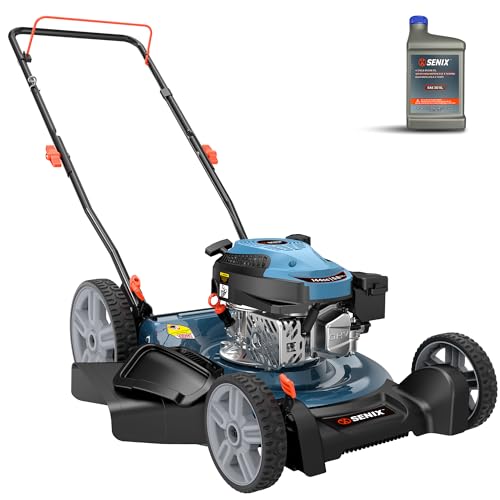
SENIX 21-Inch 144cc Gas Push Mower

Litheli 40V 16-Inch Cordless Brushless Mower

Litheli 14-Inch Cordless Brushless Mower
Meet The Standout Selections
The HRX-BE is Honda’s answer to homeowners who want the brand’s reputation for cut quality without keeping a can of fuel on the shelf. The 21-inch deck matches the footprint of the company’s gas HRX line, so existing Honda owners stepping into battery power won’t feel like they’re settling. A brushless-style drive train (the term covers motors controlled electronically rather than with brushes that wear out) keeps the RPMs steady even when the grass thickens, which matters most in spring when growth is relentless.
For a half-acre lot with mixed cool-season grass and the occasional patch of weeds, this mower feels like a true daily-driver rather than a compromise. Honda’s 4-in-1 Versamow system toggles between bagging, mulching, side discharge, and leaf shredding without tools, which is genuinely handy in autumn when leaves and grass both need attention.
Real Benefits
- 21-inch deck finishes a half-acre lot in fewer passes than the 18-inch PowerSmart covered next
- Tool-free 4-in-1 mode switching saves time across changing seasons
- Battery operation removes fuel storage, oil changes, and pull-cord frustration
- Consistent cut quality on thick fescue where gas rivals can bog down
- Quieter enough for early-morning mowing in close-knit neighborhoods
Points To Keep In Mind
- Battery runtime falls short of a full tank of gas for very large properties
- Replacement battery packs cost more than a tank of fuel over the mower’s life
- Cold-weather runtime can dip noticeably in early spring
Feature Snapshot
Whose Yard It Belongs On
Suburban homeowners with up to half an acre who want premium cut quality without the maintenance of a gas engine.
Reach For A Different Pick When
Homeowners working a tighter budget and a smaller lot should consider the PowerSmart 18-inch 144cc Gas Push Mower, which delivers reliable gas performance at a more accessible entry point.
PowerSmart’s 18-inch push mower is the kind of practical, no-frills workhorse that fits small-to-medium yards without the sticker shock of a premium battery model. The 144cc four-stroke engine starts with an auto choke and primer bulb, which removes one of the biggest frustrations for people who only mow every couple of weeks. Compared to the Honda HRX-BE covered above, this is a smaller, lighter, more compact alternative that trades cutting width for easier storage.
The trade-off is mostly about deck size: an 18-inch cut means more passes across the same lawn, but on lots under 3,000 square feet, the difference barely registers. The steel deck adds durability without much weight penalty, and side-discharge handles clippings cleanly when you don’t want to mess with a bag.
A Few Highlights
- Auto choke and primer bulb simplify cold starts for occasional users
- Compact 18-inch deck fits through narrow side gates and sheds
- Steel deck resists dings and scratches from rocky edges
- Side-discharge layout handles thick grass without frequent bag emptying
Trade Offs
- Narrower deck means more passes than the 21-inch SENIX and Honda options
- No mulching or bagging mode in this configuration
- Gas engine requires seasonal oil checks and fuel stabilizer
Made For
Homeowners with smaller urban or suburban lawns up to 3,000 square feet who prefer simple gas power and tight storage.
Skip It When
Anyone managing a larger lot with mixed grass types will get more done with the SENIX 21-Inch 144cc Gas Push Mower, which adds mulching and a wider cutting path.
The SENIX 20-inch lands in the sweet spot for many suburban homeowners. The 144cc four-stroke OHV (overhead valve) engine sips fuel more efficiently than older two-stroke designs and runs noticeably quieter, which neighbors tend to appreciate on weekend mornings. Versus the PowerSmart covered earlier, this model adds a wider deck and the efficiency benefits of a modern four-stroke cycle, making it a sensible step up for slightly larger yards.
That extra two inches of deck means about 11% more cutting width per pass, which adds up over a 5,000-square-foot lawn. For most homeowners mowing weekly, the difference between 30 and 35 minutes of work matters more than spec-sheet numbers suggest.
Practical Advantages
- Four-stroke engine reduces fuel use and emissions compared to two-stroke designs
- 20-inch deck balances maneuverability with fewer passes
- Lower noise output suits close-quarter neighborhoods
- Push design keeps cost and weight down for casual users
Honest Caveats
- Push-only drive demands more effort on sloped sections
- Standard maintenance schedule still applies: oil, spark plug, air filter
- Not ideal for lawns over a half acre without a self-propel upgrade
Key Attributes
Best Suited To
Homeowners with standard quarter-to-third-acre lots who want reliable gas performance without premium pricing.
Consider Something Else When
Anyone wanting cordless convenience and quieter operation should look at the Litheli 40V 16-Inch Cordless Brushless Mower for smaller lawns where battery runtime is enough.
The SENIX 21-inch is the workhorse pick in this lineup, aimed at homeowners who deal with thicker turf and slightly larger lots. The 144cc four-stroke engine holds RPMs under load, which is the difference between finishing a pass and stalling mid-cut when the grass gets tall. Compared to the 20-inch SENIX covered above, this version adds an inch of deck and a 2-in-1 mulching setup that returns clippings to the lawn as fine organic matter.
For lots up to a half acre with cool-season grass or mixed cool- and warm-season patches, the wider deck trims meaningful time off each mow. The high-torque design matters most in spring when growth outpaces the mowing schedule.
The Upside
- 21-inch deck covers large yards in fewer passes than 18- or 20-inch rivals
- 2-in-1 mulching mode feeds clippings back into the soil naturally
- Engine maintains steady RPMs through dense, tall grass
- Sturdy enough for gentle slopes and uneven terrain
Where It May Fall Short
- Push-only design demands more effort on hills than self-propelled alternatives
- Gas engine still requires fuel mixing, oil checks, and off-season storage prep
- Larger footprint takes more shed or garage space
Feature Snapshot
Right Fit For
Homeowners managing up to half an acre of thicker turf who want a wide deck and mulching capability without a self-propelled drive.
Swap It Out When
Anyone prioritizing quiet operation and zero maintenance should consider the Litheli 40V 16-Inch Cordless Brushless Mower for a smaller yard where battery runtime covers the whole job.
Litheli’s 40V cordless mower is built for homeowners who’d rather skip the gas station trip entirely. The brushless motor runs quieter and lasts longer than brushed designs because there are no physical contacts wearing out, and the dual 5.0Ah battery system keeps voltage steady throughout the charge. Compared to the gas SENIX models covered earlier, this trades raw cutting width and torque for convenience and storage simplicity.
Six cutting heights from 25 to 75 millimeters cover everything from a tight Bermuda cut to a shaggy cool-season summer trim. The 50-liter collection bag is generous for the deck size, meaning fewer stops to empty when the grass is growing fast.
Standout Benefits
- Brushless motor eliminates brush replacement and extends service life
- Six height positions handle varied grass types and seasonal preferences
- Dual batteries deliver consistent 40V output until depletion
- No oil changes, spark plugs, or carburetor cleaning required
- Quiet enough for early-morning cuts without disturbing neighbors
- 50-liter bag reduces emptying stops on bigger yards
Potential Drawbacks
- 16-inch deck requires more passes than the 21-inch SENIX on larger lots
- Both batteries must be inserted to operate, even for shorter jobs
- Battery storage in cold garages reduces winter runtime noticeably
Feature Rundown
Who Will Love This
Homeowners with small-to-medium lawns who want quiet, low-maintenance cutting and don’t mind a slightly narrower deck.
Look Elsewhere When
Anyone running a half-acre lot with thick fescue will appreciate the SENIX 21-Inch 144cc Gas Push Mower for its wider cut and steady torque under load.
The 14-inch Litheli is the most compact model in this roundup, designed for tight storage and small lawns. The brushless motor keeps weight low and maintenance near zero, which suits renters, seniors, or anyone who just wants to grab a mower and finish the job without pulling a cord. Compared to the 16-inch Litheli covered above, this version trims two more inches from the deck and adds a quick-fold design that shrinks the whole unit for narrow garages or shed corners.
Five cutting heights from 1 to 2.5 inches cover the common residential range without overcomplicating the adjustment. The advertised coverage up to 3,000 square feet aligns with what a single 5.0Ah battery can realistically handle on level ground with standard grass.
Positive Points
- Lightweight build reduces fatigue for seniors and smaller-framed users
- Quick-fold design stores vertically in tight garages or sheds
- Brushless motor means no oil, no spark plug, no carburetor service
- Adjustable handle supports healthier posture during longer sessions
Less Ideal Details
- 14-inch deck needs noticeably more passes than the 21-inch SENIX on open ground
- Single battery limits runtime for lots approaching the upper end of its range
- Compact size sacrifices some cut quality on tall, neglected grass
Perfect Match For
Urban dwellers, apartment renters, and seniors with small lawns under 2,000 square feet who prioritize easy storage and quiet operation.
A Better Fit Elsewhere
Anyone with a quarter-acre lot of thicker turf will find the PowerSmart 18-inch 144cc Gas Push Mower covers more ground per pass with stronger torque.
What To Weigh Before Choosing Rotary Lawn Mower Electrics
Deck Size And Yard Footprint
Deck width directly determines how long a mow takes. An 18-inch deck on a 2,000-square-foot lawn finishes quickly, while a 14-inch deck on the same yard demands many more passes. For lots under 2,000 square feet, a compact 14- or 16-inch deck earns its keep through easier storage and tighter turning. For quarter-acre properties and up, an 18- to 21-inch deck saves real minutes each session.
Power Source Trade-Offs
Gas still leads on raw runtime, torque, and cold-weather reliability, which matters most for thick grass and larger lots. Battery models have closed the gap considerably for typical suburban lawns, with brushless motors offering longevity that rivals gas engines when properly stored. The deciding factor is usually convenience: do you want to walk to the shed, pull a cord, and refuel, or push a button and swap batteries when needed?
Maintenance And Storage Realities
Gas engines require seasonal oil changes, spark plug checks, air filter cleaning, and fuel stabilizer over winter. Battery mowers skip nearly all of that, but they do demand proper battery storage: extreme cold or heat shortens lifespan. Storage footprint varies hugely. A 14-inch folding model fits in a closet corner, while a 21-inch mower with a rigid deck needs meaningful shed or garage space.
Comfort And Handling
Push mowers demand more effort on slopes and uneven ground, which adds up across a season. Self-propelled drives help, but they push the price up and add weight. Adjustable handles matter more than they seem: the right height prevents back strain during long sessions, especially for taller users or anyone with joint concerns.
Key Considerations Across These Picks
Where Shoppers Go Wrong
A common mistake is matching deck size to garage space instead of lawn size, ending up with a mower that takes twice as long to finish the yard. Another is underestimating how often the mower will actually be used, which matters because batteries degrade faster on occasional users who store them half-charged. The honest read is that the right mower matches the lawn first and the shed second.
When Paying More Pays Off
Premium battery models like the Honda HRX-BE earn their keep through longer motor life, better cut quality in tough conditions, and lower lifetime maintenance. For homeowners mowing weekly on a half-acre lot, the upgrade pays back in saved time and fewer service trips. For smaller lawns mowed monthly, a budget gas model delivers enough value without the premium price tag.
Frequently Asked Questions
How often should I sharpen the blade on a walk-behind mower?
Most homeowners should sharpen the blade once per season, with a quick touch-up mid-summer if the grass starts fraying at the cut edges. A balanced blade keeps the motor from vibrating excessively.
Can battery mowers handle wet grass?
Battery mowers can cut slightly damp grass, but heavy dew or rain-soaked lawns bog down the motor and leave clumpy clippings. Waiting for the grass to dry gives a cleaner cut and protects the motor from strain.
What size yard is too big for a 14-inch deck?
A 14-inch deck becomes tedious on lawns over 3,000 square feet, especially with thicker turf. Above that size, an 18- to 21-inch deck cuts mowing time meaningfully and reduces fatigue.
Is a brushless motor worth the extra cost?
Brushless motors last longer and run more efficiently than brushed designs, making them worth the premium for anyone mowing weekly. For occasional users with small lawns, the difference matters less.
How long does a typical battery charge last?
A 5.0Ah battery at 40V typically covers 2,000 to 3,000 square feet per charge on standard grass. Thicker turf, slopes, and tall grass reduce that range noticeably.
Closing Remarks
The right walk-behind mower comes down to honest yard math: deck size for footprint, power source for storage and maintenance tolerance, and ergonomics for who actually does the cutting. Match the pick to the person, and mowing stops feeling like a chore.