Grass that won’t release from your mower deck is more than annoying. It weighs down the blades, strangles airflow, and slowly eats at the metal underneath. A targeted non-stick spray turns cleanup into a quick rinse instead of an afternoon of scraping, and the right formula also helps shield the deck from the moisture and acids in fresh clippings.
I pulled together eight options that cover the main angles: dry-film coatings, wet lubricants with non-stick additives, graphite layers, and dedicated deck sprays. Each one suits a slightly different mower, climate, and cleaning routine.
The Essentials At A Glance

DuPont White Lithium Grease Aerosol Spray

Stens 752-102 Snowblower Spray 11 oz

DuPont Non-Stick Dry-Film Lubricant 14 oz
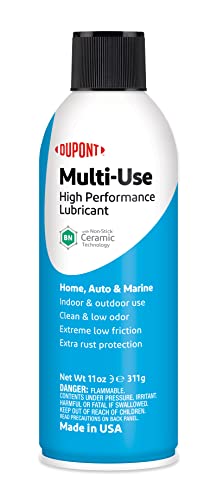
Dupont Teflon Multi-Use Lubricant 11 oz

Mo Deck Nonstick Spray with CanGun1 (3-Pack)

Mo Deck Nonstick Spray with Scraper Tool
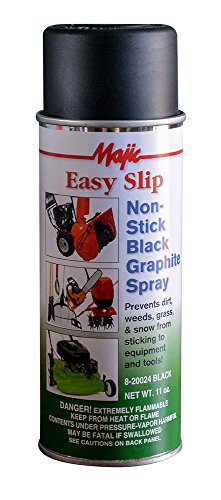
Majic Paints Non-Stick Graphite Spray 11 oz

Mo Deck Non-Stick Mower Blade/Deck Spray 11 oz
The Details Behind The Selections
This isn’t really a deck spray, and it shouldn’t be your first choice for keeping grass from clumping. Where the white lithium grease earns its place is the moving hardware around a mower: wheel axles, height-adjust levers, self-propel cables, and the pivot points on a side-discharge chute.
The formula relies on a lithium complex thickened grease (a soap-based thickener that holds oil in place) enhanced with Teflon, so it stays put through rain, summer heat, and the kind of vibration that shakes lighter lubricants off in a week. For most homeowners who maintain their own push mowers, that combination covers the hard-to-reach spots a generic oil can’t reach.
What Stands Out
- Lithium complex base resists wash-off far better than a basic spray lubricant
- Teflon additive extends service life on high-friction pivots
- Tolerates freezing temps and intense summer heat without melting or breaking down
- Low-odor formula compared to many aerosol greases on the market
- Works on metal-on-metal joints that other non-stick sprays don’t address
Honest Caveats
- Not engineered as a deck anti-stick coating, so it won’t stop grass adhesion under the deck itself
- Wet grease can attract dust and fine debris if over-applied near dirty areas
Who It Suits Best
Owners of push or self-propelled mowers who want one can to handle both deck hardware and pivot points without buying two separate products.
Reach For A Different Pick When
Mowing crews focused on under-deck grass release should look at Mo Deck Non-Stick Mower Blade/Deck Spray, which is engineered specifically for that surface.
Stens built this 11-ounce aerosol for a different machine, but the polymer technology transfers neatly to a mower deck. The Snow-Jet formula creates a thin barrier that reduces friction in the auger housing, the exact kind of slick surface that helps wet grass slide off a steel deck too.
Think of it as a winter-to-summer crossover. Snowblower owners in the Northeast already keep a can in the garage, and pulling it out for late-spring mowing saves a trip to the store. The trade-off is that it’s tuned for snow rather than grass resin, so frequent applications matter more than with a dedicated deck product.
Noteworthy Benefits
- Polymer treatment lowers friction in enclosed housings and chutes
- Helps throw distance by reducing drag, a similar effect to a clean mower deck
- Backed by a one-year warranty from Stens for any defects
- Single 11 oz can is enough for several mowing sessions
Points To Keep In Mind
- Engineered for snow, so the formula isn’t optimized for grass-sap adhesion
- Reapplication is needed more often than with a dedicated non-stick deck spray
- No applicator lever, so spraying upside-down under a deck takes some practice
Right Fit For
Homeowners who already own a snowblower and want to consolidate their shed supplies rather than buy a separate grass-focused product.
Consider Something Else When
Anyone mowing damp or thick fescue weekly should choose Mo Deck Nonstick Spray with Scraper Tool, which pairs a polymer spray with a matching scraping tool for heavier clumping.
Dry-film lubricant is a coating that cures into a solid layer rather than staying wet like an oil, and DuPont leans into that with a 100% Teflon formula. The 14-ounce aerosol lays down a micro-thin film that bonds to bare metal, repels dust and dirt, and keeps working in temperatures from well below freezing up to 500°F.
Where the white lithium grease stays wet and grabs onto moving parts, this one cures dry, which makes it a better match for a mower deck where you don’t want to coat clippings in oil. Anyone cutting in dusty, sandy soil will see the difference at cleanup time. Compared to the wet Dupont Teflon Multi-Use Lubricant, this version trades long-term wet lubrication for a clean, dry barrier that won’t attract fresh debris.
Good Reasons To Consider
- 100% Teflon formula leaves no oily residue to attract fresh clippings
- Cures into a dirt-repellent surface that resists abrasion
- Effective across an extreme temperature range, useful for off-season storage
- Proprietary resin bonding creates a tight film on metal-on-metal contact points
- Chemically resistant layer holds up against fertilizer overspray and grass acids
Worth Noting
- Dry-film cure means reapplication intervals are tighter on high-wear deck surfaces
- Not a substitute for grease on wheel bearings or pivot points where wet lubrication matters
Key Product Details
Made For
Detail-oriented owners mowing in dry, dusty conditions who want a clean, dry barrier rather than a wet grease film on their deck.
A Better Fit Elsewhere
Owners focused purely on grass release without worrying about dust attraction will find Mo Deck Nonstick Spray with CanGun1 easier to apply and reapply across an entire season.
Where the dry-film version of DuPont’s non-stick cures into a solid layer, this 11-ounce aerosol stays wet. The wet-style lubricant, enhanced with Teflon and corrosion-resistant additives, is the better pick for humid coastal yards and anyone whose mower lives outside under a tarp.
It splits the difference between the heavy white lithium grease and the ultra-dry Teflon film. The wet carrier clings to vertical and overhead surfaces longer than a dry film would, and the corrosion package helps defend bare metal during the long off-season. Think of it as a generalist that can move between deck surfaces, hardware, and even garden tools without needing a second can.
A Strong Showing
- Wet formula gives longer dwell time on vertical and underside surfaces
- Teflon additive increases wear protection over plain spray lubricants
- Corrosion-resistant package helps protect stored mowers through winter
- Highly water-resistant for wet grass and morning dew mowing
Trade Offs
- Wet carrier can grab fine dust in arid conditions, so a quick wipe before application helps
- Not as dry-clean as the DuPont Non-Stick Dry-Film Lubricant for spotless decks
Best Suited To
Homeowners in coastal or high-humidity regions where corrosion is a bigger concern than dust attraction.
Swap It Out When
Anyone working in sandy or dusty soil will see cleaner results with Majic Paints Non-Stick Graphite Spray, which leaves a dry graphite layer instead of a wet film.
Flyleaf Pro’s Mo Deck formula is a pressurized polymer spray tuned specifically for mower decks, and this 3-pack bundles it with the CanGun1 spray lever. The lever gives you a pistol grip with a trigger pull, which makes a real difference when you’re coating the underside of a tilted mower without a glove full of aerosol spray.
The shake-and-spray routine is fast, and the thin layer forms a gentle barrier over both metal and plastic surfaces. Three cans cover a full season for most homeowners, which removes the need to reorder mid-summer. Compared to the single-can version with a scraper, this one trades the scraping tool for an applicator handle and an extra two cans of product.
Well-Handled Touches
- CanGun1 trigger reduces hand fatigue and gives precise aim on tight spots
- Pressurized formula spreads evenly across textured deck surfaces
- Safe on both metal and plastic components around the deck
- Three cans last most households an entire mowing season
- Barrier reduces friction so future cleanup needs less scrubbing
Small Caveats
- Bulkier 3-pack takes more shelf space than a single can
- No scraping tool included, so heavy clumping may still need a separate putty knife
Feature Card
Whose Shelf It Belongs On
Households running more than one mower, or anyone tired of finger-fatigue from standard aerosol nozzles under a hot deck.
Look Elsewhere When
Single-mower owners who only need a few applications per year will get better value from Mo Deck Non-Stick Mower Blade/Deck Spray in a single 11 oz can.
The single-can Mo Deck bundles a pressurized polymer spray with a matching Grass Buster scraper, which is the right combination for anyone who lets buildup accumulate before treating it. The scraper handles the cured-on layer the spray can’t soften, and the spray keeps the next round from sticking in the first place.
This is the practical pick for older mowers with rough or pitted deck surfaces where polymer alone struggles to bond. The trade-off versus the 3-pack CanGun1 version is that you give up the trigger lever and the extra cans, so it suits a single-mower owner who only treats one machine a few times a season.
Useful Highlights
- Included scraper tool breaks up clumping the spray can’t reach
- Pressurized formula spreads evenly with a standard aerosol nozzle
- Safe for metal and plastic components around the deck
- Single 11 oz can is easier to store than a multi-pack
Some Limits To Know
- No trigger lever, so finger fatigue is a factor on larger decks
- Scraper is plastic, so it won’t shift truly caked-on deposits without extra effort
- Single can runs out faster for households treating multiple machines
The Right Fit
Single-mower owners with older or pitted decks who want a two-step clean-and-treat routine in one bundle.
Where Another Pick Suits Better
Anyone with a newer smooth deck can skip the scraper and choose Mo Deck Nonstick Spray with CanGun1, which focuses on faster reapplication instead.
Graphite is the original dry lubricant, and Majic Paints bottles it as a black non-stick coating rated for mower decks, snow blowers, garden tools, garage door tracks, and even snow plow blades. Where the polymer sprays sit on the surface, graphite actually bonds to clean metal, wood, concrete, and most plastics, which makes it the more versatile option for mixed yards.
It also handles wet conditions better than most sprays on this list. The black layer shrugs off wet grass, snow, and even packed weeds, which is why it shows up on so many snow-belt mower maintenance lists. You trade a clean-looking deck for a dark graphite tint, and the spray will mark clothes if you brush against it before it cures.
The Practical Payoff
- Graphite bonds to metal, wood, concrete, and most plastic surfaces
- Performs in wet, snowy, and weed-heavy conditions where polymer sprays struggle
- Works across mowers, snow blowers, plows, and garden tools from one can
- Dry finish won’t attract dust the way a wet film does
Practical Considerations
- Black finish shows wear and can mark clothing during application
- Needs a fully clean surface to bond properly, so prep time adds up
- Not a lubricant, so it doesn’t help with pivot points or cables
Feature Rundown
Who Should Grab It
Owners in the snow belt who maintain both mowers and snow equipment and want one product that handles both.
Not Your Match When
Anyone who prefers a clear, invisible finish should choose the DuPont Non-Stick Dry-Film Lubricant instead, which leaves no color behind.
This is the original Mo Deck formula from Sunbelt, and the one most commercial mowing crews reach for. The polymer coating is engineered to prevent grass clipping buildup in mulching decks, where airflow is restricted and wet clippings have a habit of clumping into cement-like layers.
The shake-and-spray application cures in under 10 minutes, so the mower is back in service fast between jobs. For reel mowers, the thin coat helps clippings release without dulling the precision-ground blades. The 11-ounce can is the smallest commitment in the Mo Deck family, which makes it the right entry point for someone trying polymer deck spray for the first time.
The Value In It
- Specifically formulated to fight grass clipping adhesion in mulching decks
- Cures in under 10 minutes for fast turnaround between mowing sessions
- Works on commercial, residential, and reel mowers from one can
- Polymer layer reduces clogging in tight deck geometries
Potential Compromises
- Single 11 oz can runs out quickly on commercial fleet use
- Standard nozzle without a trigger, so accuracy on small spots takes practice
Feature Snapshot
Who Will Love This
Homeowners with mulching decks or reel mowers who want a polymer product designed for the specific clipping behavior of those machines.
Where A Sibling Pick Shines
Anyone with multiple mowers and a larger budget will find Mo Deck Nonstick Spray with CanGun1 in the 3-pack covers a full season with less hand strain.
Picking The Right Coating For Your Mower
Matching The Spray To The Job
Non-stick sprays for lawn mowers fall into two broad camps: dry-film coatings and wet lubricants. Dry films, like the DuPont Non-Stick Dry-Film Lubricant and the graphite option from Majic Paints, cure into a thin layer that doesn’t attract fresh debris. Wet lubricants, like the DuPont White Lithium Grease and the Teflon Multi-Use Lubricant, stay slick longer and do a better job on pivot points and cables, but can pick up dust in dry conditions.
Dedicated polymer deck sprays, including all three Mo Deck options, sit between those extremes. They form a barrier that helps grass slide off, but they don’t replace grease on moving hardware.
Considering Your Mowing Conditions
Wet, dense grass and high humidity call for a wet or graphite formula that clings through moisture. Dry, sandy lawns reward a dry-film or polymer option that won’t trap fine particles. Anyone mowing snow-belt yards in two seasons will lean toward the graphite spray for its winter performance on snow blowers and plow blades.
Thinking About The Hardware
Spray-on coatings work best on smooth, clean metal. Pitted or rusted decks need light sanding first, or the polymer won’t bond evenly. Wheel bearings, height-adjust linkages, and self-propel cables still want a wet lubricant, which is why some owners keep both a deck spray and a can of white lithium grease in the shed.
Common Shopping Slip Ups And What Premium Buys
Mistakes Worth Dodging
The most common error is grabbing any old silicone spray and assuming it will work under a deck. Most general silicone sprays are tuned for high-temperature moving parts, and the carrier can actually attract grass sap, leaving a stickier surface than before. Match the formula to the surface, dry films for the deck, wet lubricants for the pivots, and skip anything labeled for door hinges or kitchen tools.
A second slip is skipping surface prep. Polymers, graphite, and dry-film Teflon all need a clean, dry surface to bond. Spraying over an already-caked deck locks in moisture and acids, which speeds up corrosion instead of preventing it.
When Paying More Pays Off
Premium options in this category earn their higher tag with longer cure chemistry, more aggressive corrosion packages, or bundled applicators that save time. The CanGun1 trigger on the Mo Deck 3-pack, the wide-temperature Teflon film on the DuPont dry aerosol, and the cross-season versatility of the graphite spray all show where the extra cost goes. For a single push mower used monthly, a basic polymer can is enough. For a fleet, a coastal mower, or a snow-belt yard with multiple machines, the upgrade pays for itself in fewer cleanings and a longer deck life.
Frequently Asked Questions
Do non-stick sprays really prevent grass buildup under the deck?
Yes, the polymer and graphite coatings form a slick surface that reduces adhesion. You’ll still need to rinse occasionally, but the clippings release much faster than on bare metal, especially in damp or thick grass.
Can I use a deck spray on the blade itself?
Most polymer and graphite sprays are rated for the entire deck surface, including around the blade area. Wet lubricants like white lithium grease are better kept away from the cutting edge and bearings.
How often should I reapply the spray?
For polymer deck sprays, a fresh coat every 4 to 6 weeks during heavy mowing season is typical. Dry-film Teflon and graphite last longer between applications but still benefit from a top-up at the start of each season.
Will these sprays damage painted or plastic deck components?
The metal-safe polymer and Teflon formulas in this list are engineered to be safe on plastic shrouds and painted surfaces. Always wipe off any overspray on visible finishes before it cures, since cured film is harder to remove.
Is one can enough for a full season?
For a single residential push mower, an 11-ounce can usually covers a full season of monthly treatments. Larger decks, commercial use, or the bundled 3-pack are better fits for multi-mower households or frequent mowing schedules.
Closing Remarks
The right non-stick spray turns a tedious cleanup into a quick rinse, and the difference shows up fast in the time you save between mowings. Match the formula to your conditions, keep the deck clean before each application, and the coating will do the heavy lifting for the rest of the season.