A healthy yard usually asks more of a mower than the mower alone can deliver. Pulling a rake, dethatcher, aerator, or sweeper behind the deck turns a single tractor pass into the kind of cleanup that normally eats an entire weekend. I dug through this list looking for tools that pair cleanly with common lawn tractors and zero-turn mowers, while keeping the smaller hand-tool crowd covered for the flower beds and tight borders the tractor can’t reach.
A Closer Look At The Lineup

Garden Guru Hand Rake Soil Tiller Tool with Ergonomic Handle

THE GROUNDSKEEPER II Rake 55-inch Lightweight Fiberglass Handle
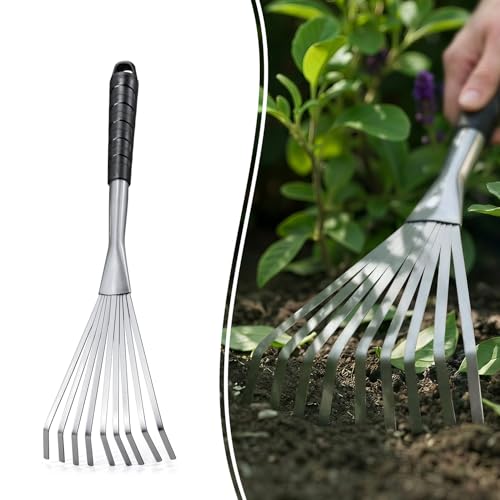
Colwelt Hand Rake 16.5″, Small Rake for Gardening
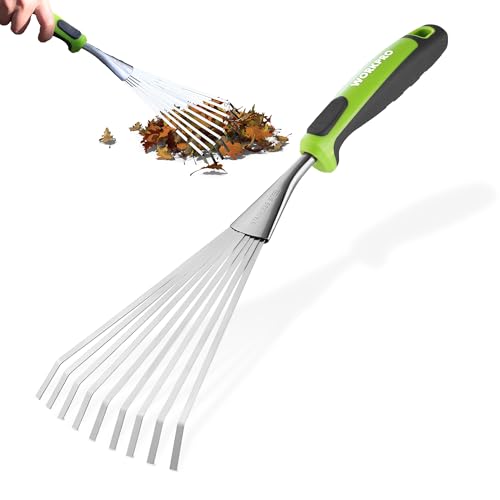
WORKPRO 16″ Hand Rake, Garden Rake with Soft Handle

Lawn Leveling Rake 35×10 inch, Professional-Grade Lawn Leveler

YITAMOTOR 48″ Tow Behind Lawn Aerator, 32 Steel Tines

YITAMOTOR ATV/UTV Landscape Rake, Fits for Manual Implement Lift

YITAMOTOR 48″ Tow Behind Lawn Sweeper, 20 cu. ft. Capacity

YITAMOTOR 3 Point Landscape Rock Rake for CAT 1, 5 FT

YITAMOTOR 40″ Tow Behind Pine Needles Rake with 20 Spring Steel Tines
The Strengths Of Each Pick
Starting with a hand tool feels off in a tractor-pulled roundup, but most of the larger rakes later in the list can’t get into a crowded flower bed without trampling it. The Garden Guru hand rake covers that gap. Five carbon steel tines fan out in a compact head, paired with an ergonomic handle that keeps wrist strain down during longer weeding sessions.
It works the loose, fluffy soil of a freshly turned bed better than the larger pull-behind units, and it slips between seedlings without uprooting them. The carbon steel construction holds up to repeated contact with gritty soil, and the rust-resistant finish keeps it serviceable through wet springs. For gardeners mixing tractor work with close-up bed prep, this tool earns a permanent spot in the kit.
What Makes Sense
- Five carbon steel tines resist bending in dense, root-filled beds
- Ergonomic grip cuts wrist fatigue during longer cultivation sessions
- Compact head reaches between perennials without collateral damage
- Rust-resistant finish holds up through damp spring soil
Honest Caveats
- Hand-powered, so any meaningful ground coverage takes real time
- Smaller head means more passes than a wide bow rake on open soil
Who It Suits Best
Backyard gardeners who already own a tractor-pulled rake but need a precise tool for crowded flower beds, vegetable starts, and tight border edges.
Consider Something Else When
Yard owners with mostly open turf and few beds will get more use from the YITAMOTOR 40″ Tow Behind Pine Needles Rake.
If the Garden Guru covers close-up bed work, the GroundsKeeper II handles the wide-open yard without demanding a tractor hookup. The 55-inch fiberglass handle keeps the working angle upright, which means most of the raking happens with arm and shoulder motion instead of bent-back pulling. That’s a real quality-of-life upgrade on a long afternoon.
The 21-inch head carries round, spring-loaded steel tines that flex on contact instead of snapping. They bite into leaves, pine straw, gravel, and thatch without the user pressing down hard, so the tool does much of the work itself. The replaceable tine system adds long-term value since a worn section can be swapped rather than discarded.
Key Advantages
- Spring-loaded tines cut the down-pressure the user has to apply
- Fiberglass handle keeps the total weight manageable for longer sessions
- Replaceable torsion tines extend the tool’s working life
- Handles leaves, mulch, pine straw, gravel, and light thatch in one tool
Trade Offs
- Wide stance makes it clumsy between closely spaced shrubs
- Not a substitute for a tractor-mounted rake on properties over an acre
Feature Snapshot
Made For
Suburban homeowners with a quarter- to half-acre lot who want a single hand-driven rake that handles fall leaves and early-spring thatch without a tractor.
Look Elsewhere When
Anyone managing two or more acres will save time by stepping up to the YITAMOTOR 48″ Tow Behind Lawn Sweeper.
The Colwelt mini rake fills a specific niche the bigger tools on this list ignore. At just 16.5 inches overall, it slips under low shrubs and between perennials where a full-sized bow rake would either skip over the debris or damage the plant. Nine flat tines gather leaves and crumbled mulch in a tight fan pattern.
The hanging hole in the handle is a small but useful detail, since shed storage tends to be the limiting factor for hand tools. Flat tines are easier to control in shallow soil than round ones, which matters when working around shallow-rooted plants like hydrangeas or newly planted annuals. It is more of a precision instrument than a brute-force rake.
What It Does Well
- Compact 16.5-inch frame reaches under shrubs and into border edges
- Nine flat tines gather fine debris without disturbing plant roots
- Hanging-hole handle simplifies shed and garage storage
Small Caveats
- Limited reach in deep or compacted soil
- Not built to move heavy piles of wet leaves in a single pass
Best Suited To
Gardeners with dense perennial beds, rock gardens, or narrow strip plantings where a larger rake would do more harm than good.
Not Your Match When
Anyone needing to clear a full lawn of leaves will get more mileage from THE GROUNDSKEEPER II Rake.
The WORKPRO 16-inch hand rake sits in the same small-tool category as the Colwelt, with a few notable differences worth weighing. The polished stainless steel head prioritizes corrosion resistance over raw tine strength, so it lives happily in a damp shed without the surface oxidation that plain carbon tools develop. The soft handle is the headline feature, especially for anyone with arthritic hands or limited grip strength.
It works well for the daily touch-ups that follow a bigger clean-up. After running a pull-behind rake across the open lawn, finishing the edges and corners with this hand tool keeps the job from looking half-done. It won’t replace a heavy-duty rake for breaking new ground, but for routine bed maintenance, it’s a comfortable everyday companion.
Positive Points
- Soft-grip handle reduces pressure points during longer sessions
- Stainless steel head resists rust even when stored in humid sheds
- Compact 16-inch frame suits container gardens and narrow borders
- Flexible tines work well in shallow, rocky, or root-heavy soil
Things To Consider
- Lighter build means it can flex on compacted or heavy clay beds
- Not designed for moving thick piles of wet debris
Feature Snapshot
Right Fit For
Gardeners who want a low-effort daily tidy-up tool for raised beds, container gardens, and the edges the larger rakes miss.
Swap It Out When
Properties with mostly open lawn and few beds will benefit more from the Dremmt Lawn Leveling Rake 35×10 inch.
Stepping up in size, the Dremmt leveling rake handles a problem the smaller rakes can’t touch at all. The 35-inch wide head drags topdressing, sand, and crumbled compost across low spots in the lawn, filling in the dips that cause scalping when the mower passes over them. The stainless steel handle resists the moisture and grit that wear down wood or mild steel handles during soil work.
It’s a tool with a focused purpose rather than an all-rounder. Homeowners who have patched irrigation lines, dealt with mole tunnels, or simply watched their lawn settle unevenly over the years will find a use for this rake every spring. The trade-off is weight and effort: dragging a full head of material across a lawn is real work, and a smaller yard may not justify the tool.
Notable Gains
- 35-inch head moves large volumes of topdressing per pass
- Stainless steel handle outlasts wood in wet soil conditions
- Smooths low spots that cause mower scalping on uneven turf
- Useful across lawn repair, sod prep, and post-aeration topdressing
Honest Caveats
- Demands real pulling effort, especially when the head is fully loaded
- Overkill for yards under a quarter acre with minimal unevenness
Feature Snapshot
Who Should Grab It
Homeowners repairing patchy, uneven turf after winter damage, mole activity, or settling who want a pro-grade leveling tool without renting equipment.
Another Choice May Suit
Anyone focused on collecting leaves rather than leveling soil should look at the YITAMOTOR 48″ Tow Behind Lawn Sweeper.
This is where the roundup shifts from hand tools to tractor-pulled implements. The YITAMOTOR 48-inch aerator rolls behind a lawn tractor or zero-turn, punching 32 steel tines into the soil to relieve compaction. The traction-style design depends on weight and momentum rather than powered drive, which keeps the mechanical complexity low.
The built-in weight tray is the detail that makes this tool adaptable across soil types. On hard clay, additional weight drives the tines deeper; on loose or sandy soil, you reduce the load to keep the tines from over-penetrating. For homeowners with compacted lawn areas that struggle to absorb water, this kind of rolling aerator can change the way the grass performs over a season.
Noteworthy Benefits
- Weight tray adjusts penetration for clay or softer soil
- 32 tines cover a wide swath per pass behind a tractor
- Tow-behind design requires no separate power source or engine
- Relieves compaction so water and nutrients reach the root zone
Trade Offs
- Requires a lawn tractor or zero-turn with a hitch to operate
- Tine wear on rocky soil is a known long-term maintenance issue
Built With In Mind
Homeowners with compacted, clay-heavy lawns and a compatible tractor who want to aerate without renting commercial equipment.
Reach For A Different Pick When
Yards with mostly sandy or loose soil get more value from a simple dethatcher like the YITAMOTOR 40″ Tow Behind Pine Needles Rake.
The ATV/UTV version steps away from a standard lawn tractor hitch and toward a manual implement lift, which is the common setup on side-by-sides and four-wheelers used around properties, farms, and trails. The all-steel design with rust-resistant coating holds up to the rougher terrain those vehicles typically cover, including pastures, gravel drives, and freshly cleared ground.
The adjustable working width helps when the same tool has to handle a long gravel lane and a tighter paddock corner. It moves hay, spreads rock, levels loose soil, and clears light brush debris, which makes it more of a year-round land tool than a seasonal yard implement. The catch is the compatibility requirement: it pairs specifically with a YITAMOTOR one-point lift system, so it isn’t a universal fit.
Features That Help
- Adjustable width adapts to lanes, paddocks, and open ground
- All-steel construction handles the abuse of off-lawn terrain
- Multi-purpose use across leveling, debris, and rock spreading
- Rust-resistant coating extends working life in damp conditions
Points To Note
- Specifically fits YITAMOTOR manual implement lifts, limiting cross-brand use
- Heavier than lawn-tractor rakes, requiring a capable tow vehicle
Whose Shelf It Belongs On
Property owners with an ATV or UTV and a YITAMOTOR manual lift who need a multi-purpose land rake for rough, mixed terrain.
A Sibling Pick Shines When
Standard lawn-tractor users will get better hitch compatibility from the YITAMOTOR 48″ Tow Behind Lawn Sweeper.
Fall leaves are the reason most people look at tractor-pulled tools in the first place. The YITAMOTOR sweeper collects leaves, grass clippings, and small twigs into a 20-cubic-foot hopper while you drive, replacing a long afternoon of raking and bagging with a much shorter session. The 48-inch sweeping width matches the deck of many common lawn tractors.
The adjustable sweeping height matters because lawns are rarely uniform. You drop the brushes for shorter, thicker grass and raise them for taller growth or uneven ground. The universal hitch is genuinely useful here, since it pairs with most lawn tractors, zero-turns, and ATVs without a special adapter.
Strengths Worth Knowing
- 20 cu. ft. hopper holds a significant pile before emptying
- Adjustable brush height adapts to grass length and ground conditions
- Universal hitch works across most common mower brands
- Cuts leaf cleanup time dramatically on properties over half an acre
Practical Considerations
- Brushes wear out and are a recurring replacement item
- Hopper emptying requires a comfortable dumping height to clear the bag fully
Feature Snapshot
Who Will Love This
Homeowners with mature shade trees and large lawns who currently spend multiple weekends each fall raking and bagging leaves by hand.
Skip It When
Smaller suburban lots with limited tree cover are easier to maintain with a hand-driven rake like THE GROUNDSKEEPER II.
The 3-point rock rake is the most serious piece of equipment on this list. It’s designed for Category 1 three-point hitches, which means compact and mid-size farm tractors rather than typical residential lawn tractors. With a 60-inch working reach, it clears rocks, roots, and debris from soil far faster than any walk-behind tool.
Where this tool makes sense is during major landscape renovations, new lawn installations, or pasture reclamation. It isn’t a seasonal maintenance tool. If a property has heavy, rocky, or uneven ground that needs serious work before seeding, this is the implement that handles the prep in a fraction of the time a hand rake would take.
The Helpful Details
- 60-inch reach covers serious ground per pass
- Compatible with Category 1 three-point hitches on compact tractors
- Designed for heavy-duty tasks like rock, root, and debris clearing
- Useful for pasture work, food plots, and new lawn prep
Things To Weigh Up
- Requires a compact tractor with a Cat 1 three-point hitch
- Too large and aggressive for routine residential lawn care
Perfect Match For
Hobby farmers and property owners with compact tractors who need an implement for serious land renovation and rock removal.
A Better Fit Elsewhere
Homeowners with a standard lawn tractor should step back to the YITAMOTOR 48″ Tow Behind Lawn Aerator for property maintenance.
Closing the list with another tractor-pulled option, the 40-inch dethatcher pulls behind a mower to lift thatch, dead grass, pine needles, and embedded debris out of the lawn surface. Twenty heat-treated spring steel tines flex on contact, which protects the turf from gouging while still pulling up the material that smothers it.
Beyond dethatching, the same pass performs a light surface aeration, opening small channels for water and nutrients to reach the root zone. That dual-action function makes it especially useful in spring, when a single tractor session can set the lawn up for a stronger growing season.
What Helps Most
- Spring steel tines flex on contact to protect healthy grass
- 40-inch width balances coverage with manageable towing
- Doubles as a light surface aerator during the same pass
- Cuts dethatching time dramatically on larger lawns
Where It Is Less Suited
- Effectiveness drops on very short, wet grass where tines skip across the surface
- Requires a tractor with a compatible hitch and enough power to pull it steadily
Feature Snapshot
Who Should Grab It
Homeowners with significant thatch buildup, pine needle coverage, or moss problems who already own a lawn tractor that can tow a 40-inch implement.
Consider Something Else When
Yards dominated by trees shedding leaves rather than needles are better served by the YITAMOTOR 48″ Tow Behind Lawn Sweeper.
Choosing A Pull-Behind Setup That Actually Suits Your Property
A pulls behind rake for lawn mower work covers a wider category than most shoppers expect, from hand tools finishing the edges to tractor implements doing the heavy lifting. The honest starting point is matching the tool to the property size and the hitch you already own, not picking the biggest unit on the page. A 60-inch rock rake does nothing useful on a quarter-acre lawn, and a 16-inch hand rake won’t touch a four-acre fall cleanup.
Hitch Compatibility Comes First
Before looking at working width, tine count, or material, check the hitch on your mower or tractor. Most residential lawn tractors and zero-turns use a standard pin-style hitch that accepts universal tow-behind implements. Compact and mid-size farm tractors typically use a three-point hitch, which means a totally different attachment class. ATVs and side-by-sides often need a brand-specific implement lift. Buying a tool without confirming the hitch match is the most common and most expensive mistake in this category.
Working Width And Property Size
The wider the working width, the fewer passes it takes to cover the lawn, but also the more storage space the tool needs and the more powerful the tow vehicle has to be. For lots under half an acre, a 40-inch implement is plenty. For one to two acres, 48 inches hits a comfortable balance. Anything beyond that, or any work on pasture and rough ground, justifies stepping into a 60-inch or larger unit on a compact tractor.
Soil Type And Tool Purpose
Lawn tractors and pull-behind tools behave differently depending on soil conditions. Hard, compacted clay benefits from the weight tray on a rolling aerator because added weight drives the tines deeper. Loose, sandy soil prefers a lighter touch, often just a dethatcher that lifts debris without over-penetrating. Rocky ground calls for a heavy-duty rock rake on a three-point hitch rather than a residential tow-behind.
Hand Tools Still Earn Their Place
Even with a full tractor setup, hand rakes remain relevant. The corners the tractor can’t reach, the flower beds it would damage, and the container gardens it can’t enter all benefit from a compact hand tool with the right grip and tine style. Treating hand tools and tractor implements as complementary, rather than competing, tends to produce the cleanest results across a whole property.
Key Considerations Across These Picks
Where Shoppers Go Wrong
The most common slip-up is buying by working width alone, without checking hitch type, lawn size, or soil conditions. A 60-inch implement is wasted on a small yard and may even damage softer turf. Another frequent mistake is assuming any tow-behind will fit any mower: hitch style, pin size, and towing capacity vary enough that cross-brand compatibility is not automatic. Storage is the third hidden trap, since 48-inch and larger implements don’t fold down to apartment-closet size.
Where The Extra Money Goes
Higher-tier models in this category tend to invest in heavier-gauge steel, replaceable tines, adjustable working depth, and broader hitch compatibility. Those upgrades matter most on properties with varied soil, larger acreage, or year-round use. For a small, uniform lawn with light seasonal cleanup, a mid-tier tool typically delivers all the performance needed without paying for features that go unused.
Frequently Asked Questions
What size pull-behind rake do I need for a half-acre lawn?
A 40 to 48-inch working width suits most half-acre lawns, balancing coverage with manageable towing and storage. Smaller widths mean more passes, while larger widths can overwhelm a residential lawn tractor.
Can I use a tractor-pulled rake on a zero-turn mower?
Many zero-turn mowers accept standard tow-behind implements through their rear hitch, but it’s worth confirming the hitch style and the mower’s towing capacity before attaching any pull-behind tool.
How do I store a pull-behind rake when not in use?
Most residential implements store upright in a shed corner or garage wall, though wider units benefit from a covered outdoor spot if indoor space is limited. Keeping tines off the ground helps prevent bending.
Do I need a separate aerator and dethatcher?
Not always. A spring-tine dethatcher performs light surface aeration in the same pass, which is usually enough for routine maintenance. Deep compaction relief calls for a dedicated rolling aerator with weighted tines.
Will a pull-behind rake damage my lawn?
Used at the correct depth and speed, no. Spring-loaded tines flex on contact and protect healthy grass, while heavier rock rakes should stay on renovation projects rather than established turf.
Wrap Up
The right pulls behind rake for lawn mower work depends less on the tool itself and more on the property, the tow vehicle, and the seasons the tool needs to handle. Match the hitch first, size the tool to the lawn, and let soil type and debris load guide the rest. For most suburban properties, a mid-width tow-behind paired with a small hand rake for the edges produces the cleanest result with the least effort.