A dead battery on a Saturday morning is one of those small frustrations that can swallow a whole afternoon. I’ve been there, wrestling with jumper cables in the driveway, wishing I’d replaced that tired battery before it quit. The right 12v lawn mower battery turns the key on the first try, holds charge through winter, and lets me get back to mowing instead of troubleshooting. This roundup pulls together six solid options that cover a range of mowers, climates, and budgets, so swapping in a new battery feels less like a gamble and more like a Saturday-morning win.
The Leading Options At A Glance

WEIZE Lawn Garden AGM Battery 12V 300CCA Group U1

WEIZE Lawn Garden AGM Battery 12V 200CCA Group U1
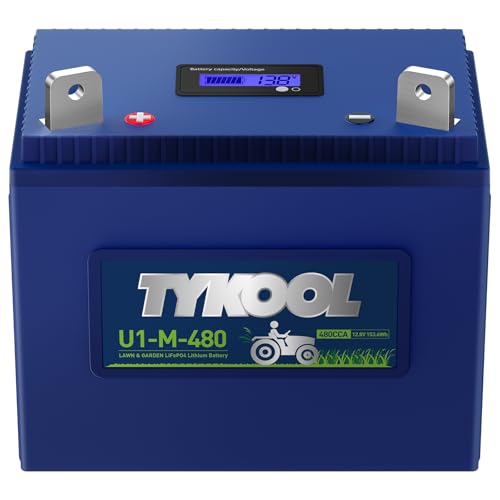
TYKOOL 480CCA Group U1 Lithium LiFePO4 Battery

WEIZE Lawn Garden AGM Battery 12V 350CCA Group U1
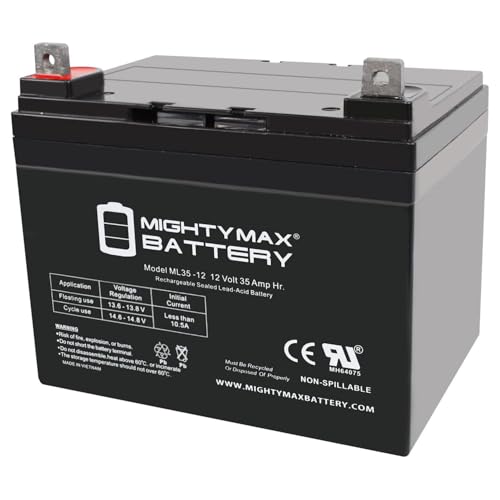
Mighty Max 12V 35Ah SLA Battery for John Deere

BRS U1 AGM Battery 12V 300CCA Group U1
The Details Behind The Selections
The 300CCA WEIZE sits in a comfortable middle ground for homeowners who mow a half-acre to a couple of acres each weekend. It drops into the standard Group U1 footprint (the common size slot for most riding mower battery trays), so installation on a John Deere, Cub Cadet, Craftsman, or Toro is a straightforward swap.
AGM stands for Absorbed Glass Mat, a sealed design that holds its electrolyte in fiberglass sheets instead of free-flowing liquid. That means no spilling if the mower sits on a slope, and no routine water top-ups. For anyone who stores their mower through winter in a cold garage, the sealed build tends to handle slow self-discharge a little more gracefully than a flooded cell. It’s a no-fuss, fit-and-forget kind of replacement.
The Helpful Details
- 300 cold cranking amps deliver confident starts on mild-to-cool mornings without long cranking times.
- Group U1 case dimensions fit the common battery trays used by John Deere, Toro, Cub Cadet, and Craftsman riding mowers.
- Sealed AGM design removes the need to check water levels or worry about acid spills on the garage floor.
- At roughly 18.68 lbs, the unit is light enough to carry one-handed during a quick swap.
Things To Consider
- CCA is a step below the 350CCA WEIZE later in this list, so very cold climates or larger engines may want more cranking headroom.
- The listing notes this unit ships as a hazardous-materials item, which can affect return options for some shoppers.
Key Advantages
Best Suited To
Homeowners with a mid-size riding mower who want a sealed, low-maintenance replacement that fits most U1 trays without modification.
Consider Something Else When
Shops and homeowners in deep-freeze regions should reach for the WEIZE 350CCA Group U1 instead, since the extra cranking headroom helps on bitter mornings.
The 200CCA WEIZE is the entry point of the Group U1 AGM family, aimed at smaller engines and lighter mowing schedules. If the mower is a rear-engine rider with a 17-horsepower single, or a smaller lawn tractor used on a flat quarter-acre lot, this is a sensible match.
The case shares the same Group U1 dimensions as the 300CCA and 350CCA siblings, so swapping between models in the WEIZE lineup is simple. For shoppers who don’t need maximum cranking amps and just want a sealed, spill-resistant battery that turns the key, this covers the basics without overpaying.
What Helps Most
- 200 cold cranking amps handle light-duty residential mowers in moderate climates.
- Group U1 form factor matches the same tray as the rest of the WEIZE family, simplifying upgrades later.
- Sealed AGM construction means no water checks, which suits first-time battery shoppers.
- 30-day easy returns are listed for this ASIN, giving a comfort margin for new owners.
Worth Noting
- 200CCA can feel underpowered in sustained sub-freezing weather or on engines that have grown harder to turn over with age.
- Larger riding mowers with bigger displacement engines will likely want the 300CCA or 350CCA options above and below.
Who It Suits Best
Owners of small or light-duty riding mowers in temperate climates who just need a reliable sealed replacement and don’t need high cranking output.
Look Elsewhere When
Cold-climate users with mid-size tractors should grab the TYKOOL 480CCA lithium option, which delivers far more starting energy for harsh mornings.
TYKOOL steps away from the AGM crowd entirely with a lithium iron phosphate (LiFePO4) battery that targets serious mowers. The chemistry differs from a sealed lead-acid battery in important ways: it weighs less, holds voltage more steadily under load, and tends to last through many more charge cycles before losing capacity.
CCA, or Cold Cranking Amps, measures the current a battery can deliver at 0°F for 30 seconds while staying above a minimum voltage. Hitting 480CCA from a lithium pack is a real upgrade over the AGM options in this list, and in our view it makes a noticeable difference when turning over a larger engine on a freezing April morning. It also fits the same Group U1 trays used by John Deere, Cub Cadet, Craftsman, and Troy-Bilt, which is convenient.
What Earns Its Place
- 480CCA delivers strong starting power, especially valuable on cold mornings when lead-acid struggles.
- LiFePO4 chemistry holds steadier voltage during cranking, helping engines spin up faster.
- Long cycle life means the battery can handle many more charge-discharge cycles than a typical AGM before needing replacement.
- Group U1 sizing keeps installation simple on a wide range of riding mowers and garden tractors.
Trade Offs
- Lithium packs usually cost more upfront than AGM equivalents in the same form factor.
- Some older mowers with basic charging systems may not fully top off a lithium battery; checking the charger’s voltage profile is wise before installing.
Feature Snapshot
Right Fit For
Owners of mid-to-large riding mowers in cold regions, plus anyone putting real hours on their equipment each season and wanting a longer-lasting battery.
Skip It When
Light-duty users with a small mower and a tight budget will do fine with the WEIZE 200CCA Group U1, which is more battery than a small engine truly needs.
The 350CCA WEIZE is the top of the brand’s AGM lineup and the strongest sealed lead-acid option in this roundup. The extra 50 amps of cranking power over the 300CCA sibling helps when the engine is older, the oil is a bit thick from a cold snap, or the mower sits outside rather than in a heated garage.
It carries the same Group U1 dimensions as the 200CCA and 300CCA versions, so there’s no surprise at install time. For tractor owners running snow blowers, larger decks, or attachments that tax the charging system, the headroom this battery offers is reassuring.
A Strong Showing
- 350 cold cranking amps tackle larger V-twin engines and hard-start situations with more confidence than lower-rated AGMs.
- Sealed AGM construction stays spill-proof, even when the mower is parked on a slope or stored sideways for short moves.
- Same Group U1 case as the smaller WEIZE units, so battery trays and hold-downs line up without modification.
- Compatible with the major residential mower brands, which simplifies shopping for mixed-equipment households.
Honest Caveats
- At 21.45 lbs, it’s a touch heavier than the 300CCA model, which matters for some users lifting into tight trays.
- AGM self-discharge still happens over long winters, so a tender or periodic top-up is wise if the mower sits for months.
Feature Card
Made For
Owners of larger garden tractors and anyone mowing in cold weather who wants sealed AGM convenience with extra cranking headroom.
Reach For A Different Pick When
Shops and frequent-use operators who want the longest possible service life should consider the TYKOOL 480CCA LiFePO4 option above, which trades a higher upfront cost for far more charge cycles.
The Mighty Max ML35-12 is a different shape of solution. Rather than focusing on cranking amps, it leans on 35Ah of capacity, meaning it can sustain electrical loads over a longer period. Ah, or amp-hours, is a measure of how much current a battery can deliver over an hour before dropping to a set cutoff voltage.
That makes it a strong pick for older John Deere lawn tractors where the original spec called for a 35Ah unit, and for owners who run accessories like work lights or a sprayer pump that draw on the battery even when the engine is off. SLA, or sealed lead-acid, shares the spill-resistant benefits of AGM, though this particular model uses a slightly different internal construction.
Everyday Wins
- 35Ah capacity supports longer accessory use without dropping voltage too far.
- Sealed lead-acid design resists spills and tolerates a range of mounting angles.
- Compact 7.76″ × 5.12″ × 7.01″ case fits the battery compartments of many older John Deere riding mowers.
- Listing includes the battery and mounting screws, so installation is a clean swap.
Room For Improvement
- No wire harness or mounting accessories beyond screws are included, so reusing existing hardware is necessary.
- Cranking amps are not the headline here, so cold-weather cranking may be weaker than the WEIZE 350CCA option.
Whose Shelf It Belongs On
Owners of older John Deere lawn tractors who want a direct-capacity replacement that supports accessory loads throughout the day.
A Better Fit Elsewhere
Anyone prioritizing cold-weather cranking should choose the WEIZE 350CCA Group U1 instead, which delivers noticeably stronger starting power in freezing conditions.
The BRS U1 AGM rounds out the list as a versatile sealed option for users who run more than just a lawn mower. It’s designed to slot into lawn tractors, generators, UTVs, ATVs, and ride-on equipment that share the Group U1 footprint, which makes it appealing for homesteads or small properties with several battery-powered machines.
The vibration-resistant build is a practical touch for equipment that lives on rough terrain. Owners commonly report that AGM construction holds up well to the shaking a UTV or a hard-working tractor dishes out over a season, and arriving fully charged means the install job is a clean drop-in without a waiting period at the workbench.
Notable Gains
- 300 cold cranking amps paired with 375 cranking amps, giving solid starting headroom in cool weather.
- Sealed, maintenance-free AGM design removes water checks and reduces spill risk across different equipment types.
- Vibration-resistant construction suits UTVs, ATVs, and rough-terrain tractors that shake batteries harder than a smooth lawn.
- Arrives fully charged, so the swap can happen in one trip without a separate charging step.
Some Limits To Know
- 300CCA trails the WEIZE 350CCA option, so very cold climates with large V-twin engines may want more cranking power.
- Some listings bundle accidental-damage protection plans, which adds cost if the basic coverage is the only goal.
Who Should Grab It
Property owners running multiple Group U1 machines, from mowers to UTVs to backup generators, who want one dependable battery on the shelf.
Swap It Out When
Pure cold-weather cranking on a big tractor is the WEIZE 350CCA’s stronger suit, making it the better call for freezing-climate mowing.
What To Weigh Before Choosing a 12v Lawn Mower Battery
The first thing to nail down is the case size. Most residential riding mowers use the Group U1 footprint, a roughly 7.7″ × 5.1″ rectangle, but some compact rear-engine riders and a few larger garden tractors use different sizes. Pulling the old battery and measuring the tray, or checking the mower’s manual, prevents the classic mistake of ordering a battery that’s two centimeters too wide.
Cranking amps matter most in cold climates. CCA, or cold cranking amps, measures how much current a battery can deliver at 0°F. A 200CCA unit is enough for small engines in mild weather, while 300 to 350CCA gives more headroom in regions with freezing mornings. Lithium options push that figure much higher and add cycle life, but they cost more and aren’t always a perfect match for older charging systems.
Battery chemistry is the next fork. AGM (absorbed glass mat) is sealed, spill-resistant, and the most common upgrade from older flooded lead-acid designs. Lithium iron phosphate (LiFePO4) lasts much longer and weighs less, but requires verifying the mower’s charging system can top it off properly. For most homeowners, AGM hits the practical sweet spot.
Finally, terminal layout and polarity are easy to overlook. The U1 standard puts the positive terminal on the left in most cases, but it’s worth a quick glance at the existing battery before ordering, so the cables reach without stretching or rerouting.
Mistakes Worth Dodging and Where The Extra Money Goes
Traps First Timers Fall Into
The most common slip is buying on cranking amps alone. A 480CCA battery sounds impressive, but if the mower’s tray can’t physically fit the case, or the charging system is too weak to refill a lithium pack, that power goes unused. Always start with the case size and terminal layout, then match chemistry to climate.
Another trap is assuming a battery that “fits” will sit properly. Hold-down brackets, vent caps, and cable lengths all need to clear. A quick check of the original battery’s dimensions and a comparison against the spec sheet avoids a frustrating return.
What Separates Premium From Basic
Higher-tier AGM and lithium batteries tend to spend the extra money on plate quality, internal resistance, and cycle life. A premium unit often delivers more usable cranking amps at the end of its life, not just on day one, and tolerates deeper discharges without damage.
For most homeowners, paying up makes sense when the mower sees heavy seasonal use, sits in unheated storage, or needs to start reliably at sub-freezing temperatures. For a small rear-engine rider that runs ten times a year, a mid-tier AGM is more than enough.
Frequently Asked Questions
How long does a 12v lawn mower battery usually last?
A typical sealed lead-acid or AGM lawn mower battery lasts around three to five years with regular seasonal use. Lithium LiFePO4 batteries can last considerably longer because they tolerate more charge cycles before losing capacity.
Can a car battery be used in a lawn mower instead?
A car battery is usually physically too large for a mower’s battery tray and delivers more cranking amps than a small engine needs. It can also damage the mower’s charging system, so a purpose-built Group U1 battery is the safer choice.
Do AGM batteries need a special charger?
Most modern AGM batteries charge fine on a standard mower charging system. A standard 12V automotive-style charger works, though smart chargers with an AGM mode can extend battery life by avoiding overcharging.
What does “Group U1” actually mean?
Group U1 is a battery-industry case size standard covering roughly 7.7″ × 5.1″ footprints, used by most residential riding mowers. Matching the group size ensures the battery physically fits the tray and that the hold-down bracket lines up.
Is a higher CCA always better for a lawn mower?
Not always. Going far beyond what the engine actually needs adds cost without real benefit for small motors. Matching CCA to climate and engine size is the smarter approach.
Closing Remarks
Choosing the right 12v lawn mower battery comes down to matching the case size, the cranking amps, and the chemistry to the mower and the climate. The six options here cover everything from a basic swap on a small rider to a long-lasting lithium upgrade for a hard-working tractor. A few minutes of measuring and a quick look at the old battery’s specs go a long way toward a Saturday morning that starts with the engine turning over, not a dead machine.