A tired lawn that shrugs off water and browns under summer stress usually has one quiet culprit: compacted soil choking off the airflow, drainage, and nutrients grass roots need. Aerators open up channels so oxygen, moisture, and fertilizer can finally reach the root zone, and the right tool turns that chore into a manageable Saturday instead of a backbreaking weekend. This roundup walks through seven aerators built for different lawn sizes, soil types, and budgets, so a homeowner can match a tool to their situation without guesswork.
How The Shortlist Stacks Up


WOLF Garten BIM Multi-Star Aerator
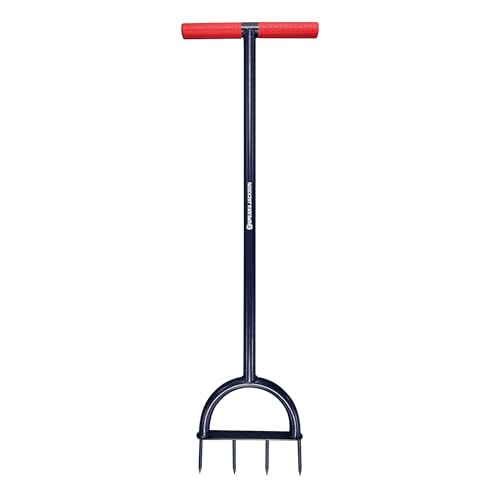
Spear & Jackson 4852LSA Lawn Spike Aerator

Lawn Aerator Shoes for Compacted Clay

Manual Core Aerator with 4 Hollow Tines

Seeutek 40-Inch Tow-Behind Spike Aerator

Seeutek 18-Inch Push Spike Aerator
Taking A Closer Look At The Options
The Bosch Garden Grubber reads more like a precision hand cultivator than a heavy aerator, and that’s exactly its lane. It targets gardeners tending a small flower bed, raised planter, or tight border where a full-size spike tool would be overkill.
Its ergonomic soft grip is the headline feature, designed to keep wrists and hands comfortable during repeat use. Anyone prepping soil before sowing seeds or working around established perennials will appreciate the control a hand tool offers over a push model.
Everyday Perks
- Soft-grip ergonomic handle reduces hand fatigue during extended detail work.
- Compact head navigates tight gaps between shrubs and perennials where larger tools cannot reach.
- Solid hand-tool build for the price tier, expected to last seasons of seasonal prep.
- Loosens soil for better water and nutrient flow, the exact goal of any aerator.
Things To Consider
- Not sized for full-lawn coverage, so plan on pairing it with another tool for open grass areas.
- Hand cultivation is physical; expect a slower pace over a large bed.
Who It Suits Best
Small-space gardeners who want precision soil prep in flower beds rather than broad lawn aeration.
Where Another Pick Suits Better
Homeowners with open lawn areas should reach for the Spear & Jackson 4852LSA, which tackles turf at scale.
The WOLF Garten BIM Multi-Star Aerator comes from a long-running German tool line known for its modular handle-and-head system. The BIM head slips onto a compatible ash handle (the ZM 140 is the brand’s recommended match), and the result is a scythe-precise tool for tight rows.
Where the Bosch grubber leans toward bed prep, this tool shines in narrow veggie rows and densely planted kitchen gardens. Its narrow 3.5 cm working width slips between plants that would otherwise be crushed or crowded by a wider head.
A Strong Showing
- Hardened steel blade holds a sharp edge through repeated soil contact.
- Scarifies, loosens, and aerates in one pass, trimming several garden chores.
- Modular Multi-Star handle system lets a gardener swap heads without buying a second tool.
- Compact footprint suits narrow rows where full-width aerators cannot operate.
Honest Caveats
- Handle is sold separately from the head, adding a step before the first use.
- Best suited to loose, loamy soil; rocky ground can blunt the blade quickly.
Quick Facts
Made For
Vegetable gardeners who already own (or plan to invest in) a Multi-Star handle and want one tidy aerator head for tight rows.
Consider Something Else When
Someone needing an all-in-one solution without buying a handle separately will find the Spear & Jackson 4852LSA easier to start with.
The Spear & Jackson 4852LSA is built around a straightforward promise: all-metal construction and carbon steel spikes that punch into compacted turf without flexing or bending. It targets homeowners tired of plastic-handled spike tools that crack after a season or two.
A wide T-handle with non-slip grip gives both hands leverage, while the secure footrest lets body weight drive the spikes in cleanly. Compared with the hand-held Bosch grubber, this is a real lawn-scale tool, sized for stepping across turf one stride at a time.
What Pays Off
- Carbon steel spikes bite through thatch and compacted soil on the first push.
- Wide T-handle keeps hands in a natural, low-strain position during long sessions.
- Built-in footrest makes downward force safer and more controlled than stepping on a flimsy plate.
- All-metal frame typically outlasts hybrid plastic-and-metal rivals in user reports.
Worth Noting
- Spike aerators puncture holes but do not remove soil plugs, so relief is shorter-term than core aeration.
- Manual stepping across a large lawn takes time and stamina.
Feature Card
Best Suited To
Homeowners with small-to-medium lawns who want a single durable manual spike aerator for seasonal use.
Look Elsewhere When
Anyone with half an acre or more of turf will work faster behind the Seeutek 40-Inch Tow-Behind model.
Aerator shoes strap onto regular footwear and turn a regular walk across the lawn into an aeration session. For homeowners who would rather mow and stroll than wrestle with a heavy manual tool, this format removes the upper-body effort entirely.
This particular pair leans into the heavy-duty side of the category, with a 5 mm metal base and a wider footrest. The clay-soil framing tells a clear story: these are aimed at lawns where ordinary thin-soled sandal-style spikes would bend before they penetrated.
Everyday Wins
- 5 mm metal base runs noticeably thicker than budget models, reducing flex underfoot.
- Walk-the-lawn approach combines exercise and aeration into one activity.
- Wider footrest improves balance, especially on uneven turf.
- Strap-on design stores flat, taking up almost no shed space.
Trade-Offs To Consider
- Coverage depends entirely on stride pattern, so results vary with walking discipline.
- Shoes work the spike-in method, which compacts surrounding soil slightly more than core-style removal.
- Wet grass can make the metal base slippery during use.
Spec Overview
Right Fit For
Casual homeowners on clay-heavy soil who want a low-effort, walkable aeration routine.
Skip It When
Anyone who wants visible soil plugs pulled out of the lawn should pick the Manual Core Aerator with 4 Hollow Tines instead.
Core aerators pull actual plugs of soil out of the lawn, which is the method most lawn-care guides recommend for serious compaction. This manual core tool uses four hollow tines to remove multiple plugs per step rather than just poking holes.
Penetration runs up to 3.94 inches, which is meaningful depth for compacted topsoil. The side-opening design helps release soil plugs so the tines do not clog mid-yard, a frustrating issue with cheaper hollow-tine tools.
Positive Takeaways
- Four tines remove more plugs per step than single-tine manual options.
- 3.94-inch core depth reaches the root zone where compaction actually hurts grass.
- Side openings cut down on clogging during longer sessions.
- Pulls real soil plugs, the method pros favor for overseeding and repair.
Points To Keep In Mind
- Removing cores is harder work than spike-style aeration.
- Soil plugs left on the lawn need raking or breaking up to keep the surface tidy.
- Best used on moist, not bone-dry, soil for clean plug extraction.
Who Should Grab It
Homeowners prepping for overseeding or repairing patchy, compacted lawn areas where spike aeration has not been enough.
Reach For A Different Pick When
Someone with a larger lawn and a riding mower should consider the Seeutek 40-Inch Tow-Behind Spike Aerator for faster coverage.
The Seeutek tow-behind model is built for acreage. Ten star-shaped galvanized tines, each with multiple sharp tips, rotate independently so the rig keeps biting even as the tractor turns. That matters on a lawn wide enough to require multiple passes.
A heavy-duty tray supports up to 330 lbs of added weight, which is the trick to deep spike penetration: ballast pushes the tines into hard ground without forcing the operator to do it manually. Without weight, even a premium tow-behind can skate over hardpan.
The Value In It
- Wide 40-inch working width covers ground far faster than any walk-behind tool.
- 3D star tines with multiple tips keep contact through turns and uneven ground.
- 330 lb weight capacity allows heavy ballast for compacted clay or dried-out soil.
- Galvanized steel resists rust through seasons of outdoor storage.
Factors To Consider
- Requires a riding mower or ATV to pull.
- Tow-behind rigs are bulky in storage; plan shed space before delivery.
- Assembly takes time out of the box, expect a first-use afternoon.
Built With In Mind
Owners of half-acre-plus lawns with a riding mower or ATV who want fast, repeatable spike aeration.
A Better Fit Elsewhere
Suburban homeowners with modest turf will do better with the Seeutek 18-Inch Push Spike Aerator, which needs no tow vehicle.
The 18-inch push version of the Seeutek aerator brings the same galvanized star-tine technology down to a self-propelled size. Five star wheels with multiple sharp tips rotate independently, so each push covers a meaningful strip of lawn.
The four-wheel design and non-slip handle keep the rig tracking straight without veering, which is a common complaint about lighter push aerators. The 220 lb weight capacity is lower than the tow-behind, but still enough for cement blocks or sandbags.
Noteworthy Benefits
- Five rotating star tines keep the bite through turns and across uneven turf.
- Galvanized steel construction handles repeated outdoor storage without rust.
- Non-slip handle keeps grip stable when pushing through tougher patches.
- No engine, no fuel, no tow vehicle, just muscle and a manageable footprint.
Points To Note
- Push models still require effort, especially when loaded with ballast.
- Smaller coverage width than the 40-inch tow version, so large yards take longer.
Perfect Match For
Suburban homeowners with medium-sized lawns who want rolling-tine efficiency without owning a riding mower.
Swap It Out When
Anyone managing more than half an acre should upgrade to the Seeutek 40-Inch Tow-Behind Spike Aerator for time savings.
Choosing The Right Aerator for Your Lawn
Spike vs Core Aeration
Spike aerators push or punch into the ground, creating channels that relieve surface compaction quickly. Core aerators actually remove plugs of soil, opening deeper channels and pulling thatch up to the surface. For most homeowners, spike aeration is plenty for annual maintenance, while core work pays off during overseeding or repair.
Lawn Size and Effort Budget
A small yard of a few hundred square feet handles well with a hand tool like the Bosch Grubber or a manual spike aerator. Mid-size lawns, anything from a quarter to half acre, suit push models or stepping tools. Anything larger starts to favor tow-behind rigs paired with a riding mower.
Soil Type Considerations
Clay-heavy soils resist thin spikes, which is why heavier bases and weighted trays matter in those conditions. Sandy or loamy ground responds to lighter tools without drama. Reading a few soil clumps before buying helps match the right tool to the ground.
Storage and Off-Season Care
Manual tools last longest when cleaned, dried, and stored under cover. Galvanized steel tolerates shed humidity, while untreated metal benefits from a light oil coat before winter. Tow-behind and push models need a clear floor footprint when not in use.
Common Pitfalls and Upgrade Trade-Offs
Wrong Turns To Avoid
Many shoppers pick the largest tow-behind model first, only to find they have no riding mower or ATV to pull it. Others grab a sandal-style spike shoe for heavy clay and watch the base bend on the first step. Matching tool size and weight rating to soil and lawn size up front saves a return trip.
The Upgrade Payoff
Higher-tier aerators earn their keep through wider coverage, heavier weight capacity, and corrosion-resistant galvanized construction. For large or compacted lawns, those upgrades translate directly into fewer passes and longer service life. For tiny beds, the upgrade is rarely worth it over a simpler hand tool.
Frequently Asked Questions
How often should a homeowner aerate a lawn?
Most cool-season grass lawns benefit from aeration once a year, typically in early fall. Warm-season lawns often do best with late-spring timing. Heavily used or compacted areas may need a second pass.
Is spike or core aeration better?
Spike aeration is faster and easier, and it suits routine maintenance. Core aeration pulls actual plugs and is the stronger choice before overseeding or repairing compacted patches.
Can aerator shoes really work on clay soil?
They can, especially when the base plate is thick enough to resist bending. Thinner budget models often fail on clay, while 5 mm metal bases hold up better under bodyweight.
When is the best season to aerate?
Soil moisture matters more than calendar. The day after a moderate rain, when ground is soft but not soaked, gives the cleanest penetration for both spike and core tools.
How long does it take to aerate a typical yard?
A small lawn under 1,000 square feet takes 20 to 30 minutes with a manual spike tool. A half-acre lawn can stretch to two hours with a manual model, or drop under 30 minutes behind a tow-behind rig.
Final Verdict
The right aerator comes down to lawn size, soil type, and how much effort a homeowner wants to invest. Small beds and detail work favor hand tools, mid-size lawns lean toward push or stepping models, and larger properties benefit from tow-behind rigs. Match the tool to the ground, and aeration becomes a simple seasonal habit rather than a dreaded chore.