Spending a Saturday pushing a mower across half an acre feels more like punishment than weekend relaxation. Homeowners with bigger yards, sloped terrain, or simply less free time are increasingly turning to automated solutions that handle the chore while they handle everything else. I’ve put together six options that represent the most practical paths to a hands-free lawn, from full robotic mowers to walk-behind alternatives worth considering.
How The Shortlist Stacks Up

Sunseeker X3 Plus Robot Lawn Mower (Wire-Free, 0.3 Acre)
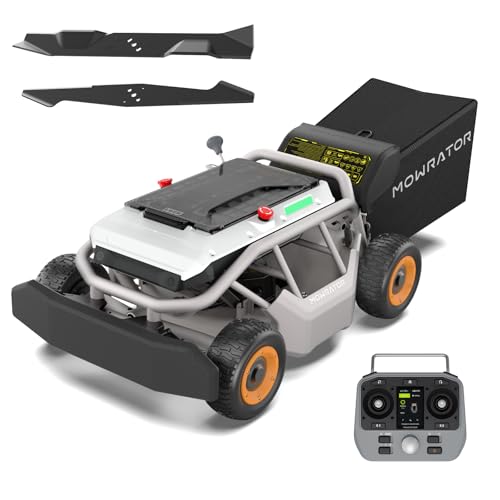
Mowrator S1 4WD Remote Control Lawn Mower (21-Inch, 37° Slope)

Casince 17-Inch Cordless Walk-Behind Lawn Mower

EGO POWER+ 21-Inch Self-Propelled Mower (LM2135SP) + Extra Battery
YARDCARE V100 Robot Lawn Mower with HD Vision (1600 sq ft)

Sunseeker X7 AWD Robot Lawn Mower (Wire-Free, 0.75 Acre)
What Each Pick Brings To The Table
Suburban lots under a third of an acre rarely need a heavy-duty tractor, but they still demand weekly attention. The Sunseeker X3 Plus skips the buried boundary wire altogether, using RTK (Real-Time Kinematic positioning, a satellite-based system accurate to roughly an inch) combined with VSLAM (Visual Simultaneous Localization and Mapping, a camera-based way the robot learns its surroundings) to chart the yard, plan routes, and shift between the front, back, and side strips. For a homeowner with a tidy, defined lawn and a busy calendar, that wire-free setup is the real time-saver.
Vision AI helps the mower tell grass from pavement during daylight hours, and ultrasonic sensors keep it honest on bumps and changes in elevation. Compared to a buried-wire robotic unit, the install here is essentially “place the charging dock and map the perimeter once.” That difference alone sells the X3 Plus to a lot of first-time robotic mower shoppers.
The Practical Payoff
- Wire-free mapping removes the most dreaded install step, so most setups finish in an afternoon.
- Covers up to 0.3 acre across multi-zone lawns with defined borders.
- RTK plus visual mapping keeps routing accurate even where satellite signals weaken near trees.
- Vision AI distinguishes grass from non-grass surfaces during daytime operation.
Worth Noting
- Daylight-only navigation means shaded corners and after-dark sessions may behave less predictably.
- Owners of yards with heavy leaf drop or unkempt edges commonly report more frequent manual trimming.
- Charging dock placement matters more than with wired units; pick a spot with clear sky view for the RTK signal.
Key Specs
Built With In Mind
Suburban homeowners with a defined, manageable yard who want true set-and-forget mowing without burying wires.
Swap It Out When
Properties over half an acre with rough terrain suit the Sunseeker X7 AWD Robot Lawn Mower better.
Sloped, rough, or oddly shaped properties are where most robotic mowers quietly give up. The Mowrator S1 takes a different angle: instead of relying on full autonomy, it pairs a four-wheel-drive chassis with a handheld remote, letting you guide it up 37° grades from the porch. The 21-inch deck is generous, and the 18Ah battery pack keeps the machine working through larger cuts than smaller units manage.
Where it really separates from a standard robotic mower is its accessory story. Optional attachments extend it into leaf mulching, snow plowing (with chains), and small trailer hauling through a tow hitch. That makes the S1 feel less like a one-season gadget and more like a year-round property tool for rural or sloped lots.
Where It Excels
- 4WD grip handles slopes up to 37°, which most consumer robots avoid.
- 21-inch deck trims mowing time compared to the 17-inch Casince unit in this list.
- Remote operation keeps the operator out of dust, pollen, and noise zones.
- Optional attachments turn it into a four-season yard tool, not just a mower.
Points To Note
- Remote-control design means active operator attention, so it’s not fully autonomous like the Sunseeker models.
- Heavier chassis and aggressive tread tires can leave tracks on soft, wet turf.
- Optional attachments like the snow plow and chains add to the total cost of ownership.
Right Fit For
Rural homeowners with steep grades, mixed terrain, and a desire to use one powered unit across mowing, hauling, and snow clearing.
Reach For A Different Pick When
Flat suburban lawns under a quarter acre get the same job done with the YARDCARE V100 at a friendlier price point.
Small lawns rarely justify a $1,500 robotic mower, and that’s exactly where the Casince 17-inch cordless unit lands. The 17-inch deck trims a small yard quickly without the bulk of a 21-inch self-propelled model. Six height settings between roughly 1 and 3 inches give plenty of seasonal flexibility for common cool- and warm-season grasses.
Two 20V 4.0Ah batteries power up to about 40 minutes of runtime, which translates to around 5,380 sq ft per charge under normal conditions. For homeowners with a townhouse lot or a compact city yard, that covers a typical mow in one go, with the second battery ready as a backup if the grass is damp or tall.
What Pays Off
- Lower price point than the self-propelled or robotic options on this list.
- Six height positions span 1 to 3 inches, covering most lawn-type preferences.
- Dual 20V batteries extend runtime without waiting on a single pack to recharge.
- Lightweight walk-behind frame is easier to store in a small garage or shed.
Trade Offs
- Walk-behind design means manual effort, which is a step back from the autonomous units here.
- 40-minute runtime limits use on larger yards without mid-task battery swaps.
Best Suited To
First-time mower owners and apartment dwellers with a small patch of grass who want a quiet, low-fuss alternative to a gas mower.
A Better Fit Elsewhere
Anyone wanting a true set-and-forget experience for a similar-size yard should look at the YARDCARE V100 instead.
For someone with a bigger yard who still wants to walk behind the mower rather than let a robot take over, the EGO POWER+ LM2135SP fills an interesting middle ground. It delivers up to 7.0 ft-lbs of torque, which puts it in gas-mower territory without the noise, oil changes, or pull cords. The Select Cut multi-blade system ships with three interchangeable lower blades, including a mulching blade, a high-lift bagging blade, and an extended runtime blade, so the cut adapts to the day.
This particular bundle pairs the 7.5Ah battery with a separate 5.0Ah pack, letting one battery stay on the mower while the other charges. For larger yards where runtime matters, that hot-swap approach keeps the session moving. Compared to the Casince unit earlier, this is a meaningful step up in deck size, torque, and build.
Good Reasons To Consider
- 7.0 ft-lbs of torque rivals gas mowers on tall or thick grass.
- Select Cut system offers mulching, bagging, and extended-runtime blade swaps in one deck.
- Extra 5.0Ah battery extends total session time without waiting on a recharge.
- Self-propelled drive reduces effort on sloped or uneven ground.
Softer Spots
- Walk-behind operation is more physically demanding than any robotic option in this roundup.
- 56V platform costs more upfront than 20V alternatives like the Casince model.
Key Specs
Who Will Love This
Homeowners with larger walk-behind yards who want gas-like cutting power without engine maintenance.
Where Another Pick Suits Better
Shoppers wanting full automation on a similarly sized lot should consider the Sunseeker X3 Plus instead.
Urban yards and townhouse lawns don’t need RTK satellite networks or 0.75-acre capacity; they need something that quietly handles a 1,000 to 1,600 sq ft patch without making a fuss. The YARDCARE V100 leans entirely on its integrated camera and bumper sensor to learn the lawn, recognize grass versus pavement, and detect obstacles on the fly. The AI reportedly flags up to 150 different obstacle types, which sounds ambitious for a small-lot mower, but the practical effect is fewer pinned-on garden hoses and trampled toys.
The no-go function gives owners a way to set exclusion zones through the app, which matters in tight spaces where flower beds crowd the grass. For a first-time robotic mower shopper in a small-lot setting, the V100 feels like a sensible starter unit without the setup overhead of RTK-equipped models.
Features That Help
- Camera-based navigation skips satellite setup, so the mower works in shaded courtyards.
- Recognizes up to 150 obstacle types according to manufacturer claims.
- No-go zones let owners protect flower beds without burying wire.
- Compact footprint suits tight urban lots and side-yard strips.
A Few Limitations
- 1,600 sq ft coverage makes it unsuitable for anything beyond small suburban lots.
- Camera-only navigation can struggle in low light, so nighttime runs may need scheduling.
Quick Facts
Made For
City homeowners with compact lawns who want quiet, hands-off mowing without RTK or boundary wires.
Skip It When
Mid-size suburban lawns need the extra coverage of the Sunseeker X3 Plus Robot Lawn Mower.
The Sunseeker X7 AWD takes the wire-free RTK foundation of the X3 Plus and stretches it into rough-terrain territory. Coverage stretches to 0.75 acre across multi-zone lawns, driveways, hills, roots, and uneven ground, which puts it firmly in the “I have a real property” category rather than a small suburban lot. All-wheel drive and deep-tread tires are what make the difference on slopes and soft spots.
Binocular vision AI (two cameras working together for depth perception, much like human eyes) gives the X7 a clearer view of obstacles than single-camera setups, and AONavi keeps mapping accurate when trees block satellite signals. Day or night operation extends the mowing window for homeowners who want a fully hands-off routine across a larger, more complex yard.
A Few Highlights
- AWD with deep-tread tires handles mud, roots, and uneven ground that stops two-wheel-drive units.
- 0.75-acre coverage suits large suburban lots and small-acreage properties.
- Binocular vision AI improves obstacle recognition versus single-camera rivals.
- Day and night operation extends the mowing window in warmer seasons.
Honest Caveats
- Premium positioning means a higher upfront cost than the X3 Plus sibling.
- Heavier AWD chassis can compact soft turf when the ground is wet.
- Complex multi-zone setups take longer to map than single-lawn installs.
Feature Snapshot
Whose Shelf It Belongs On
Homeowners with large, uneven properties who want true hands-free mowing without the limitations of two-wheel-drive units.
Consider Something Else When
Flat suburban lots under a third of an acre are a better match for the Sunseeker X3 Plus Robot Lawn Mower.
Choosing The Right Automatic Riding Lawn Mower For Your Property
Matching a mower to a yard is less about brand loyalty and more about terrain, square footage, and how much autonomy you actually want. Robotic units dominate the small-lot conversation because they remove the chore entirely, while walk-behind and remote-control models fill in for yards that are too rough, too steep, or too oddly shaped for a robot to handle confidently.
Coverage Area And Yard Layout
Start by measuring the lawn, including the side strips and any islands the mower has to navigate. Robotic units like the YARDCARE V100 top out around 1,600 sq ft, the Sunseeker X3 Plus handles up to 0.3 acre, and the X7 AWD stretches to 0.75 acre. A yard with narrow passages between houses, multiple defined zones, or dense tree cover benefits from RTK-based models that plan systematic routes rather than bouncing around randomly.
Slope, Terrain, And Drive System
Flat lawns work with anything. Sloped or uneven properties change the math quickly. The Mowrator S1 climbs 37° grades with 4WD grip, and the Sunseeker X7 AWD uses all-wheel drive with deep-tread tires for mud, roots, and soft ground. Two-wheel-drive robotic units tend to struggle on anything beyond gentle slopes, so for hillier properties, drive system matters more than deck size.
Autonomy Versus Active Control
The trade-off between robotic mowers and remote-control units comes down to how much oversight you want. Robotic mowers run themselves once mapped, while remote-control models like the Mowrator S1 keep the operator engaged but remove the physical strain of pushing or riding. Walk-behind units like the Casince and EGO POWER+ mowers still require pushing or following, but deliver more power per dollar.
Power Source And Maintenance
Battery-powered mowers dominate this list, and that brings real ownership benefits: no oil changes, no spark plugs, no gas storage. The trade-off is battery longevity over time and the cost of replacement packs several years down the line. Robotic units return to a charging dock automatically, while walk-behind models need manual plug-in routines after each session.
Common Shopping Slip Ups And What The Higher Tier Buys
Mistakes Worth Dodging
The most common error is buying by lawn size alone and ignoring terrain. A 0.3-acre robotic mower that bogs down on slopes or gets stuck on tree roots is more frustrating than a walk-behind unit that just works. Another slip is assuming all “automatic” mowers are fully autonomous; remote-control units like the Mowrator S1 still need active guidance, which is a meaningful difference for shoppers expecting true set-and-forget behavior.
What Separates Premium From Basic
Higher-tier robotic mowers earn their position through navigation accuracy, drive systems, and obstacle recognition. RTK plus visual mapping keeps routes efficient on large lots. AWD with deep-tread tires handles terrain that stops basic two-wheel-drive units. Binocular vision improves obstacle avoidance over single-camera setups. For properties that genuinely need these capabilities, the upgrade pays off in fewer interventions and a cleaner cut across complex layouts.
Frequently Asked Questions
How accurate is RTK navigation on a residential robotic mower?
RTK positioning is typically accurate to within roughly an inch under open sky, though tree cover, buildings, and narrow side yards can weaken the signal. That’s why units like the Sunseeker X3 Plus and X7 AWD pair RTK with visual mapping as a backup.
Can a robotic mower handle slopes and uneven ground?
Two-wheel-drive models work on gentle grades, but for anything steeper than about 20°, an AWD unit like the Sunseeker X7 AWD or a remote-control 4WD model like the Mowrator S1 is the safer bet.
Do robotic mowers work at night?
Vision-based units like the YARDCARE V100 rely on daylight for full navigation, while RTK-plus-vision models like the Sunseeker X3 Plus and X7 AWD can operate day or night since RTK doesn’t need light to function.
What maintenance does a robotic mower need?
Blade replacement a few times per season, occasional cleaning of the underside and sensors, and keeping the charging contacts clear. Robotic units return to dock automatically, which removes most routine charging hassle.
Is a self-propelled walk-behind mower worth it over a robotic unit?
For larger yards, steeper terrain, or homeowners who prefer to walk the lawn and inspect it as they go, a self-propelled walk-behind unit like the EGO POWER+ LM2135SP delivers more power and control without the mapping overhead.
Bottom Line
The right automatic riding lawn mower comes down to matching the tool to the terrain and the level of autonomy that fits the routine. Robotic units shine on small-to-mid-size lots with defined borders, while remote-control and walk-behind options earn their place on slopes, rough ground, or larger yards where power matters more than full automation. Pick the model that matches the property, and the chore quietly takes care of itself.