Nothing kills a Saturday mowing plan faster than a small engine that refuses to start in spring. The right fuel treatment makes the difference between pulling the cord twice and dragging the mower to the curb. I put together this list for homeowners with small-to-mid sized yards who want reliable starts and cleaner carburetors without spending a fortune on mechanic visits.
The Main Contenders
The Main Contenders

STA-BIL Storage Fuel Stabilizer, 16 oz
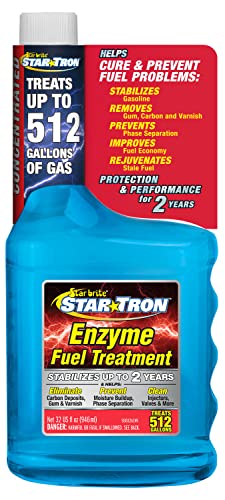
STAR BRITE Star Tron Enzyme Fuel Treatment – Gasoline
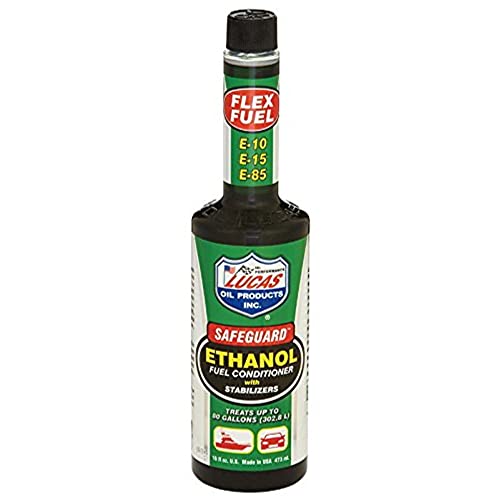
Lucas Oil 10576 Ethanol Fuel with Conditioner

STAR BRITE Star Tron Enzyme Fuel Treatment Concentrated 32 oz
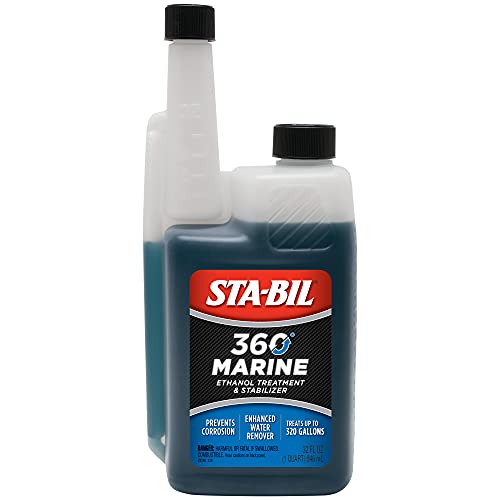
STA-BIL 360 Marine Fuel System Treatment, 32 oz

Quicksilver Quickleen Engine and Fuel System Cleaner

Mechanic in A Bottle Gas & Diesel Fuel System Cleaner 24 oz 2-Pack

STA-BIL In-Season Fuel System Treatment & Injector Cleaner, 32 oz
The Details Behind The Selections
STA-BIL is the brand most homeowners reach for first, and the 16 oz Storage Fuel Stabilizer is the original use case for fuel additives in lawn equipment. It sits in the fuel tank and keeps gasoline from breaking down over weeks or months of sitting idle, which matters most if you only mow during a 20-week growing season. The small bottle fits easily on a garage shelf next to the oil and spark-plug spares.
Owners commonly pour it into the tank before the last mow of the fall, run the engine briefly to circulate the additive, and then park the mower until spring. For the price point and the simplicity, it has earned its reputation as a go-to winterizing product for push mowers and small riding tractors alike.
A Few Strong Suits
- Compact 16 oz bottle treats roughly 40 gallons of fuel, enough for several seasons on a typical push mower
- Keeps fuel fresh during winter layup, preventing the varnish and gum buildup that gums up carburetors
- Trusted brand with decades of small-engine aftermarket use
- Simple dosing: a small measured amount per gallon with no extra measuring cup needed
Things To Consider
- Focused purely on storage, so it does not actively clean carbon from valves or injectors
- The 16 oz size may run out quickly for homeowners with multiple pieces of equipment
Who It Suits Best
Homeowners with a single push mower who store it for winter and want a simple, time-tested additive that keeps fresh fuel stable through the off-season.
Look Elsewhere When
Pick the Quicksilver Quickleen Engine and Fuel System Cleaner instead when your mower already runs rough and needs a deeper carbon clean, not just storage protection.
Most fuel sold at American pumps today is E10, meaning it carries up to 10% ethanol. Ethanol attracts water, and water in the fuel tank leads to phase separation, rough idling, and stubborn starts. Star Tron Enzyme Fuel Treatment is built specifically around ethanol-related problems, using enzyme technology that breaks down fuel clusters so the engine burns them more completely.
Where the earlier STA-BIL is mostly about storage, Star Tron works in actively used equipment. Owners with mowers that sit for a week or two between cuts but still run on pump gas often find this formulation keeps the carburetor cleaner week to week.
Well-Handled Touches
- Enzyme approach helps engines start easily even after weeks of inactivity
- Targets ethanol-related performance issues like rough idle and reduced fuel economy
- 1 oz treats 16 gallons, so a single 8 oz bottle covers a fair amount of mowing
- Works across ethanol-blended and ethanol-free fuel, useful if you sometimes run both
Worth Noting
- Not designed as a deep-cleaning carbon remover, so heavily fouled engines may need a separate treatment first
- The 8 oz bottle runs out quickly on equipment with larger fuel tanks
Feature Snapshot
Right Fit For
Homeowners running pump gas in mowers that idle for stretches between cuts and want smoother starts without dedicating the engine to fuel-system cleaning duty.
Where Another Pick Suits Better
Pick the Lucas Oil 10576 Ethanol Fuel with Conditioner instead when you live somewhere with higher ethanol blends or fuel stored for long stretches between mowings.
Lucas Safeguard sits in a different category than a basic stabilizer because it is formulated to handle the entire ethanol range, from E10 up through E85 and even pure ethanol. The Safeguard line was developed specifically to address issues that arise when ethanol-based fuels sit in small engines, including phase separation and the corrosion that moisture-laden alcohol blends can leave behind. For mowers that occasionally get parked with a partially full tank in humid climates, this matters more than it might sound.
The conditioner approach means Lucas stays soluble in any ethanol blend, so it does not separate out or clog filters as some heavier treatments can. That said, it is positioned as a fuel conditioner first, not a storage product, so pairing it with a dedicated stabilizer can make sense for long winter layup.
Reasons It Performs
- Compatible with E-10, E-15, E-85, and pure ethanol blends for flexible fueling
- Designed to remain soluble in ethanol fuels without harming fuel filters
- Addresses moisture issues common in humid storage environments
Points To Note
- Does not double as a deep injector cleaner like the STA-BIL 360 Marine formula
- Owners with hard water in their region may still see some phase separation over very long storage
Made For
Homeowners in regions where fuel contains higher ethanol percentages or where humidity makes moisture buildup in the tank a recurring problem.
Consider Something Else When
Pick the STAR BRITE Star Tron Enzyme Fuel Treatment instead when your main concern is smoother idle and easier cold starts on standard E10 pump gas.
The concentrated version of Star Tron shares the same enzyme technology as the standard bottle but goes further on coverage, treating up to 512 gallons per 32 oz bottle. For households running more than one piece of equipment, the larger bottle is the more practical pick because it spreads across the push mower, the riding mower, the leaf blower, and the trimmer without running dry mid-season.
Compared to the 8 oz version earlier in this list, the value math changes once you are treating more than 50 gallons of fuel a year. At that point, the larger bottle earns its shelf space.
Everyday Wins
- Treats up to 512 gallons, covering a fleet of small engines for an entire season
- Same enzyme formula that handles ethanol-related rough idle issues
- Larger 32 oz container reduces trips to the store for refills
- Helps engines start smoothly after weeks of inactivity, similar to the smaller bottle
Trade Offs
- Larger bottle takes up more shelf space and is heavier to carry to the fuel can
- Single-mower households may not use it before it sits past its shelf life
Best Suited To
Homeowners with multiple small engines who want one bottle that covers the mower, the trimmer, and any other gas-powered tool without constant repurchasing.
Reach For A Different Pick When
Pick the STA-BIL Storage Fuel Stabilizer, 16 oz instead when you only own a single push mower and want a smaller, more manageable bottle for occasional winter use.
The 360 Marine formula is a step up from the basic STA-BIL stabilizer. It is built around PEA additives, which is shorthand for polyether amine, a detergent chemistry that scrubs carbon and varnish from fuel injectors, lines, and pumps. Despite the marine label, the chemistry works in any small gasoline engine, including lawn mower carburetors that have been neglected for a season or two.
Where the original Storage stabilizer simply preserves fuel, this one cleans as it treats. Owners with mowers that surge, hesitate, or refuse to idle smoothly often see a difference after a couple of tanks through the system.
Strengths Worth Knowing
- PEA-based chemistry clears gum, varnish, and carbon from fuel system components
- Adds corrosion protection for internal metal parts during off-season storage
- 32 oz size covers multiple fuel tanks across a season
- Pulls water out of the fuel system, which helps engines that sit with partially full tanks
Honest Caveats
- Higher concentration than the basic STA-BIL, so dosing needs more attention to avoid over-treatment
- Not needed for a well-maintained mower that already starts cleanly every spring
Quick Facts
Who Should Grab It
Homeowners whose mower sat through a winter without stabilizer and now struggles to idle or run smoothly, where basic fuel preservation is not enough.
A Better Fit Elsewhere
Pick the Quicksilver Quickleen Engine and Fuel System Cleaner instead when carbon deposits are the main complaint and you want a treatment built specifically for carbon removal.
Quicksilver is best known in the marine world, and Quickleen leans into that expertise. The blend is meant for small engines that run hard and accumulate carbon on intake valves, spark plugs, piston crowns, and cylinder heads. Lawn mowers do not typically build up the kind of carbon a high-RPM outboard does, but a mower used weekly through a long growing season can still get fouled enough to ping or knock.
The 1 oz per 5 gallon dose is friendly for frequent use, so owners can add it at every fill-up without a separate measuring routine. Compared to the broader cleaners earlier in this list, Quickleen is more focused on deposits than on ethanol or moisture.
The Good Stuff
- Targets carbon deposits on intake valves, plugs, and cylinder heads
- Compatible with all gasoline grades and ethanol blends
- 1 oz treats 5 gallons, simple enough for routine top-of-the-can dosing
- Helps reduce engine knocking and piston seize-up on worn small engines
Worth Bearing In Mind
- Designed for ongoing use, not as a one-shot storage treatment
- Marine heritage means it is more common in boating circles than lawn care aisles
Perfect Match For
Homeowners with mowers that run weekly through thick grass, where carbon builds up faster and knocking or rough running has started to appear.
Skip It When
Pick the STA-BIL Storage Fuel Stabilizer, 16 oz instead when storage protection matters more than carbon cleaning, especially for mowers parked for months.
Most fuel additives assume gasoline. Mechanic in A Bottle goes a step further, working across gas, gas-ethanol blends, diesel, and biodiesel blends. The 24 oz two-pack gives homeowners with mixed equipment a single product to keep on the shelf for whatever tank needs topping off next.
The chemistry focuses on removing varnish, shellac, and carbon deposits, plus an antioxidant package that helps fight corrosion inside fuel lines and injectors. For small-engine owners who also maintain a diesel tractor or a biodiesel-heated workshop, that flexibility pays off.
Good Reasons To Consider
- Works across gasoline, ethanol blends, diesel, and biodiesel
- Antioxidant and anticorrosive additives protect internal fuel system components
- Disperses water in the fuel system, which helps in humid climates
- Two-pack format extends use across multiple pieces of equipment
Factors To Consider
- Two-pack size is overkill for a single-mower household with no diesel equipment
- Synthetic additive chemistry is more complex than a basic stabilizer, so dosing takes attention
Key Product Details
Whose Shelf It Belongs On
Owners with both gas-powered mowers and diesel equipment who want a single additive that handles tanks of any type without buying separate bottles.
Where A Sibling Pick Shines
Pick the STA-BIL 360 Marine Fuel System Treatment instead when your fleet is all gasoline and you want a cleaner tuned specifically for marine-style fuel systems.
The In-Season treatment is the companion to the storage stabilizer earlier in this list, with a different job. Where that earlier product sits in the tank during winter layup, this one runs through the engine during the mowing season. The 32 oz bottle is meant to be used every few fill-ups, not poured in once and forgotten.
For homeowners who cut grass weekly from April through October, the active use case justifies a continuous additive. The chemistry cleans injectors and the fuel system, while also pulling water and protecting against corrosion during the same period.
Real Benefits
- Cleans fuel injectors, lines, and pumps during active use rather than storage
- Removes water, gum, and varnish as the engine burns treated fuel
- Adds rust and corrosion protection throughout the cutting season
- Designed to support fuel economy during regular operation
Details To Watch
- Most useful for mowers used weekly, less so for occasional weekend use
- Bottle must be stored upright and sealed to prevent spills of the solvent-based formula
Feature Rundown
Built With In Mind
Homeowners who mow weekly through the growing season and want the fuel system cleaned continuously rather than waiting until the engine starts to stumble.
Swap It Out When
Pick the Quicksilver Quickleen Engine and Fuel System Cleaner instead when carbon on valves and plugs is the specific complaint, since Quickleen is tuned for that job.
What Matters Most Before Choosing Fuels For Lawn Mower
Match The Additive To The Job
The first question to answer is what the mower actually needs. A mower used weekly on a quarter-acre lot is fighting carbon buildup and stale fuel, while a mower that sits from November to March is fighting varnish and phase separation in storage. Storage stabilizers like the classic STA-BIL formulation are designed for the second case, while injectors-and-cleaners formulas like the In-Season treatment or the 360 Marine are aimed at the first. Choosing the wrong category is the most common reason people feel fuel additives do not work.
Consider Your Local Fuel And Climate
Pump gas varies by region. Some areas sell E10 year-round, others blend in more ethanol during summer, and a few pockets still carry ethanol-free options. The higher the ethanol content, the more moisture and separation risk enters the tank. Humid climates, garages that see big temperature swings, and tanks that are rarely run down to empty all raise the stakes on water-related issues. Lucas Safeguard and the Star Tron enzyme lines are tuned for ethanol-heavy conditions in ways a basic stabilizer is not.
Think About Fleet Size And Bottle Economy
A single 16 oz stabilizer can cover a push mower for several seasons, but the same bottle will disappear fast when poured into a riding mower, a generator, and a leaf blower on rotation. Concentrates like the Star Tron 32 oz and the Mechanic in A Bottle two-pack shift the math in favor of larger containers for anyone with more than one engine. Smaller bottles stay useful as glove-box top-ups for trips to the gas station.
Frequency Of Use Drives The Routine
Daily-use mowers benefit most from continuous-treatment formulas added every fill-up or every other fill-up. Seasonal mowers do better with a single treatment before storage. Trying to use a storage stabilizer as an everyday cleaner leaves the fuel system unaddressed during the cutting season, while pouring an injector cleaner into a tank you intend to leave alone for four months wastes the cleaning action.
Smart Buying Advice For This Category
Wrong Turns To Avoid
A common slip up is treating all fuel additives as interchangeable. Storage stabilizers, ethanol conditioners, and injector cleaners each target a different problem, and combining two of the same type does not double the benefit. Another trap is skipping the fuel filter, since even the best additive will not undo a filter that is already clogged with debris from years of untreated fuel.
Where The Extra Money Goes
Higher-tier bottles tend to carry multi-function chemistry. A premium product usually combines stabilization, ethanol handling, and carbon cleaning in a single dose, which removes the need to buy and measure multiple additives. The upgrade is worth it for homeowners with more than one engine or those who have already dealt with carburetor repairs. For a single push mower used a few times a month, a basic stabilizer covers the job and the extra chemistry does little additional work.