Nothing derails a Saturday morning faster than a mower that clicks instead of cranks. I’ve watched neighbors drag out jumper cables, top off corroded cells, and swap in the wrong group size more times than I can count. The right battery turns that whole ritual into a quick swap and a clean start, which is why I put together this shortlist of six solid options for riders, garden tractors, and the occasional generator backup.
How The Shortlist Stacks Up
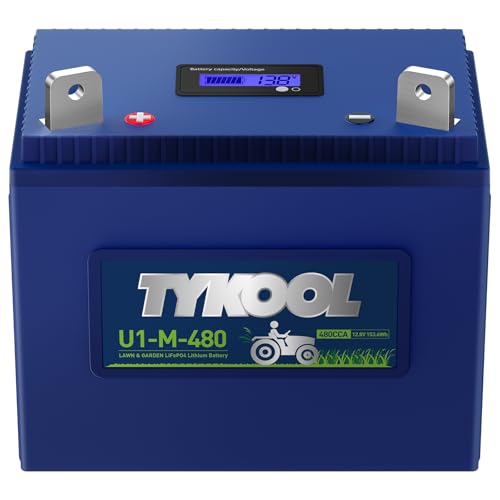
TYKOOL 480CCA Group U1 Lithium LiFePO4 Lawn Mower Battery

MARXON U1 Riding Lawn Mower Battery 12V 330CCA
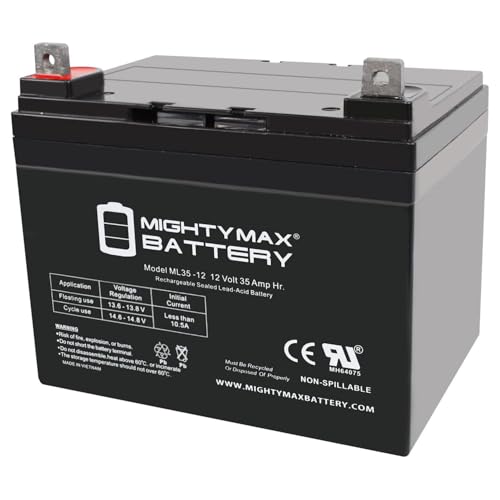
Mighty Max 12V 35Ah SLA Battery for John Deere Riding Mowers

UPLUS U1 Riding Lawn Mower Battery 12V 330CCA AGM

Autocessking Lawn Garden AGM Battery Group U1 320CCA

BRS U1 AGM Battery 12V 300 CCA Sealed Maintenance-Free
Inside Each Recommended Option
The TYKOOL 480CCA stands out the moment you pick it up, mostly because it weighs a fraction of what a sealed lead-acid battery does. That lightness matters more than people realize when they’re lifting a battery tray on a John Deere X300 after two cups of coffee on a chilly Saturday. It’s built on LiFePO4 chemistry (lithium iron phosphate, known for thermal stability and long cycle counts), so it shrugs off the partial-charge sitting that kills lead-acid batteries over winter.
The 480 cold cranking amps rating gives it enough muscle for mid-sized tractors, and the 12Ah capacity translates to roughly three to four times the cycle life of a comparable SLA (sealed lead-acid) unit, based on spec sheets. For homeowners in regions where the mercury drops below freezing for months, this is the kind of upgrade you feel every time you turn the key.
Where It Delivers
- LiFePO4 chemistry delivers 3,000+ cycles, meaning several seasons of starts before noticeable capacity loss.
- About half the weight of a comparable lead-acid unit, so swapping it out doesn’t strain your back.
- 480 CCA handles cold spring mornings that leave traditional batteries gasping.
- Stable voltage output keeps headlights and accessories on a Craftsman or Cub Cadet running cleanly.
- Broad compatibility across John Deere, Cub Cadet, Troy-Bilt, and similar garden tractors.
Honest Caveats
- Costs more up front than any SLA option on this list, which can sting for a budget-first shopper.
- Charging systems on older tractors may not fully top off a lithium battery; a periodic external charger helps preserve longevity.
Feature Snapshot
Who It Suits Best
Owners in cold climates who start their tractor through a long off-season and want a battery they can mostly forget about until the grass grows again.
Look Elsewhere When
Budget-focused shoppers should turn to the MARXON U1 330CCA instead, which delivers reliable starts on a single season’s worth of casual mowing at a fraction of the cost.
The MARXON U1 is the kind of battery I recommend to a neighbor who mows once a week in summer and stores the tractor in a garage. It’s a sealed lead-acid design (a maintenance-free chemistry where the electrolyte is held in absorbed glass mats or gel, so you never top it off with water), it ships fully charged, and it drops into the same tray the old battery came out of without any bracket mods. The 330 CCA is plenty for most single-cylinder and small V-twin engines found on popular riders.
What I appreciate here is the sheer compatibility list: AGCO, Husqvarna, Gravely, Exmark, Bob-Cat, and dozens more. For someone whose tractor brand isn’t always the priority, MARXON’s broad fitment is reassuring. Compare that to the TYKOOL lithium up top, which trades that long compatibility tail for lighter weight and longer life.
Useful Touches
- Maintenance-free sealed design means no watering or terminal fuss.
- Broad compatibility covers brands that often get overlooked in the riding mower battery aisle.
- Includes mounting hardware, so the swap is a one-trip job.
Things To Consider
- 330 CCA is fine for warm-weather starts, though deep-cold regions may want to step up cranking amps.
- Sealed lead-acid batteries don’t love sitting in a discharged state, so a tender is helpful over winter layoff.
- Shorter cycle life than the lithium option above, which is the standard trade-off at this tier.
Right Fit For
Casual homeowners with a mid-tier rider who want a reliable swap without the lithium price tag and who store their machine somewhere protected from extreme cold.
A Better Fit Elsewhere
Shops in frigid climates should look at the TYKOOL 480CCA, which holds voltage better when temperatures plummet and shrugs off the partial-charge storage that wears SLA batteries down.
The Mighty Max ML35-12 is a battery that earns its keep on bigger properties. At 35Ah, it carries roughly 40% more reserve capacity than the typical U1, which translates to more headroom for headlights, electric PTO clutches, and the kind of accessory load that drains smaller batteries before the job is done. Owners of older John Deere 100-series tractors with add-on work often run into that problem, and the higher amp-hour rating solves it cleanly.
The trade-off shows up in the dimensions. At 7.76 x 5.12 x 7.01 inches, it’s a slightly taller box than the standard U1, so the tray needs to be measured before ordering. It’s also a sealed AGM (absorbed glass mat) design, which means it can be mounted in orientations the older flooded batteries couldn’t tolerate.
Strong Points
- 35Ah capacity delivers strong reserve for accessory-heavy tractors.
- AGM construction resists vibration and tolerates a wide temperature range.
- Deep discharge recovery is a notable improvement over cheaper flooded units.
Trade Offs
- Larger footprint than a typical U1, so measuring the tray before purchase is essential.
- Heavier than the lithium TYKOOL or smaller SLA options, which matters during installation.
Best Suited To
Owners of larger John Deere tractors with electric PTOs, lighting kits, or other accessories that pull extra current during long mowing sessions.
Consider Something Else When
Tighter battery trays are a better match for the MARXON U1 330CCA, which sticks closer to standard U1 dimensions and fits more brackets without modification.
UPLUS has carved out a quiet reputation for using high-purity primary lead in their plates, and that shows up in cycle life. The spec sheets claim longevity north of five years under normal use, which I consider a generous horizon for SLA chemistry but a realistic one for a well-built AGM. The 25Ah capacity slots between the slim MARXON and the heftier Mighty Max, making it a sensible middle-of-the-pack choice.
One detail worth mentioning: the terminal layout (positive on the left, negative on the right) matches most U1 trays, but a few older models reverse it. Always cross-check with the existing battery before clicking through, because reversed polarity on a lead-acid swap can arc at the cables.
Well-Handled Touches
- Pure lead plates support longer service life under deep cycling.
- Maintenance-free AGM design skips water checks entirely.
- Strong fitment coverage for John Deere, Cub Cadet, Husqvarna, Toro, Ariens, and Poulan Pro.
Points To Note
- Polarity layout may not match every tractor, so a quick visual check matters.
- Still an SLA, so sub-zero storage with no tender shortens overall lifespan.
Spec Overview
Whose Shelf It Belongs On
Multi-brand households with a mix of tractors or a single mower that sees weekly duty across a long growing season.
Reach For A Different Pick When
Owners chasing maximum cold-weather reliability should consider the TYKOOL 480CCA, which keeps cranking strength when the thermometer dives into single digits.
The Autocessking U1-320CCA is the budget-friendly pragmatic pick. It delivers 320 cold cranking amps in a standard U1 group, which is enough muscle for a Cub Cadet LT1042, a John Deere D105, or a Craftsman riding mower with a single-cylinder Briggs. The 28Ah capacity is a small bump over the absolute entry-level options without crossing into heavy-duty territory.
I think of this one as the sensible pick for a homeowner whose tractor is eight to ten years old and still humming along. If you’re not chasing premium specs, and you just want the deck running again before the weekend, this lands in a comfortable spot. It’s worth flagging that the box ships with hazardous-materials handling, which can add a day or two depending on the carrier, so plan the swap a little ahead.
The Value In It
- Standard U1 dimensions drop into most compact and mid-size riders.
- 320 CCA is a comfortable match for single-cylinder engines and small V-twins.
- AGM construction means no spills, even on a sloped battery tray.
- Compatible with John Deere, Toro, Cub Cadet, and Craftsman out of the box.
Things To Weigh
- Hazardous-materials shipping rules can extend delivery windows slightly.
- Lacks the deep reserve of the Mighty Max or the cold-weather confidence of the TYKOOL lithium.
Perfect Match For
Suburban homeowners with a typical riding mower who want a no-frills replacement that handles a standard mowing schedule without drama.
Skip It When
Property managers running multiple tractors through commercial workloads should consider the Mighty Max ML35-12, whose higher amp-hour rating handles longer daily duty cycles.
The BRS U1 AGM leans into versatility. It works in lawn tractors, generators, UTVs, and ATVs, so for someone who owns more than one machine that takes a U1 box, this becomes a stocking-friendly option. The 300 CCA and 375 CA (cranking amps, measured at a less rigorous 32°F than CCA’s 0°F) split feels right for mild climates with occasional cold snaps.
The standout practical detail: it arrives fully charged. No babysitting a trickle charger for a day before installation. Vibration-resistant plates also help for off-road or rough-terrain use, where lesser batteries shake themselves apart internally. The optional protection plan adds drops and spills coverage, which is a sensible add for a battery that might bounce around in a shed.
What Makes Sense
- Multi-application design covers generators and UTVs alongside mowers.
- Ships fully charged, so installation happens the same day the box arrives.
- Vibration-resistant plate construction suits rough terrain and ATV use.
- AGM sealed build needs no maintenance or water top-ups.
Potential Drawbacks
- 300 CCA is the lowest in this shortlist, so very cold starts may feel sluggish.
- Optional protection plan adds cost beyond the base battery.
At A Glance
Made For
Property owners with a mix of equipment, mowers, generators, and small off-road machines, who want one reliable U1 battery to rotate through.
Not Your Match When
Deep-cold regions see stronger performance from the TYKOOL 480CCA, which delivers nearly 60% more cranking amps for sub-freezing starts.
What Matters Most Before Choosing Lawn Mower Batteries
Start with the group size. Most riding mowers and garden tractors use Group U1, but the exact dimensions vary enough that a measuring tape beats a guess. Length, width, and height all need to fit inside the tray, and the terminal orientation (positive left or right) has to match the existing cables.
Cold cranking amps matter more than people expect. CCA measures how much current the battery can deliver at 0°F for 30 seconds while maintaining a usable voltage. A 300 CCA battery starts a small engine fine in October, but the same battery struggles in February. Cold-climate owners should aim for at least 330, with 400+ preferred for the deepest winters.
Battery chemistry is the bigger decision. Sealed lead-acid (SLA) and AGM batteries cost less and work fine for moderate use, but they tolerate partial charging poorly and lose capacity fast if stored discharged. Lithium iron phosphate (LiFePO4) costs more up front but lasts longer, weighs less, and holds voltage through deep cold. For most homeowners mowing a half-acre to two acres on a single machine, SLA still wins on value. For year-round riders in cold regions or anyone tired of replacing batteries every two to three seasons, lithium pays back.
Amp-hours measure reserve capacity. Higher Ah means longer runtime for headlights, electric PTO clutches, and accessories. Riders with stock equipment rarely notice the difference, but a tractor with work lights and a powered deck switch feels the bump from 25Ah to 35Ah.
Key Considerations Across These Picks
Where Shoppers Go Wrong
The single most common mistake is grabbing whatever U1 fits the price range and assuming it’ll work. Group size is a footprint, not a guarantee of compatibility. Terminal polarity, exact dimensions, and post type (top-post versus side-post) all vary enough to cause headaches. Measure the old battery, photograph the cable orientation, and check the spec sheet before clicking through.
Storage habits also catch people off guard. Lead-acid batteries left on a shelf at half charge sulfate fast, and a sulfated battery rarely recovers. A basic maintainer (a low-amp charger that keeps the battery topped off without overcharging) over winter storage adds years of life to any SLA pick on this list.
Where The Extra Money Goes
Stepping up from a budget SLA to the TYKOOL lithium isn’t just a longer cycle count. The weight savings translate to easier installation, the voltage stability keeps accessories running, and the deep-discharge tolerance means the battery survives a forgotten charger better. For homeowners who replace a battery every two or three years, lithium chemistry pays back through avoided replacements and fewer cold-morning frustrations.
The mid-tier AGM options like UPLUS or BRS land in a different sweet spot: better plate materials and tighter manufacturing tolerances than the budget tier, without the price jump to lithium. For multi-brand households and commercial light use, that’s usually the smartest trade.
Frequently Asked Questions
How long do lawn mower batteries typically last?
Sealed lead-acid and AGM batteries in riding mowers usually last three to five seasons with reasonable care. Lithium LiFePO4 batteries often push past seven seasons, depending on climate and storage habits.
Can I use a higher CCA battery than my original?
Yes, higher cranking amps won’t harm a starter motor designed for lower CCA. The motor only draws what it needs, so a stronger battery just gives you more reserve.
Do lithium lawn mower batteries need a special charger?
Most modern tractors charge lithium batteries fine through the stock alternator. Owners storing the battery for long periods benefit from a lithium-compatible maintainer to avoid the rare over-charge scenario.
What does AGM mean, and is it better than standard SLA?
AGM stands for absorbed glass mat, a sealed lead-acid design where the electrolyte is suspended in fiberglass mats. AGM batteries resist vibration better, mount in any orientation, and recover from deep discharge more reliably than older flooded SLA designs.
Why does my mower battery keep dying after sitting?
Parasitic draw from accessories or a faulty voltage regulator can drain any battery over weeks of storage. A maintainer solves the storage side, but a charging-system test catches the wiring problem early.
Wrap Up
The right battery depends on climate, acreage, and how much tinkering you want to do. Lithium answers the “set it and forget it” crowd, AGM delivers the best balance for most weekend warriors, and a value SLA still does the job on a budget. Match the chemistry to your habits, measure the tray, and the rest falls into place.