A lawn mower that sputters or drags through thick grass usually has nothing to do with the blades. Most often, the oil is past its useful life or simply the wrong grade for the engine in front of you. Picking the right SAE 30 oil keeps small four-stroke engines cool, quiets down valve tap, and protects the crank on every pull-start. The eight options below cover the everyday commuter (the push mower running every Saturday), the weekend warrior with a small fleet, and the hobby mechanic maintaining older flat-tappet engines. I’ve kept notes on what each formula actually does, where it falls short, and which mower it pairs with best.
The Choices Worth Comparing

Valvoline Daily Protection Non-Detergent SAE 30 Motor Oil 1 QT

Royal Purple 01030 SAE 30 High Performance Synthetic Motor Oil 1 Quart

STP Premium Small Engine 4 Cycle Oil SAE-30 32 Oz
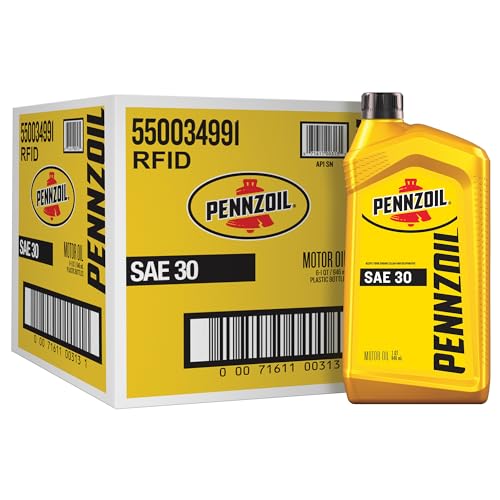
Pennzoil SAE 30 Motor Oil 1 Quart 6 Pack

Castrol HD-30 Motor Oil 1 Quart Pack of 6

Valvoline VR1 Racing SAE 30 Motor Oil 1 QT Case of 6
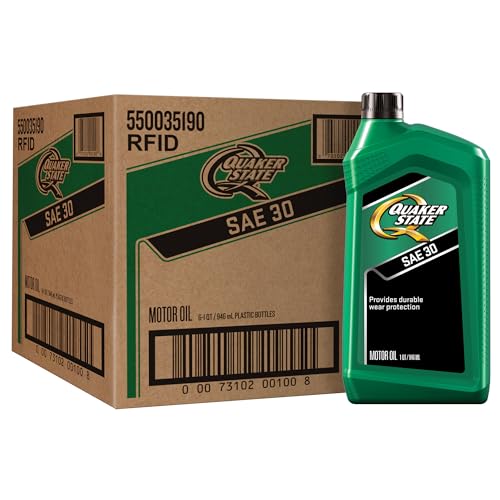
Quaker State Motor Oil HD 30 1 Quart 6 Pack

TRIAX Power 4-Stroke 10W-30 Full Synthetic Small Engine Oil 1 Gallon
Taking A Closer Look At The Options
Non-detergent SAE 30 is the old-school formula most people forget still exists. Valvoline bottles it as a general-purpose oil blended from premium base stocks with additives for wear control and oxidation inhibition (oxidation is the chemical breakdown that turns oil into varnish inside a hot engine). For mowers that were built before modern detergent oils became standard, this is the safer match.
It fits older small engines and also doubles for manual transmissions and gearboxes that don’t call for an extreme-pressure lubricant. If the garage has a 1980s-era push mower, a tiller gearbox, or a stationary engine that runs occasionally, this is the bottle to keep on the shelf. One quart covers most single-cylinder top-offs, and you can store the rest between seasons without it going bad in the jug.
Useful Strengths
- Non-detergent chemistry suits older flat-tappet engines that detergent oils can over-clean and starve of protection.
- Doubles as a gearbox and manual transmission fluid for equipment around the shop.
- Affordable single-quart bottle for occasional top-offs on a single mower.
- Stable shelf life so leftover oil stays usable season to season.
Things To Consider
- Lacks the detergents modern four-stroke engines rely on to suspend soot and combustion byproducts.
- Owners of newer Briggs & Stratton or Honda engines may find their owner’s manual steers them toward a detergent oil instead.
- Only one quart per purchase, which adds up for anyone with multiple mowers.
Key Specs
Made For
Someone maintaining a vintage mower, a tiller gearbox, or older stationary equipment where non-detergent oil is the correct chemistry.
Consider Something Else When
The Castrol HD-30 option below suits shoppers with multiple modern mowers who want the same single-weight simplicity in a six-quart case.
Royal Purple sits in the synthetic corner of the SAE 30 world. The blend is built around better wear protection, improved fuel efficiency, and a corrosion package that holds up during long storage. For a mower running weekly in 90°F+ heat, that extra margin shows up as quieter valve train and cleaner oil on the dipstick at the end of the season.
Compared to the Valvoline non-detergent option above, this is a different animal. Where that one is a minimal, traditional formula, Royal Purple layers in modern additives and a synthetic base stock that resists thermal breakdown (thermal breakdown is when oil thins out and loses film strength after sustained high-temperature running). A homeowner in the Sun Belt or anyone who hires out commercial mowing will get the most from this bottle. One quart is enough for a single change in most walk-behinds.
Strong Points
- Synthetic base stock holds viscosity through long, hot mowing sessions.
- Stronger corrosion resistance keeps internal parts protected during winter layup.
- Synergy with high-detergent additives keeps piston rings and skirts cleaner.
Points To Note
- Premium pricing per quart compared with conventional options.
- Older flat-tappet engines without modern seal materials may see minor seepage.
Who It Suits Best
Hot-climate homeowners and small commercial operators who log heavy hours and want synthetic protection in a single-weight grade.
Not Your Match When
A casual Saturday mower with modest hours gets more value out of the STP Premium Small Engine 4 Cycle Oil reviewed below.
STP’s small-engine bottle is the closest thing to a “does what it says” product in this category. The formula combines a quality base oil with anti-wear chemistry, antioxidants to fight thermal breakdown, and detergents that keep carbon deposits from building up on the piston and valves. It’s marketed at the lawnmower crowd specifically, and the spec sheet lines up with that audience.
For someone who mows a quarter-acre lot every weekend and doesn’t want to think too hard about oil specs, this is the easy choice. The 32-ounce bottle handles a full change on most push mowers with a little left for top-offs. Unlike the non-detergent Valvoline earlier in this list, STP is a modern detergent formula, so it pairs correctly with newer Briggs, Honda, and Kohler engines.
Positive Points
- Anti-wear additives cushion the crank during cold pull-starts.
- Detergents keep carbon deposits in check during stop-and-go mowing.
- Antioxidant package extends drain intervals for occasional users.
- Single 32-oz bottle is enough for one full change with spare for top-off.
Worth Noting
- Conventional base oil, so it thins faster than synthetics in extreme heat.
- Only one bottle per order unless you stack multiple units.
Best Suited To
Homeowners with one push mower or a small garden tractor who want a purpose-built small-engine formula without specialty pricing.
Look Elsewhere When
Anyone running commercial hours across a fleet should step up to the TRIAX Power 4-Stroke reviewed near the bottom of this list.
Buying a six-quart case of Pennzoil SAE 30 turns a routine oil change into a multi-season supply. The formula focuses on proven wear protection, sludge prevention, and broad compatibility with both older automotive engines and modern small four-strokes. For households running more than one piece of equipment, the bulk format pays off the moment you crack open the second bottle.
The chemistry is conventional rather than synthetic, and it’s formulated for a wide viscosity window. That means it’s a confident fit for a push mower, a pressure washer pump, or a generator engine sharing shelf space in the garage. Compared with the STP option earlier, Pennzoil leans more toward a general-engine philosophy than a strict small-engine recipe, which works fine for most walk-behinds.
Useful Touches
- Six-quart case lowers the per-change cost for frequent oil swaps.
- Sludge-control additives keep the crankcase cleaner across the drain interval.
- Compatibility with conventional oils means topping off older stock without a full flush.
Points To Keep In Mind
- Conventional base oil means shorter life in extreme heat compared with synthetics.
- Bundled packaging adds weight to store and ship.
Who Will Love This
Shops, small farms, or households running two or more engines that share a single oil grade.
A Better Fit Elsewhere
The Quaker State HD 30 6 Pack below matches similar value but adds a stronger corrosion package for equipment that sits in storage.
Castrol’s HD-30 leans into the heavy-duty side of the SAE 30 family. The “HD” stands for high-detergent, and the package is engineered around extra resistance to thermal breakdown during long mowing sessions. Mowers that see thick St. Augustine or Bermuda in summer push oil temperatures higher than people realize, and a heavy-duty conventional oil keeps film strength from collapsing mid-cut.
This is a six-quart case, so the practical fit is the same as the Pennzoil above: a garage that needs a serious stockpile of single-weight oil. Castrol’s chemistry skews more toward thermal stability than the Pennzoil formula, which makes it the better pick for southern lawns where the engine never really gets a cool-down. The packaging is also compact (19.05 cm L x 22.86 cm W x 24.13 cm H), making storage easier in tight sheds.
The Good Stuff
- Premium mono-grade chemistry resists thermal breakdown during extended mowing.
- Bulk packaging covers multiple machines without repeat orders.
- Compact case dimensions fit on a shelf alongside other supplies.
Honest Caveats
- Conventional base rather than synthetic, so drain intervals stay conservative.
- Not formulated for non-detergent-only legacy engines.
Perfect Match For
Mower operators in warm climates logging long sessions on thick turf where thermal stress is the main wear concern.
Skip It When
Vintage mower owners needing a non-detergent formula should stay with the Valvoline Daily Protection bottle reviewed at the top of this list.
VR1 sits at the enthusiast end of the SAE 30 spectrum. The racing formula carries an elevated zinc and phosphorus package (zinc and phosphorus act as anti-wear additives that protect flat-tappet camshafts from metal-to-metal contact), which is exactly what classic and high-performance engines need. Modern low-phosphorus oils leave flat-tappet valvetrains under-protected, and VR1 fills that gap.
For a homeowner with a restored lawn tractor, a vintage Briggs flat-tappet engine, or any small four-stroke running a hot cam profile, VR1 is the safe match. The case-of-six format covers an entire fleet or several drain intervals across a single project engine. Where the everyday Pennzoil and Castrol options above target broad compatibility, VR1 is purpose-built for a specific audience.
Everyday Advantages
- High zinc and phosphorus content protects flat-tappet camshafts under high-RPM load.
- Case-of-six format supports long restoration or racing projects.
- Compatible with both modern and classic small engines on and off the track.
Points To Weigh
- Phosphorus level can stress emissions catalysts on newer automotive engines.
- Specialty pricing per quart is the highest in this roundup.
Whose Shelf It Belongs On
Hobby mechanics maintaining vintage or high-performance small engines that need extra anti-wear chemistry.
Reach For A Different Pick When
A standard walk-behind mower with a stock cam is better served by the STP Premium Small Engine Oil reviewed earlier.
Quaker State rounds out the conventional HD 30 segment with a chemistry built around durable wear protection and corrosion resistance against harmful acids generated by engine contaminants. That last point matters more than it sounds: combustion byproducts create acidic compounds that attack bearing surfaces during long storage, and a corrosion package slows that damage down.
The HD 30 grade covers engines that need a single-weight oil but operate under hotter or more loaded conditions than a standard passenger car. For a mower that sits in a damp shed over winter, or a generator that runs intermittently across the year, the corrosion resistance gives the bearings and cam a longer quiet life. It pairs well with the Pennzoil SAE 30 above as a backup choice in the same bulk format.
Everyday Wins
- Corrosion protection counters acid buildup during off-season storage.
- Sludge and deposit control keep the crankcase cleaner across longer drain intervals.
- Six-quart case keeps multiple engines covered through the season.
Trade Offs
- Conventional base oil means thinner viscosity in extreme heat compared with synthetics.
- Not formulated for non-detergent legacy engines.
The Right Fit
Equipment that sees long idle periods between uses, especially mowers and generators stored in humid sheds.
Swap It Out When
Engines running sustained high-RPM commercial hours benefit more from the Royal Purple synthetic SAE 30 reviewed above.
TRIAX closes out the roundup as the most ambitious small-engine formula on the table. It’s a full-synthetic 10W-30 (a multi-grade oil that flows easily when cold and stays thick when hot) carrying roughly twice the zinc content of typical small-engine oils, with thermal stability rated for high-load operation across a wide temperature window. The pitch is a service life several times longer than conventional 4-stroke oil.
The catch is the viscosity grade. SAE 30 shoppers expecting a strict single-weight should know this is a 10W-30, which most modern small engines accept but older flat-tappet platforms may not. For someone managing a fleet of lawnmowers, generators, log splitters, and pressure washers, the one-gallon container and broad equipment compatibility make it the workshop-grade choice. The Royal Purple SAE 30 earlier remains the cleaner fit for strict single-weight requirements.
The Upside
- Elevated zinc content protects flat-tappet valvetrains under heavy commercial use.
- All-season rating covers cold-start mornings and hot summer afternoons.
- One-gallon container cuts down on packaging waste for fleet operators.
- Synthetic base extends drain intervals beyond conventional oil cycles.
Things To Weigh Up
- 10W-30 grade rather than pure SAE 30, which some legacy owners may resist.
- Premium price per gallon compared with conventional cases.
Key Specs
Built With In Mind
Shops and homeowners managing multiple small four-stroke engines who want one synthetic oil across mowers, generators, and pressure washers.
Where A Sibling Pick Shines
Single-weight purists running vintage equipment should reach for the Valvoline VR1 Racing SAE 30 case reviewed above.
What Actually Matters When Picking SAE 30 Oil
Viscosity grade is the first filter, not the last. SAE 30 is a single-weight oil that holds its thickness at operating temperature, which suits air-cooled small engines running in warm weather. Owners who mow through cold spring mornings or winter work may want a multi-grade option like the 10W-30 reviewed last instead, since multi-grade oils flow more easily at low temperatures and protect bearings during cold start-up.
Detergent chemistry is the second call. Modern engines rely on detergent additives to suspend combustion byproducts and keep carbon from gumming up the piston rings. Older flat-tappet engines, by contrast, were designed around non-detergent oils and can actually suffer when detergents scrub protective deposits away from bearing surfaces. That is why two SAE 30 bottles in this roundup target completely different audiences.
Anti-wear additives like zinc and phosphorus (ZDDP) matter most for older or high-performance valvetrains. These compounds lay down a sacrificial film on metal surfaces, and modern emissions-driven oil recipes have thinned them out. Restoration projects and any engine with a flat-tappet cam benefit from formulas like the Valvoline VR1 reviewed above.
Drain interval and capacity round out the practical side. Conventional SAE 30 in a push mower typically wants a change every 25 to 50 hours of run time. Synthetics stretch that interval, and bulk packaging like the Pennzoil or Castrol six-quart cases keeps a multi-engine garage supplied without repeat orders.
Storage conditions deserve a quick mention too. Equipment that sits for months between uses, especially in humid sheds, benefits from a corrosion package strong enough to neutralize acidic combustion residues. That is where the Quaker State HD 30 case earns its keep.
Key Considerations Across These Picks
Common Shopping Slip Ups
The most common mistake is treating all SAE 30 bottles as interchangeable. A non-detergent oil and a high-detergent synthetic may share a viscosity number, but they protect very different engines. Pouring a detergent oil into a vintage flat-tappet engine can over-clean bearing surfaces, while a non-detergent bottle in a modern Honda will let carbon build up on the rings faster.
Another trap is ignoring equipment breadth. Households with a mower, a generator, and a pressure washer often pay three times for three bottles when a single multi-equipment synthetic would do the job. The TRIAX gallon at the bottom of the roundup is built exactly for that situation.
What The Higher Tier Buys
Premium SAE 30 oils cost more because of three things: synthetic base stock, higher additive loading, and longer drain intervals. A synthetic like the Royal Purple keeps film strength through temperatures where conventional oil thins out. Higher zinc content, as in the Valvoline VR1, protects flat-tappet cams where standard formulas would let metal-on-metal contact win. And longer intervals mean fewer oil purchases and fewer used-oil disposal runs across a season.
The upgrade is worth it for engines running in extreme heat, vintage valvetrains that need extra anti-wear chemistry, or anyone running commercial hours. A casual Saturday mower does not need the premium tier and gets solid service from a conventional detergent oil at the right price.
Frequently Asked Questions
Can I use SAE 30 car oil in my lawn mower? Yes, in most cases. SAE 30 motor oil sold for automotive use, like the Pennzoil or Castrol options above, works in small four-stroke mower engines. The main exception is older engines that specifically call for a non-detergent oil.
Is SAE 30 or 10W-30 better for a lawn mower? SAE 30 is the traditional single-weight choice for warm-weather mowing. 10W-30 (a multi-grade that flows better when cold) is the better option when starting the engine in cold temperatures or when the owner’s manual specifies it. Most modern small engines accept either.
How often should I change SAE 30 oil in a mower? A general rule is every 25 to 50 hours of run time, or once per mowing season for casual users. Synthetic oils can stretch that interval, while conventional oil under heavy use may need earlier changes.
Does SAE 30 work in both push mowers and riding mowers? Yes. Engine displacement and oil capacity differ between the two, but the viscosity grade works in either platform. Riding mowers and lawn tractors simply call for more quarts per change.
What happens if I use the wrong oil in my mower? Thick oil in a cold engine starves bearings of lubrication during start-up. Oil that is too thin breaks down under heat and leaves metal unprotected. Either case shortens engine life, so matching the grade on the owner’s manual cap is worth the minute it takes.
Closing Thoughts
The right SAE 30 oil comes down to engine age, climate, and how many machines share the garage. Older flat-tappet engines and gearboxes pair cleanly with a non-detergent formula, while modern four-stroke mowers want a detergent oil with anti-wear chemistry. Bulk conventional cases cover most households on a budget, and synthetics pay for themselves on hot-climate or commercial equipment. Match the bottle to the engine in front of you, and the mower will pull-start cleanly for many seasons to come.